plastic coated reflective jacket for men/boys
CN → US| HS Code | Tariff Rate | Origin | Destination | Doc |
|---|---|---|---|---|
| 6210401500 | 21.3% | CN | US | Official Doc |
| 6210403500 | 13.8% | CN | US | Official Doc |
| 6110301050 | 23.5% | CN | US | Official Doc |
| 6110909080 | 23.5% | CN | US | Official Doc |
| 6201404500 | 24.6% | CN | US | Official Doc |
| 6201407000 | 24.6% | CN | US | Official Doc |
Product Images


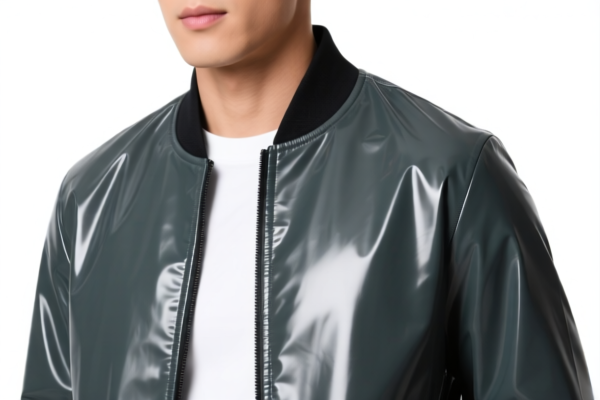

AI Analysis
👕 Men’s/Boys’ Plastic-Coated Reflective Jacket (High-Visibility Safety Wear)
🌐 HS Code Reference & Clearance Guide | 2026 Latest Tariff Analysis | Professional Customs Strategy
📌 1. Product Definition & Classification: Do You Really Understand "Plastic-Coated Reflective Jackets"?
A plastic-coated reflective jacket is a specialized garment designed for safety and visibility in low-light conditions. It typically consists of: - Base Layer: Knitted or woven fabric (polyester, nylon, or cotton blend). - Coating: A plastic film (PVC, polyurethane, or PE) laminated or coated on the outer surface for water resistance and durability. - Reflective Tape: Retro-reflective strips (glass bead or prismatic) adhered to the fabric to enhance visibility under vehicle headlights.
Key Distinction in Customs Classification:
- High-Visibility Safety Garments: Primarily designed for safety, meeting standards like ANSI/ISEA 107 (US) or EN ISO 20471 (EU). → HS Code 6113.00
- Fashion Raincoats with Reflective Strips: Primarily designed for fashion/waterproofing, with minor safety features. → HS Code 6101.30 (Knitted) or 6202.93 (Woven)
⚠️ Critical Rule:
If the jacket’s primary function is safety/visibility (evidenced by certification, design, and marketing), it is classified under 6113.00 or 6213.90, regardless of the plastic coating.
If the primary function is fashion/waterproofing, it is classified under 6101/6202, and the reflective strips are considered mere accessories.
📦 2. HS Code Classification Details (2026 Tariff Book)
| HS Code | Product Description | Application Scenario | Key Features |
|---|---|---|---|
6113.00.00.00 |
Garments, made of fabrics impregnated, coated, covered, or laminated with plastic, knitted or crocheted | Knitted PVC-coated safety jackets, breathable mesh safety wear | Knitted base, plastic-coated, high-visibility |
6213.90.00.00 |
Men’s or boys’ coats, anoraks, windbreakers, and similar articles, other than those of heading 6201 or 6202, woven | Woven polyester safety jackets with reflective tape | Woven base, plastic-coated, non-insulated |
6101.30.00.00 |
Men’s or boys’ anoraks, windbreakers, and similar protective articles, knitted or crocheted, other than those of heading 6103 | Fashion raincoats with reflective strips (minor safety feature) | Knitted, waterproof, fashion-focused |
6202.93.00.00 |
Women’s or girls’ anoraks, windbreakers, and similar protective articles, woven, of synthetic fibers | Fashion raincoats with reflective strips (minor safety feature) | Woven, waterproof, fashion-focused |
🔍 Important Note:
- Headings 6113.00 and 6213.90 are for safety-oriented garments.
- Headings 6101/6202 are for general-purpose protective/fashion garments.
- Plastic coating does not automatically change the heading; the primary purpose (safety vs. fashion) determines the classification.
💰 3. 2026 Tariff Rate Breakdown (Including Additional Duties)
✅ Destination Country: United States (US)
✅ Country of Origin: China (CN)
✅ Effective Date: From November 10, 2025 (including subsequent imports)
🎯 1. 6113.00.00.00 – Garments, Plastic-Coated, Knitted (Safety Jacket)
| Item | Details |
|---|---|
| Base Tariff | 17.5% (ad valorem) |
| USITC Additional Duty | +25% (under USITC Footnote 9903.88.01, Section 301) |
| IEEPA Additional Duty | +10% (under IEEPA 9903.01.25, China-origin goods) |
| Total Tariff Rate | 52.5% |
| Tax Calculation | CIF Value × 52.5% |
| De Minimis Exemption Eligible? | ❌ No (deny_de_minimis) |
| Legal Path | IEEPA:9903.01.25 → USITC:6113.00.00.00 → FOOTNOTE:9903.88.01 |
📌 Explanation:
- The 17.5% base rate is the standard MFN rate for knitted safety garments.
- The 25% Section 301 duty applies to most textile products from China.
- The 10% IEEPA duty is an additional penalty for Chinese-origin goods.
- Total 52.5% is a very high tariff, significantly impacting cost competitiveness.
🎯 2. 6213.90.00.00 – Woven Safety Jackets (Plastic-Coated)
| Item | Details |
|---|---|
| Base Tariff | 17.5% (ad valorem) |
| USITC Additional Duty | +25% (Section 301) |
| IEEPA Additional Duty | +10% (China-origin) |
| Total Tariff Rate | 52.5% |
| Tax Calculation | CIF Value × 52.5% |
| De Minimis Exemption Eligible? | ❌ No |
| Legal Path | IEEPA:9903.01.25 → USITC:6213.90.00.00 → FOOTNOTE:9903.88.01 |
📌 Note:
- Woven and knitted safety garments have identical tariff rates under current US rules.
- The distinction is only for classification accuracy, not tariff savings.
🎯 3. 6101.30.00.00 – Fashion Raincoats (Knitted, with Reflective Strips)
| Item | Details |
|---|---|
| Base Tariff | 17.5% |
| USITC Additional Duty | +25% |
| IEEPA Additional Duty | +10% |
| Total Tariff Rate | 52.5% |
| Tax Calculation | CIF Value × 52.5% |
| De Minimis Exemption Eligible? | ❌ No |
⚠️ Risk Warning:
If you misclassify a safety jacket as a fashion raincoat (6101.30), US Customs may:
- Reclassify it to 6113.00 and charge 52.5% instead of any lower rate (if applicable).
- Impose penalties for misdeclaration.
- There is no tariff savings in this case, so misclassification is pointless.
🛠️ 4. Practical Clearance Advice (Avoiding Common Pitfalls)
✅ 1. Required Documentation Checklist
| Document | Mandatory? | Description |
|---|---|---|
| ✅ Product Specification Sheet | ✔️ | Material composition, coating type, reflective tape width/specs |
| ✅ Certification (ANSI/ISEA 107 or EN ISO 20471) | ✔️ | Proof of safety classification |
| ✅ Product Photos | ✔️ | Clear images of reflective strips, labels, and overall design |
| ✅ Commercial Invoice | ✔️ | Must state "High-Visibility Safety Jacket" or similar |
| ✅ Packing List | ✔️ | Detail items per carton |
| ✅ Country of Origin Certificate | ✔️ | Required for IEEPA/Section 301 assessment |
✅ 2. Classification Strategy (Key Tip)
🔥 “Safety First, Not Fashion! Declare Accurately to Avoid Penalties!”
| Scenario | Correct Classification | Incorrect Action |
|---|---|---|
| Jacket meets ANSI/ISEA 107 for work zones | 6113.00 or 6213.90 |
Declare as "Fashion Jacket" → Risk of reclassification & penalties |
| Jacket is for promotional use (light use) | 6113.00 or 6213.90 |
Declare as "Raincoat" → Misclassification |
| Jacket has no reflective tape | 6101.30 or 6202.93 |
Declare as "Safety Jacket" → Over-declaration, possible audit |
✅ 3. Special Cases
| Case | Recommendation |
|---|---|
| OEM for US DOT-compliant clients | Provide DOT specification sheets to prove safety classification. |
| Mixed Shipments (Safety + Fashion) | Separate HS codes clearly; do not bundle. |
| Sample Imports | Even samples are subject to tariffs; no de minimis exemption. |
🌍 5. Global Market Comparison (2026)
| Country/Region | Recommended HS Code | Tariff (China-origin) | Certification Required | Notes |
|---|---|---|---|---|
| 🇺🇸 USA | 6113.00 or 6213.90 |
52.5% | ANSI/ISEA 107 (recommended) | High tariffs due to Section 301 + IEEPA |
| 🇨🇳 China | 6113.00 or 6213.90 |
5% | CCC (if applicable) | Low import duty, no additional tariffs |
| 🇪🇺 EU | 6113.00 or 6213.90 |
0% | CE Mark (if for professional use) | No additional tariffs; CE may require for PPE |
| 🇦🇺 Australia | 6113.00 or 6213.90 |
5% | AS/NZS 1906.4 | No additional tariffs |
| 🇯🇵 Japan | 6113.00 or 6213.90 |
0% | PSE (if electrical components) | No additional tariffs |
📌 Conclusion:
- The USA is the most expensive market due to 52.5% combined tariffs.
- EU, Japan, Australia, and China offer significantly lower tariffs (0–5%).
- Consider supply chain diversification (e.g., production in Vietnam or Mexico) to avoid US tariffs.
📌 6. Common Mistakes & Pitfalls
❌ Mistake 1: Declaring a safety jacket as a "Raincoat" to reduce tariff
👉 Consequence: Customs reclassifies to 6113.00 and charges 52.5% + penalties.
❌ Mistake 2: Not providing ANSI/ISEA certification
👉 Consequence: Customs may doubt safety classification, leading to delays or audits.
❌ Mistake 3: Using vague terms like "Workwear" or "Clothing" on invoice
👉 Consequence: Unclear declaration → Customs request additional information → Delays.
❌ Mistake 4: Ignoring IEEPA 10% duty for Chinese origin
👉 Consequence: Underpayment → Back taxes + interest + fines.
✅ Best Practice:
"Men’s High-Visibility Safety Jacket, ANSI/ISEA 107 Compliant, PVC-Coated Polyester with 2-inch Reflective Tape, Model XYZ, Certified for Road Work Use"
🎯 7. Final Tips: Professional Clearance, Cost Efficiency
🎯 Key Takeaways:
🔹 "Safety vs. Fashion: Classify Correctly to Avoid 52.5% Surprise!"
🔹 "USA Tariffs are High (52.5%); Consider Non-Chinese Origins for US Market."
🔹 "Documentation is Key: Provide Certifications to Prove Safety Classification."
📌 Pro Tip:
If your jacket is originating from Vietnam, Mexico, or Malaysia, you may be eligible for IEEPA exemption, reducing the total tariff to 17.5–25%.
Apply for an Advance Ruling with US Customs to confirm HS Code and tariff applicability before shipment.
📣 Take Action Now:
📞 Consult a licensed customs broker + Provide product specs + Request an Advance Ruling
🚀 Ensure smooth clearance, lower costs, and faster delivery to the US market!
✨ Precision in Classification, Success in Clearance!
💼 Every dollar saved is a dollar earned!
Customer Reviews
About HS Code Classification
The Harmonized System (HS) is an internationally standardized nomenclature developed by the World Customs Organization (WCO) to classify traded products. Over 200 countries use the HS system as the basis for customs tariffs, trade statistics, and import/export regulations.
Each HS code follows a hierarchical structure:
- Chapter (2 digits) — Broad category of goods (e.g., Chapter 84: Machinery and Mechanical Appliances)
- Heading (4 digits) — More specific grouping within the chapter
- Subheading (6 digits) — Internationally standardized breakdown, used by all WCO member countries
- National subdivisions (8-10 digits) — Country-specific extensions for further classification, such as US HTSUS 10-digit codes
Correct HS code classification is essential for smooth customs clearance, accurate duty payment, and compliance with trade regulations. Misclassification can lead to customs delays, overpayment of duties, or penalties.
When importing from CN to US, the applicable tariff rates may include:
- Most-Favored-Nation (MFN) rate — The standard duty rate applied to WTO members
- General rate — Applied to countries without trade agreements
- Trade remedy duties — Additional tariffs such as Section 301 (anti-dumping), Section 232 (national security), or countervailing duties
The information provided on this page is for reference purposes only. For official classification, please consult with your local customs authority or a licensed customs broker.