plastic containers
CN → US| HS Code | Tariff Rate | Origin | Destination | Doc |
|---|---|---|---|---|
| 3923300010 | 38.0% | CN | US | Official Doc |
| 3923300090 | 38.0% | CN | US | Official Doc |
| 3924104000 | 13.4% | CN | US | Official Doc |
| 3924102000 | 24.0% | CN | US | Official Doc |
| 3923210030 | 38.0% | CN | US | Official Doc |
Product Images
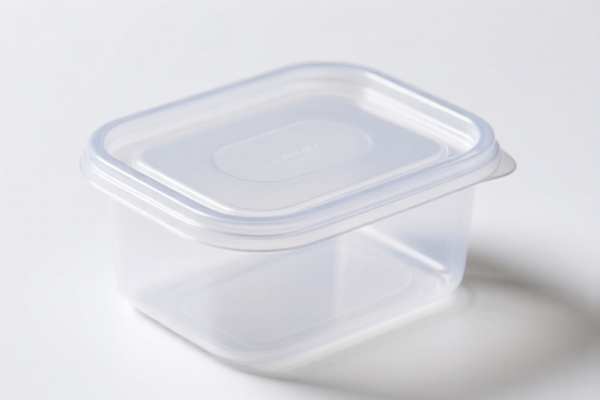
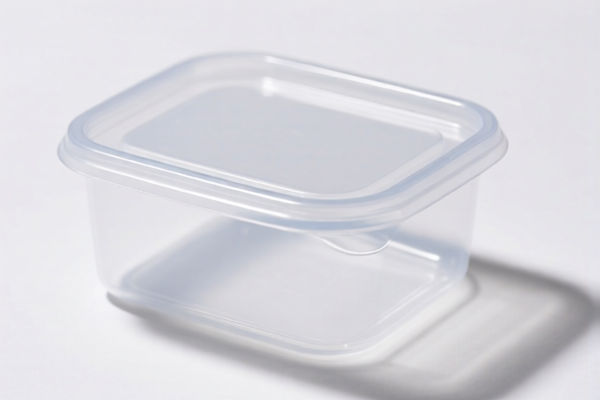
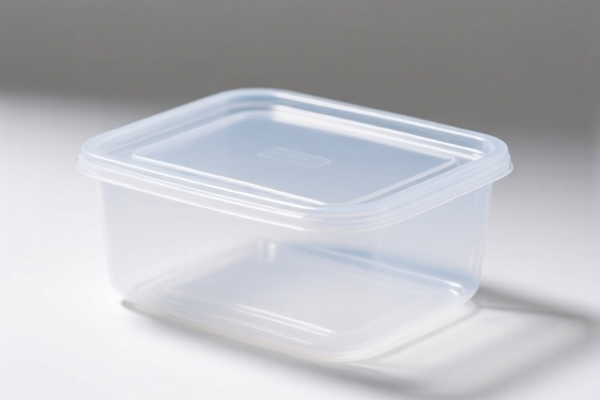

AI Analysis
🧴 Plastic Containers: The Ultimate 2026 Clearance Guide & Tax Deep Dive
🌐 HS Code Masterclass | US Market Entry 2026 | Total Tax Breakdown & Strategy
📌 一、Product Definition & Scope: What Exactly Are "Plastic Containers"?
Plastic containers are ubiquitous in global trade, serving as the primary vessel for packaging, transport, food service, and daily household use. In the US Customs and Border Protection (CBP) system, the intended use and specific shape dictate the classification and tax burden.
The Golden Rule of Classification: * Packaging/Transport Vessels (Jars, Bottles, Canisters) → Heading 3923 * Household/Service Ware (Cups, Cutlery, Tableware) → Heading 3924
⚠️ Critical Distinction:
- If it is a reservoir for transport/packaging (e.g., a sauce jar, a shipping bag), it falls under 3923.
- If it is for personal use at the table or kitchen (e.g., a reusable cup, a serving bowl), it falls under 3924.
- Misclassification = 3x Duty Penalties!
📦 二、HS Code Classification Matrix (2026 US Tariff Schedule)
Based on the latest 2026 tariff data, here is the precise breakdown for Plastic Containers:
| HS Code | Product Description & Application | Primary Use Case | Material Context |
|---|---|---|---|
| 3923.30.00.10 | Plastic containers for packaging or transporting (e.g., sauce jars, condiment bottles) | Industrial/Commercial Packaging | Rigid plastic, screw-top, squeeze bottles |
| 3923.30.00.90 | Plastic bottles and similar containers for packaging or transport | General Packaging Logistics | Bottles, canisters, drums, large bulk containers |
| 3923.21.00.30 | Plastic sacks and bags for packaging or transporting | Flexible Packaging | Grocery bags, shipping bags, bulk sacks |
| 3924.10.40.00 | Tableware, kitchen utensils & containers (domestic use) | Household/Restaurant Service | Food storage containers, mixing bowls, kitchen tools |
| 3924.10.20.00 | Plastic cups (subset of tableware) | Food/Drink Service | Reusable cups, travel mugs, disposable drinkware |
🔍 Strategic Insight:
- 3923 series is generally the "Logistics" category. Even if you buy a "food jar," if it's sold as a bulk package for shipping, it's 3923.
- 3924 series is the "Tabletop" category. A "plastic bowl" is 3924 only if intended for serving food, not for shipping ingredients.
💰 三、2026 US Tariff Rate Breakdown (China Origin)
✅ Target Market: United States (US)
✅ Origin: China (CN)
✅ Regime: Section 301 (Add'l Tariff) + Section 122 (Reciprocal) + Base Duty
🎯 1. High-Tax Category: Packaging & Transport (3923 Series)
Applies to: 3923.30.00.10, 3923.30.00.90, 3923.21.00.30
| Tax Component | Rate | Legal Source & Logic |
|---|---|---|
| Base Duty | 3.0% | Standard Most-Favored-Nation (MFN) rate for plastics. |
| Section 301 Add'l | 25.0% | "Additional Duties; China's Unfair Trade Practices" (List 4A). |
| Section 122 Add'l | 10.0% | "Section 122; Retaliatory Tariffs against US Goods" (Effective for specific HS codes). |
| 🔥 TOTAL TAX | 38.0% | 3% + 25% + 10% |
| De Minimis Exemption | ❌ NO | Not eligible for $800 threshold exemption under current rules for these codes. |
📌 Explanation:
This 38% total tax is a "Double Jeopardy" scenario. You pay the standard 301 penalty (25%) PLUS the Section 122 retaliation tariff (10%) PLUS the base duty.
Impact: A $10,000 shipment of plastic jars/bags incurs $3,800 in taxes. This is a massive cost for low-margin packaging goods.
🎯 2. Mid-High Tax Category: Tableware (3924 Series)
Applies to: 3924.10.40.00 & 3924.10.20.00
A. 3924.10.40.00 (Kitchen Utensils & Containers)
| Tax Component | Rate | Logic |
|---|---|---|
| Base Duty | 3.4% | MFN rate for tableware. |
| Section 301 Add'l | 0.0% | Exempt from Section 301 (List 4A does not cover general kitchen utensils). |
| Section 122 Add'l | 10.0% | Applicable under Section 122. |
| 🔥 TOTAL TAX | 13.4% | 3.4% + 0% + 10% |
| De Minimis | ❌ NO | Not eligible. |
B. 3924.10.20.00 (Plastic Cups)
| Tax Component | Rate | Logic |
|---|---|---|
| Base Duty | 6.5% | Higher base rate for specific cup types. |
| Section 301 Add'l | 7.5% | Applicable (Specific list for cups/cutlery). |
| Section 122 Add'l | 10.0% | Applicable under Section 122. |
| 🔥 TOTAL TAX | 24.0% | 6.5% + 7.5% + 10% |
📌 Explanation:
- Kitchen Containers (3924.40.00): Surprisingly lower tax (13.4%) because they avoid the Section 301 25% hike.
- Plastic Cups (3924.20.00): Heavily targeted with 24% total tax due to a mix of Base + 301 + 122.
Strategy: If a product can be argued as a "Kitchen Container" (e.g., a large storage box for food prep) rather than a "Cup," the tax drops from 24% to 13.4%.
🛠️ 四、Customs Clearance Strategy & Action Plan
✅ 1. Documentation Checklist (Mandatory)
| Document | Requirement | Why It Matters |
|---|---|---|
| Detailed Invoice | Must specify "Plastic Container," "Plastic Bottle," or "Plastic Cup" clearly | Prevents "Unknown Plastic" classification errors. |
| Product Function Proof | Photos of usage, marketing material, or user manual | Proves if it's for transport (3923) or consumption (3924). |
| Material Composition | % of recycled plastic, polymer type (PET, PP, HDPE) | Affects base duty rate verification. |
| Country of Origin | Must be "Made in China" (CN) | Triggers Section 301 and 122. |
| Structural Diagram | For bottles/jars: show closure type (screw cap, pump) | Crucial for 3923.30 vs. 3923.20 (bags) distinction. |
✅ 2. Smart Classification Strategy (The "Tax Gap" Optimization)
🔥 Rule of Thumb: "Is it for the Shelf or for the Table?"
| Scenario | Recommended HS Code | Tax Rate | Optimization Tip |
|---|---|---|---|
| Bottle for Sauce/Ketchup (Sold in bulk to retailers) | 3923.30.00.10 |
38.0% | Hard to avoid. Focus on volume discounts to offset tax. |
| Plastic Tupperware/Storage Box (For kitchen use) | 3924.10.40.00 |
13.4% | Win! Avoid "Container" wording; use "Storage Container for Kitchen Use." |
| Reusable Coffee Cup | 3924.10.20.00 |
24.0% | If it's a "travel mug" with insulation, argue for different classification if possible. |
| Shipping Bags (Bulk) | 3923.21.00.30 |
38.0% | Consider sourcing from non-Chinese countries for de minimis benefits. |
✅ 3. Special Handling for Section 122 & 301
- Section 301 (25%): This is the big one for 3923.30 and 3924.10.20. It is non-negotiable unless you have an exclusion (rare for plastics).
- Section 122 (10%): This is the "retaliatory" tariff. It applies to ALL 5 HS codes listed above.
- De Minimis ($800 Rule): Beware! While many small shipments enjoy duty-free entry via Section 321, Section 301 and Section 122 tariffs are often NOT waived for these specific categories. You must assume taxes apply even for small e-commerce parcels.
🌍 五、Market Comparison & Risk Warning (2026)
| Region | Tax Burden | Risk Level | Key Advice |
|---|---|---|---|
| 🇺🇸 USA | 13.4% – 38.0% | 🔴 HIGH | Strict enforcement on "Packaging" vs. "Tableware". |
| 🇪🇺 EU | ~6% (No 301) | 🟢 LOW | No Section 301/122. Focus on EPR (Eco-tax) instead. |
| 🇨🇳 China | ~10-14% | 🟡 MEDIUM | Export duty applies, but not Section 301. |
| 🇲🇽 Mexico | 0-5% (via USMCA) | 🟢 LOW | Best Alternative: Manufacture containers in Mexico to enter US duty-free. |
🚨 Critical Warning:
Do NOT try to under-declare the value or mislabel "Plastic Cups" as "Plastic Containers" to save tax. CBP's automated systems flag these discrepancies immediately. The penalty can exceed 200% of the tax evaded.
📌 六、Pro Tips for 2026 Shippers
- Pre-Classification Ruling: Always apply for a Binding Tariff Information (BTI) or CBP Ruling before shipping if the product has dual-use potential (e.g., a container that can be used for both shipping and kitchen storage).
- Supplier Negotiation: If you are importing 3923 items (38% tax), ask suppliers to lower their FOB price by 15-20% to share the tax burden.
- Supply Chain Shift: For high-volume packaging, consider shifting assembly to Mexico or Vietnam. If the "substantial transformation" happens outside China, you might avoid Section 301/122 entirely.
- Marketing Language: In your packaging and invoices, use "Kitchen Storage" (3924) language for products that are borderline, but never misrepresent the primary function.
🎯 七、Conclusion: Master the Tax, Not the Panic
🎯 The Bottom Line:
- Packaging (3923) = 38% Tax (The "Heavy Hitter")
- Kitchenware (3924.40) = 13.4% Tax (The "Sweet Spot")
- Cups (3924.20) = 24.0% Tax (The "Middle Ground")
🚀 Final Advice:
Know your HS Code. A single digit change in the description can save you 24% in taxes.
Verify your Origin. China origin = 38% or 24%.
Plan Ahead. Do not wait until the ship arrives to check the tax rate.
✨ Professional Clearance Starts with Precision!
💼 Your profit margin depends on these 3 numbers: 3, 10, 25.
📞 Contact your customs broker today for a pre-clearance audit!
Customer Reviews
About HS Code Classification
The Harmonized System (HS) is an internationally standardized nomenclature developed by the World Customs Organization (WCO) to classify traded products. Over 200 countries use the HS system as the basis for customs tariffs, trade statistics, and import/export regulations.
Each HS code follows a hierarchical structure:
- Chapter (2 digits) — Broad category of goods (e.g., Chapter 84: Machinery and Mechanical Appliances)
- Heading (4 digits) — More specific grouping within the chapter
- Subheading (6 digits) — Internationally standardized breakdown, used by all WCO member countries
- National subdivisions (8-10 digits) — Country-specific extensions for further classification, such as US HTSUS 10-digit codes
Correct HS code classification is essential for smooth customs clearance, accurate duty payment, and compliance with trade regulations. Misclassification can lead to customs delays, overpayment of duties, or penalties.
When importing from CN to US, the applicable tariff rates may include:
- Most-Favored-Nation (MFN) rate — The standard duty rate applied to WTO members
- General rate — Applied to countries without trade agreements
- Trade remedy duties — Additional tariffs such as Section 301 (anti-dumping), Section 232 (national security), or countervailing duties
The information provided on this page is for reference purposes only. For official classification, please consult with your local customs authority or a licensed customs broker.