plastic cores for packaging
CN → US| HS Code | Tariff Rate | Origin | Destination | Doc |
|---|---|---|---|---|
| 3926909989 | 22.8% | CN | US | Official Doc |
| 7310210075 | 85.0% | CN | US | Official Doc |
| 7612100000 | 37.4% | CN | US | Official Doc |
| 3923300090 | 38.0% | CN | US | Official Doc |
| 7310290065 | 85.0% | CN | US | Official Doc |
| 3923900080 | 38.0% | CN | US | Official Doc |
Product Images

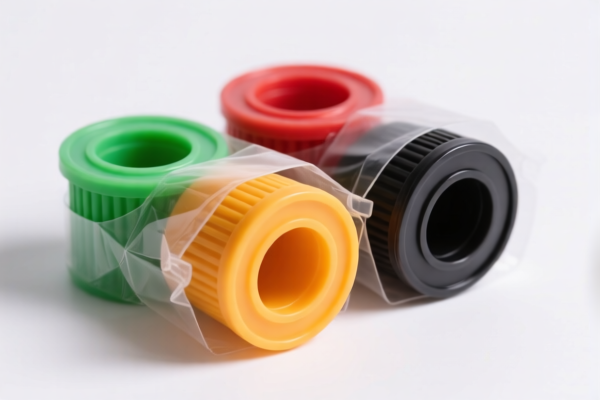
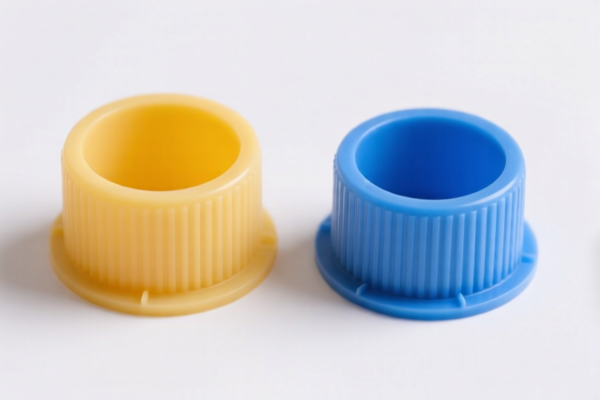
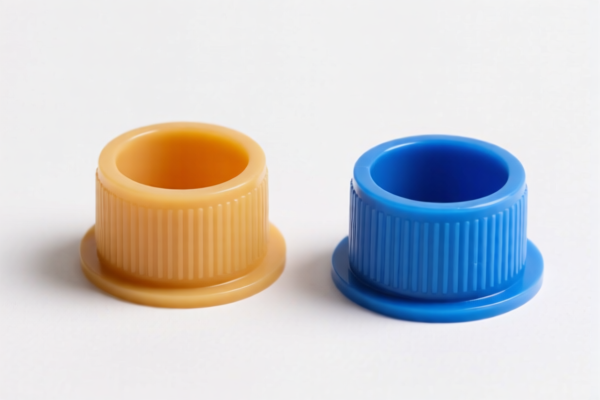
AI Analysis
🧵 Plastic Cores for Packaging
🌐 HS Code Reference & Customs Clearance Guide | 2026 Latest Tariff Analysis | Professional Clearance Strategy
📌 1. Product Definition & Classification: What are "Plastic Cores for Packaging"?
Plastic Cores (also known as Spools, Reels, or Mandrels) are cylindrical components used to wind, support, and transport flexible packaging materials such as films, foils, textiles, paper, or adhesive tapes. In international trade, they are typically classified based on their material (Plastic vs. Metal) and function (Packaging vs. Container).
⚠️ Key Distinction Points:
- Material: If the core is made of plastic, it falls under Chapter 39. If it is steel/iron or aluminum, it falls under Chapter 73 or 76.
- Function: If used strictly as a "packaging component" (part of the supply chain for other goods), it may fall under plastic articles (3926) or plastic packaging (3923). If defined as a "container" (holding substance), it may be classified as metal containers (7310/7612).
- Capacity: For metal cores, capacity (<50L) is a critical classifier.
📦 2. HS Code Classification Details (2026 Latest Tariff Authority Comparison)
Based on the provided data, here are the potential HS Codes depending on the exact material and inferred form:
| HS Code | Product Description | Material Inference | Capacity/Form | Notes |
|---|---|---|---|---|
3926.90.99.89 |
Other plastic articles | Plastic | Plastic Articles | General category for plastic制品 |
7310.21.00.75 |
Other containers of iron/steel | Iron/Steel | Metal Container | High tariff due to steel/aluminum/copper surcharge |
7612.10.00.00 |
Other containers of aluminum | Aluminum | Cylindrical Container | Matches tubular form, inferred metal material |
3923.30.00.90 |
Other packing accessories | Plastic | Packaging Supplies | Infer packaging use, generic "catch-all" |
7310.29.00.65 |
Other iron/steel containers (<50L) | Iron/Steel | <50 Liters | Specific capacity range for metal containers |
3923.90.00.80 |
Other plastic packaging articles | Plastic | Packaging Articles | Matches plastic packaging description |
🔍 Critical Note:
- Plastic Cores: Best classified under 3926.90.99.89 (Other plastic articles) or 3923.90.00.80 (Plastic packaging).
- Metal Cores: High-risk classification due to Section 301 / IEEPA surcharges. Steel (7310) and Aluminum (7612) incur massive additional tariffs.
💰 3. 2026 Latest Tariff Rate Breakdown (Including Surcharges & Policy Add-ons)
✅ Applicable Country: USA (US)
✅ Origin: China (CN)
✅ Effective Date: From November 10, 2025 (including subsequent imports)
🎯 1. 3926.90.99.89 — Plastic Other Articles (Plastic Core)
| Item | Content |
|---|---|
| Base Duty | 5.3% |
| Section 301 Surcharge | 7.5% |
| Section 122 Tariff | 10% |
| Total Duty Rate | 22.8% |
| Tax Calculation | CIF Value × 22.8% |
| De Minimis Eligibility | ❌ Not Eligible (denied_de_minimis) |
| Legal Basis Path | Base: 5.3% → Section 301: 7.5% → 122 Clause: 10% |
📌 Explanation:
- This is the most cost-effective option for plastic cores.
- The 122 Clause (often related to specific enforcement actions) adds 10%.
- Total 22.8% is moderate compared to metal counterparts.
🎯 2. 3923.30.00.90 — Other Packing Accessories (Plastic Packaging)
| Item | Content |
|---|---|
| Base Duty | 3.0% |
| Section 301 Surcharge | 25.0% |
| Section 122 Tariff | 10% |
| Total Duty Rate | 38.0% |
| Tax Calculation | CIF Value × 38.0% |
| De Minimis Eligibility | ❌ Not Eligible |
| Legal Basis Path | Base: 3.0% → Section 301: 25% → 122 Clause: 10% |
📌 Note:
- Although base duty is lower (3%), the Section 301 surcharge is 25% (higher than 7.5% for general plastic articles).
- Use this only if specifically defined as "packing accessory" rather than "article."
🎯 3. 3923.90.00.80 — Other Plastic Packaging Articles
| Item | Content |
|---|---|
| Base Duty | 3.0% |
| Section 301 Surcharge | 25.0% |
| Section 122 Tariff | 10% |
| Total Duty Rate | 38.0% |
| Tax Calculation | CIF Value × 38.0% |
| De Minimis Eligibility | ❌ Not Eligible |
| Legal Basis Path | Base: 3.0% → Section 301: 25% → 122 Clause: 10% |
📌 Note:
- Same tax structure as3923.30.00.90.
- Choose between 3926 and 3923 based on specific customs precedent for your core type.
🎯 4. 7612.10.00.00 — Aluminum Containers (Tubular)
| Item | Content |
|---|---|
| Base Duty | 2.4% |
| Section 301 Surcharge | 25.0% |
| Section 122 Tariff | 10% |
| Total Duty Rate | 37.4% |
| Tax Calculation | CIF Value × 37.4% |
| De Minimis Eligibility | ❌ Not Eligible |
| Legal Basis Path | Base: 2.4% → Section 301: 25% → 122 Clause: 10% |
📌 Explanation:
- Matches the tubular form of the core.
- If made of Aluminum, the "Steel, Aluminum, Copper Products Surcharge" applies.
- 37.4% is still high due to the 25% surcharge.
🎯 5. 7310.21.00.75 — Iron/Steel Containers
| Item | Content |
|---|---|
| Base Duty | 0.0% |
| Section 301 Surcharge | 25.0% |
| Section 122 Tariff | 10% |
| Steel/Aluminum/Copper Surcharge | 50% |
| Total Duty Rate | 85.0% |
| Tax Calculation | CIF Value × 85.0% |
| De Minimis Eligibility | ❌ Not Eligible |
| Legal Basis Path | Base: 0.0% → Section 301: 25% → 122 Clause: 10% → Steel/Al/Cu Surcharge: 50% |
📌 Critical Warning:
- 85.0% is an extremely high tariff.
- The 50% surcharge for steel/aluminum/copper products drastically increases costs.
- Avoid this classification if your core is plastic.
🎯 6. 7310.29.00.65 — Iron/Steel Containers (<50L)
| Item | Content |
|---|---|
| Base Duty | 0.0% |
| Section 301 Surcharge | 25.0% |
| Section 122 Tariff | 10% |
| Steel/Aluminum/Copper Surcharge | 50% |
| Total Duty Rate | 85.0% |
| Tax Calculation | CIF Value × 85.0% |
| De Minimis Eligibility | ❌ Not Eligible |
| Legal Basis Path | Base: 0.0% → Section 301: 25% → 122 Clause: 10% → Steel/Al/Cu Surcharge: 50% |
📌 Note:
- Applies if the metal core is inferred to have a capacity < 50 Liters.
- Same 85.0% catastrophic tax rate as above.
🛠️ 4. Customs Clearance Practical Advice (Battle-Tested Pitfall Guide)
✅ 1. Required Documentation Checklist
| Document | Mandatory | Explanation |
|---|---|---|
| ✅ Product Specification Sheet | ✔️ | Must clearly state Material (e.g., "Polypropylene") and Function ("Core for winding film"). |
| ✅ Product Photos (with label) | ✔️ | Show the cylindrical shape, but avoid images that look like "containers" holding liquid. |
| ✅ Commercial Invoice | ✔️ | Describe as "Plastic Core for Packaging" or "Plastic Spool," NOT "Metal Container." |
| ✅ Declaration of Material | ✔️ | Explicitly declare "100% Plastic" to avoid metal surcharges. |
✅ 2. Declaration Tips (Key Mantra)
🔥 "Plastic Cores, Avoid Metal, 22.8% is the Target!"
| Scenario | Correct Declaration | Wrong Approach |
|---|---|---|
| Plastic Core | 3926.90.99.89 |
Misdeclare as Metal Container → 85% |
| Plastic Core | 3923.90.00.80 |
If deemed packaging accessory |
| Metal Core (Steel) | 7310.29.00.65 |
High Risk → 85% Tax |
| Metal Core (Aluminum) | 7612.10.00.00 |
High Risk → 37.4% Tax |
📌 Advice:
- Emphasize "Plastic" in all documentation.
- Avoid terms like "Container" if possible; use "Core," "Spool," "Reel," or "Mandrel."
- If the core is metal, consider if it can be redesigned to use plastic to save ~47-62% in taxes.
✅ 3. Special Case Handling
| Scenario | Handling Advice |
|---|---|
| Mixed Material | If core is plastic but has metal pins, declare as Plastic (3926) if plastic is primary value/form. |
| Used Cores | May face additional scrutiny; ensure they are clean and new or clearly used. |
| OEM Custom Cores | Provide design drawings to prove non-container status. |
🌍 5. Global Market Clearance Comparison (2026 Latest)
| Country/Region | Recommended HS Code | Tariff (China Origin) | Certification | Notes |
|---|---|---|---|---|
| 🇺🇸 USA | 3926.90.99.89 |
22.8% | None Specific | Lowest cost among options |
| 🇺🇸 USA | 7310.29.00.65 |
85.0% | None | Avoid if possible |
| 🇨🇳 China | 3926.90.99.89 |
5% | CCC (if applicable) | No surcharges |
| 🇪🇺 EU | 3926.90.99.89 |
0% | CE (if applicable) | No surcharges |
| 🇦🇺 Australia | 3926.90.99.89 |
5% | RCM | No surcharges |
📌 Conclusion:
- USA imposes heavy surcharges on metal goods.
- Plastic cores (3926) are the safest and most cost-effective for US clearance.
- Metal cores incur 85% tax, making them economically unviable for most packaging applications.
📌 6. Common Mistakes & Pitfall Guide (Blood-Teaching Lessons)
❌ Mistake 1: Declaring Plastic Cores as "Metal Containers"
👉 Consequence: Tax jumps from 22.8% to 85%.
❌ Mistake 2: Using "Container" in the product name for Plastic Cores
👉 Consequence: Customs may infer "metal" due to ambiguity, leading to audits and penalties.
❌ Mistake 3: Failing to specify Material in Invoice
👉 Consequence: Customs may default to higher duty rates or request additional proof.
❌ Mistake 4: Assuming all "Cylindrical Objects" are the same
👉 Consequence: Misclassification leads to 22.8% vs 85% difference.
✅ Correct Practice:
"Plastic Core for Packaging, 100% Polypropylene, Non-Container, Model XYZ, For Winding Film"
🎯 7. Conclusion: Professional Declaration, Save Money, Save Time!
🎯 Remember the Mantra:
🔹 "Plastic Cores, HS 3926, 22.8% Tax Target!"
🔹 "Metal Cores, 85% Tax Disaster, Avoid at All Costs!"
🔹 "HS Code Determines Life, Tax Difference is Huge, Declaration Step Matters!"
📌 Tip:
If your cores are originating from Vietnam, Mexico, Thailand, Malaysia, you may apply for IEEPA Exemptions, reducing taxes to 0%~5%.
Recommend Apply for Advance Ruling (Pre-classification) to avoid clearance risks.
📣 Immediate Action:
📞 Contact Professional Customs Broker + Provide Product Photos + Apply for HS Code Advance Ruling
🚀 Let your cores Clear Customs Smoothly, Export Efficiently, Maximize Profit!
✨ Professional Clearance Starts with Accurate Classification!
💼 Every Penny of Your Cost Deserves Precise Calculation!
Customer Reviews
About HS Code Classification
The Harmonized System (HS) is an internationally standardized nomenclature developed by the World Customs Organization (WCO) to classify traded products. Over 200 countries use the HS system as the basis for customs tariffs, trade statistics, and import/export regulations.
Each HS code follows a hierarchical structure:
- Chapter (2 digits) — Broad category of goods (e.g., Chapter 84: Machinery and Mechanical Appliances)
- Heading (4 digits) — More specific grouping within the chapter
- Subheading (6 digits) — Internationally standardized breakdown, used by all WCO member countries
- National subdivisions (8-10 digits) — Country-specific extensions for further classification, such as US HTSUS 10-digit codes
Correct HS code classification is essential for smooth customs clearance, accurate duty payment, and compliance with trade regulations. Misclassification can lead to customs delays, overpayment of duties, or penalties.
When importing from CN to US, the applicable tariff rates may include:
- Most-Favored-Nation (MFN) rate — The standard duty rate applied to WTO members
- General rate — Applied to countries without trade agreements
- Trade remedy duties — Additional tariffs such as Section 301 (anti-dumping), Section 232 (national security), or countervailing duties
The information provided on this page is for reference purposes only. For official classification, please consult with your local customs authority or a licensed customs broker.