plastic crosslinking agent
CN → US| HS Code | Tariff Rate | Origin | Destination | Doc |
|---|---|---|---|---|
| 2942003500 | 41.5% | CN | US | Official Doc |
| 3824994900 | 41.5% | CN | US | Official Doc |
| 3907290000 | 41.5% | CN | US | Official Doc |
| 2942005000 | 38.7% | CN | US | Official Doc |
| 3824992900 | 41.5% | CN | US | Official Doc |
Product Images
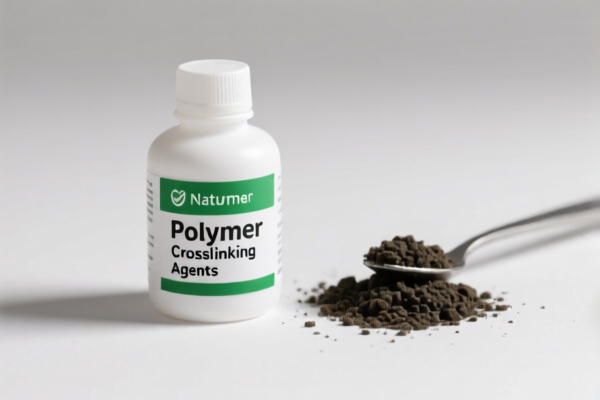
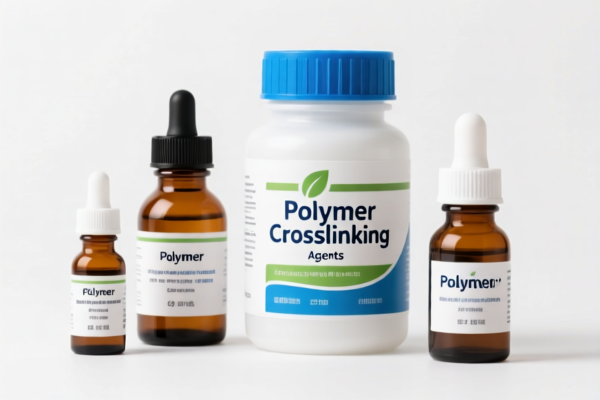
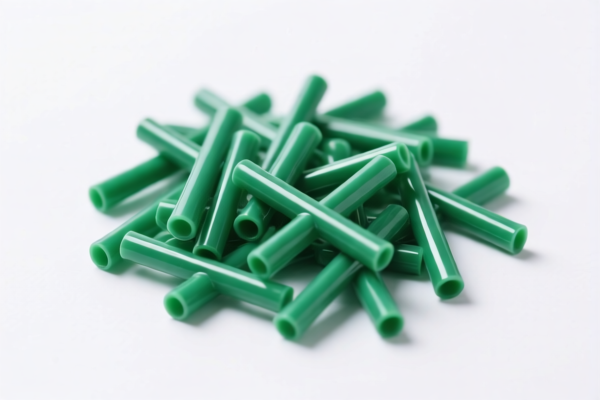

AI Analysis
🧪 Plastic Crosslinking Agent (Plastic Crosslinker)
🌐 HS Code Reference & Customs Clearance Guide | 2026 Latest Tariff Analysis | Professional-Level Strategy
📌 1. Product Definition & Classification: Do You Really Understand "Plastic Crosslinking Agents"?
A Plastic Crosslinking Agent is a chemical additive used in the polymer industry to create covalent bonds between polymer chains. This process, known as crosslinking or vulcanization, transforms thermoplastics into more durable, heat-resistant, and chemically stable thermosets or improves the properties of existing plastics (e.g., PE-RT pipes, cross-linked polyethylene).
In international trade, these agents are classified based on their chemical nature (organic compounds) vs. their function (chemical preparations/modified products). There is no single "crosslinking" code; you must choose the best fit based on the specific chemical composition.
⚠️ Key Classification Point:
- If the agent is a pure organic chemical (e.g., a specific ester, ether, or small molecule) → Use Chapter 29 (2942.00).
- If the agent is a prepared mixture, formulation, or modified chemical product → Use Chapter 38 (3824.99).
- If it is chemically similar to resins or polyethers but used as an additive → Use Chapter 39 (3907.29).
📦 2. HS Code Classification Details (2026 Latest Tariff Authority Comparison)
| HS Code | Product Description | Application Scenario | Basis for Classification |
|---|---|---|---|
2942.00.35.00 |
Other Organic Compounds | Pure organic crosslinkers (e.g., silanes, organic peroxides not in mixture) | Inferred from "organic compound" nature; no material conflict. |
3824.99.49.00 |
Other Prepared Chemicals & Preparations | Formulated crosslinking agents, mixtures, or industrial chemical preparations | Fits "chemical industry related products"; inferred hydrocarbon/organic origin. |
3907.29.00.00 |
Other Polyethers & Epoxy Resins | Crosslinkers with polymer/resin-like properties or ether structures | Inferred from "polymer/resin" category; fits organic polymer attributes. |
2942.00.50.00 |
Other Organic Compounds (Ethers/Esters) | Specific organic compounds like esters or ethers used as crosslinkers | Confirmed "organic compound" nature (ester/ether); no morphological conflict. |
3824.99.29.00 |
Other Prepared Chemicals (Non-Aromatic) | Modified chemical mixtures, non-aromatic crosslinking preparations | Fits "chemical preparations"; plastic material does not conflict with chemical mixture attributes. |
🔍 Critical Reminder:
- Pure Chemicals go to Chapter 29 (2942.00).
- Mixtures/Formulations go to Chapter 38 (3824.99).
- Resin-like Additives may fall under Chapter 39 (3907.29).
- Misclassification between "pure chemical" and "prepared mixture" is the #1 cause of customs delays.
💰 3. 2026 Latest Tariff Rate Breakdown (Including Surcharges & Policy Add-ons)
✅ Applicable Country: United States (US)
✅ Country of Origin: China (CN)
✅ Effective Date: From November 10, 2025 (and subsequent imports)
🎯 1. 2942.00.35.00 — Other Organic Compounds
| Item | Details |
|---|---|
| Base Tariff | 6.5% |
| USITC Add-on Tariff | +25.0% (Section 301) |
| IEEPA Add-on Tariff | +10.0% (China-specific, effective Nov 10, 2025) |
| Total Tax Rate | 41.5% |
| Tax Calculation | CIF Value × 41.5% |
| De Minimis Exemption | ❌ Not Allowed (deny_de_minimis) |
| Legal Basis Path | Base: 6.5% → USITC: 25% → IEEPA: 10% |
📌 Explanation:
- This code treats the agent as a pure organic compound.
- The total burden is high (41.5%) due to combined Section 301 and IEEPA tariffs.
- No de minimis (de minimis is denied for this category).
🎯 2. 3824.99.49.00 — Other Prepared Chemicals
| Item | Details |
|---|---|
| Base Tariff | 6.5% |
| USITC Add-on Tariff | +25.0% |
| IEEPA Add-on Tariff | +10.0% |
| Total Tax Rate | 41.5% |
| Tax Calculation | CIF Value × 41.5% |
| De Minimis Exemption | ❌ Not Allowed |
| Legal Basis Path | Base: 6.5% → USITC: 25% → IEEPA: 10% |
📌 Explanation:
- This code treats the agent as a prepared chemical mixture.
- Same high tariff burden as pure chemicals.
- Suitable if the product is a formulated blend rather than a single pure substance.
🎯 3. 3907.29.00.00 — Other Polyethers / Epoxy Resins
| Item | Details |
|---|---|
| Base Tariff | 6.5% |
| USITC Add-on Tariff | +25.0% |
| IEEPA Add-on Tariff | +10.0% |
| Total Tax Rate | 41.5% |
| Tax Calculation | CIF Value × 41.5% |
| De Minimis Exemption | ❌ Not Allowed |
| Legal Basis Path | Base: 6.5% → USITC: 25% → IEEPA: 10% |
📌 Explanation:
- This code is used if the crosslinker has polymer/resin-like characteristics (e.g., polyethers).
- Despite being in Chapter 39 (Plastics), it still attracts full USITC and IEEPA surcharges.
🎯 4. 2942.00.50.00 — Other Organic Compounds (Ethers/Esters)
| Item | Details |
|---|---|
| Base Tariff | 3.7% |
| USITC Add-on Tariff | +25.0% |
| IEEPA Add-on Tariff | +10.0% |
| Total Tax Rate | 38.7% |
| Tax Calculation | CIF Value × 38.7% |
| De Minimis Exemption | ❌ Not Allowed |
| Legal Basis Path | Base: 3.7% → USITC: 25% → IEEPA: 10% |
📌 Explanation:
- Cost-Saving Opportunity: If your crosslinker is chemically an ester or ether, this code offers a lower base rate (3.7% vs 6.5%).
- Total rate is 38.7%, saving 2.8% compared to other codes.
- Only applicable if the chemical structure clearly fits "esters/ethers."
🎯 5. 3824.99.29.00 — Other Prepared Chemicals (Non-Aromatic)
| Item | Details |
|---|---|
| Base Tariff | 6.5% |
| USITC Add-on Tariff | +25.0% |
| IEEPA Add-on Tariff | +10.0% |
| Total Tax Rate | 41.5% |
| Tax Calculation | CIF Value × 41.5% |
| De Minimis Exemption | ❌ Not Allowed |
| Legal Basis Path | Base: 6.5% → USITC: 25% → IEEPA: 10% |
📌 Explanation:
- Suitable for non-aromatic chemical mixtures.
- No tax advantage over other Chapter 38 codes.
🛠️ 4. Customs Clearance Practical Advice (Real-World Pitfall Guide)
✅ 1. Documentation Checklist (Essential)
| Document | Required? | Notes |
|---|---|---|
| ✅ MSDS (Material Safety Data Sheet) | ✔️ Mandatory | Must clearly list chemical composition and CAS numbers. |
| ✅ Technical Data Sheet (TDS) | ✔️ Recommended | Explains function (crosslinking agent) and chemical class. |
| ✅ Certificate of Composition | ✔️ Highly Recommended | Proves whether it is a pure chemical (Ch 29) or mixture (Ch 38). |
| ✅ Commercial Invoice | ✔️ Mandatory | Accurately describe as "Plastic Crosslinking Agent" + Chemical Class (e.g., "Silane Crosslinker"). |
| ✅ Packaging List | ✔️ Mandatory | Show net weight and gross weight for duty calculation. |
| ✅ Origin Certificate | ✔️ If applicable | To confirm CN origin and apply correct surcharges. |
✅ 2. Declaration Strategy (Key Mantra)
🔥 "Know Your Chemistry, Pick the Right Chapter! Pure=29, Mixture=38, Resin=39."
| Scenario | Correct HS Code | Risk of Wrong Classification |
|---|---|---|
| Pure Silane Crosslinker | 2942.00.35.00 |
Misdeclaring as mixture → Potential penalty for undervaluation/duty evasion. |
| Formulated Crosslinker Blend | 3824.99.49.00 |
Misdeclaring as pure chemical → Customs may demand more proof. |
| Ester-Based Crosslinker | 2942.00.50.00 |
Best for Cost Saving (38.7%) if chemically accurate. |
| Epoxy/Resin-like Additive | 3907.29.00.00 |
Misdeclaring → Chapter conflict, possible rejection. |
✅ 3. Special Situations
| Situation | Handling Advice |
|---|---|
| OEM/Private Label | Provide supplier’s technical specs to prove chemical nature. |
| Multi-Component Packaging | If crosslinker is sold with hardener (two-component system), declare as a set or separate components. Do not split arbitrarily. |
| Uncertain Chemical Nature | Apply for Advance Ruling (Pre-Ruling) from CBP before shipment. |
| High-Value Shipment | Consider Bonded Warehouse entry if delay is possible, to defer duty payment. |
🌍 5. Global Market Comparison (2026 Latest)
| Country/Region | Recommended HS Code | Tariff (China Origin) | Certification | Notes |
|---|---|---|---|---|
| 🇺🇸 USA | 2942.00.35.00 / 3824.99.49.00 |
41.5% (or 38.7%) | None specific | High duty burden; de minimis denied. |
| 🇨🇳 China | 2942.00.35.00 |
~5-6% | REACH-like compliance | Low import duty. |
| 🇪🇺 EU | 2942.00.00 / 3824.99 |
0-6.5% | REACH Registration | High regulatory compliance cost (REACH). |
| 🇬🇧 UK | 2942.00.00 |
0-6.5% | UK REACH | Post-Brexit regulations apply. |
| 🇯🇵 Japan | 2942.00.00 |
0-5% | PRTR Law | No US-style surcharges. |
📌 Conclusion:
- The USA is the most expensive market due to Section 301 + IEEPA surcharges.
- Japan/EU have lower tariffs but stricter chemical registration (REACH/PRTR).
- No market allows de minimis exemption for these chemical goods from China.
📌 6. Common Mistakes & Pitfalls (Lessons Learned)
❌ Mistake 1: Declaring a mixture as a pure chemical (2942.00)
👉 Consequence: Customs may reject the declaration if MSDS shows multiple ingredients, leading to delays.
❌ Mistake 2: Using vague descriptions like "Plastic Additive"
👉 Consequence: Customs may assign a generic code with higher duty or require further investigation.
❌ Mistake 3: Ignoring the IEEPA 10% Surcharge (effective Nov 2025)
👉 Consequence: Underestimating landed cost by 10%, eroding profit margins.
❌ Mistake 4: Not distinguishing between Esters/Ethers (2942.00.50) vs Other Organics (2942.00.35)
👉 Consequence: Missing out on 2.8% savings if the product is chemically an ester/ether.
✅ Correct Practice:
"Plastic Crosslinking Agent, Silane-Based, Pure Organic Compound, CAS No. XXXXX-XX-X, for PE Pipe Manufacturing"
🎯 7. Conclusion: Professional Declaration, Cost Efficiency
🎯 Remember the Mantra:
🔹 "Pure Organic = Ch 29 (38.7%-41.5%)"
🔹 "Prepared Mix = Ch 38 (41.5%)"
🔹 "Resin-like = Ch 39 (41.5%)"
🔹 "All from China = 25% + 10% Surcharge!"
📌 Pro Tip:
If your crosslinker is chemically an ester or ether, use 2942.00.50.00 to achieve the lowest rate of 38.7%.
For all other organic chemicals or preparations, the rate is 41.5%.
Always provide the MSDS and Certificate of Composition to justify your HS Code choice.
📣 Immediate Action:
📞 Consult a customs broker with your MSDS
📄 Apply for CBP Pre-Ruling if unsure
🚀 Accurate declaration avoids delays, fines, and unexpected 41.5% tariffs!
✨ Professional clearance starts with precise classification!
💼 Every dollar of duty saved is profit gained!
Customer Reviews
About HS Code Classification
The Harmonized System (HS) is an internationally standardized nomenclature developed by the World Customs Organization (WCO) to classify traded products. Over 200 countries use the HS system as the basis for customs tariffs, trade statistics, and import/export regulations.
Each HS code follows a hierarchical structure:
- Chapter (2 digits) — Broad category of goods (e.g., Chapter 84: Machinery and Mechanical Appliances)
- Heading (4 digits) — More specific grouping within the chapter
- Subheading (6 digits) — Internationally standardized breakdown, used by all WCO member countries
- National subdivisions (8-10 digits) — Country-specific extensions for further classification, such as US HTSUS 10-digit codes
Correct HS code classification is essential for smooth customs clearance, accurate duty payment, and compliance with trade regulations. Misclassification can lead to customs delays, overpayment of duties, or penalties.
When importing from CN to US, the applicable tariff rates may include:
- Most-Favored-Nation (MFN) rate — The standard duty rate applied to WTO members
- General rate — Applied to countries without trade agreements
- Trade remedy duties — Additional tariffs such as Section 301 (anti-dumping), Section 232 (national security), or countervailing duties
The information provided on this page is for reference purposes only. For official classification, please consult with your local customs authority or a licensed customs broker.