plastic desktop bill holder
CN → US| HS Code | Tariff Rate | Origin | Destination | Doc |
|---|---|---|---|---|
| 3926100000 | 15.3% | CN | US | Official Doc |
| 3926909989 | 22.8% | CN | US | Official Doc |
| 4820300040 | 35.0% | CN | US | Official Doc |
| 4820300020 | 35.0% | CN | US | Official Doc |
| 3923900080 | 38.0% | CN | US | Official Doc |
| 3923500000 | 40.3% | CN | US | Official Doc |
Product Images
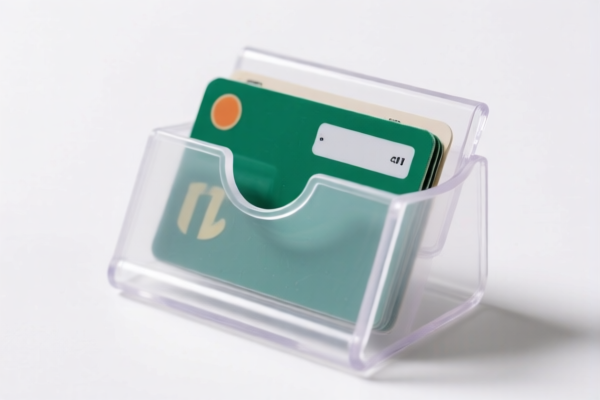
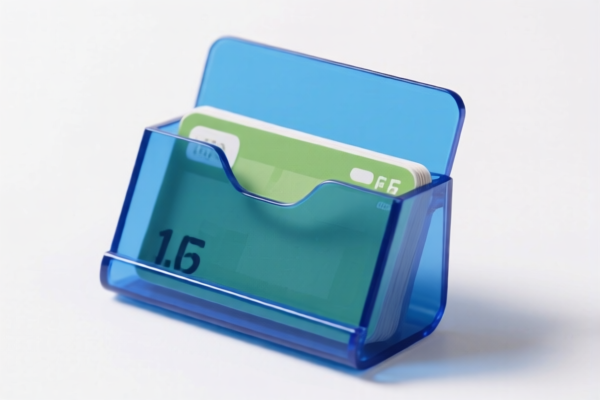

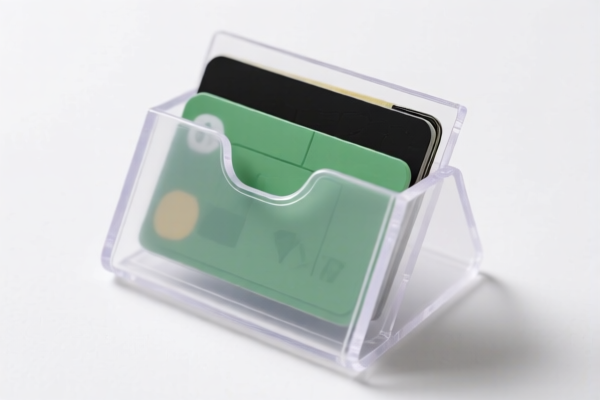
AI Analysis
📂 Plastic Desktop Bill Holder (Document Folders & Organizers)
🌐 HS Code Reference & Customs Clearance Guide | 2026 Latest Tariff Analysis | Professional Strategy for China-Origin Goods to the US
📌 I. Product Definition & Classification: What Exactly Is a "Plastic Bill Holder"?
A "Plastic Desktop Bill Holder" is a stationary item used to organize invoices, bills, receipts, or documents. In international trade, its classification depends heavily on material composition and structural design.
Key Distinctions: 1. Pure Plastic Holders: Made entirely or primarily of plastic (e.g., PP, PVC, Acrylic). These generally fall under Chapter 39. 2. Composite Holders: Have a plastic exterior but a paper/cardboard core. These often fall under Chapter 48 due to the "essential character" of the paper content.
⚠️ Critical Warning for US Imports from China:
Most plastic office supplies and document folders imported from China are subject to Section 301 Tariffs (Trade War Tariffs) and Section 1223 Tariffs (Trade Deficit Tariffs). The total tax burden can range from 15.3% to 40.3% depending on the specific HS Code. Misclassification can lead to severe penalties and retroactive duties.
📦 II. HS Code Classification Matrix (Based on Provided Data)
The following table maps the product "Plastic Desktop Bill Holder" to the specific HS Codes provided in the data, explaining why each applies.
| HS Code | Product Description (Summary) | Why This Code Applies? | Total Tax Rate |
|---|---|---|---|
3926.10.00.00 |
Plastic Materials: Office/School Supplies (Bill Holder) | Most Direct Fit. Specifically covers plastic items designed for office or school use, such as bill holders, folders, and binders. If the product is purely plastic and used as a standard office organizer, this is the primary classification. | 15.3% |
3926.90.99.89 |
Plastic Materials: Other Articles Not Specifically Provided For | Fallback for Non-Standard Designs. If the "bill holder" has a unique shape, industrial function, or doesn't strictly fit the "office/school" definition of 3926.10, it falls here as a "other plastic article." Note: This category attracts higher tariffs. | 22.8% |
4820.30.00.40 |
Plastic Exterior, Paper/Cardboard Composite: Folders & Covers | Composite Structure. Used if the item has a plastic outer layer but the core structure is paper or cardboard (e.g., a plastic-coated paper folder). The "essential character" is considered to be the paper content. | 35.0% |
4820.30.00.20 |
Plastic Exterior, Paper/Cardboard Core: Folders/Binders | Binder/Folder Specific Composite. Similar to above, but specifically for folders or ring binders where the plastic is merely a surface coating or binding material, and the primary function relies on the paper/cardboard structure. | 35.0% |
3923.90.00.80 |
Plastic Materials: Goods for Transportation/Packaging | Packaging Interpretation. If the "bill holder" is deemed a packaging material (e.g., a sleeve or pouch used solely for shipping/protecting documents during transport rather than long-term desk organization), it may be classified here. | 38.0% |
3923.50.00.00 |
Plastic Materials: Clips, Clamps, Pouches (Packaging) | Clamp/Clip Classification. If the item is primarily a plastic clip or clamp mechanism used to hold bills together, rather than a rigid folder, it may fall under this packaging-related heading. | 40.3% |
🔍 Analysis Summary:
- Lowest Tax:3926.10.00.00(15.3%) – Best for standard plastic office bill holders.
- Highest Tax:3923.50.00.00(40.3%) – Avoid unless the item is clearly a packaging clip.
- Risk Area: Composite items (Plastic + Paper) incur significantly higher duties (35%).
💰 III. Detailed Tariff Breakdown (US Market, China Origin)
✅ Applicable Region: United States (US)
✅ Origin: China (CN)
✅ Note: All rates below include Base Duty + Section 301 Tariff + Section 1223 Tariff.
🎯 1. 3926.10.00.00 – Plastic Office/Stationery Items
- Base Duty: 5.3%
- Section 301 Add-on: 0.0% (Note: Some subcategories may vary, but data shows 0%)
- Section 1223 Add-on: 10%
- Total Effective Rate: 15.3%
- De Minimis Eligibility: ❌ NO. Section 1223 tariffs explicitly deny de minimis exemptions (packages under $800). All shipments are subject to duty.
- Legal Basis:
Base Duty→USITC Section 301→Section 1223 (China Trade Deficit)
📌 Explanation: This is the most favorable classification for a standard plastic bill holder. However, be aware that Section 1223 eliminates the $800 de minimis exemption, meaning even small shipments will be taxed.
🎯 2. 3926.90.99.89 – Other Plastic Articles
- Base Duty: 5.3%
- Section 301 Add-on: 7.5%
- Section 1223 Add-on: 10%
- Total Effective Rate: 22.8%
- De Minimis Eligibility: ❌ NO
- Legal Basis:
Base Duty→USITC Section 301→Section 1223
📌 Explanation: This code is riskier due to the higher Section 301 add-on (7.5%). It is used when the product doesn't fit the specific "office/school" description of 3926.10.
🎯 3 & 4. 4820.30.00.40 & 4820.30.00.20 – Paper-Plastic Composites
- Base Duty: 0.0%
- Section 301 Add-on: 25.0%
- Section 1223 Add-on: 10%
- Total Effective Rate: 35.0%
- De Minimis Eligibility: ❌ NO
- Legal Basis:
Base Duty→USITC Section 301→Section 1223
📌 Explanation: Although the base duty is 0%, the Section 301 tariff is high (25%). If your bill holder has a plastic coating over paper, or a paper core with plastic binding, you will pay 35% total. This is significantly more expensive than the pure plastic option.
🎯 5. 3923.90.00.80 – Plastic Packaging/Goods
- Base Duty: 3.0%
- Section 301 Add-on: 25.0%
- Section 1223 Add-on: 10%
- Total Effective Rate: 38.0%
- De Minimis Eligibility: ❌ NO
- Legal Basis:
Base Duty→USITC Section 301→Section 1223
📌 Explanation: High tariff due to the 25% Section 301 add-on. Only use this if the item is strictly for transportation packaging, not desktop organization.
🎯 6. 3923.50.00.00 – Plastic Clips/Clamps
- Base Duty: 5.3%
- Section 301 Add-on: 25.0%
- Section 1223 Add-on: 10%
- Total Effective Rate: 40.3%
- De Minimis Eligibility: ❌ NO
- Legal Basis:
Base Duty→USITC Section 301→Section 1223
📌 Explanation: The highest tax rate in the list. This code is for packaging-related clips. Using this for a desk organizer will likely trigger a customs inquiry for misclassification.
🛠️ IV. Customs Clearance Recommendations (Practical Guide)
✅ 1. Material Verification (Crucial Step)
Before shipping, determine the exact material composition:
* 100% Plastic? → Aim for 3926.10.00.00 (15.3% tax).
* Tip: Ensure the product is marketed as "Plastic Bill Holder" or "Acrylic Document Organizer."
* Plastic + Paper? → Likely 4820.30.00 (35% tax).
* Tip: If possible, redesign to be 100% plastic to save 20% in duties.
* Plastic Clip Only? → Avoid 3923.50.00.00 unless it's a packaging sample.
✅ 2. Documentation Requirements
To clear customs smoothly, provide:
* Commercial Invoice: Clearly state "Plastic Office Supply: Bill Holder". Avoid vague terms like "Plastic Item."
* Product Photos: Show the product from all angles. Highlight that it is rigid and designed for desktop use.
* Material Declaration: Explicitly state "Material: 100% Plastic (PP/PVC)" if applicable.
* HS Code Pre-Ruling: For large volumes, request an Advance Ruling from US CBP to confirm the 15.3% rate for 3926.10.00.00.
✅ 3. Common Mistakes to Avoid
- ❌ Misclassifying as "Packaging": If you declare a desktop organizer as "Packaging" (
3923.50), you will pay 40.3% tax. Always declare based on end-use (Office Supply). - ❌ Ignoring Section 1223: Remember that no de minimis exemption applies. Even small samples will be taxed. Factor this into your pricing.
- ❌ Composite Confusion: Do not try to classify a paper-plastic folder as "Plastic" to get the lower rate. CBP inspectors may dismantle the item to check the core. If paper is found, they will reassess at 35%.
🌍 V. Global Market Comparison (Quick Reference)
| Country | Recommended HS Code | Est. Total Duty | Notes |
|---|---|---|---|
| 🇺🇸 USA | 3926.10.00.00 |
15.3% | High tariffs due to Section 301 & 1223. No de minimis. |
| 🇨🇳 China | 3926.10.00.00 |
~5-10% | Lower base duties. No Section 301. |
| 🇪🇺 EU | 3926.90.00 |
~6% | No Section 301/1223. Lower overall burden. |
| 🇨🇦 Canada | 3926.10.00 |
~5-10% | CUSMA benefits may apply if origin is NA. |
📌 Conclusion:
The US market is the most expensive for Chinese plastic office supplies due to layered tariffs.
Strategy: Optimize product design to be 100% plastic and classify under3926.10.00.00to minimize the 15.3% total duty. Avoid composite designs if possible.
📌 VI. Final Advice: Proactive Clearance Strategy
🎯 Key Takeaway:
"Plastic Office Use = 15.3% | Composite/Paper = 35%+ | Packaging = 40%+ | No De Minimis for USA!"
✅ Action Plan: 1. Design: Use 100% plastic materials. 2. Labeling: Clearly mark "Plastic Office Supply" on packaging. 3. Documentation: Include detailed material specs and photos. 4. Pricing: Build the 15.3% duty into your cost structure. Do not rely on de minimis exemptions.
📣 Immediate Action:
📞 Consult with a licensed customs broker to verify the exact physical properties of your bill holder.
🚀 Accurate Classification = Cost Savings = Competitive Advantage!
✨ Customs Clarity, Business Clarity!
💼 Every Percent Counts in International Trade!
Customer Reviews
About HS Code Classification
The Harmonized System (HS) is an internationally standardized nomenclature developed by the World Customs Organization (WCO) to classify traded products. Over 200 countries use the HS system as the basis for customs tariffs, trade statistics, and import/export regulations.
Each HS code follows a hierarchical structure:
- Chapter (2 digits) — Broad category of goods (e.g., Chapter 84: Machinery and Mechanical Appliances)
- Heading (4 digits) — More specific grouping within the chapter
- Subheading (6 digits) — Internationally standardized breakdown, used by all WCO member countries
- National subdivisions (8-10 digits) — Country-specific extensions for further classification, such as US HTSUS 10-digit codes
Correct HS code classification is essential for smooth customs clearance, accurate duty payment, and compliance with trade regulations. Misclassification can lead to customs delays, overpayment of duties, or penalties.
When importing from CN to US, the applicable tariff rates may include:
- Most-Favored-Nation (MFN) rate — The standard duty rate applied to WTO members
- General rate — Applied to countries without trade agreements
- Trade remedy duties — Additional tariffs such as Section 301 (anti-dumping), Section 232 (national security), or countervailing duties
The information provided on this page is for reference purposes only. For official classification, please consult with your local customs authority or a licensed customs broker.