plastic dining table decorations
CN → US| HS Code | Tariff Rate | Origin | Destination | Doc |
|---|---|---|---|---|
| 3924901050 | 13.3% | CN | US | Official Doc |
| 3924905650 | 20.9% | CN | US | Official Doc |
| 3926400010 | 15.3% | CN | US | Official Doc |
| 7117909000 | 28.5% | CN | US | Official Doc |
| 6802930090 | 38.7% | CN | US | Official Doc |
Product Images

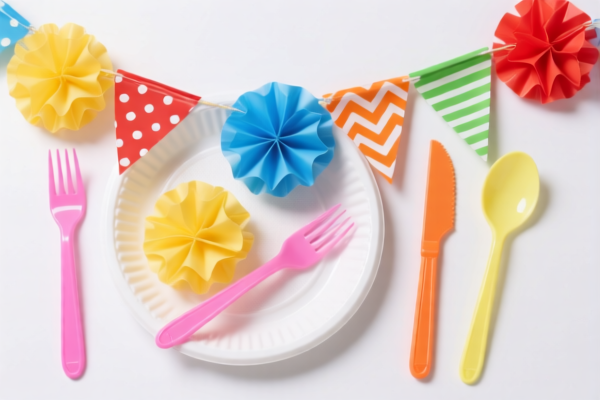
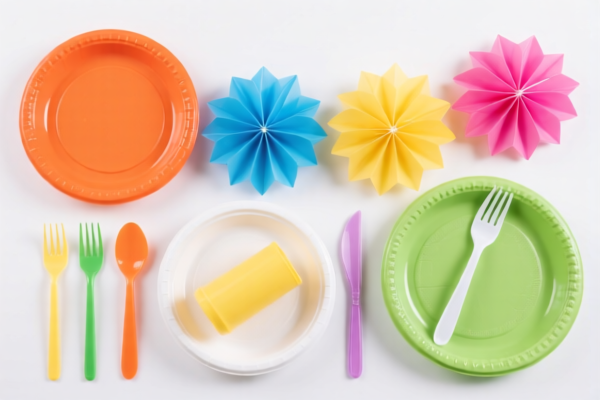

AI Analysis
🍽️ Plastic Dining Table Decorations
🌐 HS Code Reference & Clearance Guide | 2026 Latest Tariff Analysis | Strategic Compliance for US Imports
📌 I. Product Definition & Classification: What Are "Plastic Dining Table Decorations"?
Plastic dining table decorations encompass a wide range of aesthetic items used to enhance the visual appeal of dining tables. These items are primarily made of plastic materials and serve decorative purposes rather than functional ones (like eating or serving food). In international trade, the classification depends heavily on the material (plastic) and the specific use (table decoration vs. general household item vs. imitation jewelry).
⚠️ Key Distinction Points:
- If the item is a plastic ornament/figurine used purely for decoration → It may fall under Plastic Household Articles or Plastic Ornaments.
- If the item resembles jewelry (e.g., plastic beads, chains, earrings for table settings) → It may fall under Imitation Jewelry.
- If the item is stone-like but actually plastic or if the material is ambiguous but looks like stone (granite) → It may fall under Stone Articles.
📦 II. HS Code Classification Details (Based on Provided Data)
The following HS codes are derived from the provided data. Note that the total tax rates vary significantly based on the specific sub-category and additional tariffs (Section 301/122).
| HS Code | Product Description | Key Classification Logic | Total Tax Rate |
|---|---|---|---|
3924.90.10.50 |
Plastic Household Articles (Other) | Classified as plastic household items for table decoration. | 13.3% |
3924.90.56.50 |
Plastic Household Articles (Other) | Another subset of plastic household articles, likely with different structural details. | 20.9% |
3926.40.00.10 |
Plastic Ornaments & Accessories | Specifically classified as plastic decorative accessories/ornaments. | 15.3% |
7117.90.90.00 |
Imitation Jewelry (Other) | Classified as imitation jewelry/decorative items, not strictly household plastic goods. | 28.5% |
6802.93.00.90 |
Worked Stone Articles (Granite) | Classified as stone/granite decorations, possibly due to appearance or ambiguity in material reporting. | 38.7% |
🔍 Critical Note:
- The highest tax rate (38.7%) applies to6802.93.00.90, which classifies the item as worked stone (granite). This is risky if the item is actually plastic, as misclassification can lead to penalties.
- The lowest tax rate (13.3%) applies to3924.90.10.50, assuming it is clearly identified as a plastic household article.
💰 III. 2026 Latest Tariff Rate Breakdown (Including Surcharges & Policy Add-ons)
✅ Applicable Country: United States (US)
✅ Origin: China (CN)
✅ Effective Time: Post-2025 (Based on 122 Clauses and Additional Tariffs)
🎯 1. 3924.90.10.50 —— Plastic Household Articles (Most Favorable)
| Item | Details |
|---|---|
| Base Tariff | 3.3% |
| Additional Tariff (Section 301) | 0.0% |
| Section 122 Tariff | 10.0% |
| Total Tax Rate | 13.3% |
| Tax Calculation | CIF Value × 13.3% |
| De Minimis Exemption | ❌ Not Applicable (Subject to high tariffs) |
| Legal Path | Base Tariff → Section 122: 10% |
📌 Explanation:
- This is the lowest tax option among the plastic categories.
- The 10% Section 122 tariff is added on top of the base rate.
- No additional Section 301 tariff (0%) makes this code highly competitive.
🎯 2. 3924.90.56.50 —— Plastic Household Articles (Higher Cost)
| Item | Details |
|---|---|
| Base Tariff | 3.4% |
| Additional Tariff (Section 301) | 7.5% |
| Section 122 Tariff | 10.0% |
| Total Tax Rate | 20.9% |
| Tax Calculation | CIF Value × 20.9% |
| De Minimis Exemption | ❌ Not Applicable |
| Legal Path | Base Tariff → Section 301: 7.5% → Section 122: 10% |
📌 Note:
- Slightly higher base tariff (3.4% vs 3.3%) and an additional 7.5% Section 301 tariff make this code more expensive.
- Ensure your product description clearly aligns with this specific sub-category to avoid mismatches.
🎯 3. 3926.40.00.10 —— Plastic Ornaments
| Item | Details |
|---|---|
| Base Tariff | 5.3% |
| Additional Tariff (Section 301) | 0.0% |
| Section 122 Tariff | 10.0% |
| Total Tax Rate | 15.3% |
| Tax Calculation | CIF Value × 15.3% |
| De Minimis Exemption | ❌ Not Applicable |
| Legal Path | Base Tariff → Section 122: 10% |
📌 Explanation:
- Classified as plastic ornaments rather than household articles.
- Base tariff is higher (5.3%), but no Section 301 tariff applies.
- Suitable for items that are purely decorative and not used for dining functions.
🎯 4. 7117.90.90.00 —— Imitation Jewelry (High Risk)
| Item | Details |
|---|---|
| Base Tariff | 11.0% |
| Additional Tariff (Section 301) | 7.5% |
| Section 122 Tariff | 10.0% |
| Total Tax Rate | 28.5% |
| Tax Calculation | CIF Value × 28.5% |
| De Minimis Exemption | ❌ Not Applicable |
| Legal Path | Base Tariff → Section 301: 7.5% → Section 122: 10% |
📌 Warning:
- This code is for imitation jewelry. If your product is not jewelry (e.g., table runners, centerpieces), misclassification here could lead to audits.
- High base tariff (11.0%) + additional tariffs = Expensive.
🎯 5. 6802.93.00.90 —— Worked Stone (Granite) (Highest Risk & Cost)
| Item | Details |
|---|---|
| Base Tariff | 3.7% |
| Additional Tariff (Section 301) | 25.0% |
| Section 122 Tariff | 10.0% |
| Total Tax Rate | 38.7% |
| Tax Calculation | CIF Value × 38.7% |
| De Minimis Exemption | ❌ Not Applicable |
| Legal Path | Base Tariff → Section 301: 25% → Section 122: 10% |
📌 Critical Alert:
- This code assumes the item is stone/granite. If your product is plastic, this is a misclassification.
- 25% Section 301 tariff is very high.
- Only use this if the product is genuinely made of stone or if the material is ambiguous and you wish to declare it as stone (risky).
🛠️ IV. Clearance Practical Advice (Avoiding Pitfalls)
✅ 1. Documentation Checklist (Mandatory)
| Document | Required | Notes |
|---|---|---|
| ✅ Product Specification Sheet | ✔️ | Must clearly state material (100% Plastic) and use (Table Decoration). |
| ✅ Product Photos | ✔️ | Show the item in context (on a dining table) to support "decoration" use. |
| ✅ Material Test Report | ✔️ | To prove it is plastic, not stone or metal. |
| ✅ Commercial Invoice | ✔️ | Clearly describe as "Plastic Table Decorations" or "Plastic Ornaments". |
| ✅ Packing List | ✔️ | Detail contents to avoid confusion with other items. |
✅ 2. Declaration Tips (Key Mnemonic)
🔥 "Plastic is King, Stone is Risk, Jewelry is Expensive!"
| Scenario | Recommended HS Code | Error to Avoid |
|---|---|---|
| Plastic Table Centerpieces | 3924.90.10.50 (13.3%) |
Misdeclaring as Stone (6802...) → 38.7% |
| Plastic Ornaments | 3926.40.00.10 (15.3%) |
Misdeclaring as Jewelry (7117...) → 28.5% |
| Ambiguous Material | Clarify as Plastic | Declaring as Stone to avoid plastic tariffs? → Illegal & High Penalty Risk |
| Plastic Jewelry-like Items | 7117.90.90.00 (28.5%) |
Only if it functions as jewelry (e.g., beads). |
✅ 3. Special Cases
| Case | Handling Advice |
|---|---|
| Mixed Materials | If plastic + metal, still classify as plastic if plastic is the primary component. |
| Custom Designs | Provide design files to prove it is a decoration, not a functional tableware. |
| Origin Marking | Ensure products are marked "Made in China" to avoid origin fraud issues. |
| Section 122 Compliance | All codes include a 10% Section 122 tariff. Ensure compliance with labeling requirements. |
🌍 V. Global Market Comparison (2026)
| Country/Region | Recommended HS Code | Tariff (China Origin) | Notes |
|---|---|---|---|
| 🇺🇸 USA | 3924.90.10.50 |
13.3% | Best rate for plastic decorations. |
| 🇨🇳 China | 3924.90.10.50 |
~3.3% | No Section 301/122 tariffs. |
| 🇪🇺 EU | 3924.90.10.50 |
~3.3% | No additional US-style tariffs. |
| 🇬🇧 UK | 3924.90.10.50 |
~3.3% | Post-Brexit rules apply. |
📌 Conclusion:
- The USA has the highest effective tariffs due to Section 301 and Section 122.
- Plastic classification is crucial to avoid the 25% Section 301 tariff on stone/metal items.
- Misclassification (e.g., declaring plastic as stone) can lead to severe penalties and cargo detention.
📌 VI. Common Errors & Pitfalls (Lessons Learned)
❌ Error 1: Declaring plastic items as "Stone Decorations" to avoid plastic tariffs.
👉 Consequence: Customs inspection reveals plastic → Fine, Back Taxes, and Legal Action.
❌ Error 2: Misclassifying plastic centerpieces as "Imitation Jewelry".
👉 Consequence: 28.5% tax instead of 13.3% → Unnecessary Cost.
❌ Error 3: Using vague descriptions like "Home Decor" without specifying material.
👉 Consequence: Customs may choose the highest applicable rate or delay clearance.
❌ Error 4: Ignoring Section 122 Tariff (10%).
👉 Consequence: Underestimating total landed cost.
✅ Correct Approach:
"Plastic Table Decorations, 100% Plastic, for Dining Table Use, Model XYZ, No Food Contact"
🎯 VII. Conclusion: Professional Declaration, Cost Savings, Risk Mitigation
🎯 Remember the Mnemonic:
🔹 "Plastic is 13%, Stone is 38%, Jewelry is 28%!"
🔹 "Declare Material Clearly, Avoid Penalties, Save Money!"
📌 Tips:
- If your product is originally from Vietnam, Mexico, or Thailand, you may be eligible for IEEPA exemptions, reducing tariffs significantly.
- Apply for an Advance Ruling from US Customs (CBP) to confirm the correct HS code before shipment.
📣 Immediate Action:
📞 Consult a Professional Customs Broker + Provide Product Photos + Apply for HS Code Advance Ruling
🚀 Ensure Smooth Clearance, Efficient Export, and Maximized Profits!
✨ Professional Clearance Starts with Accurate Classification!
💼 Every Dollar Counts in Tariff Management!
Customer Reviews
About HS Code Classification
The Harmonized System (HS) is an internationally standardized nomenclature developed by the World Customs Organization (WCO) to classify traded products. Over 200 countries use the HS system as the basis for customs tariffs, trade statistics, and import/export regulations.
Each HS code follows a hierarchical structure:
- Chapter (2 digits) — Broad category of goods (e.g., Chapter 84: Machinery and Mechanical Appliances)
- Heading (4 digits) — More specific grouping within the chapter
- Subheading (6 digits) — Internationally standardized breakdown, used by all WCO member countries
- National subdivisions (8-10 digits) — Country-specific extensions for further classification, such as US HTSUS 10-digit codes
Correct HS code classification is essential for smooth customs clearance, accurate duty payment, and compliance with trade regulations. Misclassification can lead to customs delays, overpayment of duties, or penalties.
When importing from CN to US, the applicable tariff rates may include:
- Most-Favored-Nation (MFN) rate — The standard duty rate applied to WTO members
- General rate — Applied to countries without trade agreements
- Trade remedy duties — Additional tariffs such as Section 301 (anti-dumping), Section 232 (national security), or countervailing duties
The information provided on this page is for reference purposes only. For official classification, please consult with your local customs authority or a licensed customs broker.