plastic document rack
CN → US| HS Code | Tariff Rate | Origin | Destination | Doc |
|---|---|---|---|---|
| 4819600000 | 35.0% | CN | US | Official Doc |
| 4819504020 | 35.0% | CN | US | Official Doc |
| 3926909989 | 22.8% | CN | US | Official Doc |
| 3926908700 | 40.3% | CN | US | Official Doc |
| 9403708020 | 35.0% | CN | US | Official Doc |
Product Images
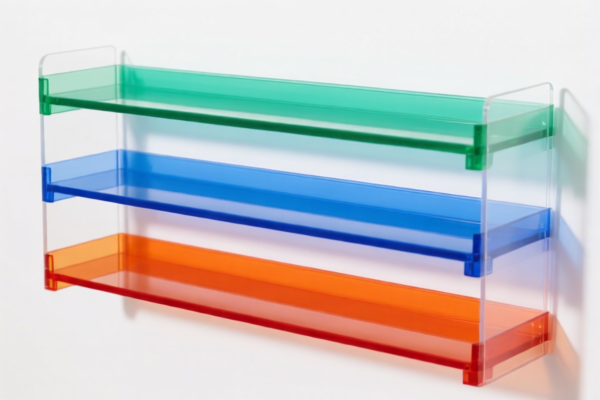
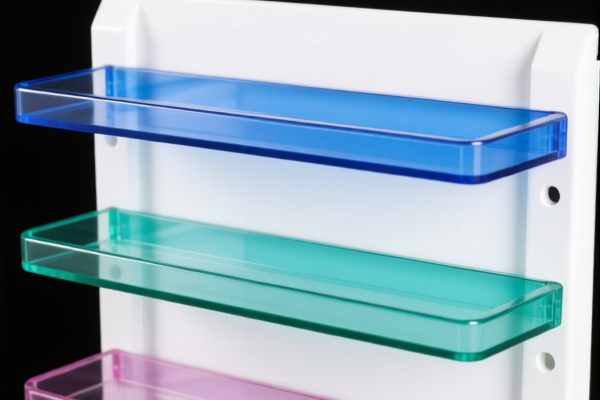
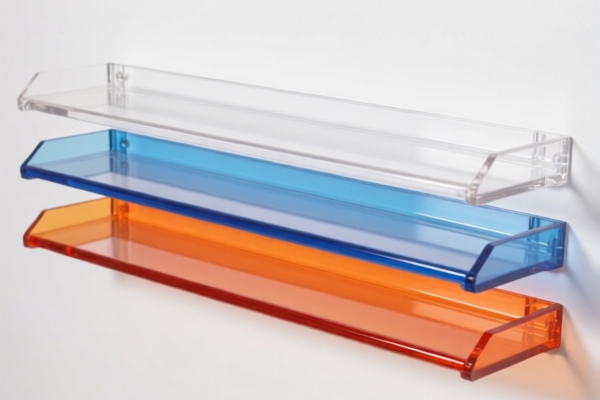
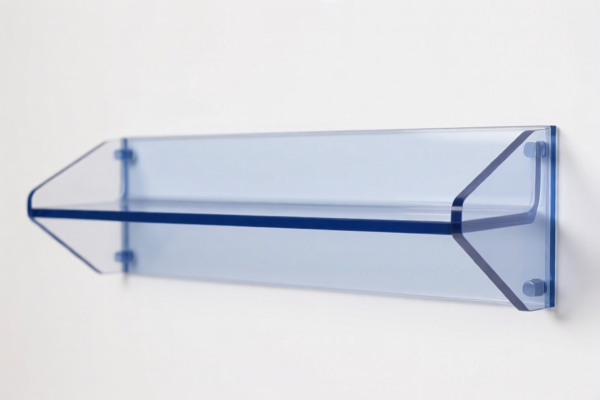
AI Analysis
📂 Plastic Document Rack: HS Code Classification & Customs Clearance Guide (2026)
🌐 HS Code Reference & Customs Strategy | Ultimate Tariff Breakdown for US Imports
📌 One Product, Five Possible Classifications: Why Context is King
A "Plastic Document Rack" seems simple, but in international trade, its classification depends heavily on specific material characteristics, exact form factor, and intended use. Is it a rigid office accessory? A flexible file holder? Or a piece of furniture?
Below is the detailed breakdown based on potential HS Code matches provided in the data, including tax implications for China-origin goods entering the USA.
📦 II. HS Code Classification Details (2026 Latest Tariff Schedule)
| HS Code | Product Description | Key Matching Criteria | Total Tax Rate (China) |
|---|---|---|---|
4819.60.00.00 |
Paper/Cardboard Storage Items | Form: File rack/storage container. Use: Office/store environment. Material: Plastic inferred (common variant). Conflict: None found in summary. |
35.0% |
4819.50.40.20 |
Folders, Letter Trays & Similar Articles | Material: "Plastic paper" inferred as cellulose/paper-based (slight ambiguity but no conflict). Form: Rack-like container for letters/files. |
35.0% |
3926.90.99.89 |
Other Plastic Articles | Material: Explicitly "Plastic". Form: Finished article (rack). Category: "Other articles of plastics" (3926 covers plastic goods not specified elsewhere). |
22.8% |
3926.90.87.00 |
Plastic Book/Document Binders & Accessories | Material: Plastic. Form: Flat/flexible characteristic. Use: Document storage/organization, consistent with binder accessories. |
40.3% |
9403.70.80.20 |
Plastic Furniture & Office Fixtures | Material: Plastic. Form: Document rack classified as "Office Furniture". Use: Office/Store fixture. |
35.0% |
🔍 Critical Insight:
The biggest variance is between3926.90.99.89(22.8%) and3926.90.87.00(40.3%).
- If the item is a generic plastic storage box/rack →3926.90.99.89is likely the lowest cost.
- If it is specifically designed as a binder accessory or flexible file holder →3926.90.87.00may apply.
-4819codes imply paper-like properties; if your product is 100% hard plastic, these may be rejected by customs.
💰 III. 2026 Latest Tariff Rate Breakdown (Including Additional Duties)
✅ Applicable Country: USA (US)
✅ Origin: China (CN)
✅ Effective Date: Nov 10, 2025 onwards
🎯 1. 3926.90.99.89 — Other Plastic Articles (Lowest Cost Option)
| Item | Detail |
|---|---|
| Base Duty | 5.3% |
| Section 301 Duty | +7.5% |
| IEEPA 122 Clause | +10.0% |
| Total Effective Rate | 22.8% |
| Calculation | CIF Value × 22.8% |
| De Minimis Exemption | ❌ Not Eligible |
| Legal Path | USITC:3926.90.99.89 → 301:7.5% → IEEPA:10% |
📌 Explanation:
- This code falls under "Other Plastic Articles."
- The 7.5% Section 301 duty is lower than the standard 25% tariff applied to many Chinese goods.
- The 10% IEEPA tax is a new/additional surcharge on Chinese plastics.
- Net Tax: 22.8% is significantly cheaper than other classifications.
🎯 2. 3926.90.87.00 — Plastic Binders/Document Accessories
| Item | Detail |
|---|---|
| Base Duty | 5.3% |
| Section 301 Duty | +25.0% |
| IEEPA 122 Clause | +10.0% |
| Total Effective Rate | 40.3% |
| Calculation | CIF Value × 40.3% |
| De Minimis Exemption | ❌ Not Eligible |
| Legal Path | USITC:3926.90.87.00 → 301:25% → IEEPA:10% |
📌 Explanation:
- This code attracts the standard 25% Section 301 tariff (not the reduced 7.5%).
- Combined with 10% IEEPA, the total hits 40.3%.
- Risk: Misclassifying a generic rack as a "binder accessory" can trigger this higher rate.
🎯 3. 4819.60.00.00 & 4819.50.40.20 — Paper-like Storage Items
| Item | Detail |
|---|---|
| Base Duty | 0.0% |
| Section 301 Duty | +25.0% |
| IEEPA 122 Clause | +10.0% |
| Total Effective Rate | 35.0% |
| Calculation | CIF Value × 35.0% |
| De Minimis Exemption | ❌ Not Eligible |
📌 Explanation:
- Base duty is 0%, but the 25% Section 301 applies.
- Caution: Customs may reject this if the item is clearly rigid plastic, not paper/cellulose-based. Misclassification can lead to penalties.
🎯 4. 9403.70.80.20 — Plastic Office Furniture
| Item | Detail |
|---|---|
| Base Duty | 0.0% |
| Section 301 Duty | +25.0% |
| IEEPA 122 Clause | +10.0% |
| Total Effective Rate | 35.0% |
| Calculation | CIF Value × 35.0% |
| De Minimis Exemption | ❌ Not Eligible |
📌 Explanation:
- Classified as furniture.
- If the document rack is large, heavy, or fixed (e.g., a desktop filing cabinet), this is appropriate.
- Small, lightweight plastic racks are usually not considered furniture by customs.
🛠️ IV. Customs Clearance Practical Advice (Avoid Pitfalls)
✅ 1. Documentation Checklist (Mandatory)
| Document | Required | Notes |
|---|---|---|
| Product Spec Sheet | ✔️ | Must specify material (e.g., "100% Polypropylene"), weight, dimensions. |
| Product Photos | ✔️ | Clear shots of the rack, showing it is rigid or flexible. |
| Commercial Invoice | ✔️ | Use precise description: "Plastic Desktop Document Organizer, Model XYZ" |
| Material Declaration | ✔️ | Explicitly state "Plastic" to avoid confusion with Paper/Cardboard (4819). |
| Country of Origin | ✔️ | Must be marked "Made in China" to trigger applicable tariffs. |
✅ 2. Classification Strategy (Key Tips)
🔥 “Be Precise, Not Generic. Material Dictates Code.”
| Scenario | Recommended HS Code | Why? |
|---|---|---|
| Generic Plastic Box/Rack | 3926.90.99.89 |
Lowest tariff (22.8%). "Other plastic articles" is a catch-all. |
| Flexible File Folder/Clip | 3926.90.87.00 |
Specific for binder accessories/flexible items. Higher tariff (40.3%). |
| Hard Plastic Filing Cabinet | 9403.70.80.20 |
Classified as furniture. Avoid if it’s a small desktop organizer. |
| Paper/Cardboard Rack | 4819.60.00.00 |
Only if made of paper/cardboard. Do not use for plastic. |
✅ 3. Common Mistakes & Penalties
❌ Mistake 1: Declaring a plastic rack as paper (4819).
👉 Result: Customs inspection reveals plastic material → Penalty + Back Taxes + Delay.
❌ Mistake 2: Using 3926.90.87.00 for a generic rack.
👉 Result: You pay 40.3% instead of 22.8%. You lose 17.5% profit margin unnecessarily.
❌ Mistake 3: Declaring as Furniture (9403) for a small tray.
👉 Result: Customs may reclassify to 3926 anyway, but it raises flags for unnecessary scrutiny.
✅ Best Practice:
Describe your item as: "Plastic Desktop Document Organizer/Rack, Model ABC, Material: Polypropylene, Not Office Furniture."
This supports classification under3926.90.99.89(22.8%) or3926.90.87.00(40.3%) depending on exact design, but avoids furniture/paper traps.
🌍 V. Global Market Comparison (2026)
| Market | Recommended HS Code | Est. Tax (China Origin) | Notes |
|---|---|---|---|
| 🇺🇸 USA | 3926.90.99.89 |
22.8% | Best option. Includes IEEPA 10% + 301 7.5%. |
| 🇨🇳 China | 3926.90.99.89 |
~6-10% | Import duty into China is lower. |
| 🇪🇺 EU | 3926.90.99 |
4.5% | No Section 301/IEEPA equivalents. |
| 🇬🇧 UK | 3926.90.99 |
4.5% | Post-Brexit rules apply. |
📌 Conclusion:
The USA has the most complex tax structure for plastic goods due to Section 301 and IEEPA tariffs.
Strategic Classification is critical to saving up to 17.5% in duties.
📌 VI. Final Recommendation
- Audit Your Product: Is it rigid plastic? → Lean towards
3926.90.99.89(22.8%). - Check Flexibility: Is it a soft folder/binder? → May require
3926.90.87.00(40.3%). - Avoid Ambiguity: Do not use "Document Rack" alone. Use "Plastic Document Organizer".
- Pre-Clearance: Submit 8000 forms or request Advance Ruling from US CBP if importing large volumes.
🎯 Pro Tip:
If your product is 100% plastic and not furniture, fight for
3926.90.99.89.
The 17.5% difference between 22.8% and 40.3% is pure profit or competitive advantage.
✨ Precise Classification = Maximized Profit.
💼 Don't let tariffs eat your margins. Classify Smart.
Customer Reviews
About HS Code Classification
The Harmonized System (HS) is an internationally standardized nomenclature developed by the World Customs Organization (WCO) to classify traded products. Over 200 countries use the HS system as the basis for customs tariffs, trade statistics, and import/export regulations.
Each HS code follows a hierarchical structure:
- Chapter (2 digits) — Broad category of goods (e.g., Chapter 84: Machinery and Mechanical Appliances)
- Heading (4 digits) — More specific grouping within the chapter
- Subheading (6 digits) — Internationally standardized breakdown, used by all WCO member countries
- National subdivisions (8-10 digits) — Country-specific extensions for further classification, such as US HTSUS 10-digit codes
Correct HS code classification is essential for smooth customs clearance, accurate duty payment, and compliance with trade regulations. Misclassification can lead to customs delays, overpayment of duties, or penalties.
When importing from CN to US, the applicable tariff rates may include:
- Most-Favored-Nation (MFN) rate — The standard duty rate applied to WTO members
- General rate — Applied to countries without trade agreements
- Trade remedy duties — Additional tariffs such as Section 301 (anti-dumping), Section 232 (national security), or countervailing duties
The information provided on this page is for reference purposes only. For official classification, please consult with your local customs authority or a licensed customs broker.