plastic doilies
CN → US| HS Code | Tariff Rate | Origin | Destination | Doc |
|---|---|---|---|---|
| 3924103000 | 22.8% | CN | US | Official Doc |
| 3924104000 | 13.4% | CN | US | Official Doc |
| 3926901000 | 20.9% | CN | US | Official Doc |
| 3926909989 | 22.8% | CN | US | Official Doc |
| 3924102000 | 24.0% | CN | US | Official Doc |
Product Images
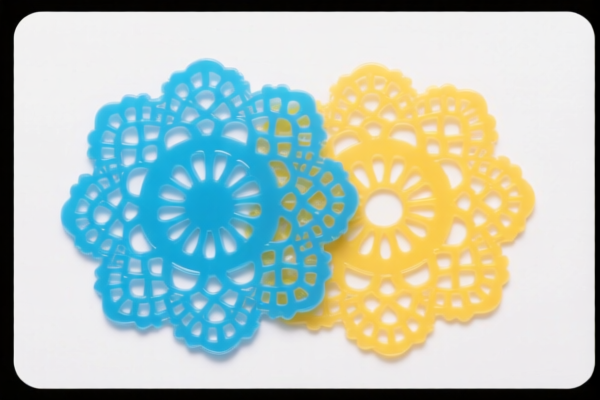
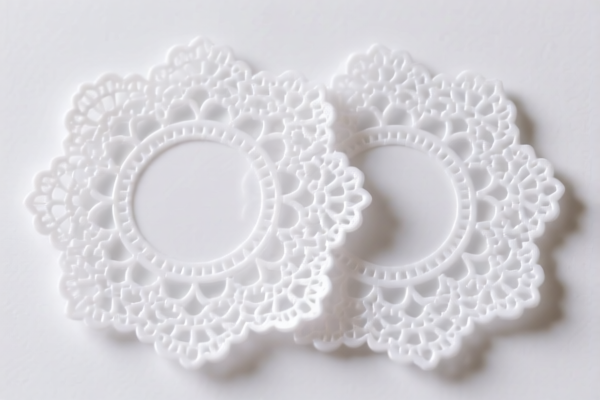
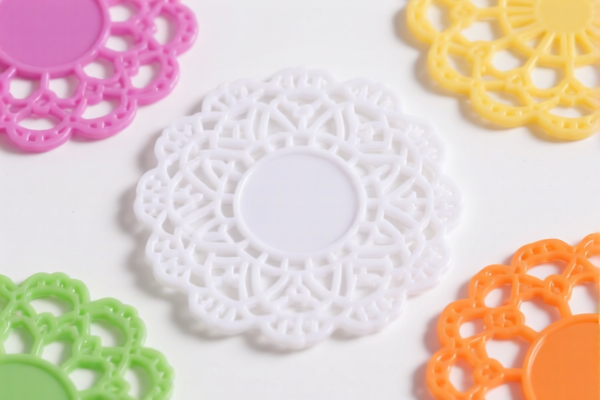
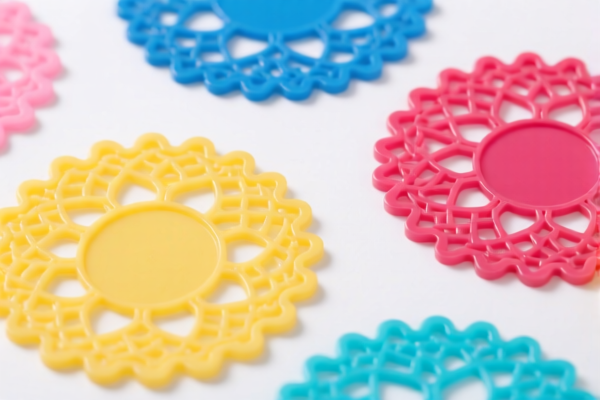
AI Analysis
🍽️ Plastic Doilies & Tableware Classification Guide
🌐 HS Code Reference & Customs Clearance Strategy | 2026 Updated Tariff Analysis | Professional Compliance Guide
📌 I. Product Definition & Classification: What Exactly Are "Plastic Doilies"?
"Plastic Doilies" are thin, decorative plastic sheets typically used for table decoration, food protection, or as liners in baskets and trays. In international trade, their classification depends heavily on functionality and material composition.
While often perceived as simple "plastic goods," customs authorities classify them based on whether they are considered tableware (cutlery/platters) or general plastic articles.
⚠️ Key Distinction Point: - If the item is specifically designed as a serving plate, dish, or tray (even if decorative) → It falls under Heading 3924 (Tableware, kitchenware, etc.). - If the item is a generic decorative sheet or liner not shaped as a dish → It may fall under Heading 3926 (Other plastic articles).
📦 II. HS Code Classification Details (2026 Latest Tariff Alignment)
| HS Code | Product Description | Application Scenario | Taxation Status (US/CN Origin) |
|---|---|---|---|
3924.10.30.00 |
Plastic tableware, including platters, suitable for plastic material and tableware use | Decorative serving plates, shaped plastic doilies used as mini-platters | ✅ High Tariff |
3924.10.40.00 |
Plastic tableware and other kitchenware, suitable for plastic material and plate usage | Standard plastic plates, bowls, or doilies with plate-like function | ✅ Lowest Tariff |
3926.90.10.00 |
Other plastic articles, suitable for plastic material and non-specific tableware use | Generic decorative plastic sheets, non-shape-specific liners | ✅ Medium Tariff |
3926.90.99.89 |
Other plastic articles, suitable for plastic material and product morphology | Unspecified plastic decorative items, non-tableware plastics | ✅ High Tariff |
3924.10.20.00 |
Plastic tableware and plates, suitable for plastic material and dish usage | Standard plastic dinnerware, clear or colored plastic plates | ✅ Highest Tariff |
🔍 Critical Note:
- Shape matters: If the "doily" is flat and circular but not shaped to hold food like a plate, it might be argued as3926. However, if it has raised edges or is marketed as a "charger plate" or "serving doily," it is likely3924. - Use case: If marketed for direct food contact as a plate substitute →3924. If marketed for decoration only (e.g., under a candle) →3926.
💰 III. 2026 Latest Tariff Rate Breakdown (Including Surcharges)
✅ Applicable Country: United States (US)
✅ Origin: China (CN)
✅ Effective Date: Current rates apply with Section 122 and 301 tariffs
🎯 1. 3924.10.30.00 —— Plastic Platters/Doilies (Tableware Category)
| Item | Detail |
|---|---|
| Base Tariff | 5.3% |
| Section 301 Surcharge | 7.5% |
| Section 122 Tariff | 10% |
| Total Tax Rate | 22.8% |
| Tax Calculation | CIF Value × 22.8% |
| De Minimis Exemption | ❌ Not Eligible (Value threshold exceeded or specific exclusion) |
| Legal Basis | Base Rate + Trade Remedies + Emergency Provisions |
📌 Explanation:
- This code attracts a 22.8% total burden due to multiple layers of tariffs. - The Section 122 (10%) is a significant addition for national security/import relief measures. - Strategy: Avoid this code if a lower-rate alternative exists.
🎯 2. 3924.10.40.00 —— Plastic Tableware (Optimal Choice for Doilies)
| Item | Detail |
|---|---|
| Base Tariff | 3.4% |
| Section 301 Surcharge | 0.0% |
| Section 122 Tariff | 10% |
| Total Tax Rate | 13.4% |
| Tax Calculation | CIF Value × 13.4% |
| De Minimis Exemption | ❌ Not Eligible |
| Legal Basis | Base Rate + Emergency Provisions |
📌 Why This is the Best Option:
- Despite being in the same heading (3924), this subheading has a 0% Section 301 surcharge. - Total tax is 13.4%, which is 9.4 percentage points lower than3924.10.30.00. - Strategy: If the doilies can be described as "tableware" or "plates," use this code to save costs.
🎯 3. 3926.90.10.00 —— Other Plastic Articles (Non-Specific)
| Item | Detail |
|---|---|
| Base Tariff | 3.4% |
| Section 301 Surcharge | 7.5% |
| Section 122 Tariff | 10% |
| Total Tax Rate | 20.9% |
| Tax Calculation | CIF Value × 20.9% |
| De Minimis Exemption | ❌ Not Eligible |
| Legal Basis | Base Rate + Trade Remedies + Emergency Provisions |
📌 Note:
- Higher than3924.10.40.00due to the 7.5% Section 301 surcharge. - Use only if the item cannot be classified as tableware.
🎯 4. 3926.90.99.89 —— Other Plastic Articles (Catch-all)
| Item | Detail |
|---|---|
| Base Tariff | 5.3% |
| Section 301 Surcharge | 7.5% |
| Section 122 Tariff | 10% |
| Total Tax Rate | 22.8% |
| Tax Calculation | CIF Value × 22.8% |
| De Minimis Exemption | ❌ Not Eligible |
| Legal Basis | Base Rate + Trade Remedies + Emergency Provisions |
📌 Note:
- Same high rate as3924.10.30.00. Avoid if possible.
🎯 5. 3924.10.20.00 —— Plastic Plates/Tableware (Highest Burden)
| Item | Detail |
|---|---|
| Base Tariff | 6.5% |
| Section 301 Surcharge | 7.5% |
| Section 122 Tariff | 10% |
| Total Tax Rate | 24.0% |
| Tax Calculation | CIF Value × 24.0% |
| De Minimis Exemption | ❌ Not Eligible |
| Legal Basis | Base Rate + Trade Remedies + Emergency Provisions |
📌 Warning:
- This is the highest tariff among all options. - Only use if the product strictly fits this narrow definition and no other code applies.
🛠️ IV. Customs Clearance Practical Advice (Risk Avoidance Guide)
✅ 1. Documentation Checklist (Non-Negotiable)
| Document | Required | Notes |
|---|---|---|
| ✅ Product Specifications | ✔️ | Material (PP, PET, PS), thickness, dimensions, FDA compliance if food contact |
| ✅ Commercial Invoice | ✔️ | Clearly state "Plastic Doilies" or "Plastic Tableware" – do not just say "Plastic Goods" |
| ✅ Packing List | ✔️ | Weight, quantity, carton dimensions |
| ✅ Material Safety Data Sheet (MSDS) | ✔️ | If applicable for chemical safety |
| ✅ Certification | ✔️ | FDA (if food contact), LFGB (if EU), or RoHS |
| ✅ Origin Certificate | ✔️ | To prove CN origin (triggers tariffs) |
✅ 2. Declaration Tips (Crucial for Cost Saving)
🔥 "Function Defines Code, Code Defines Cost!"
| Scenario | Correct HS Code | Why? |
|---|---|---|
| Flat, circular, decorative doilies | 3924.10.40.00 |
Can be argued as "tableware" with 0% Section 301. Saves 9.4%! |
| Shaped plates/chargers | 3924.10.40.00 |
Clearly tableware. Same benefit as above. |
| Generic plastic sheets (no shape) | 3926.90.10.00 |
Not tableware. Must pay 7.5% Section 301. |
| Unknown/Unspecified plastic items | 3926.90.99.89 |
Last resort. High tariff. Avoid if possible. |
📌 Expert Tip:
- If your "doilies" are flat but marketed for table decoration, argue they are "Table Accessories" or "Tableware" to qualify for3924.10.40.00. - Do NOT declare them as "Plastic Decorations" under3926if they can fit3924, as3924.10.40.00is cheaper than3926.90.10.00.
✅ 3. Special Cases & Mitigation
| Case | Handling Advice |
|---|---|
| Food Contact | Ensure FDA compliance. Lack of certification may lead to detention. |
| Small Quantities (De Minimis) | ❌ No Exemption: All these codes are subject to high tariffs, so Section 321 (de minimis) does not apply effectively for cost savings. |
| OEM/White Label | Provide design files to prove product nature. Help customs understand if it's "tableware" or "general plastic." |
| Mixed Shipments | If shipping with other plastic goods, separate shipments or clear description is vital. Mixed declarations increase inspection risk. |
🌍 V. Global Market Comparison (2026 Overview)
| Market | Recommended HS Code | Total Tariff (China Origin) | Key Requirement |
|---|---|---|---|
| 🇺🇸 USA | 3924.10.40.00 |
13.4% | FDA, Clear Description |
| 🇪🇺 EU | 3924.10 |
~5% + VAT | LFGB, No Section 301/122 |
| 🇨🇳 China (Export) | N/A | N/A | Domestic standards may apply |
| 🇬🇧 UK | 3924.10 |
~5% + VAT | UKCA Mark if applicable |
📌 Conclusion:
- The US is the most expensive market due to Section 301 and Section 122 tariffs. - Choosing3924.10.40.00saves 9.4% compared to other plastic codes. This is a massive margin saver for low-cost items like doilies.
📌 VI. Common Mistakes & Pitfalls (Learn from Errors)
❌ Mistake 1: Declaring plastic doilies as "Plastic Crafts" under 3926.90.99.89
👉 Result: 22.8% Tax. If you declared as 3924.10.40.00, you would pay 13.4%.
💸 Loss: 9.4% extra cost per unit!
❌ Mistake 2: Using vague terms like "Plastic Decorations"
👉 Result: Customs may reclassify to the highest available code (3926.90.99.89 or 3924.10.30.00).
💸 Loss: Delay in clearance + Potential fines.
❌ Mistake 3: Ignoring Section 122 Tariff
👉 Result: Assuming only 301 tariffs apply.
💸 Loss: Unexpected 10% charge at customs.
✅ Correct Practice:
"Plastic Doilies, Round, Disposable, for Table Decoration, Material: PP, FDA Compliant, HS: 3924.10.40.00"
🎯 VII. Conclusion: Optimize Your Customs Strategy
🎯 Remember This Rule:
🔹 "Tableware Code (3924.10.40) is King: 13.4% Total. Avoid 3926 and Other 3924 Codes: 20%+ Total."
🔹 "10% Section 122 is Always On. 7.5% Section 301 Can Be Avoided by Choosing the Right Subheading."
📌 Pro Tip:
- If you are shipping large volumes, consider pre-ruling with US Customs to confirm 3924.10.40.00 applicability.
- For small B2C shipments, ensure your product title on platforms includes "Tableware" or "Plates" to justify the lower tariff code.
📣 Take Action Now:
📞 Consult a Customs Broker to verify your specific product design.
📄 Update Your Commercial Invoice to use precise HS Code3924.10.40.00if applicable.
🚀 Save 9.4% on every shipment by choosing the right classification!
✨ Precision in Classification, Profit in Compliance!
💼 Every percentage point saved is pure profit!
Customer Reviews
About HS Code Classification
The Harmonized System (HS) is an internationally standardized nomenclature developed by the World Customs Organization (WCO) to classify traded products. Over 200 countries use the HS system as the basis for customs tariffs, trade statistics, and import/export regulations.
Each HS code follows a hierarchical structure:
- Chapter (2 digits) — Broad category of goods (e.g., Chapter 84: Machinery and Mechanical Appliances)
- Heading (4 digits) — More specific grouping within the chapter
- Subheading (6 digits) — Internationally standardized breakdown, used by all WCO member countries
- National subdivisions (8-10 digits) — Country-specific extensions for further classification, such as US HTSUS 10-digit codes
Correct HS code classification is essential for smooth customs clearance, accurate duty payment, and compliance with trade regulations. Misclassification can lead to customs delays, overpayment of duties, or penalties.
When importing from CN to US, the applicable tariff rates may include:
- Most-Favored-Nation (MFN) rate — The standard duty rate applied to WTO members
- General rate — Applied to countries without trade agreements
- Trade remedy duties — Additional tariffs such as Section 301 (anti-dumping), Section 232 (national security), or countervailing duties
The information provided on this page is for reference purposes only. For official classification, please consult with your local customs authority or a licensed customs broker.