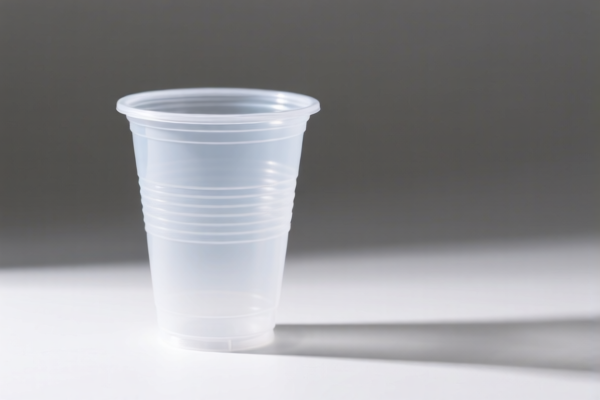
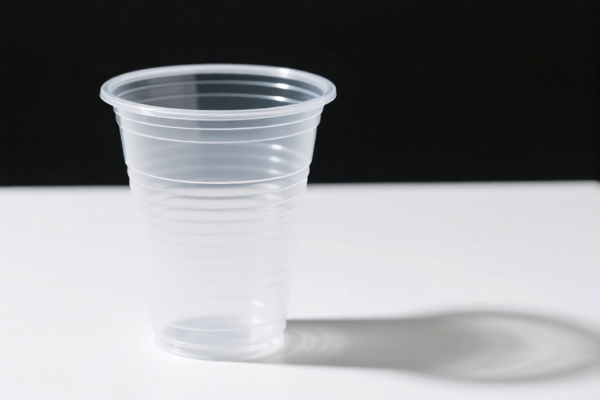
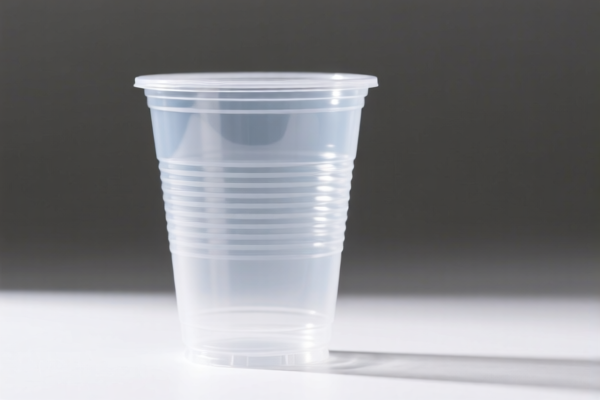
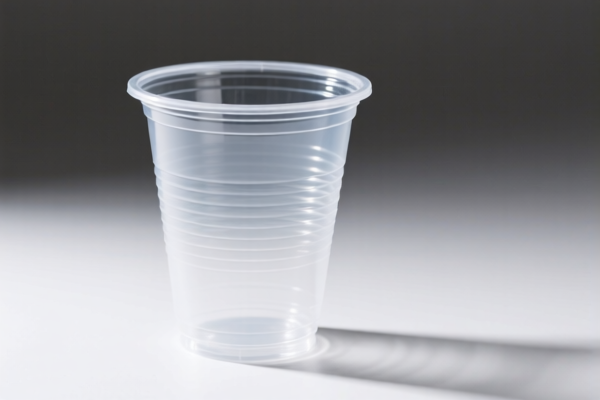
plastic drinking cup
CN → US| HS Code | Tariff Rate | Origin | Destination | Doc |
|---|---|---|---|---|
| 3924102000 | 24.0% | CN | US | Official Doc |
| 3924104000 | 13.4% | CN | US | Official Doc |
| 3926901000 | 20.9% | CN | US | Official Doc |
| 7013371001 | 46.0% | CN | US | Official Doc |
| 7013372090 | 40.0% | CN | US | Official Doc |
Product Images
AI Analysis
☕ Plastic Drinking Cup: HS Code Classification & US Import Tax Strategy (2026)
🌐 HS Code Reference & Customs Clearance Guide | 2026 Latest Tariff Analysis | Professional Entry Strategy
📌 I. Product Definition & Classification: Do You Really Know a "Plastic Cup"?
A Plastic Drinking Cup is a ubiquitous item in daily life, ranging from single-use party cups to durable travel mugs. However, in international trade, customs authorities distinguish them based on material, function, and specific design logic. Misclassification is the #1 cause of customs delays and unexpected tariffs for this category.
In the provided data, three distinct HS Codes are identified for plastic cups, each with significantly different tax implications:
⚠️ Key Distinction Points: - General Tableware Definition: Standard cups used for drinking, classified under specific tableware subheadings. - Container/Utility Definition: If the item resembles a bucket or large storage vessel rather than a personal drinking vessel, it falls under a different logic. - Specific Material & Use: The combination of "Plastic" + "Drinking Cup" drives the primary classification.
📦 II. HS Code Classification Details (Based on Provided Data)
| HS Code | Product Description (Summary) | Classification Logic | Total Tax Rate | Tax Detail Breakdown |
|---|---|---|---|---|
3924.10.20.00 |
Plastic material, drinking cup, fits the definition of cups within plastic tableware. | Primary Tableware: Specifically defined as a "cup" within the plastic tableware chapter. | 24.0% | Base Tariff: 6.5% Add-on (Section 301): 7.5% 122 Clause Tariff: 10% |
3924.10.40.00 |
Plastic material, drinking cup, falls under the category of tableware/home goods. | Secondary Tableware: Broader "tableware/home goods" category for plastic drinking vessels. | 13.4% | Base Tariff: 3.4% Add-on (Section 301): 0.0% 122 Clause Tariff: 10% |
3926.90.10.00 |
Plastic material, water container, fits the logic of buckets/water containers. | Utility Container: Classified as a storage container (bucket-like) rather than tableware. | 20.9% | Base Tariff: 3.4% Add-on (Section 301): 7.5% 122 Clause Tariff: 10% |
🔍 Critical Analysis: -
3924.10.20.00and3924.10.40.00are the most common classifications for standard drinking cups. -3926.90.10.00is a risk zone: If the cup is large, sturdy, or used for storage rather than immediate drinking, Customs may reclassify it as a "bucket," triggering a different tax structure.
💰 III. 2026 US Tariff Rate Detailed Explanation
✅ Applicable Country: United States (US)
✅ Origin: China (CN)
✅ Effective Time: Current tariffs apply as of 2026.
🎯 1. 3924.10.20.00 – Plastic Tableware Cups (Specific Definition)
| Item | Content |
|---|---|
| Base Tariff | 6.5% |
| Section 301 Add-on | +7.5% |
| 122 Clause Tariff | +10.0% |
| Total Effective Rate | 24.0% |
| Calculation Basis | CIF Value × 24.0% |
| De Minimis Eligibility | ❌ No (Generally, Section 301 and 122 tariffs apply; de minimis exceptions for China are heavily restricted or non-existent for these categories depending on specific enforcement periods). |
| Legal Basis Path | HTSUS:3924.10.20.00 → Section 301 Footnote → 122 Clause Footnote |
📌 Explanation: - This code applies to cups explicitly defined as "cups" in the plastic tableware section. - The 10% "122 Clause" tariff is a significant additional cost often overlooked. It applies specifically to certain Chinese imports. - Total 24% is a moderate-to-high burden but lower than glass alternatives.
🎯 2. 3924.10.40.00 – Plastic Tableware/Home Goods Cups
| Item | Content |
|---|---|
| Base Tariff | 3.4% |
| Section 301 Add-on | 0.0% |
| 122 Clause Tariff | +10.0% |
| Total Effective Rate | 13.4% |
| Calculation Basis | CIF Value × 13.4% |
| De Minimis Eligibility | ❌ No (122 Clause tariffs generally negate de minimis exemptions for Chinese goods). |
| Legal Basis Path | HTSUS:3924.10.40.00 → 122 Clause Footnote |
📌 Note: - This is the most cost-effective classification for standard plastic drinking cups. - The 0% Section 301 add-on makes this significantly cheaper than
3924.10.20.00. - However, you must ensure your product description aligns with "tableware/home goods" broadly, not the specific "cup" definition if that triggers the higher rate. Consultation with a customs broker is essential to justify this subheading.
🎯 3. 3926.90.10.00 – Plastic Water Containers (Bucket Logic)
| Item | Content |
|---|---|
| Base Tariff | 3.4% |
| Section 301 Add-on | +7.5% |
| 122 Clause Tariff | +10.0% |
| Total Effective Rate | 20.9% |
| Calculation Basis | CIF Value × 20.9% |
| De Minimis Eligibility | ❌ No |
| Legal Basis Path | HTSUS:3926.90.10.00 → Section 301 Footnote → 122 Clause Footnote |
📌 Warning: - This code is for containers that resemble buckets or storage vessels. - If you ship a standard drinking cup but declare it here to avoid tableware checks, you risk misclassification penalties. - Use only for large plastic water jugs or storage containers.
🛠️ IV. Customs Clearance Practical Advice (Real-World Pitfall Guide)
✅ 1. Documentation Checklist (Non-Negotiable)
| Document | Required | Description |
|---|---|---|
| ✅ Commercial Invoice | ✔️ | Must clearly state: "Plastic Drinking Cup, Model #, Material: PP/PS/etc." |
| ✅ Product Specifications | ✔️ | Include material type (e.g., Food-Grade Polypropylene), capacity (ml/oz), and intended use (drinking). |
| ✅ Product Photos | ✔️ | Clear images of the cup, showing no confusion with buckets or non-drinking containers. |
| ✅ FDA Compliance Statement | ✔️ | Plastic food-contact items must comply with US FDA standards. Provide a statement of compliance. |
| ✅ Packing List | ✔️ | Detail net/gross weight and quantity. |
✅ 2. Declaration Strategy (Key Rules)
🔥 “Accurate Description is Everything! ‘Cup’ vs. ‘Bucket’ Changes Everything!”
| Scenario | Correct Declaration | Risk of Wrong Declaration |
|---|---|---|
| Standard Plastic Cup (e.g., 12oz tumbler) | 3924.10.40.00 (Recommended for 13.4% tax) |
Declaring as 3924.10.20.00 leads to 10.6% higher tax. |
| Large Plastic Jug (e.g., 1-gallon storage) | 3926.90.10.00 |
Declaring as tableware may trigger scrutiny for misuse. |
| Glass Cup (Mistake Alert) | 7013.37.10.01 (46.0% Tax!) |
DO NOT declare plastic cups as glass. Conversely, if your product is glass, DO NOT declare it as plastic. |
✅ 3. Special Cases
| Situation | Handling Advice |
|---|---|
| Mixed Materials (Plastic cup + metal straw) | Declare the principal material (plastic). Attach the straw as an accessory. Total tax still based on plastic cup HS. |
| Set of Cups | Declare the entire set under the HS code of the primary item (the cup). Do not split. |
| Gift Sets | If included in a gift box, the HS code remains based on the essential character (the cup). |
🌍 V. Global Market Comparison (2026)
| Country/Region | Recommended HS Code | Estimated Tariff (China Origin) | Key Certification | Notes |
|---|---|---|---|---|
| 🇺🇸 USA | 3924.10.40.00 |
13.4% (Best Option) | FDA, Prop 65 | High scrutiny on 122 Clause; ensure accurate description. |
| 🇺🇸 USA | 3924.10.20.00 |
24.0% | FDA, Prop 65 | Higher risk; only use if 40 is rejected by broker. |
| 🇪🇺 EU | 3924.10.90 |
3-4% | LFGB, EC 1935/2004 | No 122 Clause. Lower base tariffs than US. |
| 🇨🇳 China | 3924.10.90 |
0-5% | GB 4806 (Food Contact) | Low risk, high volume. |
📌 Conclusion: - The US market is the most expensive due to Section 301 and 122 Clause tariffs. -
3924.10.40.00is the optimal code for cost-saving, provided the product is clearly a "drinking cup" and not a specialized "tableware cup" that falls under20.
📌 VI. Common Errors & Pitfall Guide (Blood & Tears Lessons)
❌ Error 1: Using "Plastic Container" as the description for a drinking cup.
👉 Consequence: Customs may classify it as 3926.90.10.00 (20.9%) or reject it for ambiguity.
✅ Fix: Use "Plastic Drinking Cup" in the product name.
❌ Error 2: Ignoring the "122 Clause" tariff.
👉 Consequence: Unexpected 10% extra charge at the border.
✅ Fix: Factor 122 Clause (10%) into your landed cost calculation for all China-origin plastic cups.
❌ Error 3: Confusing Plastic with Glass.
👉 Consequence: Glass cups (7013.37.10.01) face 46.0% tax!
✅ Fix: Verify material. If it’s plastic, never use a glass HS code.
🎯 VII. Conclusion: Professional Declaration, Cost Efficiency!
🎯 Remember the Golden Rule:
🔹 "Plastic Cup? Go for
3924.10.40.00(13.4%). Avoid3924.10.20.00(24.0%). Never confuse with Glass (46%)!"
🔹 "Include 'Drinking Cup' in your description. Exclude 'Bucket' unless it’s a jug."
📌 Pro Tip:
If your plastic cups are made from recycled materials or have special food-safe certifications, highlight this in your declaration. It doesn’t change the HS code but may help with FDA compliance and customs credibility.
📣 Immediate Action:
📞 Consult a Customs Broker to validate your product’s fit for
3924.10.40.00.
📄 Prepare FDA Compliance Docs and clear Product Photos.
🚀 Calculate Landed Cost: CIF Value × 13.4% (for40) + Duties + Fees.
✨ Precise Classification = Maximized Profit!
💼 Your Plastic Cup’s Journey Starts with the Right HS Code!
Customer Reviews
About HS Code Classification
The Harmonized System (HS) is an internationally standardized nomenclature developed by the World Customs Organization (WCO) to classify traded products. Over 200 countries use the HS system as the basis for customs tariffs, trade statistics, and import/export regulations.
Each HS code follows a hierarchical structure:
- Chapter (2 digits) — Broad category of goods (e.g., Chapter 84: Machinery and Mechanical Appliances)
- Heading (4 digits) — More specific grouping within the chapter
- Subheading (6 digits) — Internationally standardized breakdown, used by all WCO member countries
- National subdivisions (8-10 digits) — Country-specific extensions for further classification, such as US HTSUS 10-digit codes
Correct HS code classification is essential for smooth customs clearance, accurate duty payment, and compliance with trade regulations. Misclassification can lead to customs delays, overpayment of duties, or penalties.
When importing from CN to US, the applicable tariff rates may include:
- Most-Favored-Nation (MFN) rate — The standard duty rate applied to WTO members
- General rate — Applied to countries without trade agreements
- Trade remedy duties — Additional tariffs such as Section 301 (anti-dumping), Section 232 (national security), or countervailing duties
The information provided on this page is for reference purposes only. For official classification, please consult with your local customs authority or a licensed customs broker.