plastic drinking water pipe
CN → US| HS Code | Tariff Rate | Origin | Destination | Doc |
|---|---|---|---|---|
| 3917210000 | 38.1% | CN | US | Official Doc |
| 3926909989 | 22.8% | CN | US | Official Doc |
| 3917290090 | 38.1% | CN | US | Official Doc |
| 3926909987 | 22.8% | CN | US | Official Doc |
| 3924104000 | 13.4% | CN | US | Official Doc |
Product Images
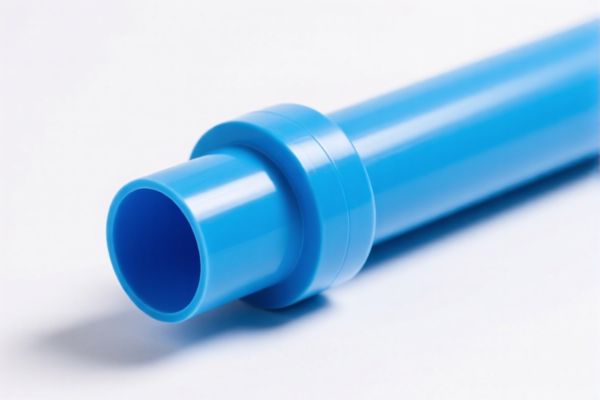
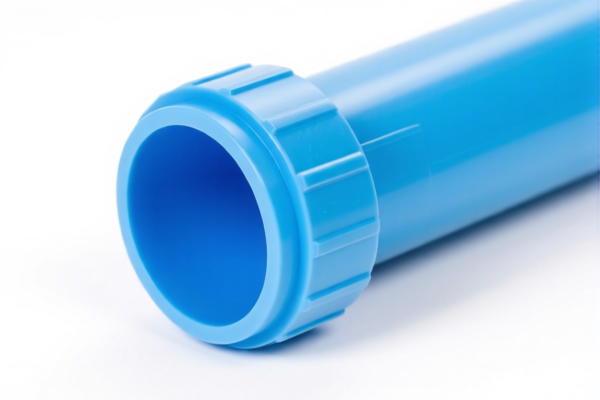
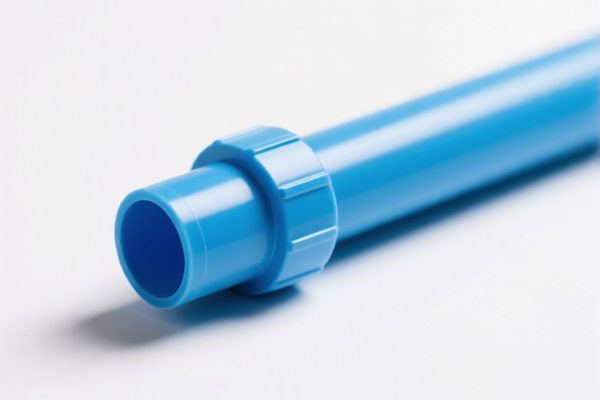
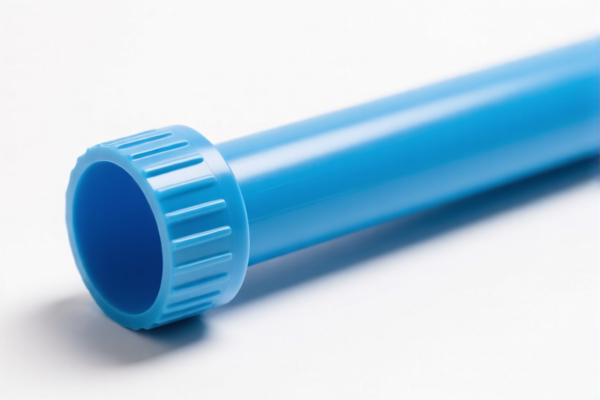
AI Analysis
🚰 Plastic Drinking Water Pipes (HDPE/PVC/PPR)
🌐 HS Code Reference & Customs Clearance Guide | 2026 Latest Tariff Analysis | Professional Clearance Strategy
📌 I. Product Definition & Classification: What exactly is a "Plastic Drinking Water Pipe"?
Plastic drinking water pipes are essential components of municipal water supply, residential plumbing, and industrial fluid transport systems. In international trade, they are primarily classified based on material type, form (rigid/flexible), and specific application.
The term "Plastic Drinking Water Pipe" is a broad category. Customs authorities scrutinize the chemical composition (PE, PVC, PPR, etc.) and the physical structure (rigid tube, flexible hose, or general plastic article) to determine the correct HS Code.
⚠️ Key Distinction Point:
- If the product is a rigid pipe/tube intended for fluid transport → It generally falls under Chapter 39.17 ("Plastics and articles thereof; tubes, pipes and hoses...").
- If the product is a general plastic article (e.g., a short connector, a specific accessory not fitting the "tube" definition) → It may fall under Chapter 39.26 ("Other articles of plastics...").
- If the product is a straw-like item (disposable) → It falls under Chapter 39.24 ("Tableware, kitchenware...").
📦 II. HS Code Classification Details (Based on Provided Data)
| HS Code | Product Description | Applicable Scenario | Tax Rate (Total) | Key Tax Components |
|---|---|---|---|---|
| 3917.21.00.00 | Plastic tubes, pipes & hoses, rigid, of polyethylene | High-Tax Scenario: Rigid plastic pipes (likely PE material). | 38.1% | Base: 3.1% + Sec 301: 25.0% + IEEPA: 10% |
| 3917.29.00.90 | Plastic tubes, pipes & hoses, rigid, other (e.g., PVC, PPR) | High-Tax Scenario: Other rigid plastic pipes not of polyethylene. | 38.1% | Base: 3.1% + Sec 301: 25.0% + IEEPA: 10% |
| 3926.90.99.89 | Other plastic articles (classified as general plastic goods) | Mid-Tax Scenario: Plastic tubes/articles that do not fit 39.17 definitions or are considered "other articles." | 22.8% | Base: 5.3% + Sec 301: 7.5% + IEEPA: 10% |
| 3926.90.99.87 | Other plastic articles (rigid tubes/hoses classified as "other") | Mid-Tax Scenario: Specific rigid tubes/hoses classified under "other plastic articles" rather than 39.17. | 22.8% | Base: 5.3% + Sec 301: 7.5% + IEEPA: 10% |
| 3924.10.40.00 | Tableware & kitchenware of plastic (e.g., disposable straws) | Low-Tax Scenario: Only if the product is effectively a drinking straw or similar disposable tableware. | 13.4% | Base: 3.4% + Sec 301: 0.0% + IEEPA: 10% |
🔍 Critical Note:
- 3917 vs. 3926: The major difference is whether the item is classified as a "Tube/pipe" (39.17) or an "Other article" (39.26).
- Tax Impact: Classification under 3917 results in a 38.1% total tariff, while 3926 results in 22.8%. This is a 15.3% difference!
- 3924 Exception: Only applicable if the "pipe" is actually a single-use drinking straw. Standard water supply pipes cannot be classified here.
💰 III. 2026 Latest Tariff Rate Breakdown (Detailed Analysis)
✅ Applicable Country: United States (US)
✅ Origin: China (CN)
✅ Effective Date: Post-November 10, 2025 (Subject to current trade policies)
🎯 1. 3917.21.00.00 & 3917.29.00.90 — Plastic Pipes (Rigid)
Total Tariff: 38.1%
| Component | Rate | Legal Basis |
|---|---|---|
| Base Tariff | 3.1% | Harmonized Tariff Schedule (HTSUS) General Rate |
| Section 301 Tariff | 25.0% | USITC Footnote 9903.88.01 (Trade Act of 1974, Section 301) |
| IEEPA Tariff | 10.0% | International Emergency Economic Powers Act (China-specific) |
| Total Effective Rate | 38.1% | High Risk |
📌 Explanation:
- Section 301 (25%): This is the significant cost driver for plastic pipes from China. Most rigid plastic pipes are classified here.
- IEEPA (10%): An additional surcharge on Chinese-origin plastics.
- Total: 3.1% + 25% + 10% = 38.1%.
- De Minimis Exemption: ❌ NOT Applicable. Packages under $800 do not qualify for these tariffs if they are subject to Section 301.
🎯 2. 3926.90.99.89 & 3926.90.99.87 — Other Plastic Articles
Total Tariff: 22.8%
| Component | Rate | Legal Basis |
|---|---|---|
| Base Tariff | 5.3% | HTSUS General Rate |
| Section 301 Tariff | 7.5% | USITC Footnote 9903.88.01 (List 4B/Other) |
| IEEPA Tariff | 10.0% | IEEPA (China-specific) |
| Total Effective Rate | 22.8% | Moderate Risk |
📌 Explanation:
- Section 301 (7.5%): Lower than the 25% rate for pipes, but still significant.
- Why lower?: These codes are for "other articles" which may not be on the highest-tariff list for Section 301.
- Total: 5.3% + 7.5% + 10% = 22.8%.
- Strategy: If your product can be argued as an "other article" rather than a "pipe," you save 15.3% in duties. However, this is risky and requires strong technical justification.
🎯 3. 3924.10.40.00 — Plastic Tableware (Straws)
Total Tariff: 13.4%
| Component | Rate | Legal Basis |
|---|---|---|
| Base Tariff | 3.4% | HTSUS General Rate |
| Section 301 Tariff | 0.0% | Not on List 4B/High-tariff items |
| IEEPA Tariff | 10.0% | IEEPA (China-specific) |
| Total Effective Rate | 13.4% | Low Risk |
📌 Explanation:
- ONLY for drinking straws. If you ship actual water pipes, DO NOT use this code. Misclassification can lead to penalties, seizures, and audits.
- Total: 3.4% + 0% + 10% = 13.4%.
🛠️ IV. Customs Clearance Practical Advice (Pitfall Avoidance Guide)
✅ 1. Documentation Checklist (Essential)
| Document | Required | Notes |
|---|---|---|
| ✅ Product Specifications | ✔️ | Must clearly state: Material (e.g., HDPE, PVC), Diameter, Wall Thickness, Pressure Rating. |
| ✅ Material Certificate | ✔️ | Proof of food-grade compliance (if for drinking water). |
| ✅ Commercial Invoice | ✔️ | Use precise description: "Rigid HDPE Water Supply Pipe" NOT just "Plastic Pipe." |
| ✅ Packing List | ✔️ | Clearly separate pipes from fittings (elbows, tees) if classified differently. |
| ✅ Origin Certificate | ✔️ | To prove Chinese origin (subject to tariffs). |
| ✅ Test Reports | ✔️ | NSF/ANSI 61 or equivalent for drinking water safety. |
✅ 2. Classification Strategy (Key Tips)
| Scenario | Recommended HS Code | Reason |
|---|---|---|
| Rigid Water Pipes (HDPE/PVC/PPR) | 3917.21.00.00 or 3917.29.00.90 |
Standard classification for tubes/pipes. Expect 38.1% tax. |
| Short Connectors/Fittings | 3926.90.99.89 or 3926.90.99.87 |
If not "pipes" per se, may be "other articles." Expect 22.8% tax. |
| Disposable Plastic Straws | 3924.10.40.00 |
ONLY if product is a single-use straw. Expect 13.4% tax. |
| Flexible Hoses | 3917.29.00.90 |
Usually classified with rigid pipes unless specifically exempted. |
📌 Warning:
- Do not try to classify rigid water pipes as "straws" (3924.10.40.00) to save tax. Customs will reject this, as the items are functionally and physically different.
- Do not split a complete pipe system into "pipes" and "fittings" to misclassify. If sold as a set, the principal item dictates the classification.
✅ 3. Special Considerations for US Imports
| Issue | Advice |
|---|---|
| Section 301 Exclusions | Check if your specific HS Code was excluded from Section 301 tariffs. Most plastic pipes are NOT excluded. |
| De Minimis ($800) | ❌ Do not rely on de minimis. Section 301 tariffs apply to de minimis shipments from China. |
| Anti-Dumping Duties (AD/CVD) | Check if your specific type of plastic pipe (e.g., certain PVC pipes) is subject to AD/CVD orders. This data is not provided, but always verify. |
| Food Contact Safety | Ensure compliance with NSF/ANSI 61 for drinking water applications. Non-compliance can lead to import refusal. |
🌍 V. Global Market Comparison (2026 Snapshot)
| Country | Typical HS Code | Base Tariff | US Section 301 | IEEPA | Total (China Origin) | Notes |
|---|---|---|---|---|---|---|
| 🇺🇸 USA | 3917.29.00.90 |
3.1% | 25.0% | 10.0% | 38.1% | High tariff. |
| 🇨🇳 China | 3917.29.00.90 |
2.0% | N/A | N/A | ~2-5% | Low tariff for domestic/export. |
| 🇪🇺 EU | 3917.29.00.90 |
4.5% | N/A | N/A | ~4.5% | No Section 301. |
| 🇨🇦 Canada | 3917.29.00.90 |
5.0% | N/A | N/A | ~5.0% | CUSMA benefits if rules met. |
| 🇲🇽 Mexico | 3917.29.00.90 |
10% | N/A | N/A | ~10% | USMCA benefits if rules met. |
📌 Conclusion:
- The USA is the most expensive market due to Section 301 and IEEPA tariffs.
- Consider supply chain diversification (e.g., sourcing from Vietnam, Mexico) to avoid high US tariffs, if possible.
📌 VI. Common Mistakes & Pitfalls
❌ Mistake 1: Classifying rigid water pipes as "plastic articles" (3926) to avoid 25% Section 301.
👉 Result: Customs audit, penalty, and back-tariff. Rigid pipes are clearly 3917.
❌ Mistake 2: Using 3924.10.40.00 for standard pipes.
👉 Result: Seizure of goods. This code is for tableware/straws.
❌ Mistake 3: Ignoring IEEPA 10% tariff.
👉 Result: Underpayment of duties. This is a mandatory surcharge on Chinese plastics.
❌ Mistake 4: Assuming de minimis exemption applies.
👉 Result: Package held by CBP, duties charged anyway.
✅ Correct Approach:
"Rigid HDPE Pipe, 4-inch Diameter, 100m Roll, NSF/ANSI 61 Certified, for Drinking Water Supply"
🎯 VII. Conclusion: Professional Clearance, Cost Efficiency
🎯 Key Takeaways:
1. Rigid Plastic Pipes are subject to 38.1% total tariff in the US (3.1% base + 25% Sec 301 + 10% IEEPA).
2. "Other Plastic Articles" (3926) may have a lower rate (22.8%) but require strong justification to avoid misclassification.
3. Straws (3924) are the only low-tax option (13.4%), but only for disposable tableware.
4. De minimis does NOT apply to Section 301 tariffs from China.
📌 Pro Tip:
- Apply for an Advance Ruling from US Customs and Border Protection (CBP) to confirm your HS Code classification.
- Evaluate Supply Chain: If volume is high, consider sourcing from non-China countries to avoid Section 301 and IEEPA tariffs.
📣 Immediate Action:
📞 Consult a Customs Broker to verify your specific product description against HS Codes
3917.21.00.00,3917.29.00.90,3926.90.99.89, and3926.90.99.87.
📄 Prepare Detailed Technical Documents to support your classification choice.
💰 Budget for 38.1% Tariff for standard rigid plastic pipes from China to the US.
✨ Precision in Classification Saves Thousands!
💼 Every dollar of duty saved is a dollar of profit gained!
Customer Reviews
About HS Code Classification
The Harmonized System (HS) is an internationally standardized nomenclature developed by the World Customs Organization (WCO) to classify traded products. Over 200 countries use the HS system as the basis for customs tariffs, trade statistics, and import/export regulations.
Each HS code follows a hierarchical structure:
- Chapter (2 digits) — Broad category of goods (e.g., Chapter 84: Machinery and Mechanical Appliances)
- Heading (4 digits) — More specific grouping within the chapter
- Subheading (6 digits) — Internationally standardized breakdown, used by all WCO member countries
- National subdivisions (8-10 digits) — Country-specific extensions for further classification, such as US HTSUS 10-digit codes
Correct HS code classification is essential for smooth customs clearance, accurate duty payment, and compliance with trade regulations. Misclassification can lead to customs delays, overpayment of duties, or penalties.
When importing from CN to US, the applicable tariff rates may include:
- Most-Favored-Nation (MFN) rate — The standard duty rate applied to WTO members
- General rate — Applied to countries without trade agreements
- Trade remedy duties — Additional tariffs such as Section 301 (anti-dumping), Section 232 (national security), or countervailing duties
The information provided on this page is for reference purposes only. For official classification, please consult with your local customs authority or a licensed customs broker.