plastic eco friendly table covers
CN → US| HS Code | Tariff Rate | Origin | Destination | Doc |
|---|---|---|---|---|
| 5903102010 | 35.0% | CN | US | Official Doc |
| 3920100000 | 39.2% | CN | US | Official Doc |
| 5903102090 | 35.0% | CN | US | Official Doc |
| 3920200055 | 39.2% | CN | US | Official Doc |
Product Images
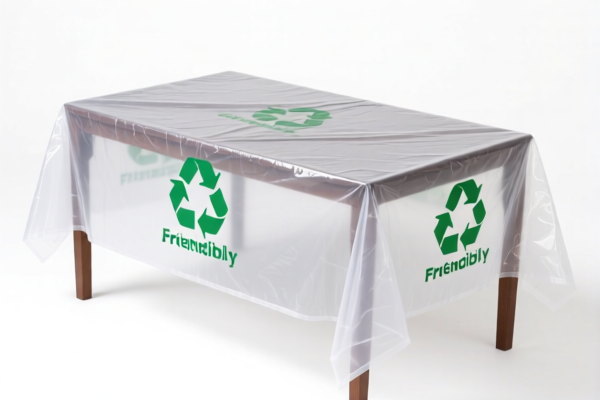
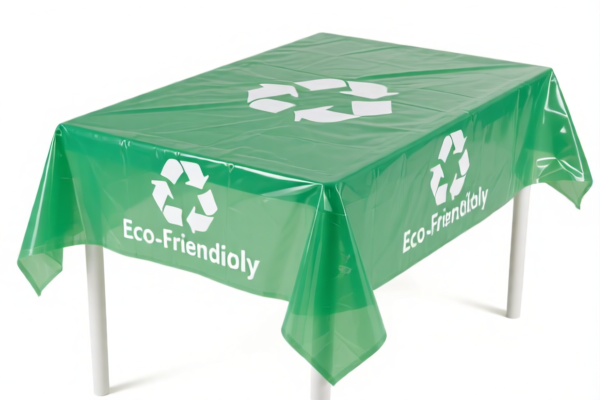

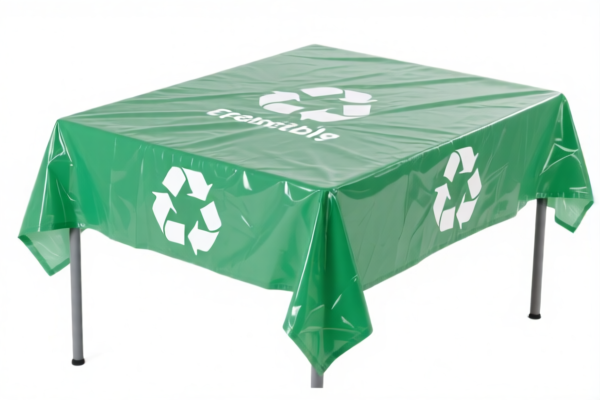
AI Analysis
🍽️ Plastic Eco-Friendly Table Covers
🌐 HS Code Reference & Customs Clearance Guide | 2026 Latest Tariff Analysis | Professional Entry Strategy
📌 I. Product Definition & Classification: Do You Truly Understand "Eco-Friendly Plastic Table Covers"?
"Plastic eco-friendly table covers" is a marketing term, not a technical customs classification. In international trade, the duty rate depends entirely on the material composition and structural form of the product. Customs authorities do not recognize "eco-friendly" as a separate tariff category. Instead, the product is classified based on whether it is:
- Textile-based (Fabric impregnated/coated/laminated with plastic) → Chapter 59
- Plastic-based (Solid sheets/films of plastic polymers) → Chapter 39
⚠️ Critical Distinction Point:
- If the core structure is textile/fabric (e.g., polyester, nylon) with a plastic coating for waterproofing → Classify under 5903.10.
- If the core structure is pure plastic sheet/film (e.g., PVC, PE, PP) without a textile base → Classify under 3920.
- "Eco-friendly" claims (biodegradable, recycled content) do not change the HS Code but may require additional certificates (e.g., BPI, DIN CERTCO) for marketing purposes.
📦 II. HS Code Classification Details (2026 Latest Tariff Authoritative Comparison)
Based on the data provided, here are the four potential HS Codes for plastic table covers:
| HS Code | Product Description | Structural Feature | Material Type |
|---|---|---|---|
5903.10.20.10 |
Plastic table cover: Textile fabric impregnated/coated/laminated with plastic | Textile base + Plastic layer | Any plastic (PVC, PE, etc.) on fabric |
3920.10.00.00 |
Plastic table cover: Plastic/polymer material, sheet/film/strip form | Pure plastic sheet/film | Polymers (e.g., PE, PET) |
5903.10.20.90 |
Plastic table cover: Textile fabric impregnated/coated with PVC etc. | Textile base + PVC coating | Specifically PVC on fabric |
3920.20.00.55 |
Plastic table cover: Polypropylene (PP), plate/sheet/film/foil/striпg form | Pure plastic sheet/film | Polypropylene (PP) |
🔍 Key Reminder:
- Textile-based covers (5903) typically have a lower basic tariff (0%) but are subject to the same additional duties.
- Pure plastic covers (3920) have a basic tariff (4.2%) due to the polymer nature.
- "Eco-friendly" does not lower the tariff unless it qualifies for a specific Free Trade Agreement (FTA) preference, which is not reflected in these standard codes.
💰 III. 2026 Latest Tariff Rate Breakdown (Including Additional Duties & Policy Surcharges)
✅ Applicable Country: United States (US)
✅ Country of Origin: China (CN)
✅ Effective Date: 2025/2026 (Current Trade Policy)
🎯 1. 5903.10.20.10 & 5903.10.20.90 —— Textile-Based Plastic Table Covers
These codes cover fabrics impregnated, coated, or laminated with plastics (e.g., PVC-coated tablecloths).
| Item | Details |
|---|---|
| Basic Tariff | 0.0% (Ad Valorem) |
| Section 301 Duty (Additional) | +25.0% |
| Section 122 Duty (IEEPA) | +10.0% |
| Total Effective Tax Rate | 35.0% |
| Calculation Basis | CIF Value × 35% |
| De Minimis Exemption | ❌ Not Eligible (Denied) |
| Legal Basis Path | USITC:5903.10.20.10/90 → Section 301 Footnote → IEEPA:9903 |
📌 Explanation:
- The base rate is 0% because Chapter 59 products often enjoy preferential basic rates.
- However, the +25% Section 301 duty and +10% Section 122 duty apply heavily to Chinese-origin goods.
- Total: 35%. This is significantly lower than pure plastic products but still substantial.
🎯 2. 3920.10.00.00 & 3920.20.00.55 —— Pure Plastic Sheet/Film Table Covers
These codes cover solid plastic sheets, films, or plates (e.g., PVC vinyl sheets, PE tablecloths, PP mats).
| Item | Details |
|---|---|
| Basic Tariff | 4.2% (Ad Valorem) |
| Section 301 Duty (Additional) | +25.0% |
| Section 122 Duty (IEEPA) | +10.0% |
| Total Effective Tax Rate | 39.2% |
| Calculation Basis | CIF Value × 39.2% |
| De Minimis Exemption | ❌ Not Eligible (Denied) |
| Legal Basis Path | USITC:3920.10.00.00/20.00.55 → Section 301 Footnote → IEEPA:9903 |
📌 Explanation:
- The base rate is 4.2% because Chapter 39 (Plastics) does not have a 0% basic rate for these specific forms.
- The additional duties remain the same: +25% + 10%.
- Total: 39.2%. This is 4.2% higher than the textile-based option due to the basic tariff difference.
🛠️ IV. Customs Clearance Practical Advice (Battle-Tested Pitfall Avoidance)
✅ 1. Documentation Checklist (Essential)
| Document | Required? | Notes |
|---|---|---|
| ✅ Product Specification Sheet | ✔️ | Must detail: Material (PVC/PP/PE), Structure (Fabric vs. Pure Plastic), Thickness, Width. |
| ✅ Composition Statement | ✔️ | Explicitly state: "90% Polyester, 10% PVC coating" OR "100% Polyethylene". |
| ✅ Commercial Invoice | ✔️ | Use precise description: "PVC-Coated Polyester Tablecloth" vs. "Plastic Table Cover". |
| ✅ Origin Certificate (CO) | ✔️ | Crucial for verifying CN origin to apply/additional duties correctly. |
| ✅ "Eco-Friendly" Certificates | ⚠️ Optional | BPI, DIN CERTCO, or TUV reports. Note: These do not reduce US tariffs but support marketing claims. |
| ✅ Packing List | ✔️ | Net/Gross weight must match invoice. |
✅ 2. Declaration Strategy (Key Mnemonics)
🔥 "Check the Base: Fabric? 0% Base. Plastic? 4.2% Base. Always Add 35-39%."
| Scenario | Correct Declaration | Wrong Declaration | Consequence |
|---|---|---|---|
| Tablecloth with fabric texture | 5903.10.20.10/90 |
3920.10.00.00 |
Overpayment: +4.2% on total value. |
| Smooth, non-woven plastic sheet | 3920.10.00.00 |
5903.10.20.10 |
Underpayment Risk: Customs will re-classify + fines. |
| Recycled Plastic Table Cover | 3920.10.00.00 |
5903.10.20.10 |
Misclassification. "Recycled" does not change HS Code. |
| Biodegradable PLA Table Cover | 3920.10.00.00 (if pure plastic) |
5903.10.20.10 |
PLA is a plastic polymer. Must use Chapter 39. |
✅ 3. Special Cases & Handling
| Situation | Handling Advice |
|---|---|
| "Eco-Friendly" Marketing | Do not declare "Eco-Friendly" in the HS Code description. Use technical terms: "PVC-Coated Fabric". |
| Mixed Materials | If the table cover has a plastic layer on one side and fabric on the other, determine the essential character. Usually, the fabric base dictates Chapter 59. |
| OEM Private Label | Ensure the supplier’s material declaration matches the physical product. Discrepancies lead to seizure. |
| Samples vs. Bulk | Same HS Code applies. De Minimis (Section 321) does not apply to Chinese-origin goods over $800 if subject to Section 301/122. |
🌍 V. Global Market Comparison (2026)
| Country/Region | Recommended HS Code | Effective Duty Rate (China Origin) | Key Requirements | Notes |
|---|---|---|---|---|
| 🇺🇸 USA | 5903.10.20.10/90 or 3920.10.00.00 |
35.0% or 39.2% | FCC/Prop65 (if applicable), CO | High duties due to Section 301/122. |
| 🇪🇺 EU | 3920.10.00 or 5903.10.00 |
~4.2% + VAT | REACH, RoHS, CE | No Section 301 equivalent. Lower burden. |
| 🇨🇳 China | 5903.10.20 or 3920.10.00 |
~5-10% | CCC (if specific types) | Import duty lower than US. |
| 🇬🇧 UK | 3920.10.00 or 5903.10.00 |
~5% + VAT | UKCA | Post-Brexit rules apply. |
| 🇨🇦 Canada | 3920.10.00 or 5903.10.00 |
~5-6.25% | CBSA Form 301 | CUSMA benefits may apply if non-CN. |
📌 Conclusion:
- The USA is the most expensive market for Chinese plastic table covers due to the 35-39% total tariff.
- Chapter 59 (Textile-based) is cheaper than Chapter 39 (Pure Plastic) by 4.2%.
- "Eco-friendly" labels do not reduce US tariffs.
📌 VI. Common Errors & Pitfall Guide (Blood & Tears Lessons)
❌ Error 1: Declaring "Eco-Friendly Table Cover" without specifying material.
👉 Consequence: Customs will inspect and re-classify. If they find it's pure plastic, you pay 39.2% instead of 35%. Overpayment or Penalty.
❌ Error 2: Using 5903 for a pure plastic sheet (e.g., PE film).
👉 Consequence: Under-declaration. CBP will assess 39.2% and impose penalties. Risk of Seizure.
❌ Error 3: Assuming "Recycled Plastic" qualifies for a lower duty.
👉 Consequence: No tariff reduction for recycled content in Chapter 39/59 under current US law. No Benefit.
❌ Error 4: Splitting a single table cover into "Fabric" and "Plastic Coating" for separate HS Codes.
👉 Consequence: "Essential character" rule applies. The item is one product. Misclassification.
✅ Correct Declaration Example:
"Table Cover, 100% Polyester Fabric, Coated with PVC, 1.2mm Thickness, Printed Design, for Home Use"
HS Code:5903.10.20.10
Duty: 35.0%
🎯 VII. Conclusion: Precise Classification Saves Money!
🎯 Remember the Golden Rule:
🔹 "Fabric Base? 35%. Pure Plastic? 39.2%. Eco-Friendly? Still 35-39%!"
🔹 "Material Structure is King. Don't let marketing terms mislead customs."
📌 Pro Tip:
If your product is made in Vietnam, Mexico, or Malaysia, you may avoid the Section 301/122 duties, reducing the total tax to 0-4.2%.
Recommendation:
1. Verify the Country of Origin carefully.
2. If exporting to the US, consider supply chain diversification to non-China origins to save 25-35% in duties.
3. Always request a Material Composition Declaration from your supplier.
📣 Immediate Action:
📞 Consult your customs broker BEFORE shipment.
📄 Provide material samples for pre-classification.
🚀 Ensure accurate HS Codes to avoid costly delays and penalties.
✨ Professional clearance starts with precise classification!
💼 Every percentage point counts in international trade!
Customer Reviews
About HS Code Classification
The Harmonized System (HS) is an internationally standardized nomenclature developed by the World Customs Organization (WCO) to classify traded products. Over 200 countries use the HS system as the basis for customs tariffs, trade statistics, and import/export regulations.
Each HS code follows a hierarchical structure:
- Chapter (2 digits) — Broad category of goods (e.g., Chapter 84: Machinery and Mechanical Appliances)
- Heading (4 digits) — More specific grouping within the chapter
- Subheading (6 digits) — Internationally standardized breakdown, used by all WCO member countries
- National subdivisions (8-10 digits) — Country-specific extensions for further classification, such as US HTSUS 10-digit codes
Correct HS code classification is essential for smooth customs clearance, accurate duty payment, and compliance with trade regulations. Misclassification can lead to customs delays, overpayment of duties, or penalties.
When importing from CN to US, the applicable tariff rates may include:
- Most-Favored-Nation (MFN) rate — The standard duty rate applied to WTO members
- General rate — Applied to countries without trade agreements
- Trade remedy duties — Additional tariffs such as Section 301 (anti-dumping), Section 232 (national security), or countervailing duties
The information provided on this page is for reference purposes only. For official classification, please consult with your local customs authority or a licensed customs broker.