plastic elastic bands for stationery
CN → US| HS Code | Tariff Rate | Origin | Destination | Doc |
|---|---|---|---|---|
| 4016993510 | 35.0% | CN | US | Official Doc |
| 4016993550 | 35.0% | CN | US | Official Doc |
| 4017000000 | 37.7% | CN | US | Official Doc |
| 3926909989 | 22.8% | CN | US | Official Doc |
Product Images
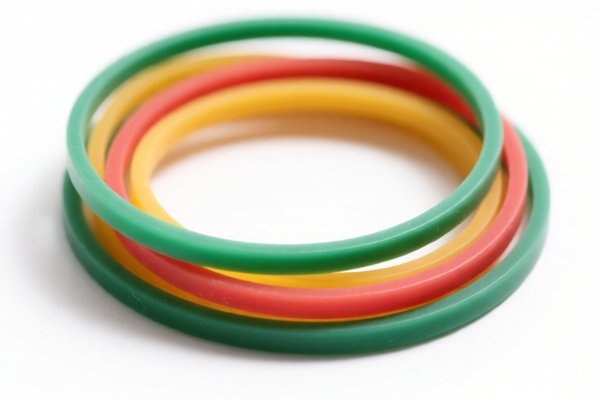
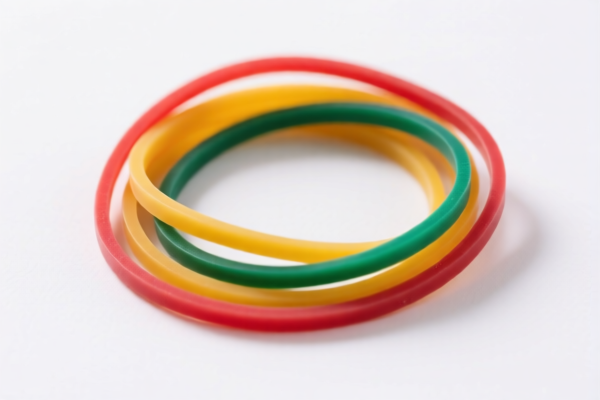
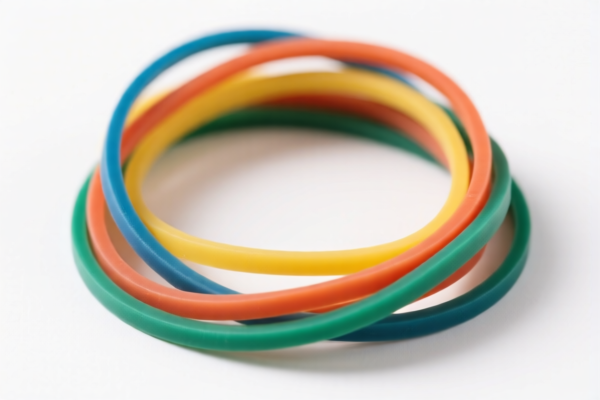
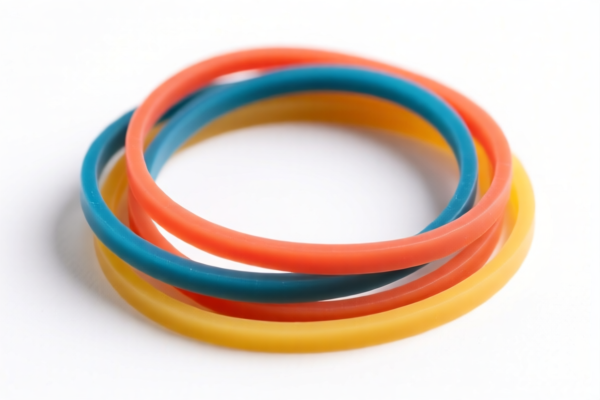
AI Analysis
🎀 Rubber Bands / Elastic Bands for Stationery (Stationery Elastic Bands)
🌐 HS Code Reference & Customs Clearance Guide | 2026 Latest Tariff Analysis | Professional Clearance Strategy
📌 I. Product Definition & Classification: Do You Really Understand "Elastic Bands"?
Elastic bands (commonly referred to as rubber bands in trade) are essential office and stationery supplies used for binding, bundling, or securing items. In international trade, the classification hinges on material composition and processing method.
Key Distinctions: * Pure Rubber/Elastomer Bands: Made primarily from natural rubber, synthetic rubber, or thermoplastic elastomers. These fall under Chapter 40 (Rubber and Articles Thereof). * Plastic/Polymer Bands: If the material is strictly a plastic (polymer) not classified as rubber in Chapter 40, it may fall under Chapter 39 (Plastics and Articles Thereof). * Vulcanized vs. Hard Rubber: If the rubber is hardened (ebonite/hard rubber), it falls under HS 4017.
⚠️ Critical Classification Point:
- Standard, soft, flexible elastic bands for stationery are Vulcanized Rubber Articles → HS 4016.99.
- If made from hard/rigid rubber → HS 4017.00.
- If made from specific plastic elastomers not meeting Chapter 40 definitions → HS 3926.90.
📦 II. HS Code Classification Details (2026 Latest Tariff Authority Comparison)
Based on the provided data, here are the four potential HS Codes with their specific rationales:
| HS Code | Product Description | Rationale for Classification | Material Characteristic |
|---|---|---|---|
4016.99.35.10 |
Other rubber articles: Elastic bands | Matches rubber material and "rubber band" usage. Fits the explanatory notes for material and product characteristics. | Soft Rubber / Elastomer |
4016.99.35.50 |
Other rubber articles: Elastic bands | "Rubber" in name matches natural rubber products. Elastic bands are classified as other forms of vulcanized rubber articles. | Natural Rubber / Vulcanized |
4017.00.00.00 |
Hard rubber (e.g., ebonite) and articles thereof | Material is rubber, fitting "hard rubber and articles." Shape falls under rubber articles generally. | Hard/Rigid Rubber |
3926.90.99.89 |
Other articles of plastics: Other | Matches material (Rubber/Elastomer extends to 3901-3914 category) and shape (Other articles not specifically provided for). | Plastic-Based Elastomer |
🔍 Key Insight:
- Most standard stationery elastic bands are soft, flexible, and vulcanized, making4016.99.35.10or4016.99.35.50the most common and accurate classifications.
-4017.00.00.00is less likely unless the bands are unusually rigid or made of ebonite (which is rare for stationery).
-3926.90.99.89is a fallback if the material is deemed a plastic/elastomer composite that doesn't fully meet Chapter 40 criteria, but this carries a lower tax burden.
💰 III. 2026 Latest Tariff Rate Breakdown (Including Surtaxes & Policy Surcharges)
✅ Applicable Country: United States (US)
✅ Origin: China (CN)
✅ Effective Date: 2025/2026 (Current Trade Policies)
🎯 1. 4016.99.35.10 & 4016.99.35.50 —— Rubber Elastic Bands (Most Common)
| Item | Content |
|---|---|
| Base Tariff | 0.0% (ad valorem) |
| USITC Surtax (Section 301) | +25.0% |
| IEEPA Surtax (Section 122/Other) | +10.0% |
| Total Tax Rate | 35.0% |
| Tax Calculation | CIF Value × 35% |
| De Minimis Exemption | ❌ Not Eligible |
| Legal Basis Path | USITC:4016.99.35 → SECTION_301:25% → IEEPA:10% |
📌 Explanation:
- These HS codes are considered Rubber Articles, subject to standard trade tensions.
- Total Duty: 35%. This is a significant cost factor for low-margin stationery items.
🎯 2. 4017.00.00.00 —— Hard Rubber Articles (Uncommon for Standard Bands)
| Item | Content |
|---|---|
| Base Tariff | 2.7% |
| USITC Surtax (Section 301) | +25.0% |
| IEEPA Surtax | +10.0% |
| Total Tax Rate | 37.7% |
| Tax Calculation | CIF Value × 37.7% |
| De Minimis Exemption | ❌ Not Eligible |
| Legal Basis Path | USITC:4017.00 → SECTION_301:25% → IEEPA:10% |
📌 Explanation:
- If misclassified as "Hard Rubber" (e.g., for rigid rubber components), the base rate is higher (2.7%).
- Total Duty: 37.7%. This is the highest tax bracket among the options. Avoid unless the product is genuinely hard rubber.
🎯 3. 3926.90.99.89 —— Plastic/Other Articles (Tax Optimization Candidate)
| Item | Content |
|---|---|
| Base Tariff | 5.3% |
| USITC Surtax (Section 301) | +7.5% (Note: Lower surtax rate applies to certain plastic articles under specific conditions or updated lists) |
| IEEPA Surtax | +10.0% |
| Total Tax Rate | 22.8% |
| Tax Calculation | CIF Value × 22.8% |
| De Minimis Exemption | ❌ Not Eligible |
| Legal Basis Path | USITC:3926.90.99 → SECTION_301:7.5% → IEEPA:10% |
📌 Explanation:
- If the elastic bands can be legally classified as Plastic/Thermoplastic Elastomers under Chapter 39, the total duty drops to 22.8%.
- Savings: 12.2% - 14.2% compared to rubber classifications.
- ⚠️ Risk: Must ensure the material definition strictly fits Chapter 39 (Plastics) rather than Chapter 40 (Rubber). Misclassification can lead to penalties.
🛠️ IV. Customs Clearance Practical Advice (Real-World Pitfall Avoidance)
✅ 1. Documentation Checklist (Non-Negotiable)
| Document | Required | Notes |
|---|---|---|
| ✅ Product Specification | ✔️ | Must specify: Material (Natural/Synthetic Rubber vs. TPE/Plastic), Hardness, Diameter, Length. |
| ✅ Material Safety Data Sheet (MSDS) | ✔️ | Critical for determining if it's "Rubber" (Ch 40) or "Plastic" (Ch 39). |
| ✅ Product Photos | ✔️ | Clear images of the band, packaging, and any markings. |
| ✅ Commercial Invoice | ✔️ | Declare as "Stationery Elastic Bands" or "Rubber Bands," NOT generic "Office Supplies." |
| ✅ Certificate of Origin | ✔️ | Essential for proving CN origin for surtax calculation. |
| ✅ Packing List | ✔️ | Detail weight and quantity. |
✅ 2. Classification Strategy & Declaration Tips
🔥 "Material Dictates Code, Tax Varies by Chapter!"
| Scenario | Correct Declaration | Risk of Misclassification |
|---|---|---|
| Standard Soft Rubber Bands | 4016.99.35.10 or 4016.99.35.50 |
If declared as Plastic (3926), customs may reclassify and charge 35%. |
| TPE/Thermoplastic Bands | 3926.90.99.89 (if eligible) |
If declared as Rubber, you pay 35% instead of 22.8%. Must prove it's NOT vulcanized rubber. |
| Hard/Rigid Rubber Parts | 4017.00.00.00 |
Rare for bands. If used, expect 37.7%. |
| Mixed Materials | Consult Customs | If band has plastic coating, still likely Ch 40. |
📌 Declaration Phrase Example:
"Stationery Elastic Bands, Made of Natural Rubber, Vulcanized, Circular Cross-Section, for Binding Papers" → Supports4016.99.35.xx.
✅ 3. Special Handling & Optimization
| Situation | Recommendation |
|---|---|
| Cost Optimization | If your bands are made of TPE (Thermoplastic Elastomer) and NOT vulcanized rubber, explore 3926.90.99.89 to save ~12% in duties. Ensure MSDS supports this. |
| High-Value Shipments | Apply for Pre-Ruling (Advance Ruling) from US CBP to lock in the HS Code and avoid disputes at border. |
| De Minimis Loophole (Section 321) | ❌ Not Applicable. Rubber/Plastic articles from China under $800 do NOT qualify for de minimis exemption due to Section 301/IEEPA surtaxes. |
| Packaging | Ensure packaging doesn't contain additional components (e.g., plastic dispensers) that might change the classification to a "Set." |
🌍 V. Global Market Comparison (2026 Update)
| Country/Region | Recommended HS Code | Base Duty | Surtax (China) | Total Est. Duty | Notes |
|---|---|---|---|---|---|
| 🇺🇸 USA | 4016.99.35.10 |
0% | 35% | 35% | High surtax. Check 3926 for savings. |
| 🇨🇳 China | 4016.99.35.10 |
5-8% | None | ~5-8% | Low import duty. |
| 🇪🇺 EU | 4016.99.39 |
6.5% | None | 6.5% | No Section 301 equivalent. |
| 🇬🇧 UK | 4016.99.39 |
6.5% | None | 6.5% | Post-Brexit tariff alignment with EU. |
| 🇯🇵 Japan | 4016.99.90 |
6% | None | 6% | No major surtaxes. |
📌 Conclusion:
- The US market is the most expensive for rubber bands due to the 35% combined surtax.
- European/Asian markets are significantly cheaper (~6-8%).
- Optimization Opportunity: If exporting to the US, evaluate if TPE materials allow reclassification to HS 3926 (22.8% total) vs. HS 4016 (35% total).
📌 VI. Common Mistakes & Pitfall Guide (Lessons Learned)
❌ Mistake 1: Declaring all elastic bands as "Plastic" to avoid rubber taxes without material proof.
👉 Consequence: Customs lab tests reveal rubber content → Reclassification to 4016 + 35% duty + Penalties.
❌ Mistake 2: Using "Rubber Band" as the only description.
👉 Consequence: Ambiguity between 4016 (Soft) and 4017 (Hard). Leads to delayed clearance.
❌ Mistake 3: Assuming de minimis ($800) applies.
👉 Consequence: Shipment held at border. Rubber/Plastic articles from China are excluded from duty-free entry under $800.
✅ Correct Action:
"Stationery Rubber Bands, Vulcanized Natural Rubber, Circular, For Office Use, HS 4016.99.35.10"
🎯 VII. Conclusion: Professional Classification, Cost Savings!
🎯 Key Takeaways:
🔹 Soft Rubber Bands → HS 4016.99.35.xx → 35% Total Duty.
🔹 TPE/Plastic Bands → HS 3926.90.99.89 → 22.8% Total Duty (Save 12.2%).
🔹 Hard Rubber → HS 4017.00.00.00 → 37.7% Total Duty (Avoid if possible).
📌 Pro Tip:
If your product is made of Thermoplastic Elastomer (TPE), provide a material test report proving it is not vulcanized rubber. This allows you to use HS 3926, saving over 12% in US import duties.
📣 Immediate Action:
📞 Contact your freight forwarder to confirm material composition.
📄 Request a Material Test Report (Vulcanized vs. TPE).
🚀 Optimize your HS Code before shipment to minimize customs costs!
✨ Professional Clearance Starts with Precise Classification!
💼 Every Percent Saved is Pure Profit!
Customer Reviews
About HS Code Classification
The Harmonized System (HS) is an internationally standardized nomenclature developed by the World Customs Organization (WCO) to classify traded products. Over 200 countries use the HS system as the basis for customs tariffs, trade statistics, and import/export regulations.
Each HS code follows a hierarchical structure:
- Chapter (2 digits) — Broad category of goods (e.g., Chapter 84: Machinery and Mechanical Appliances)
- Heading (4 digits) — More specific grouping within the chapter
- Subheading (6 digits) — Internationally standardized breakdown, used by all WCO member countries
- National subdivisions (8-10 digits) — Country-specific extensions for further classification, such as US HTSUS 10-digit codes
Correct HS code classification is essential for smooth customs clearance, accurate duty payment, and compliance with trade regulations. Misclassification can lead to customs delays, overpayment of duties, or penalties.
When importing from CN to US, the applicable tariff rates may include:
- Most-Favored-Nation (MFN) rate — The standard duty rate applied to WTO members
- General rate — Applied to countries without trade agreements
- Trade remedy duties — Additional tariffs such as Section 301 (anti-dumping), Section 232 (national security), or countervailing duties
The information provided on this page is for reference purposes only. For official classification, please consult with your local customs authority or a licensed customs broker.