plastic gas tube
CN → US| HS Code | Tariff Rate | Origin | Destination | Doc |
|---|---|---|---|---|
| 3917320050 | 38.1% | CN | US | Official Doc |
| 3917390050 | 38.1% | CN | US | Official Doc |
| 3917310000 | 38.1% | CN | US | Official Doc |
| 3917290090 | 38.1% | CN | US | Official Doc |
| 3926909987 | 22.8% | CN | US | Official Doc |
Product Images
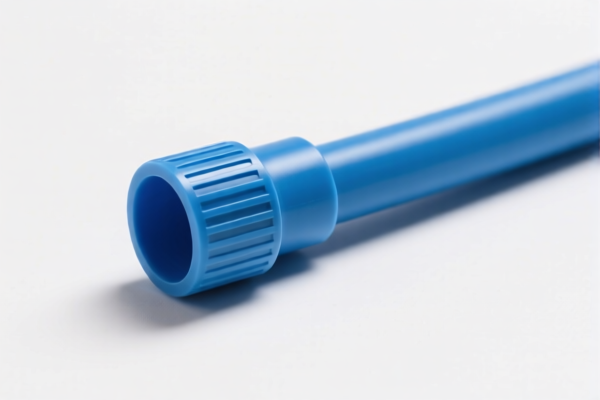
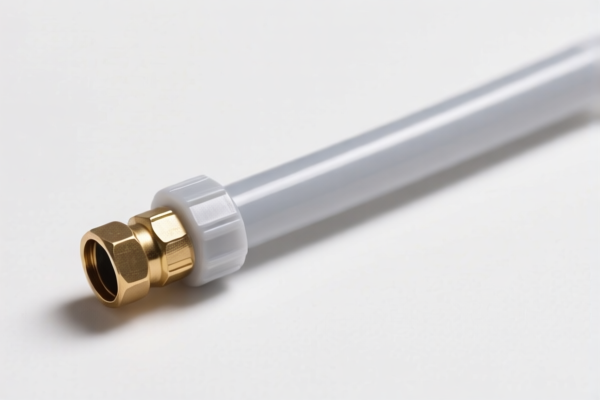

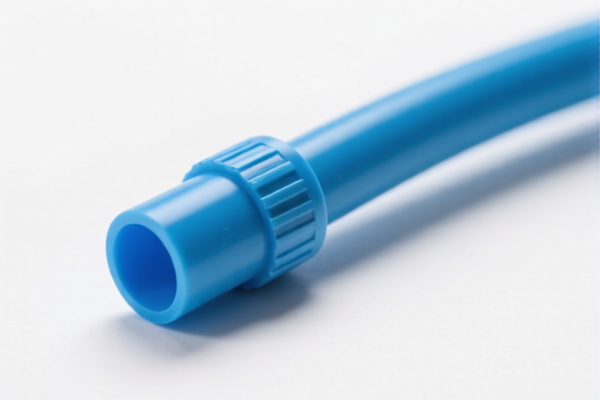
AI Analysis
🔌 Plastic Gas Tubes (Pneumatic/Hydraulic Tubing)
🌐 HS Code Reference & Customs Clearance Guide | 2024/2026 Latest Tariff Structure | Professional Compliance Strategy 📌 I. Product Definition & Classification: What is a "Plastic Gas Tube"?
"Plastic Gas Tubes" generally refer to flexible or rigid tubing made entirely of plastic (polymer), used for conveying gases (compressed air, nitrogen, etc.) or liquids (hydraulic oil, coolant). In international trade, they fall under Chapter 39: Plastics and Articles Thereof.
The critical distinction lies in the physical state and manufacturing process: * Flexible Tubes: Extruded plastic hoses (often reinforced but primarily plastic). * Rigid Pipes: Extruded or molded rigid tubes. * General Plastic Parts: If the item is a finished accessory (like a connector or a pre-cut, non-standardized part) rather than a standard pipe/hose, it may fall under general plastic articles.
⚠️ Key Classification Logic: * If it is a hose, tube, or pipe made of plastic → Chapters 3917 (Plastic pipes, hoses, tubes). * If it is a finished plastic article not specified elsewhere (e.g., a custom-formed plastic tube accessory) → Chapter 3926 (Other plastic articles).
📦 II. HS Code Classification Details (Based on Provided Data)
| HS Code | Product Description | Key Characteristics | Tax Rate (Total) |
|---|---|---|---|
| 3917.32.00.50 | Plastic Gas Tube | Material: Plastic; Form: Tube; Category: Other plastic pipes/tubes/hoses. Default category if specific material is not designated. | 38.1% |
| 3917.39.00.50 | Plastic Gas Tube | Material: Plastic; Form: Tube; Fits definition of plastic pipes, tubing, and hoses. | 38.1% |
| 3917.31.00.00 | Plastic Air Tube | Material: Plastic; Form: Tube; Meets plastic piping requirements. Inferred from "Other" categories. | 38.1% |
| 3917.29.00.90 | Plastic Pipe | Material: Plastic; Form: Pipe; Length unspecified, fits "Other" category logic. | 38.1% |
| 3926.90.99.87 | Plastic Tube (Accessory) | Material: Plastic; Form: Tube; Classified as a finished plastic article (hard pipe/accessory) based on fallback/general plastic article matching. | 22.8% |
🔍 Critical Distinction: * HS 3917.XX: Classifies the item as pipes, tubes, or hoses (functional conduits). * HS 3926.90.99.87: Classifies the item as a general plastic article (often used for custom parts, connectors, or non-standard tubes that don't fit the strict "pipe/hose" definition). * Tax Implication: Classifying under 3926 saves significant tariff costs (22.8% vs 38.1%), but requires strong justification that it is not a standard pipe/hose.
💰 III. 2024/2026 Latest Tariff Rate Breakdown (Detailed Tax Clauses)
✅ Applicable Country: USA (US) ✅ Origin: China (CN) ✅ Effective Time: 2025/2026 Period (Based on provided data)
🎯 1. 3917.32.00.50 / 3917.39.00.50 / 3917.31.00.00 / 3917.29.00.90
(Plastic Pipes, Tubes, and Hoses Category)
| Item | Content |
|---|---|
| Base Duty | 3.1% (Ad Valorem) |
| Section 301 Duty | +25.0% (USITC Additional Tariff) |
| Section 122 Duty | +10.0% (Specific surcharge for Chinese goods) |
| Total Tax Rate | 38.1% |
| Tax Calculation | CIF Value × 38.1% |
| De Minimis Eligibility | ❌ No (High tariffs prevent low-value exemption) |
| Legal Basis Path | USITC:3917.xxxxxxxx → SECTION301:25% → SECTION122:10% |
📌 Explanation: * These codes are classified as "Plastic Pipes, Tubes, and Hoses." * They are subject to both the 25% Section 301 tariff and the 10% Section 122 surcharge. * Total Burden: 38.1%. This is a high-cost category.
🎯 2. 3926.90.99.87
(Other Plastic Articles / Finished Goods Category)
| Item | Content |
|---|---|
| Base Duty | 5.3% (Ad Valorem) |
| Section 301 Duty | +7.5% (Reduced Additional Tariff) |
| Section 122 Duty | +10.0% (Specific surcharge for Chinese goods) |
| Total Tax Rate | 22.8% |
| Tax Calculation | CIF Value × 22.8% |
| De Minimis Eligibility | ❌ No |
| Legal Basis Path | USITC:3926.90.99.87 → SECTION301:7.5% → SECTION122:10% |
📌 Explanation: * This code falls under "Other Plastic Articles" (Chapter 3926). * It benefits from a lower Section 301 rate (7.5% vs 25%). * Total Burden: 22.8%. This is 15.3% cheaper than the 3917 codes. * ⚠️ Risk: Must prove the item is NOT a standard pipe/hose. If customs inspects and determines it is a hose, they will reclassify it to 3917 and charge 38.1% + penalties.
🛠️ IV. Customs Clearance Practical Advice (Real-World Pitfall Avoidance)
✅ 1. Document Checklist (Mandatory)
| Document | Required | Notes |
|---|---|---|
| ✅ Product Specifications | ✔️ | Must clearly state: Material (e.g., PVC, PTFE, PE), Inner/Outer Diameter, Wall Thickness, Pressure Rating. |
| ✅ Product Photos | ✔️ | Show cross-section, ends (cut vs. fitted), and any branding. Crucial for proving it's not a standard hose. |
| ✅ Commercial Invoice | ✔️ | Description should be precise: "Plastic Tube for [Specific Use]" vs. "Plastic Hose for Pneumatic Systems." |
| ✅ Packing List | ✔️ | Weight and dimensions per package. |
| ✅ Material Safety Data Sheet (MSDS) | ✔️ | If the plastic contains specific chemicals, MSDS may be required for safety clearance. |
✅ 2. Classification Strategy (The "Golden Rule")
🔥 "Standard Conduit = 3917 (38.1%); Custom Accessory = 3926 (22.8%)"
| Scenario | Recommended HS Code | Tax Rate | Risk Level |
|---|---|---|---|
| Standard Pneumatic Hose (Flexible, reinforced, sold by meter/roll) | 3917.32.00.50 |
38.1% | 🟢 Low (Correct) |
| Rigid Plastic Pipe (e.g., PVC conduit for wiring/pneumatics) | 3917.29.00.90 |
38.1% | 🟢 Low (Correct) |
| Pre-formed Plastic Tube (e.g., custom-molded, specific shape, not standard pipe/hose) | 3926.90.99.87 |
22.8% | 🟠 High Risk - Must justify "non-pipe" nature. |
| Mixed Shipment (Hoses + Connectors) | Split Declaration | N/A | 🟢 Recommended |
📌 Advice: * If the product is a standard tube/hose used for conveying gas/liquid, do NOT try to force it into 3926. The risk of audit and penalty is too high. * If the product is a custom plastic tube that serves as a component (e.g., a specific molded part in a machine) and not a general-purpose pipe, 3926.90.99.87 is the optimal choice for cost savings.
✅ 3. Special Cases & Handling
| Case | Handling Advice |
|---|---|
| Reinforced Hoses | If the hose has textile or metal reinforcement but is still primarily plastic, it usually remains under 3917. Do not misclassify. |
| Food Grade vs. Industrial | Material specification (e.g., "Food Grade PVC") does not change the HS code, but may require additional certifications (FDA, EU 1935/2004) for clearance. |
| Small Diameter Tubing | Very small diameter tubes (e.g., <10mm) may still be classified as 3917.39.00.50. |
🌍 V. Global Market Comparison (2026 Perspective)
| Country/Region | Recommended HS Code | Tariff (China Origin) | Key Requirements |
|---|---|---|---|
| 🇺🇸 USA | 3917.32.00.50 |
38.1% | Section 301 + 122 apply. High cost. |
| 🇺🇸 USA | 3926.90.99.87 |
22.8% | Only if not a standard pipe. Lower cost. |
| 🇨🇳 China | 3917.32.00.00 |
~5-10% | Standard import duty. No Section 301/122. |
| 🇪🇺 EU | 3917.32.00.00 |
~0-5% | Generally low duty. CE marking may be needed. |
| 🇦🇺 Australia | 3917.32.00.00 |
~5% | No major surcharges. |
📌 Conclusion: * US Market: The tariff difference between 3917 and 3926 is 15.3%. For large shipments, this is significant. However, only use 3926 if the product is legally defensible as a "general plastic article." * Other Markets: Tariffs are generally much lower. The 122/301 clauses are unique to US-China trade tensions.
📌 VI. Common Errors & Pitfall Guide (Lessons Learned)
❌ Error 1: Declaring a standard pneumatic hose as "Plastic Part" (3926) to avoid 25% tariff. 👉 Consequence: Customs inspection reveals it's a hose. Back taxes + 25% penalty + seizure risk.
❌ Error 2: Mixing rigid pipes and flexible hoses in one declaration. 👉 Consequence: Misclassification. Delayed clearance.
❌ Error 3: Ignoring Section 122 (10%) surcharge. 👉 Consequence: Underpayment. Interest and penalties.
❌ Error 4: Vague description: "Plastic Tube." 👉 Consequence: Customs uses "Residual" code, potentially applying highest applicable duty.
✅ Correct Action:
"Flexible Plastic Pneumatic Hose, Material: Polyurethane, ID: 6mm, OD: 10mm, Reinforced: Yes, Model: ABC123" or "Custom Molded Plastic Conduit Component, Plastic, Non-Pipe Article, Model: XYZ789"
🎯 VII. Conclusion: Professional Declaration, Cost Optimization
🎯 Remember the Mantra:
🔹 "Standard Pipe/Hose = 3917 (38.1%); Custom Part = 3926 (22.8%)." 🔹 "Don't lie about the product type. If it's a hose, pay the 38.1%. If it's a part, prove it's a part."
📌 Pro Tip: If you are importing large volumes, consider: 1. Pre-Ruling: Apply for an Advance Ruling from US CBP to confirm if your specific product qualifies for 3926. 2. Supply Chain Diversification: If tariffs are too high, consider sourcing from Vietnam or Mexico (if applicable) to avoid Section 301/122.
📣 Immediate Action:
📞 Consult a licensed customs broker BEFORE shipment. 📸 Provide clear photos and specs to determine if 3926 is legally viable. 🚀 Save 15.3% on tariffs by choosing the right HS Code!
✨ Professional clearance starts with accurate classification! 💼 Your bottom line depends on the first line of the declaration.
Customer Reviews
About HS Code Classification
The Harmonized System (HS) is an internationally standardized nomenclature developed by the World Customs Organization (WCO) to classify traded products. Over 200 countries use the HS system as the basis for customs tariffs, trade statistics, and import/export regulations.
Each HS code follows a hierarchical structure:
- Chapter (2 digits) — Broad category of goods (e.g., Chapter 84: Machinery and Mechanical Appliances)
- Heading (4 digits) — More specific grouping within the chapter
- Subheading (6 digits) — Internationally standardized breakdown, used by all WCO member countries
- National subdivisions (8-10 digits) — Country-specific extensions for further classification, such as US HTSUS 10-digit codes
Correct HS code classification is essential for smooth customs clearance, accurate duty payment, and compliance with trade regulations. Misclassification can lead to customs delays, overpayment of duties, or penalties.
When importing from CN to US, the applicable tariff rates may include:
- Most-Favored-Nation (MFN) rate — The standard duty rate applied to WTO members
- General rate — Applied to countries without trade agreements
- Trade remedy duties — Additional tariffs such as Section 301 (anti-dumping), Section 232 (national security), or countervailing duties
The information provided on this page is for reference purposes only. For official classification, please consult with your local customs authority or a licensed customs broker.