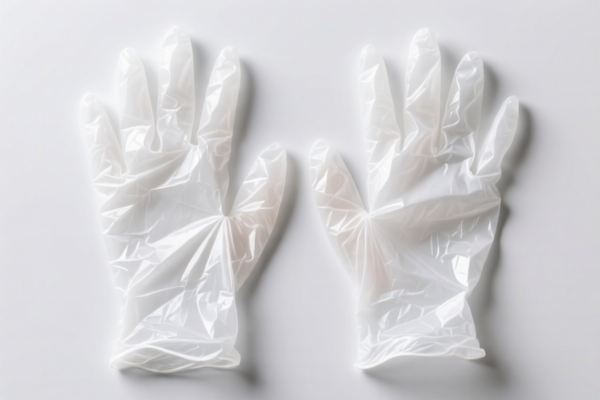
plastic gloves
CN → US| HS Code | Tariff Rate | Origin | Destination | Doc |
|---|---|---|---|---|
| 4015191110 | 38.0% | CN | US | Official Doc |
| 4015195100 | 49.0% | CN | US | Official Doc |
| 3926201020 | 10.0% | CN | US | Official Doc |
| 3926204010 | 16.5% | CN | US | Official Doc |
| 6116104400 | 27.4% | CN | US | Official Doc |
| 3926204050 | 16.5% | CN | US | Official Doc |
Product Images



AI Analysis
🧤 Plastic Gloves: HS Code Classification & US Customs Clearance Guide (2026)
🌐 HS Code Reference & Clearance Strategy | Updated Tariff Analysis | Critical Compliance Guide
📌 Part I: Product Definition & Classification Logic
Plastic Gloves are versatile protective or household items made primarily from polymers. In international trade, classification hinges on material composition, processing method (coating vs. molded), and specific use. Misclassification here leads to severe tariff penalties (up to 49% vs 10%).
⚠️ Key Distinction Points:
- Raw Material: Is it pure plastic (Chapter 39) or rubber/latex (Chapter 40)?
- Structure: Is it a coated fabric (textile base + plastic layer) or a molded plastic item?
- Intended Use: Industrial protective vs. household/cleaning vs. fashion accessory.
📦 Part II: Detailed HS Code Breakdown (2026 Latest Tariff Schedule)
The following table maps specific product characteristics to the correct HS Codes and their corresponding tax structures based on your provided data.
| HS Code | Product Description & Logic | Material/State | Applicable Scenario | Total Tax Rate (US Origin) |
|---|---|---|---|---|
| 4015.19.11.10 | Rubber-based Gloves Material matches vulcanized rubber. Used as gloves. |
Vulcanized Rubber | Industrial medical or heavy-duty rubber gloves. | 38.0% |
| 4015.19.51.00 | Synthetic Rubber Gloves Material matches vulcanized or synthetic rubber. |
Synthetic/Vulcanized Rubber | High-performance industrial gloves. | 49.0% |
| 3926.20.10.20 | General Plastic Gloves Material is plastic. Form is gloves. No specific use defined (catch-all). |
Pure Plastic (e.g., PVC, PE) | General household, catering, or low-grade protective gloves. | 10.0% |
| 3926.20.40.10 | Standard Plastic Gloves Material is plastic. Form is gloves. Fits plastic product & glove characteristics. |
Pure Plastic | Standard disposable or reusable plastic gloves. | 16.5% |
| 6116.10.44.00 | Coated/Laminated Gloves Plastic or rubber impregnated, coated, covered, or laminated onto a base. |
Composite (Fabric + Coating) | Textile gloves with plastic/rubber coating for grip/protection. | 27.4% |
| 3926.20.40.50 | Plastic Coated Gloves (Apparel) Plastic coating material. Form/use is gloves. Classified as apparel accessory. |
Plastic Coating | Fashion accessories or specific apparel-linked gloves. | 16.5% |
🔍 Critical Classification Note:
- Chapter 40 (Rubber) vs Chapter 39 (Plastic): If the glove is made of natural or synthetic rubber (vulcanized), it goes to4015. If it is plastic (PVC, PU, PE), it goes to3926.
- Base Material Matters: If the glove is a fabric glove dipped in plastic, it may fall under 6116 (knitted/crocheted gloves with plastic coating) rather than pure plastic gloves.
- Use Defines Subheading: For Chapter 39, if no specific use is declared,3926.20.10.20is the default "catch-all." Specific uses may push it to3926.20.40.10or3926.20.40.50.
💰 Part III: 2026 Tariff Rate Breakdown (Detailed Tax Analysis)
✅ Applicable Country: United States (US)
✅ Origin: China (CN)
✅ Effective Date: Current tariff structure applies.
🎯 1. Rubber-Based Gloves (4015.19.11.10 & 4015.19.51.00)
These items carry the highest risk due to higher base duties on rubber products combined with Section 301 tariffs.
| HS Code | Base Duty | Section 301 (Add'l) | 122 Clause | Total Tax Rate | Legal Basis Path |
|---|---|---|---|---|---|
| 4015.19.11.10 | 3.0% | 25.0% | 10.0% | 38.0% | USITC:4015.19.11.10 → Footnote:301 → IEEPA:122 |
| 4015.19.51.00 | 14.0% | 25.0% | 10.0% | 49.0% | USITC:4015.19.51.00 → Footnote:301 → IEEPA:122 |
📌 Explanation:
- Base Duty: Varies by exact rubber type. Synthetic rubber often has a higher base duty (14%) than natural/vulcanized rubber variants (3%).
- Section 301: A flat 25% surcharge on most Chinese rubber goods.
- 122 Clause: An additional 10% tariff applied under specific trade enforcement provisions.
- Result: Total rates range from 38% to 49%. This is a high-cost classification.
🎯 2. Pure Plastic Gloves (3926.20.10.20 & 3926.20.40.10)
Plastic gloves generally enjoy lower base duties, but Section 301 and 122 clauses still apply.
| HS Code | Base Duty | Section 301 (Add'l) | 122 Clause | Total Tax Rate | Legal Basis Path |
|---|---|---|---|---|---|
| 3926.20.10.20 | 0.0% | 0.0% | 10.0% | 10.0% | USITC:3926.20.10.20 → IEEPA:122 |
| 3926.20.40.10 | 6.5% | 0.0% | 10.0% | 16.5% | USITC:3926.20.40.10 → IEEPA:122 |
📌 Explanation:
- Base Duty: Can be as low as 0% (for generic plastic gloves) or 6.5% (for specific plastic glove types).
- Section 301: 0% for these specific plastic subheadings (a key saving!).
- 122 Clause: Still applies at 10%.
- Result: Total rates are 10% or 16.5%. This is a low-cost classification compared to rubber.
🎯 3. Coated/Laminated Gloves (6116.10.44.00)
Composite goods where plastic/rubber is applied to a textile base.
| HS Code | Base Duty | Section 301 (Add'l) | 122 Clause | Total Tax Rate | Legal Basis Path |
|---|---|---|---|---|---|
| 6116.10.44.00 | 9.9% | 7.5% | 10.0% | 27.4% | USITC:6116.10.44.00 → Footnote:301 → IEEPA:122 |
📌 Explanation:
- Base Duty: 9.9%.
- Section 301: Only 7.5% (lower than the standard 25% for other chapters).
- 122 Clause: 10%.
- Result: 27.4%. Moderate cost, but structure is complex.
🎯 4. Apparel Accessory Gloves (3926.20.40.50)
Classified under accessories/apparel rather than pure plastic goods.
| HS Code | Base Duty | Section 301 (Add'l) | 122 Clause | Total Tax Rate | Legal Basis Path |
|---|---|---|---|---|---|
| 3926.20.40.50 | 6.5% | 0.0% | 10.0% | 16.5% | USITC:3926.20.40.50 → IEEPA:122 |
📌 Explanation:
- Benefits from 0% Section 301 tariff.
- Total rate matches the standard plastic glove category: 16.5%.
🛠️ Part IV: Customs Clearance Practical Advice
✅ 1. Essential Documentation Checklist
| Document | Required? | Why? |
|---|---|---|
| Product Specification Sheet | ✔️ | Must detail material (e.g., "100% PVC," "Vulcanized Nitrile Rubber"), thickness, and coating type. |
| Material Composition Statement | ✔️ | Critical to distinguish between Plastic (Ch 39) and Rubber (Ch 40). Misstatement leads to audits. |
| Product Photos (Inside/Outside) | ✔️ | To verify if it is a molded plastic glove vs. a fabric glove with coating (which would fall under 6116). |
| Commercial Invoice | ✔️ | Must clearly state "Plastic Gloves" or "Rubber Gloves" and HS Code. Avoid vague terms like "Hand Protection." |
| Country of Origin Certificate | ✔️ | Confirms China origin to apply correct Section 301 and 122 duties. |
✅ 2. Declaration Strategy (Key Formulas)
🔥 "Material First, Then Structure, Then Use!"
| Product Type | Recommended HS Code | Declaration Keyword | Risk Level |
|---|---|---|---|
| Pure Plastic Disposable Gloves | 3926.20.10.20 or 3926.20.40.10 |
"PVC Plastic Gloves, Disposable" | 🟢 Low (10-16.5%) |
| Vulcanized Rubber Medical Gloves | 4015.19.11.10 |
"Vulcanized Rubber Surgical Gloves" | 🟡 Medium (38%) |
| Synthetic Rubber Industrial Gloves | 4015.19.51.00 |
"Nitrile Rubber Industrial Gloves" | 🔴 High (49%) |
| Fabric Gloves with Plastic Coating | 6116.10.44.00 |
"Knitted Cotton Gloves with PVC Coating" | 🟡 Medium (27.4%) |
⚠️ Pitfall Alert:
- Do NOT declare "Rubber Gloves" if they are actually PVC plastic.
- Do NOT declare "Plastic Gloves" if they are Nitrile/Latex rubber.
- Consequence: Customs may reclassify to the higher duty item (4015.19.51.00at 49%) + penalties.
✅ 3. Special Cases & Optimization
| Scenario | Strategy |
|---|---|
| Mix of Plastic & Rubber | Separate shipments if possible. Plastic gloves (3926) are significantly cheaper to import (10-16.5%) than rubber (4015, 38-49%). |
| Coated Fabric Gloves | Ensure the base fabric is declared. If the base is synthetic fibers, confirm if it fits 6116.10.44.00. If it's pure plastic dipped, use 3926. |
| Gift Sets (Gloves + Brush) | Declare gloves separately. Mixing with unrelated items can trigger complex classification rules. |
| Pre-Clearance Ruling | For large volumes, apply for an Advance Ruling from CBP. It locks in the HS Code and prevents retroactive duty changes. |
🌍 Part V: Global Market Comparison (2026)
| Market | Recommended HS Code | Est. Total Duty (China Origin) | Key Requirement |
|---|---|---|---|
| 🇺🇸 USA | 3926.20.10.20 (Plastic) |
10.0% | IEEPA 122 Clause applies. Section 301 is 0% for this subheading. |
| 🇺🇸 USA | 4015.19.51.00 (Rubber) |
49.0% | High Section 301 + 122 Clause. Very expensive. |
| 🇨🇳 China | 3926.20.10.20 |
Low/Zero | No additional punitive tariffs. Standard MFN rates. |
| 🇪🇺 EU | 4015.19 / 3926.20 |
0-6.5% | No Section 301/122 equivalents. Standard EU Common Customs Tariff. |
📌 Conclusion for US Importers:
- Plastic Gloves (3926) are the most cost-effective entry point due to 0% Section 301 tariff (only 10% IEEPA 122 applies).
- Rubber Gloves (4015) face a 38-49% effective tax rate due to 25% Section 301 + 10% IEEPA 122 + base duty.
- Strategy: If your product can be formulated as a plastic compound (e.g., PVC, PE) rather than vulcanized rubber, consider redesigning or reclassifying to save ~29-39% in taxes.
📌 Part VI: Common Mistakes & Avoidance Guide
❌ Mistake 1: Calling all hand protections "Gloves" without specifying material.
👉 Result: Customs selects the highest default duty.
✅ Fix: Explicitly state "Vulcanized Rubber" or "PVC Plastic."
❌ Mistake 2: Confusing "Coated Gloves" (Fabric base) with "Plastic Gloves" (Solid plastic).
👉 Result: Wrong HS Code (3926 vs 6116).
✅ Fix: Check the base material. If woven/knitted fabric is visible inside, it’s likely 6116.
❌ Mistake 3: Ignoring the "122 Clause" (10%).
👉 Result: Underpayment of duties. This clause applies to ALL the listed HS codes.
✅ Fix: Always include the 10% 122 clause in your Landed Cost Calculation.
🎯 Part VII: Final Checklist for Importers
- Identify Material: Is it Plastic (Ch 39) or Rubber (Ch 40)?
- Check Structure: Is it molded plastic or coated fabric?
- Calculate Tax:
- Plastic (Molded): ~10-16.5%
- Rubber: ~38-49%
- Coated Fabric: ~27.4%
- Declare Precisely: Use full descriptions (e.g., "Disposable PVC Plastic Gloves, Nitrile-Free").
- Verify Origin: Ensure COO is marked "Made in China" to trigger correct additional duties.
✨ Professional Clearance Starts with Accurate Classification!
💼 Save up to 39% in duties by correctly classifying Plastic vs. Rubber Gloves.
🚀 Optimize your supply chain today!
Customer Reviews
About HS Code Classification
The Harmonized System (HS) is an internationally standardized nomenclature developed by the World Customs Organization (WCO) to classify traded products. Over 200 countries use the HS system as the basis for customs tariffs, trade statistics, and import/export regulations.
Each HS code follows a hierarchical structure:
- Chapter (2 digits) — Broad category of goods (e.g., Chapter 84: Machinery and Mechanical Appliances)
- Heading (4 digits) — More specific grouping within the chapter
- Subheading (6 digits) — Internationally standardized breakdown, used by all WCO member countries
- National subdivisions (8-10 digits) — Country-specific extensions for further classification, such as US HTSUS 10-digit codes
Correct HS code classification is essential for smooth customs clearance, accurate duty payment, and compliance with trade regulations. Misclassification can lead to customs delays, overpayment of duties, or penalties.
When importing from CN to US, the applicable tariff rates may include:
- Most-Favored-Nation (MFN) rate — The standard duty rate applied to WTO members
- General rate — Applied to countries without trade agreements
- Trade remedy duties — Additional tariffs such as Section 301 (anti-dumping), Section 232 (national security), or countervailing duties
The information provided on this page is for reference purposes only. For official classification, please consult with your local customs authority or a licensed customs broker.