Plastic Grey Hose
CN → US| HS Code | Tariff Rate | Origin | Destination | Doc |
|---|---|---|---|---|
| 3917290050 | 38.1% | CN | US | Official Doc |
| 3917320010 | 38.1% | CN | US | Official Doc |
| 3917310000 | 38.1% | CN | US | Official Doc |
| 3917320020 | 38.1% | CN | US | Official Doc |
| 3917330000 | 38.1% | CN | US | Official Doc |
Product Images
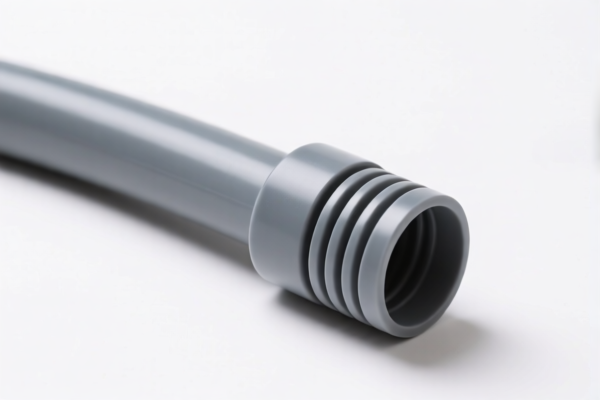
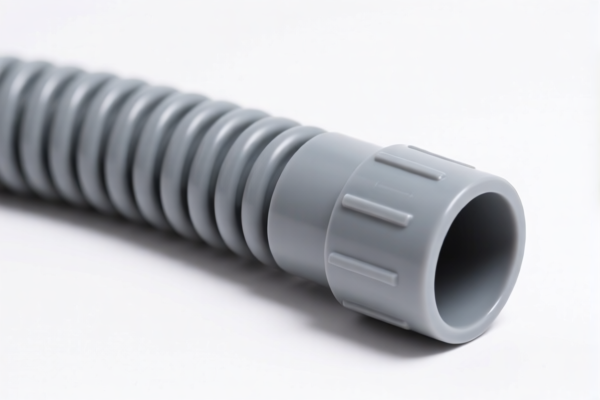
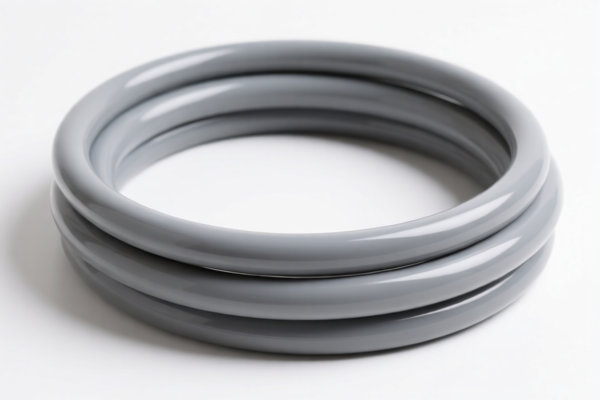
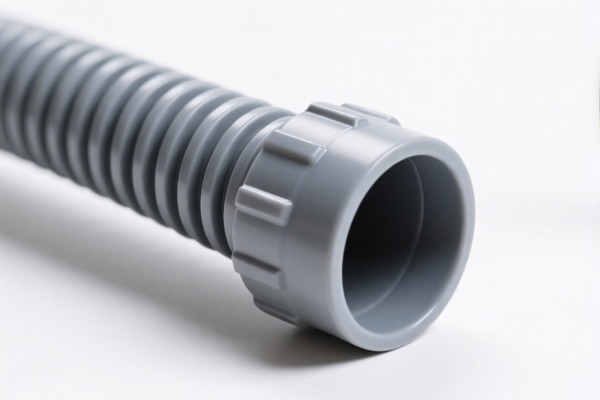
AI Analysis
🛢️ Plastic Grey Hose (Grey Polymeric Tubing)
🌐 HS Code Reference & Customs Clearance Guide | 2026 Latest Tariff Analysis | Professional-Level Entry Strategy 📌 I. Product Definition & Classification: Do You Know "Grey Hose"?
"Plastic Grey Hose" is a generic commercial term that usually refers to flexible or rigid tubing made from polymeric materials (such as PVC, PE, PEX, or chemical-resistant plastics) characterized by its grey color. In international trade, precise classification depends heavily on material composition, physical state (rigid vs. flexible), and specific use (chemical vs. general).
⚠️ Key Distinction Points: - Rigid vs. Flexible: Is it a hard pipe (capable of holding its shape without support) or a flexible tube (can be coiled/bent easily)? - Chemical Resistance: Is it specifically designed for transporting aggressive chemical media? - Material: What is the primary polymer (PE, PVC, PP, etc.)?
📦 II. HS Code Classification Details (2026 Latest Tariff Authority Reference)
Based on the provided data, here are the specific classifications for "Plastic Grey Hose" depending on its exact characteristics:
| HS Code | Product Description | Application Scenario | Key Classification Criteria |
|---|---|---|---|
3917.29.00.50 |
Rigid Plastic Pipes | General plumbing, construction, water supply, drainage | ❌ Rigid state; made of plastic; not for chemical media specifically |
3917.32.00.10 |
Plastic Chemical Media Hoses | Chemical industry, lab equipment, industrial fluid transfer | ✅ Flexible; specifically for chemical media transmission |
3917.31.00.00 |
Plastic Chemical Media Hoses | Similar to above; industrial chemical transport | ✅ Flexible; for chemical media; may vary by specific polymer type under 3917.31 |
3917.32.00.20 |
Plastic PE/Yellow Hoses | General fluid transport, agricultural, water irrigation | ✅ Flexible; often PE (Polyethylene); note: "Yellow" in title but grey PE hoses often fall here if generic |
3917.33.00.00 |
Plastic PE Hoses | Water supply, gas lines (if certified), irrigation | ✅ Flexible; specifically PE (Polyethylene) material |
🔍 Important Note: - The term "Grey Hose" is not specific enough for customs. You must specify if it is Rigid (
3917.29) or Flexible (3917.3x). - If it is flexible, you must specify if it is for Chemical Media (3917.31/32) or General/PE (3917.32/33). - Misclassification between Rigid and Flexible can lead to significant duty discrepancies.
💰 III. 2026 Latest Tariff Rate Breakdown (Including Surtaxes & Policy Add-ons)
✅ Applicable Country: United States (US)
✅ Origin: China (CN)
✅ Effective Date: Current rates apply (Includes Section 301 & 122 Duties)
🎯 Common Tariff Structure for All Listed HS Codes
| Item | Content |
|---|---|
| Base Tariff Rate | 3.1% (Ad Valorem) |
| Section 301 Surcharge | +25.0% (Trump/Biden era tariffs on Chinese goods) |
| Section 122 Tariff | +10.0% (Specific additional duty on certain plastics/china goods) |
| Total Effective Rate | 38.1% |
| Tax Calculation | CIF Value × 38.1% |
| De Minimis Exemption | ❌ NOT Applicable (Value usually exceeds $800 threshold for exemption, but Section 301/122 duties often apply regardless) |
| Legal Basis Path | Base: 3917.xx → Section 301: Footnote 9903.88.01 → Section 122: HTSUS Add-on |
📌 Explanation: - Base 3.1%: Standard Most Favored Nation (MFN) rate for plastics hoses/pipes. - 25% Surtax: Imposed under Section 301 of the Trade Act of 1974 against China. - 10% Surtax: Imposed under Section 122 of the Trade Act of 1974 (or similar emergency measures depending on current 2026 regulations cited in data). - Total 38.1%: This is a high tariff burden. Importers must factor this into cost-plus pricing.
🛠️ IV. Customs Clearance Practical Advice (Real-World Pitfall Avoidance)
✅ 1. Required Documentation Checklist (None Can Be Missing)
| Document | Must Provide | Description |
|---|---|---|
| ✅ Product Specification Sheet | ✔️ | Must clearly state: Material (PE, PVC, etc.), State (Rigid/Flexible), Inner/Outer Diameter, Wall Thickness. |
| ✅ Product Photos | ✔️ | Show cross-section (to prove rigid/flexible), label (color: Grey), and markings (e.g., "PE", "Chemical Resistant"). |
| ✅ Commercial Invoice | ✔️ | Must specify "Plastic Hose, Grey, [Material]" — DO NOT just write "Hose". |
| ✅ Usage Statement | ✔️ | Is it for chemical transfer? Water? Air? This determines 3917.31/32 vs 3917.33. |
| ✅ Material Safety Data Sheet (MSDS) | ✔️ | Especially if claimed as "Chemical Media Hose" (3917.3x). |
| ✅ Packing List | ✔️ | Quantity, weight, packaging type. |
✅ 2. Declaration Techniques (Key Mnemonic)
🔥 “Rigid is 29, Flexible is 3x; Chemical needs care, PE goes to 33!”
| Scenario | Correct HS Code | Common Mistake | Consequence |
|---|---|---|---|
| Grey Rigid Pipe (e.g., PVC conduit) | 3917.29.00.50 |
Declared as Flexible Hose | May face inspection for misclassification; potential penalty. |
| Grey Flexible PE Hose (Water/Irrigation) | 3917.33.00.00 or 3917.32.00.20 |
Declared as Chemical Hose | Unnecessary scrutiny; potential delay if chemical certification is requested. |
| Grey Chemical Resistant Hose | 3917.32.00.10 or 3917.31.00.00 |
Declared as General PE Hose | High risk of customs rejection if chemical resistance is claimed but not proven. |
| Mixed Batch (Rigid + Flexible) | Split Declaration | Single Declaration | Customs may reject mixed lot; demand separation. |
✅ 3. Special Situation Handling
| Situation | Handling Advice |
|---|---|
| OEM Grey Hoses | Provide customer PO and design specs. If color is customized, note "Grey (Custom)". |
| Chemical Resistance Claim | Must provide test reports (e.g., ASTM D543) proving resistance to specific chemicals if using 3917.3x. |
| PE vs. PVC | Clearly distinguish. PE (3917.33) and PVC (often 3917.31/32) have different physical properties and tariffs in some contexts. |
| Small Samples | Even small quantities are subject to 38.1% duty if from China. No de minimis exemption for Section 301 goods. |
🌍 V. Global Market Comparison (2026 Latest)
| Country/Region | Recommended HS Code | Tariff Rate (China Origin) | Certification Required | Notes |
|---|---|---|---|---|
| 🇺🇸 USA | 3917.29.00.50 / 3917.3x |
38.1% (Base 3.1% + 25% + 10%) | None specific for plastic, but FTC labeling required | High duty; plan pricing accordingly. |
| 🇨🇳 China | 3917.29 / 3917.3x |
3.1% - 7.5% | CCC (if applicable) | Lower duty; import-friendly. |
| 🇪🇺 EU | 3917.29 / 3917.3x |
0% - 4.5% | REACH, RoHS | No Section 301/122 equivalent. |
| 🇬🇧 UK | 3917.29 / 3917.3x |
0% - 4.5% | UKCA, REACH | Post-Brexit rules align with EU. |
| 🇯🇵 Japan | 3917.29 / 3917.3x |
0% - 3.1% | JIS, PSE (if electrical) | Low tariff; strict quality checks. |
📌 Conclusion: - USA is the most expensive market due to 38.1% total duty. - EU/UK/Japan are significantly more cost-effective (under 5%). - Consider supply chain diversification (e.g., sourcing from Vietnam/Mexico) if exporting to the US to avoid surtaxes.
📌 VI. Common Errors & Pitfall Guide (Blood & Tears Lessons)
❌ Mistake 1: Declaring "Plastic Hose" without specifying Rigid or Flexible. 👉 Result: Customs will issue a Request for Information (RFI), delaying clearance by 7-14 days.
❌ Mistake 2: Claiming "Chemical Hose" (3917.31/32) for general water hoses.
👉 Result: Customs may demand chemical test reports. If none provided, reclassification and penalty.
❌ Mistake 3: Ignoring the 10% Section 122 duty. 👉 Result: Underpayment of duties → Audit risk, back taxes, and fines.
❌ Mistake 4: Using "Grey" as the sole descriptor. 👉 Result: "Grey" is a color, not a material. Must specify PE, PVC, PEX, etc.
✅ Correct Declaration Example:
"Plastic Grey Flexible Hose, Material: Polyethylene (PE), Diameter: 1 inch, Use: Water Irrigation, Model: XYZ-100"
🎯 VII. Conclusion: Precision in Classification, Profit in Clearance
🎯 Remember the Mnemonic:
🔹 "Rigid 29, Flexible 3x; Chemical needs proof, PE 33; 38.1% Total Duty, Plan Ahead!" 🔹 "HS Code decides fate, 38% duty is steep, declare material right, profits don't leak!"
📌 Pro Tip: If your grey hoses are originating from Vietnam, Mexico, Thailand, or Malaysia, you may be eligible for Section 301 Exclusions or lower tariffs (0%~5%). ✅ Recommendation: Apply for a Customs Ruling (Advance Ruling) before shipment to confirm the correct HS Code and duty rate.
📣 Immediate Action:
📞 Contact a professional customs broker + Provide Material Spec + Apply for HS Code Pre-ruling
🚀 Ensure your grey hoses clear customs smoothly, avoid 38.1% shock, and maximize margin!
✨ Professional Clearance Starts with Accurate Classification!
💼 Every penny of duty saved is pure profit!
Customer Reviews
About HS Code Classification
The Harmonized System (HS) is an internationally standardized nomenclature developed by the World Customs Organization (WCO) to classify traded products. Over 200 countries use the HS system as the basis for customs tariffs, trade statistics, and import/export regulations.
Each HS code follows a hierarchical structure:
- Chapter (2 digits) — Broad category of goods (e.g., Chapter 84: Machinery and Mechanical Appliances)
- Heading (4 digits) — More specific grouping within the chapter
- Subheading (6 digits) — Internationally standardized breakdown, used by all WCO member countries
- National subdivisions (8-10 digits) — Country-specific extensions for further classification, such as US HTSUS 10-digit codes
Correct HS code classification is essential for smooth customs clearance, accurate duty payment, and compliance with trade regulations. Misclassification can lead to customs delays, overpayment of duties, or penalties.
When importing from CN to US, the applicable tariff rates may include:
- Most-Favored-Nation (MFN) rate — The standard duty rate applied to WTO members
- General rate — Applied to countries without trade agreements
- Trade remedy duties — Additional tariffs such as Section 301 (anti-dumping), Section 232 (national security), or countervailing duties
The information provided on this page is for reference purposes only. For official classification, please consult with your local customs authority or a licensed customs broker.