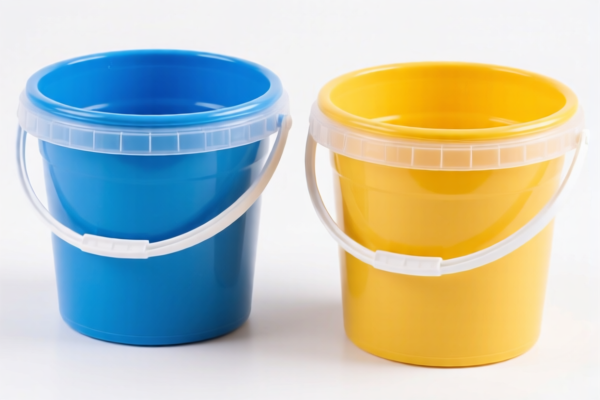
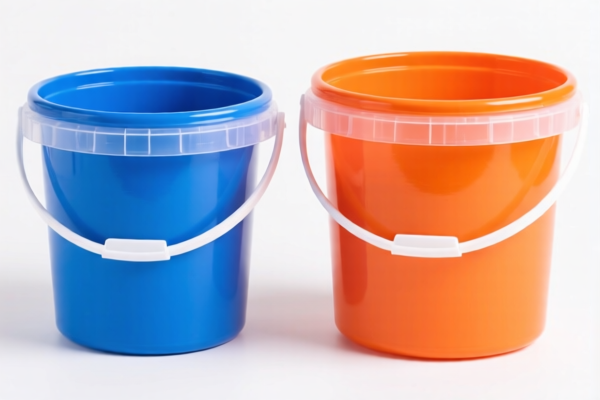
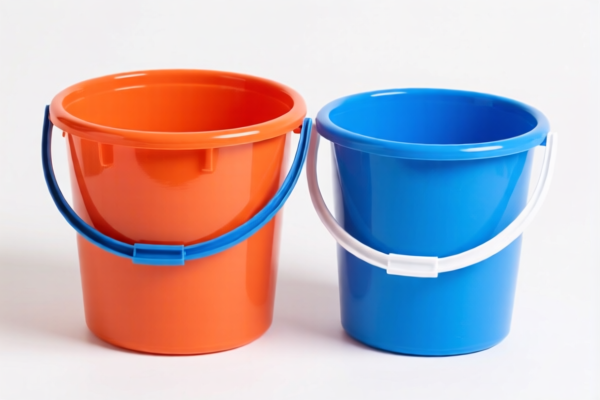
plastic household buckets
CN → US| HS Code | Tariff Rate | Origin | Destination | Doc |
|---|---|---|---|---|
| 3923900012 | 38.0% | CN | US | Official Doc |
| 3926901000 | 20.9% | CN | US | Official Doc |
| 3926904000 | 12.8% | CN | US | Official Doc |
| 3923900014 | 38.0% | CN | US | Official Doc |
| 3926909989 | 22.8% | CN | US | Official Doc |
Product Images

AI Analysis
🪣 Plastic Household Buckets: HS Code Classification & US Customs Clearance Guide (2026)
🌐 HS Code Reference & Customs Clearance Strategy | 2026 Latest Tariff Analysis | Professional Entry Guide
📌 I. Product Definition & Classification: Do You Really Understand "Plastic Buckets"?
Plastic household buckets are ubiquitous containers used for cleaning, storage, and transport in domestic and light industrial settings. In international trade, their classification depends heavily on specific usage, structural design, and whether they are specialized containers. Under the Harmonized System (HS), they are primarily split between Heading 3923 (Articles for the conveyance or packing of goods) and Heading 3926 (Other articles of plastics).
Key Distinction:
- Packing/Conveyance (3923): Buckets designed specifically for transporting goods, chemicals, or bulk materials (often with handles, reinforced structures, or specific lid compatibility).
- General Use/Articles (3926): Buckets used for general household purposes (cleaning, carrying water) or as general plastic goods without specific "packing" functionality.
⚠️ Critical Differentiator:
- If the bucket is explicitly designed as a shipping container or chemical drum (even if plastic) → It may fall under 3923 (Packing).
- If it is a general utility bucket (e.g., mop bucket, laundry bucket) → It falls under 3926 (Other plastic articles).
- Note: Despite the English name "Buckets and Pails" appearing in the summaries, the HS Code determination hinges on whether it is considered a "packing article" (3923) or a "general article" (3926).
📦 II. HS Code Classification Details (2026 Latest Tariff Matrix)
Based on the provided data, here is the detailed breakdown for plastic buckets:
| HS Code | Product Description | Classification Logic | Total Tax Rate |
|---|---|---|---|
3923.90.00.12 |
Plastic Transport Bucket (Plastic, Bucket Form) | Classified under Buckets and pails for transport/packing. High tariff due to specific packing classification. | 38.0% |
3926.90.10.00 |
Plastic Transport Bucket (Plastic, Usage: Transport) | Classified as Buckets and pails based on usage. Lower tax than 3923.90.00.12. | 20.9% |
3926.90.40.00 |
Plastic Bucket (Plastic, Form: Article) | Classified as Other plastic articles (not specifically "buckets/pails" in this subheading). Lowest base tax. | 12.8% |
3923.90.00.14 |
Plastic Transport/Chemical Bucket (Plastic, Bucket Form) | Fits Buckets/pails definition for packing. High tariff due to packing classification. | 38.0% |
3926.90.99.89 |
Plastic Chemical Bucket (Plastic, Form: Container) | Classified as Other plastic containers. High base tax due to container nature. | 22.8% |
🔍 Key Insight:
- The term "Buckets and Pails" appears in the summary for3923.90.00.12and3923.90.00.14, indicating they are treated as packing/conveyance articles.
-3926.90.10.00also mentions "Buckets and pails" but is classified under 3926 (Other articles), resulting in a lower tax rate (20.9%) compared to the 3923 codes (38.0%).
- Warning: Misclassifying a general bucket as a "packing" item (3923) can lead to a 17% higher tariff (38% vs 20.9%).
💰 III. 2026 US Tariff Rate Breakdown (Detailed Tax Clauses)
✅ Applicable Country: United States (US)
✅ Origin: China (CN)
✅ Effective Date: Post-2025 (Includes Section 301 & Section 122 tariffs)
🎯 1. 3923.90.00.12 & 3923.90.00.14 —— Plastic Packing/Transport Buckets
Total Tax: 38.0%
| Component | Rate | Legal Basis |
|---|---|---|
| Basic Tariff | 3.0% | General MFN Rate |
| Section 301 Tariff | 25.0% | USITC Footnote 9903.88.01 (China-specific) |
| Section 122 Tariff | 10.0% | IEEPA/Customs Directive (China-specific) |
| Total | 38.0% | Sum of all applicable rates |
📌 Explanation:
- These codes are classified under Heading 3923 (Articles for the conveyance or packing of goods).
- They attract the highest penalty rates due to the 25% Section 301 tariff + 10% Section 122 tariff.
- Risk: High. De minimis exemption is NOT AVAILABLE for these high-value/high-risk classifications if declared as "packing."
🎯 2. 3926.90.10.00 —— General Plastic Transport Buckets
Total Tax: 20.9%
| Component | Rate | Legal Basis |
|---|---|---|
| Basic Tariff | 3.4% | General MFN Rate |
| Section 301 Tariff | 7.5% | USITC Footnote 9903.88.01 (Partial exemption or lower tier) |
| Section 122 Tariff | 10.0% | IEEPA/Customs Directive |
| Total | 20.9% | Sum of all applicable rates |
📌 Explanation:
- Classified under Heading 3926 (Other articles of plastics).
- Despite mentioning "Transport" in the summary, it is not classified as a "packing article" under 3923, resulting in a lower Section 301 rate (7.5% vs 25%).
- Advantage: 17.1% cheaper than3923.90.00.12.
🎯 3. 3926.90.40.00 —— General Plastic Household Buckets
Total Tax: 12.8%
| Component | Rate | Legal Basis |
|---|---|---|
| Basic Tariff | 2.8% | General MFN Rate |
| Section 301 Tariff | 0.0% | Not subject to Section 301 (or exempt) |
| Section 122 Tariff | 10.0% | IEEPA/Customs Directive |
| Total | 12.8% | Sum of all applicable rates |
📌 Explanation:
- Classified as Other plastic articles.
- Zero Section 301 tariff is a significant advantage.
- Best Option for general household buckets that are not primarily used for industrial packing or chemical transport.
🎯 4. 3926.90.99.89 —— Plastic Chemical Buckets/Containers
Total Tax: 22.8%
| Component | Rate | Legal Basis |
|---|---|---|
| Basic Tariff | 5.3% | General MFN Rate |
| Section 301 Tariff | 7.5% | USITC Footnote 9903.88.01 |
| Section 122 Tariff | 10.0% | IEEPA/Customs Directive |
| Total | 22.8% | Sum of all applicable rates |
📌 Explanation:
- Classified under "Other containers."
- Higher basic tariff (5.3%) due to the "container" classification, but lower Section 301 rate (7.5%).
🛠️ IV. Customs Clearance Practical Advice
✅ 1. Documentation Checklist
| Document | Required | Purpose |
|---|---|---|
| Product Description | ✔️ | Must clearly state: "Plastic Bucket," "Household Use," "Not for Industrial Packing" |
| Product Photos | ✔️ | Show handle, lid (if any), and interior structure |
| Material Specification | ✔️ | Confirm 100% Plastic (e.g., HDPE, PP) |
| Usage Statement | ✔️ | Explicitly state: "For household cleaning/laundry, NOT for chemical transport or bulk goods" |
| Commercial Invoice | ✔️ | Harmonize description with HS Code |
| Packing List | ✔️ | Ensure no "drum" or "chemical container" terminology is used |
✅ 2. Classification Strategy (Critical!)
🔥 "Household Use = 3926; Industrial Packing = 3923!"
| Scenario | Recommended HS Code | Tax Rate | Risk Level |
|---|---|---|---|
| Home Cleaning/Laundry Bucket | 3926.90.40.00 |
12.8% | ✅ Low (Best Option) |
| General Utility Bucket (Non-Chemical) | 3926.90.10.00 |
20.9% | ⚠️ Medium |
| Chemical/Industrial Drum (Plastic) | 3923.90.00.14 or 3926.90.99.89 |
22.8%-38.0% | ❌ High (Heavy Tax) |
| Bulk Transport Barrel | 3923.90.00.12 |
38.0% | ❌ High (Highest Tax) |
✅ 3. Avoiding Common Pitfalls
❌ Mistake 1: Using the word "Drum" or "Chemical Container" in the description.
👉 Consequence: Customs may reclassify to 3923.90.00.12 or 3926.90.99.89, increasing tax by 25%+.
❌ Mistake 2: Declaring a general bucket as "Packing Material."
👉 Consequence: Misclassification under Heading 3923 triggers the 25% Section 301 tariff.
❌ Mistake 3: Ignoring the "Section 122" tariff.
👉 Consequence: All these items are subject to an additional 10% regardless of HS Code. This is non-negotiable for Chinese-origin goods.
✅ 4. Special Recommendations
- For Household Buckets:
- Use HS Code
3926.90.40.00if possible. - Justification: The bucket is for general household use (e.g., carrying water, laundry), not for transporting goods in commerce.
-
Result: Lowest total tax (12.8%).
-
For Transport Buckets (Non-Chemical):
- Use HS Code
3926.90.10.00. - Justification: While used for transport, it is not a "packing article" under 3923.
-
Result: Moderate tax (20.9%).
-
For Chemical/Industrial Buckets:
- Use HS Code
3926.90.99.89if possible, otherwise3923.90.00.14. - Justification: Must declare as chemical-resistant.
- Result: High tax (22.8%-38.0%).
🌍 V. Global Market Comparison (2026)
| Region | Recommended HS Code | Total Tax (China Origin) | Key Notes |
|---|---|---|---|
| 🇺🇸 USA | 3926.90.40.00 |
12.8% | Includes 10% Section 122 + 2.8% Basic. No Section 301. |
| 🇪🇺 EU | 3926.90.99 | ~6.5% | No Section 301/122. Standard MFN applies. |
| 🇨🇳 China (Import) | 3926.90.99 | ~6.5% | Standard MFN rate. |
| 🇯🇵 Japan | 3926.90.99 | ~7.5% | Standard MFN rate. |
📌 Conclusion:
- The US market is uniquely expensive due to Section 301 and Section 122 tariffs.
- Strategic Classification is critical to minimize costs.
- Household use buckets should be clearly marketed and declared as non-packing, non-chemical items to qualify for the lowest tax bracket (3926.90.40.00).
📌 VI. Summary & Action Plan
🎯 Golden Rule for Plastic Buckets:
"Household = 3926.40 (12.8%) | General Transport = 3926.10 (20.9%) | Packing/Chemical = 3923 (38%)"
✅ Immediate Actions:
- Review Product Design: Is it truly for household use? If yes, aim for
3926.90.40.00. - Update Descriptions: Remove words like "industrial," "chemical," or "packing" from invoices and listings.
- Confirm Origin: Ensure all goods are marked "Made in China" to trigger accurate tariff calculation.
- Consult Customs Broker: Submit product photos and specifications for a Pre-Ruling if the volume is significant.
📣 Final Reminder:
Accurate classification saves 25% in tariffs.
Don't let a misclassified "bucket" cost you $2,500 per $10,000 shipment.
Optimize. Declare. Save.
✨ Professional Clearance Starts with Precision!
💼 Every percentage point counts in the age of trade wars.
Customer Reviews
About HS Code Classification
The Harmonized System (HS) is an internationally standardized nomenclature developed by the World Customs Organization (WCO) to classify traded products. Over 200 countries use the HS system as the basis for customs tariffs, trade statistics, and import/export regulations.
Each HS code follows a hierarchical structure:
- Chapter (2 digits) — Broad category of goods (e.g., Chapter 84: Machinery and Mechanical Appliances)
- Heading (4 digits) — More specific grouping within the chapter
- Subheading (6 digits) — Internationally standardized breakdown, used by all WCO member countries
- National subdivisions (8-10 digits) — Country-specific extensions for further classification, such as US HTSUS 10-digit codes
Correct HS code classification is essential for smooth customs clearance, accurate duty payment, and compliance with trade regulations. Misclassification can lead to customs delays, overpayment of duties, or penalties.
When importing from CN to US, the applicable tariff rates may include:
- Most-Favored-Nation (MFN) rate — The standard duty rate applied to WTO members
- General rate — Applied to countries without trade agreements
- Trade remedy duties — Additional tariffs such as Section 301 (anti-dumping), Section 232 (national security), or countervailing duties
The information provided on this page is for reference purposes only. For official classification, please consult with your local customs authority or a licensed customs broker.