plastic laundry room fittings
CN → US| HS Code | Tariff Rate | Origin | Destination | Doc |
|---|---|---|---|---|
| 9403994080 | 35.0% | CN | US | Official Doc |
| 3926305000 | 22.8% | CN | US | Official Doc |
| 3926301000 | 24.0% | CN | US | Official Doc |
| 9403993080 | 35.0% | CN | US | Official Doc |
Product Images
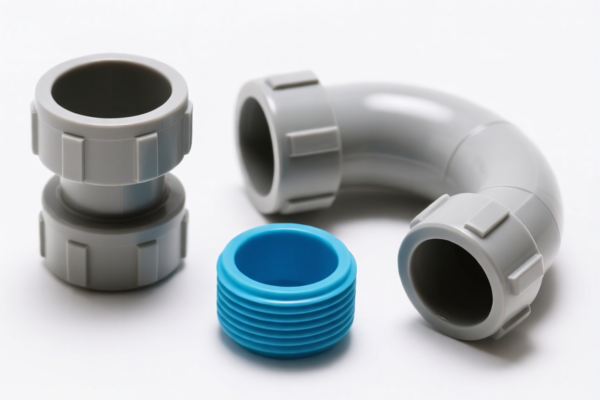
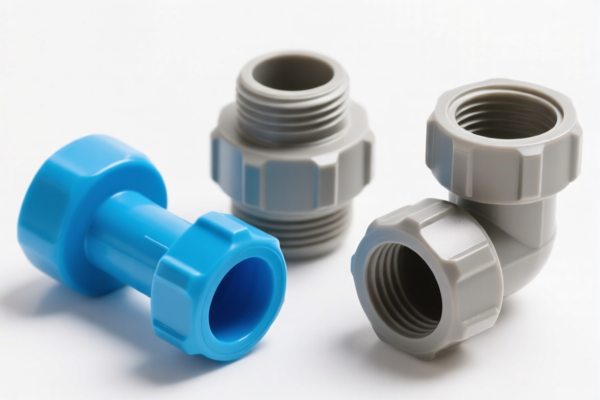
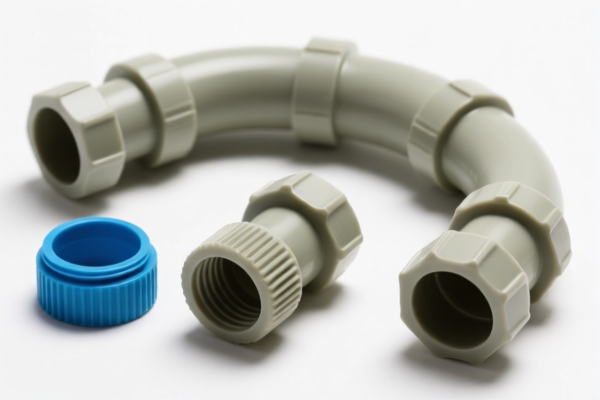
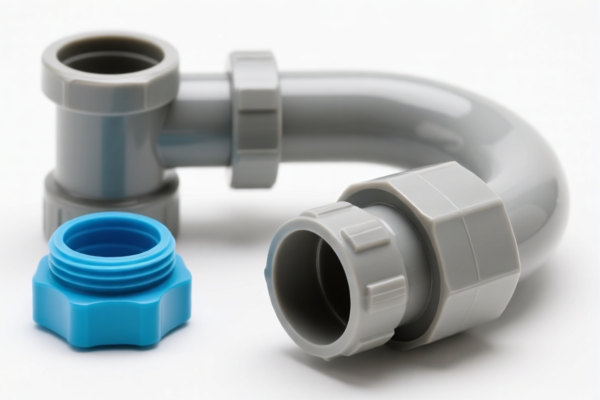
AI Analysis
🧺 Plastic Laundry Room Fittings: HS Code Classification & Customs Clearance Guide (US Market)
🌐 HS Code Reference & Customs Clearance Guide | 2026 Latest Tariff Analysis | Professional通关 Strategy
📌 Part 1: Product Definition & Classification: What Are "Plastic Laundry Room Fittings"?
Plastic Laundry Room Fittings generally refer to non-mechanical plastic components used in laundry setups. These can include: * Handles/Knobs: For washing machines, dryers, or laundry baskets. * Connectors/Fixings: Plastic clips, brackets, or fasteners used to assemble laundry furniture or machines. * Accessories: Hangers, bins, or decorative trim pieces made of plastic.
⚠️ Key Distinction:
- If the item is a structural part of the laundry machine itself (e.g., a motor mount, internal drum component), it might be classified under Chapter 84 (Machinery) or Chapter 85 (Electrical).
- If the item is accessory furniture parts (e.g., handles for a laundry cabinet, knobs for a front-load washer) OR general plastic articles not specifically designed for a machine's internal function, it falls under Chapter 39 (Plastics) or Chapter 94 (Furniture).
- Crucial Note: In US customs practice, simple plastic accessories like knobs or handles are often debated between "Parts of Machinery" and "Plastic Articles." However, for general "furniture fittings" or standalone plastic accessories, the provided data points to Chapter 39 (Plastics) and Chapter 94 (Furniture).
📦 Part 2: HS Code Classification Details (Based on Provided Data)
| HS Code | Product Description | Applicable Scenario | Total Tax Rate | Tax Breakdown |
|---|---|---|---|---|
3926.30.50.00 |
Plastic Articles, explicitly including plastic material and furniture fitting usage, consistent with furniture connectors | General plastic fittings, connectors, or furniture accessories | 22.8% | Base: 5.3% + Section 301: 7.5% + IEEPA 122: 10% |
3926.30.10.00 |
Plastic Articles, conforming to furniture utensils and fittings attributes, such as handles/knobs | Plastic handles, knobs, or specific furniture utensils | 24.0% | Base: 6.5% + Section 301: 7.5% + IEEPA 122: 10% |
9403.99.40.80 |
Plastic Furniture Accessories, Material: Plastic, Form: Accessories, Use: Other Furniture | General plastic parts for other types of furniture (not specifically mechanical) | 35.0% | Base: 0.0% + Section 301: 25.0% + IEEPA 122: 10% |
9403.99.30.80 |
Material: Plastic, Use: Furniture Accessories/Parts, Complies with Default Tendency for Parts Category | Default classification for plastic furniture parts if not specified otherwise | 35.0% | Base: 0.0% + Section 301: 25.0% + IEEPA 122: 10% |
🔍 Key Insight:
- Chapter 39 (Plastics) offers significantly lower tariffs (~22-24%) compared to Chapter 94 (Furniture) (35%).
- If your product is a handle, knob, or specific connector,3926.30.x0.00is likely the most advantageous and accurate classification.
- If it is a generic "furniture part" without specific utensil attributes, customs may default to9403.99.x0.80, resulting in a higher tax burden.
💰 Part 3: 2026 Latest Tariff Rate Details (Including Additional Taxes)
✅ Applicable Country: United States (US)
✅ Origin: China (CN)
✅ Effective Date: Post-November 2025 (Includes subsequent imports)
🎯 1. 3926.30.50.00 — Plastic Articles (Furniture Connectors/Fittings)
| Item | Content |
|---|---|
| Base Tariff | 5.3% (ad valorem) |
| USITC Additional Tax (Section 301) | +7.5% |
| IEEPA Additional Tax (122 Clause) | +10% (Specifically for China-origin products) |
| Total Effective Rate | 22.8% |
| Tax Calculation | CIF Value × 22.8% |
| De Minimis Exemption? | ❌ No (Subject to high tariffs) |
| Legal Basis Path | IEEPA:9903.01.24 → USITC:3926.30.50.00 → FOOTNOTE:9903.88.01 |
📌 Explanation:
- This classification is ideal for functional connectors or general plastic fittings that are clearly defined as "plastic articles."
- The total rate of 22.8% is moderate but significantly lower than the 35% rate for furniture parts.
🎯 2. 3926.30.10.00 — Plastic Articles (Handles/Knobs)
| Item | Content |
|---|---|
| Base Tariff | 6.5% (ad valorem) |
| USITC Additional Tax (Section 301) | +7.5% |
| IEEPA Additional Tax (122 Clause) | +10% |
| Total Effective Rate | 24.0% |
| Tax Calculation | CIF Value × 24.0% |
| De Minimis Exemption? | ❌ No |
| Legal Basis Path | IEEPA:9903.01.24 → USITC:3926.30.10.00 → FOOTNOTE:9903.88.01 |
📌 Note:
- Best for handles, knobs, or ergonomic plastic parts.
- Slightly higher base tariff (6.5%) than3926.30.50.00, but still competitive compared to Chapter 94.
🎯 3. 9403.99.40.80 & 9403.99.30.80 — Plastic Furniture Accessories/Parts
| Item | Content |
|---|---|
| Base Tariff | 0.0% (ad valorem) |
| USITC Additional Tax (Section 301) | +25.0% |
| IEEPA Additional Tax (122 Clause) | +10% |
| Total Effective Rate | 35.0% |
| Tax Calculation | CIF Value × 35.0% |
| De Minimis Exemption? | ❌ No |
| Legal Basis Path | IEEPA:9903.01.24 → USITC:9403.99.x0.80 → FOOTNOTE:9903.88.01 |
📌 Warning:
- While the base tariff is 0%, the Section 301 tariff jumps to 25% for furniture parts, leading to a 35% total rate.
- This is 12-12.2% higher than the Chapter 39 options.
- Customs may default to this classification if the product is perceived as a "furniture part" rather than a "plastic article."
🛠️ Part 4: Customs Clearance Practical Advice (Avoiding Pitfalls)
✅ 1. Documentation Checklist (Non-negotiable)
| Document | Required | Description |
|---|---|---|
| ✅ Product Specification Sheet | ✔️ | Detailed description: Material (100% Plastic), Part Number, Usage (e.g., "Handle for Laundry Cabinet") |
| ✅ Product Photos | ✔️ | Clear images of the item, including any branding or model numbers. Show scale if possible. |
| ✅ Commercial Invoice | ✔️ | Must explicitly state: "Plastic Laundry Fittings," "HS Code: [Selected Code]," "Country of Origin: China" |
| ✅ Packing List | ✔️ | List items individually. Avoid vague terms like "Miscellaneous Parts." |
| ✅ Certificate of Origin (CO) | ✔️ | To prove Chinese origin and apply appropriate IEEPA tariffs. |
| ✅ Third-Party Lab Report | ✔️ | Optional but recommended: Material composition test (confirming 100% plastic) to support Chapter 39 classification. |
✅ 2. Declaration Tips (Key Mantra)
🔥 "Be Specific! Use 'Plastic Article' not 'Furniture Part' when possible!"
| Scenario | Recommended Declaration | Incorrect Practice |
|---|---|---|
| Handles/Knobs | "Plastic Handle for Laundry Cabinet" → 3926.30.10.00 |
"Furniture Part" → 9403.99.40.80 (Higher Tax) |
| Connectors/Clips | "Plastic Connector/Fitting" → 3926.30.50.00 |
"Plastic Accessory" → Ambiguous, may trigger 9403 |
| General Plastic Item | "Plastic Laundry Basket Handle" → 3926.30.50.00 |
"Laundry Room Accessory" → Vague, risk of misclassification |
| Structural Part of Machine | "Part of Washing Machine" → Likely 8483 or 8538 |
Misclassifying as 3926 → Illegal Misdeclaration |
✅ 3. Special Considerations
| Situation | Advice |
|---|---|
| OEM/Custom Parts | Provide design drawings to prove the item is a "plastic article" rather than a "furniture part." |
| Mixed Shipments | If shipping plastic fittings with actual furniture, declare them separately. Do not bundle under one HS Code. |
| High-Value Items | Consider applying for an Advance Ruling (Pre-Ruling) from CBP to confirm the HS Code and avoid post-entry audits. |
| Material Composition | If the item contains metal inserts (e.g., threaded inserts), ensure the plastic is the principal material to retain Chapter 39 classification. |
🌍 Part 5: Global Market Comparison (2026)
| Country/Region | Recommended HS Code | Tariff Rate | Certification | Notes |
|---|---|---|---|---|
| 🇺🇸 USA | 3926.30.10.00 or 3926.30.50.00 |
22.8% - 24.0% | No specific | Best option: Chapter 39 avoids 35% furniture rate |
| 🇨🇳 China | 3926.30.10.00 or 3926.30.50.00 |
0% - 5% | CCC (if applicable) | Low import duties for re-export |
| 🇪🇺 EU | 3926.30.90 |
0% - 4% | CE, RoHS | Standard plastic articles |
| 🇬🇧 UK | 3926.30.90 |
0% - 4% | UKCA | Post-Brexit tariffs |
| 🇯🇵 Japan | 3926.30.00 |
0% | PSE | No additional tariffs |
📌 Conclusion:
- The US market is the most challenging due to high Section 301 and IEEPA tariffs.
- Chapter 39 (Plastics) is significantly more cost-effective than Chapter 94 (Furniture) for plastic laundry fittings.
- Proper documentation and precise naming are critical to avoid being defaulted to the higher 35% rate.
📌 Part 6: Common Errors & Pitfalls (Lessons Learned)
❌ Error 1: Declaring as "Laundry Room Accessory" without specifying material or function.
👉 Consequence: Customs may classify as 9403.99.x0.80 → 35% tax.
❌ Error 2: Mixing plastic fittings with wooden furniture in one shipment without separate declarations.
👉 Consequence: Complex audit risk, potential misclassification penalties.
❌ Error 3: Using generic terms like "Plastic Parts" on the commercial invoice.
👉 Consequence: CBP may request additional information, causing delays or audits.
❌ Error 4: Ignoring the "122 Clause" IEEPA tariff.
👉 Consequence: Underpayment of 10% IEEPA tax → Back taxes + Interest + Penalties.
✅ Correct Approach:
"Plastic Handle for Laundry Cabinet, 100% PP Plastic, Model XYZ, Made in China, HS Code: 3926.30.10.00"
🎯 Part 7: Conclusion: Precision in Classification Saves Money!
🎯 Remember the Mantra:
🔹 "Handles & Knobs → Chapter 39 (24%)!
🔹 Connectors → Chapter 39 (22.8%)!
🔹 Generic Furniture Parts → Chapter 94 (35%)!
🔹 Save 12% by choosing the right HS Code!"
🔹 "IEEPA 10% is non-negotiable for China Origin!"
📌 Pro Tip:
If your volume is high, apply for a CBP Advance Ruling. It provides legal certainty and prevents unexpected customs holds.
For shipments under $800, remember that de minimis exemptions DO NOT apply to goods subject to Section 301/IEEPA tariffs from China.
📣 Immediate Action:
📞 Consult with a licensed customs broker.
📤 Provide product photos and specs.
🚀 Ensure your plastic laundry fittings clear US customs efficiently and cost-effectively!
✨ Professional Customs Clearance Starts with Accurate Classification!
💼 Every percentage point matters in your profit margin!
Customer Reviews
About HS Code Classification
The Harmonized System (HS) is an internationally standardized nomenclature developed by the World Customs Organization (WCO) to classify traded products. Over 200 countries use the HS system as the basis for customs tariffs, trade statistics, and import/export regulations.
Each HS code follows a hierarchical structure:
- Chapter (2 digits) — Broad category of goods (e.g., Chapter 84: Machinery and Mechanical Appliances)
- Heading (4 digits) — More specific grouping within the chapter
- Subheading (6 digits) — Internationally standardized breakdown, used by all WCO member countries
- National subdivisions (8-10 digits) — Country-specific extensions for further classification, such as US HTSUS 10-digit codes
Correct HS code classification is essential for smooth customs clearance, accurate duty payment, and compliance with trade regulations. Misclassification can lead to customs delays, overpayment of duties, or penalties.
When importing from CN to US, the applicable tariff rates may include:
- Most-Favored-Nation (MFN) rate — The standard duty rate applied to WTO members
- General rate — Applied to countries without trade agreements
- Trade remedy duties — Additional tariffs such as Section 301 (anti-dumping), Section 232 (national security), or countervailing duties
The information provided on this page is for reference purposes only. For official classification, please consult with your local customs authority or a licensed customs broker.