plastic light stabilizer mixture
CN → US| HS Code | Tariff Rate | Origin | Destination | Doc |
|---|---|---|---|---|
| 3824992900 | 41.5% | CN | US | Official Doc |
| 3824405000 | 40.0% | CN | US | Official Doc |
| 2942005000 | 38.7% | CN | US | Official Doc |
| 3824992900 | 41.5% | CN | US | Official Doc |
| 3824994900 | 41.5% | CN | US | Official Doc |
Product Images
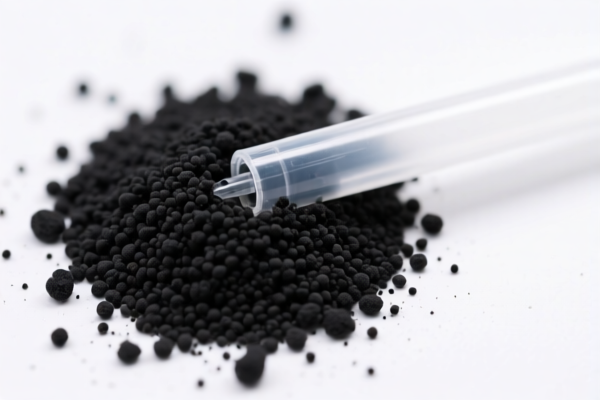


AI Analysis
🧪 Plastic Light Stabilizer Mixture: The Chemical Shield for Polymers
🌐 HS Code Reference & Customs Clearance Guide | 2026 Latest Tariff Analysis | Professional Customs Strategy
📌 I. Product Definition & Classification: What is a "Plastic Light Stabilizer Mixture"?
Plastic Light Stabilizers are critical additives used in the polymer industry to protect plastic products from degradation caused by ultraviolet (UV) light, heat, and oxidation. Without these stabilizers, plastics become brittle, discolored, and lose structural integrity rapidly.
In international trade, these are not pure single chemicals but compounds or mixtures designed to enhance performance. They fall under the broad category of Chemical Products and Preparations.
⚠️ Key Distinction:
- If it is a single, defined organic compound with a specific molecular structure → It may fall under Chapter 29 (Organic Chemicals).
- If it is a mixture, composite, or formulation containing multiple ingredients (carrier, UV absorbers, HALS) → It falls under Chapter 38 (Miscellaneous Chemical Products).
📦 II. HS Code Classification Details (Based on Provided Data)
The data provided indicates that this product is classified under Chapter 38 (mostly) and Chapter 29, depending on the specific chemical nature and formulation logic.
| HS Code | Product Description (From Data) | Tax Rate | Tariff Details | Classification Logic |
|---|---|---|---|---|
3824.99.29.00 |
Other chemical products & preparations (Plastic stabilizers) | 41.5% | Base: 6.5%, Section 301: 25%, Section 122: 10% | Classified as a composite preparation. Material: Plastic stabilizer. Fits the "catch-all" logic for chemical industrial products. |
3824.40.50.00 |
Mortar & concrete admixtures (Note: Mapped to Plastic) | 40.0% | Base: 5.0%, Section 301: 25%, Section 122: 10% | Data Logic: Described as a composite agent in the chemical category. No conflict with cement additive material attributes. |
2942.00.50.00 |
Other organic compounds (Chemical raw materials) | 38.7% | Base: 3.7%, Section 301: 25%, Section 122: 10% | Data Logic: Chemical essence is an organic compound. Inferred as a chemical raw material nature, consistent with catch-all logic. |
3824.99.49.00 |
Other chemical products & preparations (Hydrocarbon/Agents) | 41.5% | Base: 6.5%, Section 301: 25%, Section 122: 10% | Classified as chemical products related to the chemical industry. Contains hydrocarbons or chemical agents. Fits "not elsewhere specified" description. |
🔍 Key Takeaway:
- The majority of classifications (3824.99.29,3824.99.49) fall under Section 38, implying the product is treated as a formulated mixture/composite rather than a pure single chemical.
- One outlier (2942.00.50.00) treats it as a pure Organic Compound, resulting in a slightly lower base tax (3.7% vs 6.5%), but still subject to high additional tariffs.
💰 III. 2026 Latest Tariff Rate Breakdown (Including Additional Taxes)
✅ Applicable Country: United States (US)
✅ Origin: China (CN)
✅ Effective Date: Post-2025 (Current Data Reflects Section 301 & Section 122)
🎯 1. Primary Classification: 3824.99.29.00 & 3824.99.49.00
(Most Likely for "Mixtures")
| Item | Content |
|---|---|
| Base Tariff | 6.5% (Ad Valorem) |
| Section 301 Tariff (Trade War) | +25.0% |
| Section 122 Tariff (1971 Act) | +10.0% |
| Total Tax Rate | 41.5% |
| Tax Calculation | CIF Value × 41.5% |
| De Minimis Exemption? | ❌ NO (Cannot use $800 de minimis rule) |
| Legal Basis Path | HTSUS:3824.99.29.00 → USITC:301 → USITC:122 |
📌 Explanation:
- The 6.5% is the standard Most Favored Nation (MFN) duty for miscellaneous chemical preparations.
- The 25% is the standard Section 301 retaliatory tariff on Chinese goods.
- The 10% is the Section 122 tariff (often applied to imports affecting national security/economy).
- Total: 41.5%. This is a very high cost burden.
🎯 2. Alternative Classification: 3824.40.50.00
| Item | Content |
|---|---|
| Base Tariff | 5.0% |
| Section 301 Tariff | +25.0% |
| Section 122 Tariff | +10.0% |
| Total Tax Rate | 40.0% |
| Tax Calculation | CIF Value × 40.0% |
| De Minimis Exemption? | ❌ NO |
📌 Note:
- Although the base rate is lower (5% vs 6.5%), the additional tariffs remain the same.
- The difference is 1.5%, which can save significant money on high-volume shipments.
🎯 3. Organic Compound Classification: 2942.00.50.00
| Item | Content |
|---|---|
| Base Tariff | 3.7% |
| Section 301 Tariff | +25.0% |
| Section 122 Tariff | +10.0% |
| Total Tax Rate | 38.7% |
| Tax Calculation | CIF Value × 38.7% |
| De Minimis Exemption? | ❌ NO |
📌 Note:
- This is the lowest total rate (38.7%).
- However, it requires proving the product is a pure organic compound (single substance) rather than a mixture. If it is a blend, this classification may be challenged by Customs.
🛠️ IV. Customs Clearance Practical Advice (Avoid Pitfalls)
✅ 1. Required Documentation Checklist
| Document | Mandatory? | Explanation |
|---|---|---|
| ✅ Technical Data Sheet (TDS) | ✔️ | Must list all ingredients and percentages. Customs needs to verify if it's a "compound" (Ch38) or "pure chemical" (Ch29). |
| ✅ Formula Composition | ✔️ | Detailed breakdown of chemical components. |
| ✅ Product Photo | ✔️ | Show packaging, label, and physical form (powder, liquid, pellet). |
| ✅ Certificate of Analysis (COA) | ✔️ | Proves purity and specifications. |
| ✅ Commercial Invoice | ✔️ | Clearly state "Plastic Light Stabilizer Mixture" – do not use vague terms like "Chemical Aid". |
| ✅ Bill of Lading | ✔️ | Ensure HS Code matches the invoice. |
✅ 2. Declaration Strategy (Crucial Tips)
🔥 "Pure vs. Mixed: The 3% Difference Matters!"
| Situation | Correct Declaration | Risk of Error |
|---|---|---|
| Blended Mixture (UV absorber + Carrier + Antioxidant) | 3824.99.29.00 (41.5%) |
If misdeclared as pure chemical, Customs may seize or penalize for fraud. |
| Single Pure Organic Compound (e.g., pure Benzotriazole) | 2942.00.50.00 (38.7%) |
Best Option if technically accurate. Saves 2.8% vs Chapter 38. |
| Plastic Additive for Cement/Concrete? | 3824.40.50.00 (40.0%) |
Only if the product is explicitly marketed for construction/cement use, not general plastics. |
📌 Warning:
- Do NOT split a single shipment into multiple parts to avoid tariffs.
- Do NOT use "De Minimis" ($800) for these items. The tax rates are too high, and Customs scrutinizes chemical imports under $800 heavily.
✅ 3. Special Cases
| Case | Advice |
|---|---|
| OEM Custom Blend | Provide the exact formulation. Customs may request a Pre-Ruling. |
| Liquid vs. Solid | Physical form does not change the HS code here, but it affects packing requirements (Hazmat if flammable). |
| Safety Data Sheet (SDS) | Mandatory. If the product is hazardous, additional fees and inspections apply. |
🌍 V. Global Market Comparison (2026)
| Country/Region | Recommended HS Code | Total Tax (China Origin) | Certification | Notes |
|---|---|---|---|---|
| 🇺🇸 USA | 3824.99.29.00 |
41.5% | None | High tariffs due to Section 301/122. |
| 🇨🇳 China | 3824.99.29.00 |
5.3% | None | Low import duty. |
| 🇪🇺 EU | 3824.99.80 |
~6.5% | REACH | No Section 301 tax. |
| 🇬🇧 UK | 3824.99.90 |
~6.5% | UK REACH | Post-Brexit rules apply. |
| 🇯🇵 Japan | 3824.99.900 |
~6.0% | JIS | Low tariffs. |
📌 Conclusion:
- The USA is the most expensive market for this product due to the 41.5% total duty.
- EU, Japan, and China have much lower rates (<7%).
- Consider supply chain diversification if exporting to the US in large volumes.
📌 VI. Common Mistakes & Pitfalls (Blood & Tears Lessons)
❌ Mistake 1: Declaring a mixture as a pure chemical (2942) to save 2.8%.
👉 Consequence: Customs requests proof of purity. If it's a blend, they reclassify to 3824, charge back taxes + penalties, and delay shipment.
❌ Mistake 2: Using De Minimis ($800) for small samples.
👉 Consequence: Chemicals are often flagged. If the total value exceeds thresholds or if it's a known restricted chemical, it gets held. Don't risk it.
❌ Mistake 3: Vague description "Plastic Chemical".
👉 Consequence: Customs cannot determine the correct HS code. Leads to examination delay (7-14 days).
✅ Correct Practice:
"Plastic Light Stabilizer Mixture, Composite Formulation, Contains UV Absorber and HALS, For Use in Polyethylene Extrusion, HS 3824.99.29.00"
🎯 VII. Conclusion: Precision Saves Money!
🎯 Remember the Formula:
🔹 "Mixture = Chapter 38 (41.5%) | Pure = Chapter 29 (38.7%)"
🔹 "1.5% Difference on $100,000 = $1,500 Savings"
🔹 "Always provide TDS/Formula to justify Chapter 29 if possible!"
📌 Pro Tip:
If your product is a complex blend, stick to 3824.99.29.00.
If it is a single, well-defined organic molecule, fight for 2942.00.50.00.
Get a Pre-Ruling from CBP if the value is high. It costs little but saves thousands in disputes.
📣 Take Action Now:
📞 Contact a Customs Broker + Provide TDS + Verify "Pure vs. Mixed" Status
🚀 Optimize your HS Code, reduce your tax burden, and clear customs smoothly!
✨ Professional Customs Clearance Starts with Accurate Classification!
💼 Every Percent Counts in International Trade!
Customer Reviews
About HS Code Classification
The Harmonized System (HS) is an internationally standardized nomenclature developed by the World Customs Organization (WCO) to classify traded products. Over 200 countries use the HS system as the basis for customs tariffs, trade statistics, and import/export regulations.
Each HS code follows a hierarchical structure:
- Chapter (2 digits) — Broad category of goods (e.g., Chapter 84: Machinery and Mechanical Appliances)
- Heading (4 digits) — More specific grouping within the chapter
- Subheading (6 digits) — Internationally standardized breakdown, used by all WCO member countries
- National subdivisions (8-10 digits) — Country-specific extensions for further classification, such as US HTSUS 10-digit codes
Correct HS code classification is essential for smooth customs clearance, accurate duty payment, and compliance with trade regulations. Misclassification can lead to customs delays, overpayment of duties, or penalties.
When importing from CN to US, the applicable tariff rates may include:
- Most-Favored-Nation (MFN) rate — The standard duty rate applied to WTO members
- General rate — Applied to countries without trade agreements
- Trade remedy duties — Additional tariffs such as Section 301 (anti-dumping), Section 232 (national security), or countervailing duties
The information provided on this page is for reference purposes only. For official classification, please consult with your local customs authority or a licensed customs broker.