plastic mats
CN → US| HS Code | Tariff Rate | Origin | Destination | Doc |
|---|---|---|---|---|
| 3914002000 | 35.0% | CN | US | Official Doc |
| 3926909989 | 22.8% | CN | US | Official Doc |
| 3926909905 | 22.8% | CN | US | Official Doc |
| 3914006000 | 38.9% | CN | US | Official Doc |
| 3926904590 | 13.5% | CN | US | Official Doc |
Product Images
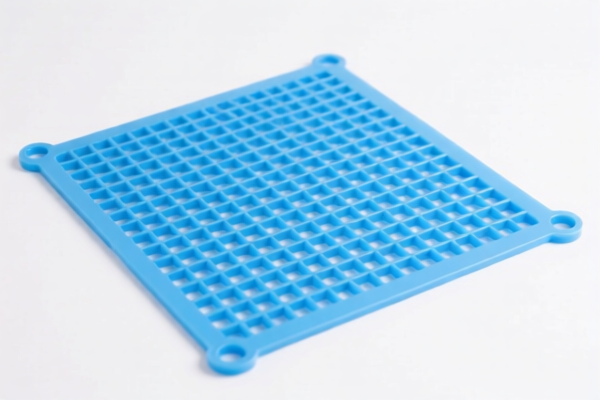
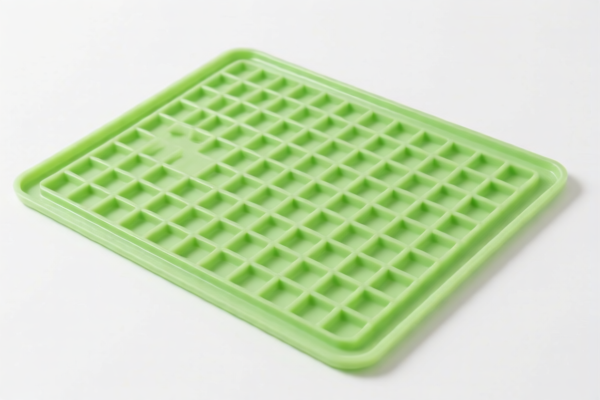
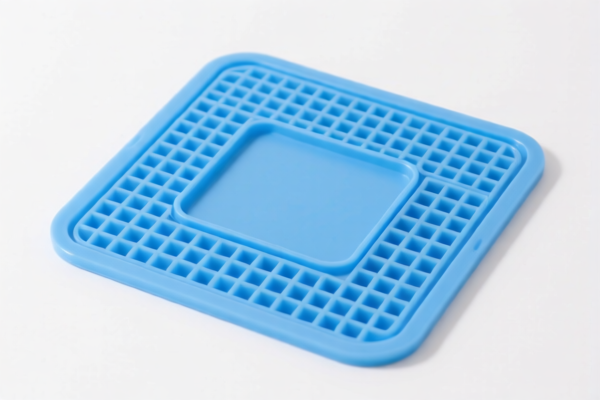
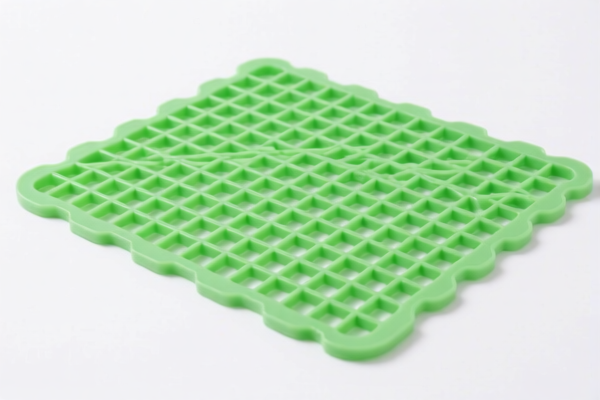
AI Analysis
🧱 Plastic Mats (Polymer/Plastic Sheets & Pads)
🌐 HS Code Reference & Customs Clearance Guide | 2026 Latest Tariff Analysis | Professional Clearance Strategy
📌 I. Product Definition & Classification: What Exactly Are "Plastic Mats"?
"Plastic Mats" is a broad commercial term that can refer to several different industrial or consumer goods. In international trade, the exact material state (primary form vs. finished article) and specific function determine the Harmonized System (HS) Code.
Misclassification can lead to massive duty shocks due to Section 301 tariffs and IEEPA surcharges on Chinese goods.
⚠️ Key Distinction Point:
- Are they "Primary Forms" (sheets, films, strips for further processing)? → Chapter 39, Heading 3914
- Are they "Finished Articles" (mats, pads, cushions, protective layers)? → Chapter 39, Heading 3926
- Are they specifically "Anti-vibration/Sealing Pads"? → Chapter 39, Heading 3926, Subheading 45
📦 II. HS Code Classification Details (2026 Latest Tariff Authority Comparison)
Based on the provided dataset, here are the 5 potential classifications for "Plastic Mats":
| HS Code | Product Description | Application Scenario | Classification Logic |
|---|---|---|---|
3914.00.20.00 |
Plastic mesh mats, polymer material, primary/semi-finished form | Raw mesh sheets, industrial backing materials | ✅ Primary Form (Polymer/Resin) |
3926.90.99.89 |
Plastic mesh mats, plastic material, other plastic articles | General use mesh mats, household/industrial non-specific use | ✅ Finished Article (Other) |
3926.90.99.05 |
Plastic mesh mats, all-plastic, within plastic articles category | Similar to above, specific sub-variant for general plastic goods | ✅ Finished Article (Other) |
3914.00.60.00 |
Plastic mesh mats, polymer material, primary form or semi-finished | Raw polymer mesh, semi-finished state for further manufacturing | ✅ Primary Form (Polymer) |
3926.90.45.90 |
Plastic shock-absorbing pads, plastic material, gaskets/washers type | Industrial vibration damping pads, sealing mats, cushioning | ✅ Finished Article (Gaskets/Pads) |
🔍 Important Reminder:
- If the "mat" is a raw sheet/mesh used as a substrate for further manufacturing, it belongs to 3914.
- If the "mat" is a finished product used for protection, cushioning, or decoration, it belongs to 3926.
- If it serves a specific mechanical function like shock absorption or sealing, 3926.45 is the most precise fit.
💰 III. 2026 Latest Tariff Rate Breakdown (Including Surcharges & Policy Add-ons)
✅ Applicable Country: United States (US)
✅ Origin: China (CN) (Implied by the tariff structure in data)
✅ Effective Time: 2025/2026 Current Rates
🎯 1. 3914.00.20.00 & 3914.00.60.00 —— Polymer Mats (Primary/Semi-Finished Form)
| Item | Content |
|---|---|
| Basic Duty Rate | 0.0% (20.00) / 3.9% (60.00) |
| USITC Additional Duty (Section 301) | +25.0% |
| IEEPA Additional Duty | +10.0% (China/HK specific) |
| Total Duty Rate | 35.0% (for 20.00) / 38.9% (for 60.00) |
| Tax Calculation | CIF Value × Total Rate |
| De Minimis Eligibility | ❌ No (Denied) |
| Legal Basis Path | IEEPA:9903.01.25 → USITC:3914.00.20.00 → FOOTNOTE:9903.88.01 |
📌 Explanation:
-3914.00.20.00: Total 35.0% (0% base + 25% Sec 301 + 10% IEEPA).
-3914.00.60.00: Total 38.9% (3.9% base + 25% Sec 301 + 10% IEEPA).
- These codes apply to raw or semi-finished polymer meshes. If your product is a finished mat, these codes may be challenged by Customs for being incorrect.
🎯 2. 3926.90.99.89 & 3926.90.99.05 —— General Plastic Mats (Other Finished Articles)
| Item | Content |
|---|---|
| Basic Duty Rate | 5.3% |
| USITC Additional Duty (Section 301) | +7.5% |
| IEEPA Additional Duty | +10.0% (China/HK specific) |
| Total Duty Rate | 22.8% |
| Tax Calculation | CIF Value × 22.8% |
| De Minimis Eligibility | ❌ No |
| Legal Basis Path | IEEPA:9903.01.24 → USITC:3926.90.99.89 → FOOTNOTE:9903.88.01 |
📌 Explanation:
- Total 22.8% for both subcodes.
- This is the "catch-all" for plastic mats that don’t fit specific categories like gaskets or shock pads.
- Savings Tip: If your mat is a shock-absorbing pad, using code3926.90.45.90reduces the rate to 13.5% (see below).
🎯 3. 3926.90.45.90 —— Plastic Shock-Absorbing Pads / Gaskets
| Item | Content |
|---|---|
| Basic Duty Rate | 3.5% |
| USITC Additional Duty (Section 301) | 0.0% |
| IEEPA Additional Duty | +10.0% (China/HK specific) |
| Total Duty Rate | 13.5% |
| Tax Calculation | CIF Value × 13.5% |
| De Minimis Eligibility | ❌ No |
| Legal Basis Path | IEEPA:9903.01.24 → USITC:3926.90.45.90 |
📌 Explanation:
- Total 13.5%.
- Crucial Distinction: If the mat is used for vibration damping, sealing, or as a gasket/washer, it qualifies for this lower bracket.
- Note: The 301 Section 301 tariff is 0% for this specific subheading, which is a significant saving compared to the 7.5% or 25% for other plastic goods.
🛠️ IV. Customs Clearance Practical Advice (Battle-Tested Pitfall Guide)
✅ 1. Documentation Checklist (Non-Negotiable)
| Document | Required | Description |
|---|---|---|
| ✅ Product Specification Sheet | ✔️ | Must specify: Material (e.g., PP, PE, PVC), Thickness, Density, Function (e.g., "Shock Absorbing"). |
| ✅ Technical Data Sheet (TDS) | ✔️ | Proof of physical properties. If claiming 3926.90.45.90, include vibration damping test reports. |
| ✅ Product Photos (Clear Labels) | ✔️ | Show the mat with scale/ruler. Show any markings or branding. |
| ✅ Commercial Invoice | ✔️ | Description must match HS Code logic (e.g., "Polypropylene Shock Pad" vs. "Plastic Mesh"). |
| ✅ Bill of Lading | ✔️ | Consistent weight and package count. |
| ✅ Certificate of Origin | ✔️ | Required for IEEPA determination. |
✅ 2. Declaration Strategy (Key Mantra)
🔥 "Function Defines Form, Form Defines Rate!"
| Scenario | Correct HS Code | Incorrect Approach | Consequence |
|---|---|---|---|
| Mat is a raw mesh sheet for further processing | 3914.00.20.00 / 3914.00.60.00 |
Declare as "Finished Mat" | Risk of reclassification & penalty |
| Mat is a finished, general-use rug/mat | 3926.90.99.89 / 3926.90.99.05 |
Declare as "Gasket" | Customs may reject "Shock Absorbing" claim |
| Mat is for machine vibration/sealing | 3926.90.45.90 |
Declare as "General Plastic Art." | Lose $9.3% duty savings! |
| Mat is part of a larger machine | Check Machine HS Code | Separate declaration | May trigger complex component rules |
⚠️ Critical Advice:
- Do NOT use vague terms like "Plastic Sheet" if it is a finished product. Use "Plastic Shock Absorbing Pad."
- If the mat is colored or has special coatings, ensure the TDS reflects this, as it might affect the "Other" classification under 3926.99.
✅ 3. Special Cases & Optimization
| Situation | Handling Advice |
|---|---|
| Low-Cost Mats | Even for low value, De Minimis ($800) is DENIED for Chinese-origin plastics under these HS codes. Always declare formally. |
| Mixed Materials | If the mat has a fabric backing, it may fall under Textiles (Chapter 60) or Composite Goods. Analyze essential character. |
| Custom Shape | If cut to specific machine shapes, emphasize "Gasket" or "Sealing Pad" to target 3926.90.45.90. |
| Export to Other Markets | US rates are high. For EU/UK/Japan, rates are often 0-5%. Ensure documentation meets local CE/FCC standards if applicable. |
🌍 V. Global Market Comparison (2026 Latest)
| Country/Region | Recommended HS Code | Duty Rate (China Origin) | Certification Required | Remarks |
|---|---|---|---|---|
| 🇺🇸 USA | 3926.90.45.90 |
13.5% | ASTM (if industrial) | Lowest rate in US! |
| 🇺🇸 USA | 3926.90.99.89 |
22.8% | ASTM | General purpose |
| 🇺🇸 USA | 3914.00.20.00 |
35.0% | N/A | Raw material only |
| 🇪🇺 EU | 3926.90.99 |
0% - 6% | REACH / RoHS | No IEEPA/301 surcharges |
| 🇨🇳 China | 3926.90.99 |
5% - 10% | CCC (if applicable) | Import duty only |
| 🇯🇵 Japan | 3926.90.99 |
0% - 6% | PSE (if electrical) | Low duty |
📌 Conclusion:
- USA is the most expensive market due to IEEPA (10%) + 301 Tariffs.
- Strategic Tip: If your product is a shock-absorbing pad, aggressively classify under3926.90.45.90to save 9.3% compared to general plastic mats.
- For raw meshes, expect 35-39% total duty.
📌 VI. Common Errors & Pitfall Guide (Lessons Learned)
❌ Error 1: Declaring "Shock Pads" as "General Plastic Mats" (3926.90.99.89)
👉 Consequence: Paying 22.8% instead of 13.5%. Waste of profit margin.
❌ Error 2: Declaring "Finished Mats" as "Primary Polymer Forms" (3914.00.20.00)
👉 Consequence: Customs may argue it’s a finished good, apply 35%, and impose penalties for misdeclaration.
❌ Error 3: Assuming De Minimis ($800) applies
👉 Consequence: Customs will block! These codes are explicitly excluded from De Minimis for Chinese origins. Formal entry is mandatory.
❌ Error 4: Vague Description "Plastic Mat"
👉 Consequence: Customs officer uses discretion, likely defaulting to 22.8% or 35% because "Shock Absorbing" wasn’t proven.
✅ Correct Practice:
"Polypropylene Shock Absorbing Pad, 10mm thickness, for machinery vibration damping, Model XYZ, RoHS Compliant"
🎯 VII. Conclusion: Precise Classification, Maximize Profit!
🎯 Remember the Mantra:
🔹 "Gaskets & Pads = 13.5% (Low!) 🥇"
🔹 "General Mats = 22.8% (Medium) 🥈"
🔹 "Raw Mesh = 35-39% (High!) 🥉"
🔹 "No De Minimis for China Plastics! 🚫"
📌 Pro Tip:
If your mats are not for shock absorption but are decorative or flooring, ensure you have technical data to support the "Finished Article" classification under 3926.99. If they are raw sheets, ensure they are not cut to size or finished, or they may be reclassified.
📣 Immediate Action:
📞 Consult a Customs Broker with your Product TDS.
📝 Request a Binding Ruling (if unsure) to lock in the 13.5% rate for shock pads.
🚀 Optimize your BOM description to highlight "Shock Absorbing" or "Gasket" functions!
✨ Professional Clearance Starts with Precise Classification!
💼 Every Percentage Point Saved is Pure Profit!
Customer Reviews
About HS Code Classification
The Harmonized System (HS) is an internationally standardized nomenclature developed by the World Customs Organization (WCO) to classify traded products. Over 200 countries use the HS system as the basis for customs tariffs, trade statistics, and import/export regulations.
Each HS code follows a hierarchical structure:
- Chapter (2 digits) — Broad category of goods (e.g., Chapter 84: Machinery and Mechanical Appliances)
- Heading (4 digits) — More specific grouping within the chapter
- Subheading (6 digits) — Internationally standardized breakdown, used by all WCO member countries
- National subdivisions (8-10 digits) — Country-specific extensions for further classification, such as US HTSUS 10-digit codes
Correct HS code classification is essential for smooth customs clearance, accurate duty payment, and compliance with trade regulations. Misclassification can lead to customs delays, overpayment of duties, or penalties.
When importing from CN to US, the applicable tariff rates may include:
- Most-Favored-Nation (MFN) rate — The standard duty rate applied to WTO members
- General rate — Applied to countries without trade agreements
- Trade remedy duties — Additional tariffs such as Section 301 (anti-dumping), Section 232 (national security), or countervailing duties
The information provided on this page is for reference purposes only. For official classification, please consult with your local customs authority or a licensed customs broker.