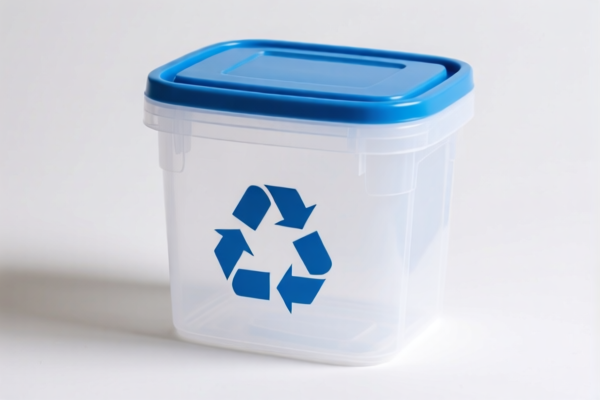
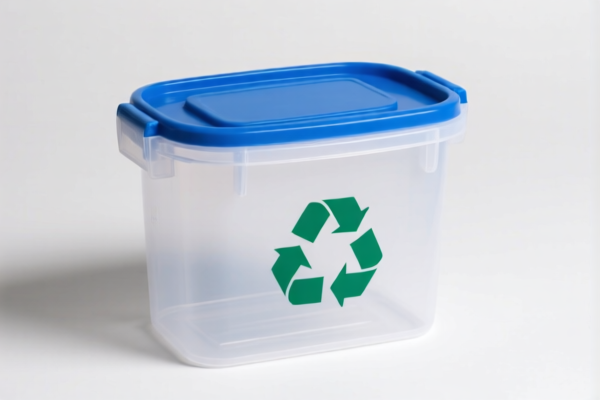
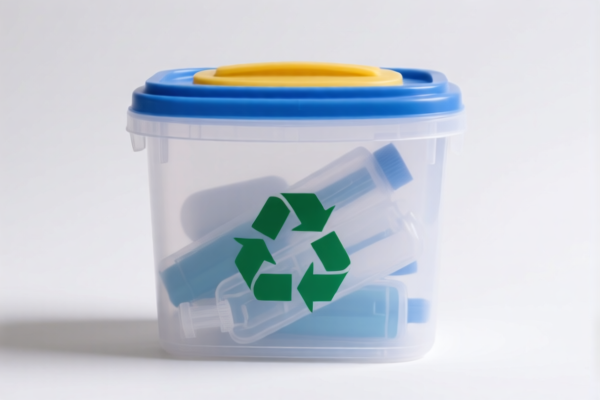
plastic medical waste containers with foot pedal
CN → US| HS Code | Tariff Rate | Origin | Destination | Doc |
|---|---|---|---|---|
| 3923900080 | 38.0% | CN | US | Official Doc |
| 3923900014 | 38.0% | CN | US | Official Doc |
Product Images

AI Analysis
🏥 Plastic Medical Waste Containers with Foot Pedal (Foot-Operated Pedal Bins)
🌐 HS Code Reference & Clearance Guide | 2026 Latest Tariff Analysis | Professional Customs Strategy
📌 I. Product Definition & Classification: What Exactly Is a "Foot Pedal Bin"?
Medical waste containers with foot pedals are specialized sanitation devices used in hospitals, clinics, and laboratories to handle infectious or hazardous waste without manual contact. They consist primarily of a plastic body, a lid, and a mechanical foot-pedal mechanism.
In international trade, classification hinges on the primary material and function: - Primary Material: Polypropylene (PP), Polyethylene (PE), or other plastics. - Function: Conveyance, storage, and disposal of goods (specifically medical waste). - Mechanism: The foot pedal is an accessory to the container, not a separate machine.
⚠️ Critical Distinction:
- If the item is primarily a plastic container for waste, it falls under Chapter 39 (Articles of Plastic).
- It is NOT classified as machinery or electrical appliances (Chapter 84/85) because the pedal is purely mechanical and integral to the container’s operation.
- It is NOT classified as glass or metal containers.
📦 II. HS Code Classification Details (2026 Latest Tariff Authority)
Based on the provided DATA, the correct classification falls under Heading 3923: Articles for the conveyance or packing of goods, of plastics; stoppers, lids, caps and other closures, of plastics.
| HS Code | Product Description | Applicability | Key Features |
|---|---|---|---|
3923.90.00.80 |
Other articles for the conveyance or packing of goods, of plastics | General use plastic waste bins, sharps containers, non-standard sizes | Fits if the bin does not meet the specific capacity criteria of the other code. Most standard foot-pedal bins fall here if they are not buckets/pails in the specified size range. |
3923.90.00.14 |
Buckets and pails, with or without lids, capacity: 11.36L to 22.71L (3–6 gallons) | Larger medical waste bins that resemble "buckets" and fall within the 3–6 gallon capacity range | Only applies if the container is structurally defined as a "bucket/pail" AND has a capacity between 3 and 6 gallons. Many rectangular medical waste bins do not qualify as "buckets." |
🔍 Key Note:
- The term "Bucket or Pail" is interpreted strictly by customs. Rectangular, angular, or cylindrical bins with handles or foot pedals are often classified as "Other" (3923.90.00.80) rather than "buckets," unless they clearly fit the traditional shape and capacity definition.
- Capacity Check: Measure the internal volume. If it is < 3 gallons or > 6 gallons,3923.90.00.14is incorrect. Use3923.90.00.80.
💰 III. 2026 Latest Tariff Rate Breakdown (Including Additional Taxes)
✅ Applicable Country: United States (US)
✅ Country of Origin: China (CN)
✅ Effective Date: From November 10, 2025 onwards
🎯 1. 3923.90.00.80 —— Other Plastic Articles for Conveyance/Packing
| Item | Details |
|---|---|
| Base Tariff | 3.0% (Ad Valorem) |
| Additional Tariff (Section 301) | +25.0% |
| Total Tax Rate | 28.0% |
| Tax Calculation | CIF Value × 28.0% |
| De Minimis Exemption | ❌ Not Eligible (Deny De Minimis for Section 301 goods) |
| Legal Basis | HTSUS 3923.90.00.80 + Section 301 Footnote 9903.88.01 (or applicable Chapter 39 footnote) |
📌 Explanation:
- Plastic articles of Heading 39 are subject to the 25% Section 301 additional tariff imposed on Chinese goods.
- This rate is fixed and does not change based on the presence of a foot pedal.
- No IEEPA 10% additional tax is applied to this specific HS code in the provided data (unlike display panels). The total is strictly 3% + 25% = 28%.
🎯 2. 3923.90.00.14 —— Buckets/Pails (11.36L–22.71L)
| Item | Details |
|---|---|
| Base Tariff | 3.0% (Ad Valorem) |
| Additional Tariff (Section 301) | +25.0% |
| Total Tax Rate | 28.0% |
| Tax Calculation | CIF Value × 28.0% |
| De Minimis Exemption | ❌ Not Eligible |
| Legal Basis | HTSUS 3923.90.00.14 + Section 301 Footnote |
📌 Note:
- The tax rate is identical to the "Other" category.
- The only difference is the HS Code description, which affects customs scrutiny and potential anti-dumping duties (if any specific plastic waste bins are under investigation).
🛠️ IV. Clearance Practical Advice (Operational Pitfall Guide)
✅ 1. Required Documentation Checklist
| Document | Mandatory? | Notes |
|---|---|---|
| Commercial Invoice | ✔️ | Must clearly state "Plastic Medical Waste Container" and "Foot Pedal Mechanism." Do not just say "Bin." |
| Product Photographs | ✔️ | Show the foot pedal, the opening, and the overall structure. Prove it is plastic. |
| Material Declaration | ✔️ | Specify plastic type (e.g., PP, PE). |
| Capacity Statement | ✔️ | Declare internal volume in Liters/Gallons. Crucial for distinguishing between 3923.90.00.14 and 3923.90.00.80. |
| Country of Origin Certificate | ✔️ | Required for Section 301 assessment. |
| FDA Registration (Optional but Recommended) | ✔️ | While HS classification is for customs, FDA compliance is for product safety. Medical waste bins may fall under FDA regulations as medical devices/accessories. |
✅ 2. Declaration Tips (Key Mnemonic)
🔥 “Material is Plastic, Function is Packing, Foot Pedal is Accessory, Tax is 28%!”
| Scenario | Correct HS Code | Incorrect Approach | Consequence |
|---|---|---|---|
| Standard rectangular bin (any size) | 3923.90.00.80 |
Mislabel as "Bucket" (...14) |
May be rejected if shape doesn't match "bucket" definition. |
| Cylindrical bin, 5 gallons | 3923.90.00.14 |
Mislabel as "Other" (...80) |
No tax difference, but may cause unnecessary customs questions. |
| Metal frame with plastic bin | 3923.90.00.80 |
Declare as metal (7326) |
Incorrect classification, higher scrutiny, potential penalties. |
| Electric foot pedal (motorized) | NOT in DATA | Force into 3923 |
If motorized, it may be Chapter 84. But most foot pedal bins are mechanical spring-loaded. Ensure no electricity. |
✅ 3. Special Case Handling
| Situation | Handling Advice |
|---|---|
| Composite Materials | If the bin has a metal base or handle, the essential character is usually the plastic container. Still classify under Chapter 39. |
| Shredder Bins | If the bin has a built-in shredder (motorized), it is NOT a simple plastic article. It may fall under 8479.89 or 8443.99. Check with broker! |
| Sharps Containers | Small, rigid plastic boxes for needles. Still fall under 3923.90.00.80 as "other packing articles." |
| De Minimis | Do not use Section 321 (de minimis) for these goods from China. They are subject to Section 301 duties. |
🌍 V. Global Market Clearance Comparison (2026 Latest)
| Country/Region | Recommended HS Code | Tariff Rate | Certification Requirements | Notes |
|---|---|---|---|---|
| 🇺🇸 USA | 3923.90.00.80 |
28% (3% + 25%) | FDA (if considered medical accessory) | Section 301 applies. |
| 🇨🇳 China | 3923.90.00.80 |
5.5% | None | Import duty for China is different. |
| 🇪🇺 EU | 3923.90.00 |
4.5% | CE Marking (if medical device) | No Section 301 equivalent. |
| 🇬🇧 UK | 3923.90.00 |
4.5% | UKCA Marking | Post-Brexit rules apply. |
| 🇨🇦 Canada | 3923.90.00 |
5% | Health Canada | Free trade via CUSMA. |
📌 Conclusion:
- The USA has the highest tariff burden due to Section 301.
- Plastic medical waste containers are not exempt from additional tariffs.
- Ensure your supplier’s origin is clearly marked to avoid misclassification.
📌 VI. Common Mistakes & Pitfalls (Lessons Learned)
❌ Mistake 1: Declaring as "Medical Device" directly under Chapter 90 without proper classification.
👉 Result: Customs may reclassify to Chapter 39 if it’s primarily a container. Delays and penalties.
❌ Mistake 2: Using "Bucket" code (3923.90.00.14) for a rectangular bin.
👉 Result: Customs officer may reject the code as it doesn’t match the "bucket" shape. Stick to 3923.90.00.80 for non-bucket shapes.
❌ Mistake 3: Ignoring the foot pedal mechanism.
👉 Result: If the pedal is motorized, Chapter 39 is wrong. It must be a purely mechanical spring-loaded pedal to stay in Chapter 39.
❌ Mistake 4: Assuming De Minimis ($800) applies.
👉 Result: Section 301 goods from China are excluded from De Minimis. You must pay duties even on small shipments.
✅ Correct Approach:
"Plastic Waste Bin, Foot Pedal Operated, PP Material, 30L Capacity, Mechanical Linkage, For Hospital Use, Made in China."
🎯 VII. Conclusion: Professional Declaration, Risk-Free Clearance!
🎯 Remember the Mnemonic:
🔹 "Plastic Container, Mechanical Pedal, Tax is 28%, No De Minimis!"
🔹 "Check Capacity for Bucket Code, Otherwise use 'Other' Code!"
📌 Pro Tip:
If you are exporting motorized medical waste shredders or bins, do NOT use this classification. Consult a customs broker for Chapter 84 codes.
For mechanical foot pedal bins, stick to 3923.90.00.80 (or .14 if applicable) and budget for 28% duty.
📣 Immediate Action:
📞 Verify the capacity and shape of your product.
📋 Prepare clear photos showing the plastic material and mechanical pedal.
🚀 Apply for Advance Ruling if you have large shipments to ensure classification certainty.
✨ Professional Clearance Starts with Accurate Classification!
💼 Every percentage point of tariff matters in the profit margin!
Customer Reviews
About HS Code Classification
The Harmonized System (HS) is an internationally standardized nomenclature developed by the World Customs Organization (WCO) to classify traded products. Over 200 countries use the HS system as the basis for customs tariffs, trade statistics, and import/export regulations.
Each HS code follows a hierarchical structure:
- Chapter (2 digits) — Broad category of goods (e.g., Chapter 84: Machinery and Mechanical Appliances)
- Heading (4 digits) — More specific grouping within the chapter
- Subheading (6 digits) — Internationally standardized breakdown, used by all WCO member countries
- National subdivisions (8-10 digits) — Country-specific extensions for further classification, such as US HTSUS 10-digit codes
Correct HS code classification is essential for smooth customs clearance, accurate duty payment, and compliance with trade regulations. Misclassification can lead to customs delays, overpayment of duties, or penalties.
When importing from CN to US, the applicable tariff rates may include:
- Most-Favored-Nation (MFN) rate — The standard duty rate applied to WTO members
- General rate — Applied to countries without trade agreements
- Trade remedy duties — Additional tariffs such as Section 301 (anti-dumping), Section 232 (national security), or countervailing duties
The information provided on this page is for reference purposes only. For official classification, please consult with your local customs authority or a licensed customs broker.