plastic other containers
CN → US| HS Code | Tariff Rate | Origin | Destination | Doc |
|---|---|---|---|---|
| 3923900012 | 38.0% | CN | US | Official Doc |
| 3924905650 | 20.9% | CN | US | Official Doc |
| 3926901000 | 20.9% | CN | US | Official Doc |
| 3926909989 | 22.8% | CN | US | Official Doc |
| 3924104000 | 13.4% | CN | US | Official Doc |
Product Images
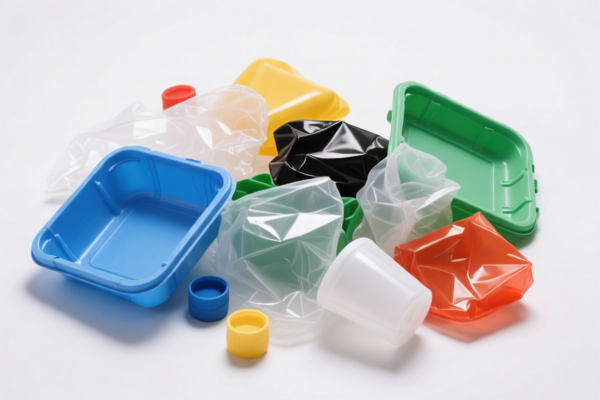
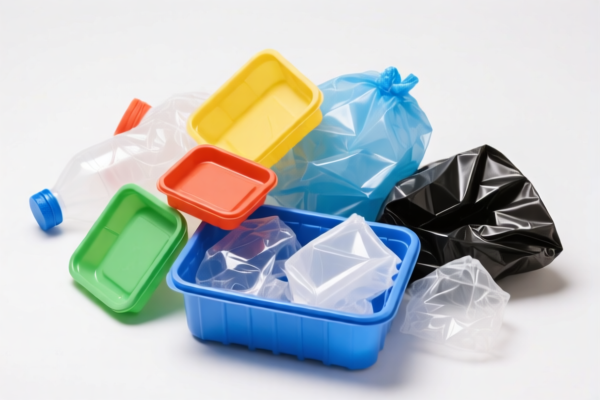
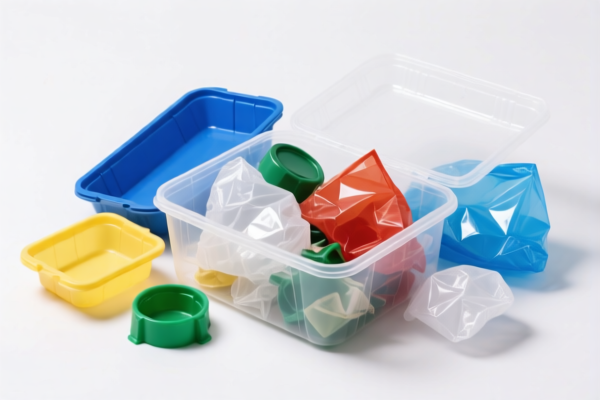
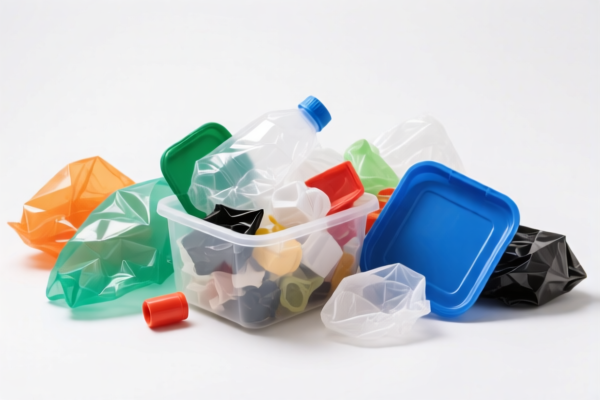
AI Analysis
📦 Plastic Other Containers (Plastic Packaging & Household Items)
🌐 HS Code Reference & Customs Clearance Guide | 2026 Latest Tariff Analysis | Professional Compliance Strategy
📌 Part 1: Product Definition & Classification: Do You Really Understand "Plastic Other Containers"?
"Plastic Other Containers" is a broad category in international trade, covering a wide range of plastic items used for storage, transport, packaging, and household use. The classification depends heavily on the specific usage and structural nature of the item.
Key Distinctions: * Transport/Packaging Containers: Items designed primarily for shipping, bulk storage, or protecting goods during transit (e.g., crates, pallets, heavy-duty bins). → Tends toward 3923.90 or 3926.90. * Household/Consumer Containers: Items used in homes for food storage, organization, or daily use (e.g., food boxes, cosmetic jars, bathroom organizers). → Tends toward 3924.90. * General Plastic Articles: Items that don't fit neatly into specific container definitions or are generic plastic parts. → Tends toward 3926.90.
⚠️ Critical Differentiation Point:
- If the item is a shipping aid (like a pallet or crate) or a generic packaging vessel not specific to household use → It may fall under 3923.90 or 3926.90.
- If the item is clearly a household good (like a food container or organizer) → It typically falls under 3924.90.
- Misclassification can lead to significant tariff differences (from ~13% to ~38%).
📦 Part 2: HS Code Classification Details (2026 Latest Tariff Authority Comparison)
| HS Code | Product Description | Application Scenario | Primary Use Category | Total Tax Rate |
|---|---|---|---|---|
3923.90.00.12 |
Other plastic articles, for transport or packaging of goods | Shipping crates, bulk bins, industrial packaging containers | Transport/Packaging | 38.0% |
3924.90.56.50 |
Other plastic household articles, for domestic use | Food storage containers, bathroom organizers, household bins | Household Items | 20.9% |
3926.90.10.00 |
Other plastic articles, not specified elsewhere | Generic plastic containers, non-household, non-transport specific | Other Plastic Goods | 20.9% |
3926.90.99.89 |
Other plastic articles, not specified elsewhere | General plastic goods with different material thickness or form | Other Plastic Goods | 22.8% |
3924.10.40.00 |
Plastic tableware and kitchenware | Food containers, cutlery, kitchen organizers | Household/Kitchen | 13.4% |
🔍 Key Reminder:
- 3923.90.00.12 carries the highest total tax (38.0%). Use this only for genuine transport/packaging items. Do not use for household goods. - 3924.10.40.00 has the lowest tax (13.4%). Only use if the item is clearly tableware or kitchenware. - 3924.90.56.50 and 3926.90.10.00 are mid-range (20.9%). Use for general household or other plastic containers.
💰 Part 3: 2026 Latest Tariff Rate Details (Including Surtaxes & Policy Add-ons)
✅ Applicable Country: United States (US)
✅ Origin: China (CN)
✅ Effective Date: 2025-11-10 onwards (including subsequent imports)
🎯 1. 3923.90.00.12 —— Plastic Articles for Transport/Packaging
| Item | Content |
|---|---|
| Base Tariff | 3.0% (ad valorem) |
| Surtax (Section 301) | +25.0% |
| IEEPA Surtax (Section 122) | +10.0% |
| Total Tax Rate | 38.0% |
| Tax Calculation | CIF Value × 38.0% |
| De Minimis Exemption | ❌ Not Eligible |
| Legal Basis Path | Base: 3.0% → Section 301: 25.0% → IEEPA: 10.0% → Total: 38.0% |
📌 Explanation:
- This is the most heavily taxed category. The 25% Section 301 tariff and 10% IEEPA surtax are applied on top of the 3% base rate. - High Risk: If you mistakenly declare household containers under this code, you will overpay taxes.
🎯 2. 3924.90.56.50 —— Other Plastic Household Articles
| Item | Content |
|---|---|
| Base Tariff | 3.4% (ad valorem) |
| Surtax (Section 301) | +7.5% |
| IEEPA Surtax (Section 122) | +10.0% |
| Total Tax Rate | 20.9% |
| Tax Calculation | CIF Value × 20.9% |
| De Minimis Exemption | ❌ Not Eligible |
| Legal Basis Path | Base: 3.4% → Section 301: 7.5% → IEEPA: 10.0% → Total: 20.9% |
📌 Note:
- Lower Section 301 surtax (7.5%) compared to 3923.90 (25%). - Suitable for food storage, cosmetic jars, bathroom organizers.
🎯 3. 3926.90.10.00 —— Other Plastic Articles (Not Elsewhere Specified)
| Item | Content |
|---|---|
| Base Tariff | 3.4% (ad valorem) |
| Surtax (Section 301) | +7.5% |
| IEEPA Surtax (Section 122) | +10.0% |
| Total Tax Rate | 20.9% |
| Tax Calculation | CIF Value × 20.9% |
| De Minimis Exemption | ❌ Not Eligible |
| Legal Basis Path | Base: 3.4% → Section 301: 7.5% → IEEPA: 10.0% → Total: 20.9% |
📌 Note:
- Same tax rate as3924.90.56.50. Use when the item is not clearly household but also not primarily for transport/packaging.
🎯 4. 3926.90.99.89 —— Other Plastic Articles (Other)
| Item | Content |
|---|---|
| Base Tariff | 5.3% (ad valorem) |
| Surtax (Section 301) | +7.5% |
| IEEPA Surtax (Section 122) | +10.0% |
| Total Tax Rate | 22.8% |
| Tax Calculation | CIF Value × 22.8% |
| De Minimis Exemption | ❌ Not Eligible |
| Legal Basis Path | Base: 5.3% → Section 301: 7.5% → IEEPA: 10.0% → Total: 22.8% |
📌 Note:
- Slightly higher base tariff (5.3%) than other 3926 codes. Used for generic plastic goods that don't fit other subheadings.
🎯 5. 3924.10.40.00 —— Plastic Tableware and Kitchenware
| Item | Content |
|---|---|
| Base Tariff | 3.4% (ad valorem) |
| Surtax (Section 301) | 0.0% |
| IEEPA Surtax (Section 122) | +10.0% |
| Total Tax Rate | 13.4% |
| Tax Calculation | CIF Value × 13.4% |
| De Minimis Exemption | ❌ Not Eligible |
| Legal Basis Path | Base: 3.4% → Section 301: 0.0% → IEEPA: 10.0% → Total: 13.4% |
📌 Key Advantage:
- Lowest Total Tax (13.4%). - No Section 301 Surtax (0%). - CRITICAL: Only use for tableware and kitchenware (e.g., food containers, cutlery, kitchen organizers). Do not use for general household bins or transport containers.
🛠️ Part 4: Customs Clearance Practical Advice (Avoid Pitfalls)
✅ 1. Documentation Checklist (Mandatory)
| Document | Required | Description |
|---|---|---|
| ✅ Product Specifications | ✔️ | Material type (PP, PE, etc.), dimensions, capacity, intended use |
| ✅ Product Photos | ✔️ | Clear images of the item, including labels and usage context |
| ✅ Commercial Invoice | ✔️ | Accurate description: e.g., "Plastic Food Container" vs. "Plastic Shipping Crate" |
| ✅ Packing List | ✔️ | Details of quantity, weight, and packaging |
| ✅ Certificate of Origin | ✔️ | Required for origin verification (China) |
| ✅ Third-Party Test Report | ✔️ | FDA (if food contact), BPA-free certification, if applicable |
✅ 2. Declaration Tips (Key Mantras)
🔥 "Know Your Use, Choose Your Code!"
| Scenario | Correct HS Code | Incorrect Practice |
|---|---|---|
| Food Container / Kitchen Organizer | 3924.10.40.00 (13.4%) |
Misdeclare as "Other Container" → 20.9%+ |
| Bathroom / General Household Bin | 3924.90.56.50 (20.9%) |
Misdeclare as "Tableware" → Customs rejection |
| Shipping Crate / Bulk Bin | 3923.90.00.12 (38.0%) |
Misdeclare as "Household" → Underpayment risk |
| Generic Plastic Jar (Non-Food) | 3926.90.10.00 (20.9%) |
Misdeclare as "Food Container" → Compliance issue |
✅ 3. Special Cases Handling
| Scenario | Handling Advice |
|---|---|
| Food-Contact Plastic | Must declare as 3924.10.40.00 if tableware/kitchenware. Provide FDA compliance documents. |
| Industrial Bins | Declare as 3923.90.00.12. Ensure description emphasizes transport/packaging use. |
| Mixed Household Items | If a box contains both tableware and general household goods, split the declaration if possible. If mixed, consider the primary use for classification. |
| OEM Custom Containers | Provide design drawings and product descriptions to justify the HS code. Avoid vague terms like "Plastic Container". |
🌍 Part 5: Global Market Clearance Comparison (2026 Latest)
| Country/Region | Recommended HS Code | Tariff (China Origin) | Certification Requirements | Notes |
|---|---|---|---|---|
| 🇺🇸 USA | 3924.10.40.00 (if tableware) |
13.4% | FDA (if food contact) | Highest risk: Misclassification leads to 38% tax |
| 🇺🇸 USA | 3923.90.00.12 (if packaging) |
38.0% | None specific | Highest tax rate in this category |
| 🇨🇳 China | 3924.10.40.00 |
5% | None | No surtaxes |
| 🇪🇺 EU | 3924.10.40.00 |
0-6.5% | LFGB (food contact) | No US-style surtaxes |
| 🇬🇧 UK | 3924.10.40.00 |
0-6.5% | UKCA (if applicable) | No US-style surtaxes |
📌 Conclusion:
- USA is the most complex market for plastic containers due to Section 301 and IEEPA surtaxes. - Tariff differences are significant (13.4% vs. 38.0%). Accurate classification is critical for cost control. - European and UK markets are more straightforward, with no additional surtaxes.
📌 Part 6: Common Errors & Pitfalls (Lessons Learned)
❌ Error 1: Declaring food containers as "Other Plastic Containers" (3926.90)
👉 Consequence: Miss out on lower tax rate (13.4% vs. 20.9-22.8%). Overpayment!
❌ Error 2: Declaring shipping crates as "Household Containers" (3924.90)
👉 Consequence: Underpayment risk. Customs may audit and impose penalties + back taxes. Compliance Risk!
❌ Error 3: Using vague descriptions like "Plastic Box"
👉 Consequence: Customs cannot determine the correct HS code. Delay in clearance or additional inspection.
❌ Error 4: Ignoring IEEPA Section 122 (10% surtax)
👉 Consequence: All these codes include the 10% IEEPA surtax. Forgetting to budget for it leads to cash flow issues.
✅ Correct Practice:
"Plastic Food Container, BPA-Free, FDA Compliant, 1 Liter Capacity, Model XYZ"
OR
"Plastic Shipping Crate, Heavy-Duty, Reusable, For Logistics Use"
🎯 Part 7: Conclusion: Professional Declaration, Save Costs, Ensure Compliance!
🎯 Remember the Mantra:
🔹 "Tableware 13%, Household 21%, Packaging 38%, Wrong Code = Costly Lesson!"
🔹 "IEEPA 10% is Always On, Plan Your Budget Accordingly!"
📌 Tips:
- If your plastic containers are originating from Vietnam, Mexico, Thailand, or Malaysia, you may exempt IEEPA surtaxes.
- Consider applying for Advance Rulings if your product category is ambiguous.
- Always provide detailed product descriptions and photos to customs brokers.
📣 Immediate Action:
📞 Contact professional customs brokers + Provide product images + Apply for HS Code Advance Ruling
🚀 Ensure your plastic containers clear customs smoothly, reduce costs, and maximize profits!
✨ Professional clearance starts with accurate classification!
💼 Every cent of your cost deserves precise calculation!
Customer Reviews
About HS Code Classification
The Harmonized System (HS) is an internationally standardized nomenclature developed by the World Customs Organization (WCO) to classify traded products. Over 200 countries use the HS system as the basis for customs tariffs, trade statistics, and import/export regulations.
Each HS code follows a hierarchical structure:
- Chapter (2 digits) — Broad category of goods (e.g., Chapter 84: Machinery and Mechanical Appliances)
- Heading (4 digits) — More specific grouping within the chapter
- Subheading (6 digits) — Internationally standardized breakdown, used by all WCO member countries
- National subdivisions (8-10 digits) — Country-specific extensions for further classification, such as US HTSUS 10-digit codes
Correct HS code classification is essential for smooth customs clearance, accurate duty payment, and compliance with trade regulations. Misclassification can lead to customs delays, overpayment of duties, or penalties.
When importing from CN to US, the applicable tariff rates may include:
- Most-Favored-Nation (MFN) rate — The standard duty rate applied to WTO members
- General rate — Applied to countries without trade agreements
- Trade remedy duties — Additional tariffs such as Section 301 (anti-dumping), Section 232 (national security), or countervailing duties
The information provided on this page is for reference purposes only. For official classification, please consult with your local customs authority or a licensed customs broker.