plastic packaging articles
CN → US| HS Code | Tariff Rate | Origin | Destination | Doc |
|---|---|---|---|---|
| 3923109000 | 38.0% | CN | US | Official Doc |
| 3926901000 | 20.9% | CN | US | Official Doc |
| 3926909989 | 22.8% | CN | US | Official Doc |
| 3923900080 | 38.0% | CN | US | Official Doc |
| 3901101000 | 41.5% | CN | US | Official Doc |
Product Images
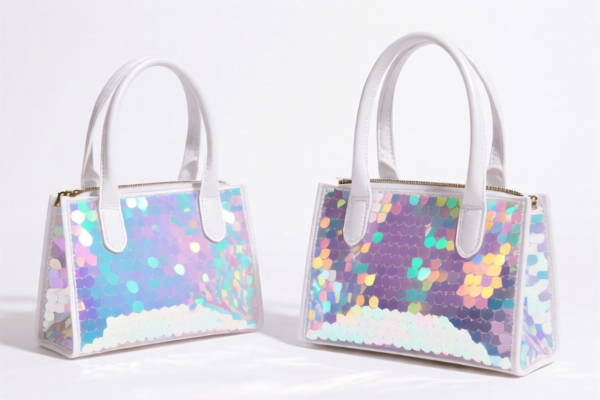


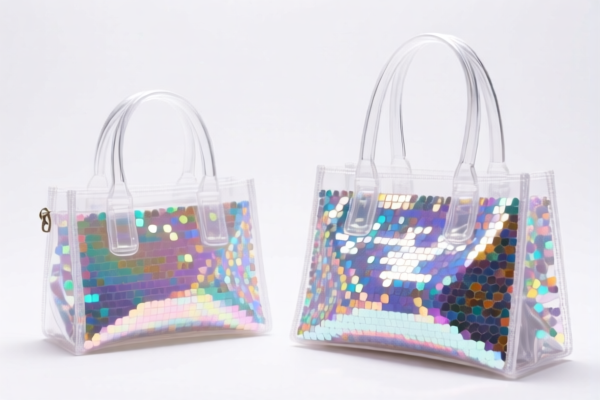
AI Analysis
📦 Plastic Packaging Articles: HS Code Classification & Tax Strategy | 2026 Customs Clearance Guide
🌐 HS Code Reference & Customs Clearance Guide | Latest 2026 Tariff Analysis | Professional Clearance Strategy
📌 I. Product Definition & Classification: What Exactly is "Plastic Packaging"?
"Plastic Packaging Articles" is a broad category in international trade. It covers goods made of plastics that are used for the transport, storage, or industrial packaging of goods. However, in customs classification, the distinction lies in the form (raw material vs. finished article) and the specific function (general packaging vs. specialized containers).
Misclassification is the #1 risk here because the tariff difference can be significant (from ~20% to ~41.5%).
⚠️ Key Distinction Point: - If the product is a finished good (boxes, bags, pallets, drums) used for packaging → Likely 3923 or 3926. - If the product is a raw material (pellets, sheets, rolls) used to make packaging → Likely 3901. - "122 Clause" Tax: All entries below include a 10% additional tariff (Section 122), reflecting current US trade policy measures.
📦 II. HS Code Classification Details (2026 Latest Tariff Authority)
| HS Code | Product Description | Application Scenario | Total Tax Rate |
|---|---|---|---|
3923.10.90.00 |
Plastic Articles for the Transport or Packaging of Goods (Other) | General industrial plastic packaging (boxes, cases, crates) | 38.0% |
3926.90.10.00 |
Other Articles of Plastics: Containers | Specific plastic containers/cases not listed elsewhere | 20.9% |
3926.90.99.89 |
Other Articles of Plastics: Other (Not Elsewhere Specified) | Generic plastic packaging items, custom molded parts | 22.8% |
3923.90.00.80 |
Plastic Articles for the Transport or Packaging of Goods (Other) | Alternative classification for general plastic packaging | 38.0% |
3901.10.10.00 |
Primary Forms of Polymers of Ethylene (Raw Materials) | Plastic raw materials (pellets, granules, powder) for manufacturing | 41.5% |
🔍 Critical Reminder: - Do not mix raw materials with finished goods.
3901.10.10.00is for ingredients (pellets), not the package itself. - 3923 vs. 3926:3923is generally for transport/packing articles (bags, sacks, boxes).3926is a "catch-all" for other plastic articles. However, specific subheadings in3926.90.10(containers) have a lower tax rate (20.9%) compared to general3923(38.0%). Choose carefully based on the item's primary function.
💰 III. 2026 Latest Tariff Rate Details (Including Surtaxes & Policy Add-ons)
✅ Applicable Country: United States (US)
✅ Origin: China (CN)
✅ Effective Time: Current rates apply (Post-2024 adjustments)
🎯 1. 3923.10.90.00 & 3923.90.00.80 —— General Plastic Packaging Articles
These codes cover a wide range of plastic boxes, crates, and industrial packaging items.
| Item | Content |
|---|---|
| Base Tariff | 3.0% - 5.3% (depending on specific subheading interpretation) |
| Section 301 Surcharge | +25.0% |
| Section 122 Clause | +10.0% |
| Total Tax Rate | 38.0% (for 3923 series) |
| Tax Calculation | CIF Value × 38.0% |
| De Minimis Exemption | ❌ Not Eligible (Deny De Minimis) |
| Legal Basis Path | USITC:3923.10.90.00 → USITC:3923.90.00.80 → FOOTNOTE:301 → SECTION:122 |
📌 Explanation: - The 25% is the standard Section 301 tariff on Chinese plastic products. - The 10% is the additional "122 Clause" tax. - The base rate varies slightly between
3923.10and3923.90, but both hit the 38% total when surcharges are applied. This is a high-cost category.
🎯 2. 3926.90.10.00 —— Plastic Containers
This code is specifically for "containers" under the "Other Articles of Plastics" heading. It often captures specific industrial containers that might otherwise fall into broader categories.
| Item | Content |
|---|---|
| Base Tariff | 3.4% |
| Section 301 Surcharge | +7.5% (Note: Lower surcharge rate in some specific interpretations/sub-lists) |
| Section 122 Clause | +10.0% |
| Total Tax Rate | 20.9% |
| Tax Calculation | CIF Value × 20.9% |
| De Minimis Exemption | ❌ Not Eligible (Deny De Minimis) |
| Legal Basis Path | USITC:3926.90.10.00 → FOOTNOTE:301 → SECTION:122 |
📌 Strategic Note: - This is the most cost-effective option for finished plastic packaging items if they can be legitimately classified as "Containers" under
3926.90.10. - Crucial: You must prove the item is a "container" and not a general "packaging article" under3923. If the CBP rejects this, you may face a re-classification to3923(38%).
🎯 3. 3926.90.99.89 —— Other Plastic Articles
Used for plastic packaging items that do not fit into specific "containers" or "transport articles."
| Item | Content |
|---|---|
| Base Tariff | 5.3% |
| Section 301 Surcharge | +7.5% |
| Section 122 Clause | +10.0% |
| Total Tax Rate | 22.8% |
| Tax Calculation | CIF Value × 22.8% |
| De Minimis Exemption | ❌ Not Eligible |
| Legal Basis Path | USITC:3926.90.99.89 → FOOTNOTE:301 → SECTION:122 |
🎯 4. 3901.10.10.00 —— Ethylene Polymers (Raw Materials)
This is for plastic resin/pellets, NOT the packaging itself.
| Item | Content |
|---|---|
| Base Tariff | 6.5% |
| Section 301 Surcharge | +25.0% |
| Section 122 Clause | +10.0% |
| Total Tax Rate | 41.5% |
| Tax Calculation | CIF Value × 41.5% |
| De Minimis Exemption | ❌ Not Eligible |
| Legal Basis Path | USITC:3901.10.10.00 → FOOTNOTE:301 → SECTION:122 |
📌 Warning: - Do NOT use this code for finished boxes or bags. This is only for raw materials (pellets, granules). - It has the highest total tax rate (41.5%). - Using this for finished goods is a major red flag for customs audits.
🛠️ IV. Customs Clearance Practical Advice (Pitfall Avoidance)
✅ 1. Documentation Checklist (Must-Haves)
| Document | Required | Description |
|---|---|---|
| ✅ Product Specification Sheet | ✔️ | Must clearly state: "Plastic Packaging Container" or "Plastic Raw Material Pellets". |
| ✅ Product Photos | ✔️ | Clear images of the item, including any markings or logos. |
| ✅ Bill of Lading/Air Waybill | ✔️ | Ensure the description matches the HS Code (e.g., "Plastic Boxes" vs. "Plastic Resin"). |
| ✅ Commercial Invoice | ✔️ | Value must be accurate; include origin "China". |
| ✅ Material Composition Proof | ✔️ | For 3901, provide Certificate of Analysis (CoA) to prove it's ethylene polymer. |
| ✅ Structure Diagram | ✔️ | For 3923 vs 3926, a diagram showing how the item functions as a container vs. general packaging helps. |
✅ 2. Classification Strategy (Key Tips)
🔥 "Raw Material = 3901 (High Tax); Container = 3926.90.10 (Low Tax); General Box = 3923 (High Tax)"
| Scenario | Recommended HS Code | Reason |
|---|---|---|
| Plastic Pellets/Granules | 3901.10.10.00 |
It's a raw material, not a finished article. |
| Specific Industrial Containers (e.g., IBC totes, specific drums) | 3926.90.10.00 |
If it fits "Container" definition, saves 17.1% vs 3923. |
| General Plastic Boxes/Crates/Bags | 3923.10.90.00 |
Standard industrial packaging. |
| Custom Plastic Packaging Parts | 3926.90.99.89 |
If not a standard container or transport article. |
| Plastic Bags for Consumer Use | 3923.21.00.00 (Not in list, but common) |
Note: If your specific "Plastic Packaging" refers to consumer bags, it may not be in this list. This list focuses on industrial/general packaging. |
✅ 3. Special Cases
| Case | Handling Advice |
|---|---|
| Mixed Shipment (Raw Material + Finished Goods) | Do not combine! Ship separately or declare separately. Mixing causes massive delays and potential fraud allegations. |
| "Plastic Packaging" vs. "Container" | If you claim 3926.90.10.00 (20.9%), be prepared to prove it is a "container" (holds goods directly). If it's a box containing a container, it might still be 3923. |
| 122 Clause Applicability | Always include the 10% surcharge in your cost model. It is non-negotiable for Chinese origin plastic goods. |
| De Minimis Exemption | Absolutely NOT available. All these HS codes are above the $800 threshold for exemption and are subject to full duty. |
🌍 V. Global Market Comparison (2026)
| Market | Recommended HS Code | Estimated Total Tax (China Origin) | Key Certification |
|---|---|---|---|
| 🇺🇸 USA | 3926.90.10.00 (if eligible) |
20.9% (or 38.0%/41.5%) | FDA (if food contact), Prop 65 |
| 🇨🇳 China | 3926.90.10.00 |
~10-15% (varies) | CCC (if applicable) |
| 🇪🇺 EU | 3926.90.10.00 |
~6.5% | REACH, LFGB |
| 🇬🇧 UK | 3926.90.10.00 |
~6.5% | UKCA |
📌 Conclusion: - The US market is the most expensive for plastic packaging from China due to Section 301 and 122 taxes. - Optimization Tip: If your product is a specific "container," argue for
3926.90.10.00to save 17.1% in tariffs compared to3923. - If it's raw material, accept the 41.5% rate or consider sourcing raw materials from non-China origins (e.g., South Korea, Vietnam) if feasible.
📌 VI. Common Mistakes & Pitfalls (Lessons Learned)
❌ Mistake 1: Calling "Plastic Pellets" "Plastic Packaging" to avoid high taxes.
👉 Result: Customs detects raw material nature → Re-classification to 3901 → 41.5% tax + penalties.
❌ Mistake 2: Declaring all plastic boxes as 3926.90.10.00 to save tax.
👉 Result: CBP disagrees, classifies as 3923.10.90.00 → Backdated duties of 17.1% on all imports.
❌ Mistake 3: Ignoring the "122 Clause" in cost calculations.
👉 Result: Profit margin eroded by unexpected 10% surcharge.
❌ Mistake 4: Assuming De Minimis ($800) applies.
👉 Result: Shipment held at border, requiring full bond and duty payment → Delays.
✅ Correct Approach:
"Classify by Form and Function. Raw Material = 3901. Container = 3926.90.10. General Packaging = 3923. Always pay the 122 Clause. No De Minimis."
🎯 VII. Conclusion: Precision Saves Money
🎯 Remember the Strategy:
🔹 "Pellets = 3901 (41.5%); Containers = 3926.90.10 (20.9%); Boxes = 3923 (38.0%)."
🔹 "122 Clause is Mandatory. De Minimis is Gone. Documentation is Key."
📌 Pro Tip:
If you are importing large volumes, consider applying for an Advance Ruling from CBP for complex packaging items to ensure 3926.90.10.00 eligibility, potentially saving 17.1% in duties over time.
📣 Immediate Action:
📞 Contact your customs broker with product photos and specifications.
🚀 Optimize your HS Code to the lowest possible rate (3926.90.10.00if applicable) to maximize profit margins.
✨ Professional Customs Clearance Starts with Accurate Classification!
💼 Every Percent Saved in Duty is Profit in Your Pocket!
Customer Reviews
About HS Code Classification
The Harmonized System (HS) is an internationally standardized nomenclature developed by the World Customs Organization (WCO) to classify traded products. Over 200 countries use the HS system as the basis for customs tariffs, trade statistics, and import/export regulations.
Each HS code follows a hierarchical structure:
- Chapter (2 digits) — Broad category of goods (e.g., Chapter 84: Machinery and Mechanical Appliances)
- Heading (4 digits) — More specific grouping within the chapter
- Subheading (6 digits) — Internationally standardized breakdown, used by all WCO member countries
- National subdivisions (8-10 digits) — Country-specific extensions for further classification, such as US HTSUS 10-digit codes
Correct HS code classification is essential for smooth customs clearance, accurate duty payment, and compliance with trade regulations. Misclassification can lead to customs delays, overpayment of duties, or penalties.
When importing from CN to US, the applicable tariff rates may include:
- Most-Favored-Nation (MFN) rate — The standard duty rate applied to WTO members
- General rate — Applied to countries without trade agreements
- Trade remedy duties — Additional tariffs such as Section 301 (anti-dumping), Section 232 (national security), or countervailing duties
The information provided on this page is for reference purposes only. For official classification, please consult with your local customs authority or a licensed customs broker.