plastic pipe end cap
CN → US| HS Code | Tariff Rate | Origin | Destination | Doc |
|---|---|---|---|---|
| 3924104000 | 13.4% | CN | US | Official Doc |
| 3926901000 | 20.9% | CN | US | Official Doc |
| 3924905650 | 20.9% | CN | US | Official Doc |
| 3926909989 | 22.8% | CN | US | Official Doc |
| 3926901000 | 20.9% | CN | US | Official Doc |
Product Images
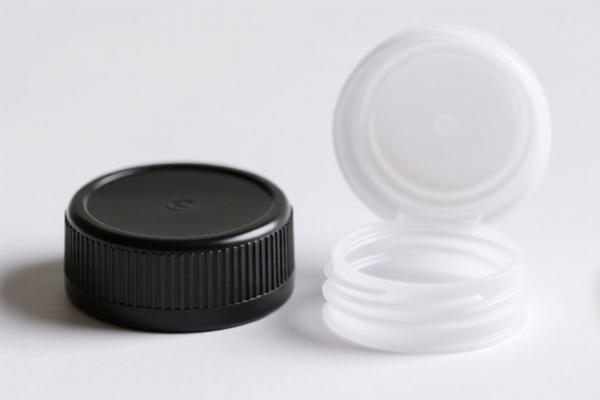



AI Analysis
🛠️ Plastic Pipe End Cap (Plastic Pipe End Cap)
🌐 HS Code Reference & Customs Clearance Guide | 2026 Latest Tariff Analysis | Professional Clearance Strategy
📌 I. Product Definition & Classification: What Exactly is a "Plastic Pipe End Cap"?
A Plastic Pipe End Cap is a fitting used to seal the end of a pipe. In international trade, its classification depends heavily on its specific application and physical form. It is generally categorized under Chapter 39 (Plastics and Articles Thereof).
Key Distinctions in Customs Logic: 1. Specific Utility (Chapter 3924): If the cap is designed for household, kitchen, or bathroom accessories (e.g., a cover for a sink drain, a decorative cap for furniture legs, or a specific lid-like component for household containers), it often falls under 3924. 2. General Accessory (Chapter 3926): If the cap is a general-purpose connector, a lid for a container, or a "catch-all" plastic part not specifically named elsewhere, it falls under 3926. 3. Material Matters: All examples below assume the primary material is Plastic as per the data provided.
⚠️ Critical Classification Point:
- If it looks like a lid, cover, or stopper for household use (like a sink cover) → 3924.10.40.00
- If it is a container lid or general fitting → 3926.90.10.00
- If it is a kitchen utensil accessory not elsewhere specified → 3924.90.56.50
- If it is a miscellaneous plastic part with no specific function described → 3926.90.99.89
📦 II. HS Code Classification Details (Based on Provided Data)
| HS Code | Product Description (From Data) | Applicable Scenario | Total Tax Rate |
|---|---|---|---|
3924.10.40.00 |
Plastic material, used for household accessory parts such as sink covers | Household items, decorative covers, sink accessories | 13.4% |
3926.90.10.00 |
Plastic material, belongs to container accessories or lid products | Container lids, general pipe caps acting as lids | 20.9% |
3924.90.56.50 |
Plastic material, classified as other sub-items of kitchen utensils or household articles | Kitchen-related plastic parts, specialized household fittings | 20.9% |
3926.90.99.89 |
Plastic material, as a bottom-of-the-bucket category for other plastic products | General plastic fittings, miscellaneous plastic parts | 22.8% |
🔍 Key Reminder:
- The tax rate varies significantly based on whether the cap is viewed as a household accessory (lower tax) or a general plastic component (higher tax due to additional duties).
- "Sink Cover" vs. "Pipe Cap": If your pipe cap is intended for a kitchen sink drain, 3924.10.40.00 is the most favorable and accurate code. If it is for industrial or general plumbing without a specific household aesthetic, 3926 codes apply.
💰 III. 2026 Latest Tariff Rate Breakdown (Including Surcharges)
✅ Applicable Country: United States (US)
✅ Origin: China (CN) (Note: Tax details imply US-China trade context due to "Section 301" and "122 Clause" references in the data)
✅ Effective Time: Current tariffs apply based on the provided data structure.
🎯 1. 3924.10.40.00 —— Household Accessory (e.g., Sink Cover)
| Item | Content |
|---|---|
| Base Tariff | 3.4% (MFN Rate) |
| Section 301 Surcharge | 0.0% (Exempt or not applicable for this specific sub-category) |
| Section 122 Tariff | 10% |
| Total Tariff | 13.4% |
| Tax Calculation | CIF Value × 13.4% |
| De Minimis Eligibility | ❌ Likely Not Eligible (Due to Section 122/301 implications) |
| Legal Basis | Base Tariff (3.4%) + Section 122 (10%) |
📌 Explanation:
- This is the most cost-effective classification if the product can be justified as a household accessory (like a sink cap).
- The 0% Section 301 surcharge is a significant advantage.
- The 10% Section 122 tariff applies to certain Chinese imports.
🎯 2. 3926.90.10.00 —— Container Accessory / Lid
| Item | Content |
|---|---|
| Base Tariff | 3.4% |
| Section 301 Surcharge | 7.5% |
| Section 122 Tariff | 10% |
| Total Tariff | 20.9% |
| Tax Calculation | CIF Value × 20.9% |
| De Minimis Eligibility | ❌ Not Eligible |
| Legal Basis | Base Tariff (3.4%) + Section 301 (7.5%) + Section 122 (10%) |
📌 Explanation:
- This code treats the pipe cap as a container accessory.
- It incurs the 7.5% Section 301 surcharge, making it more expensive than the household accessory code.
🎯 3. 3924.90.56.50 —— Other Kitchen/Household Items
| Item | Content |
|---|---|
| Base Tariff | 3.4% |
| Section 301 Surcharge | 7.5% |
| Section 122 Tariff | 10% |
| Total Tariff | 20.9% |
| Tax Calculation | CIF Value × 20.9% |
| De Minimis Eligibility | ❌ Not Eligible |
| Legal Basis | Base Tariff (3.4%) + Section 301 (7.5%) + Section 122 (10%) |
📌 Explanation:
- Similar to the previous code, but categorized under kitchen utensils.
- Tax rate is identical to3926.90.10.00. Choose this if the cap is specifically marketed for kitchen use (e.g., drain covers).
🎯 4. 3926.90.99.89 —— Other Plastic Articles (Catch-All)
| Item | Content |
|---|---|
| Base Tariff | 5.3% |
| Section 301 Surcharge | 7.5% |
| Section 122 Tariff | 10% |
| Total Tariff | 22.8% |
| Tax Calculation | CIF Value × 22.8% |
| De Minimis Eligibility | ❌ Not Eligible |
| Legal Basis | Base Tariff (5.3%) + Section 301 (7.5%) + Section 122 (10%) |
📌 Explanation:
- This is the least favorable code. It is used when the product doesn’t fit into specific accessory categories.
- Highest Base Tariff (5.3%) plus all surcharges. Avoid this unless no other classification fits.
🛠️ IV. Customs Clearance Practical Advice (Pitfall Avoidance Guide)
✅ 1. Documentation Checklist (Mandatory)
| Document | Required | Description |
|---|---|---|
| ✅ Product Specification Sheet | ✔️ | Must state: Material (Plastic Type), Dimensions, Intended Use (e.g., "Kitchen Sink Cap"). |
| ✅ Product Photos | ✔️ | Clear images showing the cap’s shape, threading (if any), and context (e.g., installed on a pipe). |
| ✅ Commercial Invoice | ✔️ | Description should match the HS Code rationale (e.g., "Plastic Sink Cover" vs. "Plastic Pipe Fitting"). |
| ✅ Packing List | ✔️ | Net/Gross weight, quantity. |
| ✅ Origin Certificate | ✔️ | Proof of Chinese origin is critical for applying Section 301/122 tariffs. |
✅ 2. Classification Strategy (Key Mantra)
🔥 "Household Use = Lower Tax; General Use = Higher Tax!"
| Scenario | Recommended HS Code | Tax Rate | Why? |
|---|---|---|---|
| Pipe cap for kitchen sink/drain | 3924.10.40.00 |
13.4% | Classified as household accessory; no Section 301 surcharge. |
| Pipe cap for general plumbing | 3926.90.10.00 |
20.9% | Classified as container/accessory; subject to Section 301. |
| Generic plastic plug/cap | 3926.90.99.89 |
22.8% | No specific function; highest base rate + all surcharges. |
✅ 3. Special Handling Tips
| Situation | Advice |
|---|---|
| OEM/Custom Caps | If the cap is custom-shaped for a specific appliance, provide the appliance manual to prove it’s a "household accessory" (aim for 3924). |
| Mixed Shipments | If you have both household caps and industrial pipe fittings in one shipment, separate them in the invoice. Do not lump them under one HS code. |
| Material Declaration | Ensure the invoice states "100% Plastic" or specifies the polymer (e.g., PP, PVC). Vague descriptions like "Plastic Part" may trigger customs scrutiny. |
🌍 V. Global Market Comparison (2026 Overview)
| Country/Region | Recommended HS Code | Estimated Tariff | Notes |
|---|---|---|---|
| 🇺🇸 USA | 3924.10.40.00 |
13.4% | Best rate for household items. Avoid 3926 if possible. |
| 🇨🇳 China | 3926.90.99.89 |
~5-10% | Import tariffs vary; check current FTA benefits. |
| 🇪🇺 EU | 3926.90.99 |
~6.5% | No Section 301/122 equivalents, but standard MFN applies. |
| 🇬🇧 UK | 3926.90.99 |
~6.5% | Post-Brexit tariffs align closely with EU. |
📌 Conclusion:
- USA is the most complex market due to Section 301 and 122 tariffs.
- Optimize your description to fit 3924.10.40.00 if the product is used in a household context (kitchen, bathroom, living area).
- Avoid3926.90.99.89unless necessary, as it adds unnecessary cost.
📌 VI. Common Mistakes & Pitfalls (Lessons Learned)
❌ Mistake 1: Calling all plastic caps "Pipe Fittings" and using 3926.90.99.89
👉 Consequence: You pay 22.8% instead of 13.4%. Loss: 9.4% extra tax.
❌ Mistake 2: Ignoring Section 301 in the invoice description
👉 Consequence: Customs may reclassify from 3924 (0% Sec 301) to 3926 (7.5% Sec 301). Loss: 7.5% extra tax.
❌ Mistake 3: Vague description "Plastic Cap"
👉 Consequence: Customs delay for classification review. Risk: Demurrage fees + Audit.
✅ Correct Approach:
"Plastic Sink Drain Cover, Household Use, PP Material, Model XYZ" → Use
3924.10.40.00
🎯 VII. Conclusion: Precise Classification Saves Money!
🎯 Remember the Mantra:
🔹 "Household Cap = 13.4% (Best)"; "General Accessory = 20.9%"; "Misc Plastic = 22.8% (Worst)"
🔹 "Describe the Use, Not Just the Shape!"
📌 Pro Tip:
If your plastic end caps are exported to the US, ensure your Invoice Description clearly states the end-use (e.g., "for kitchen sinks") to support the 3924.10.40.00 classification. This can save you up to 9.4% in tariffs compared to generic classifications.
📣 Immediate Action:
📞 Consult with a customs broker to verify the end-use of your product.
🚀 Optimize your product descriptions to align with the most favorable HS Code.
💡 Save money by classifying correctly!
✨ Professional Clearance Starts with Precise Classification!
💼 Every percentage point counts in international trade!
Customer Reviews
About HS Code Classification
The Harmonized System (HS) is an internationally standardized nomenclature developed by the World Customs Organization (WCO) to classify traded products. Over 200 countries use the HS system as the basis for customs tariffs, trade statistics, and import/export regulations.
Each HS code follows a hierarchical structure:
- Chapter (2 digits) — Broad category of goods (e.g., Chapter 84: Machinery and Mechanical Appliances)
- Heading (4 digits) — More specific grouping within the chapter
- Subheading (6 digits) — Internationally standardized breakdown, used by all WCO member countries
- National subdivisions (8-10 digits) — Country-specific extensions for further classification, such as US HTSUS 10-digit codes
Correct HS code classification is essential for smooth customs clearance, accurate duty payment, and compliance with trade regulations. Misclassification can lead to customs delays, overpayment of duties, or penalties.
When importing from CN to US, the applicable tariff rates may include:
- Most-Favored-Nation (MFN) rate — The standard duty rate applied to WTO members
- General rate — Applied to countries without trade agreements
- Trade remedy duties — Additional tariffs such as Section 301 (anti-dumping), Section 232 (national security), or countervailing duties
The information provided on this page is for reference purposes only. For official classification, please consult with your local customs authority or a licensed customs broker.