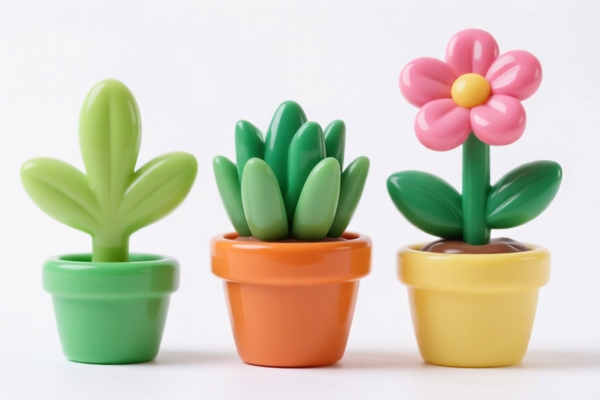
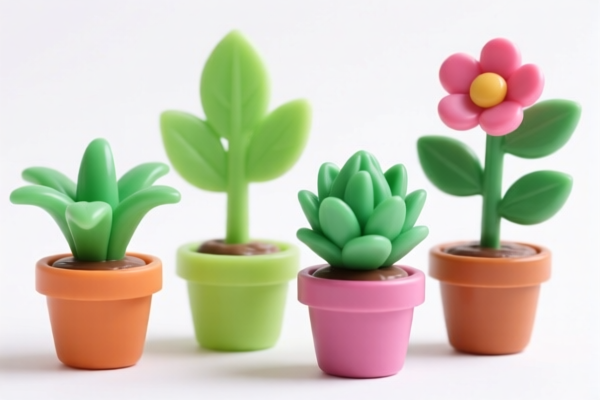
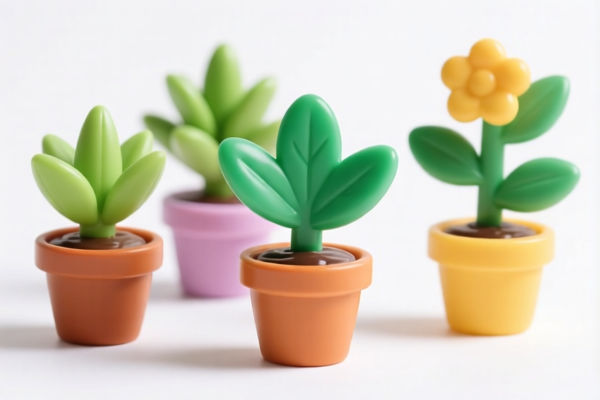
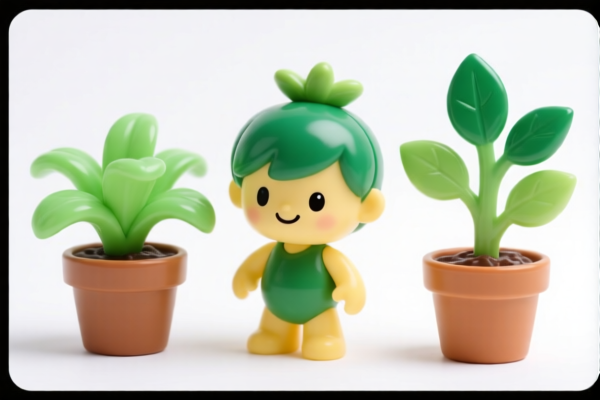
plastic plant figurines
CN → US| HS Code | Tariff Rate | Origin | Destination | Doc |
|---|---|---|---|---|
| 3926400010 | 15.3% | CN | US | Official Doc |
| 7117907500 | 10.0% | CN | US | Official Doc |
| 9503000090 | 10.0% | CN | US | Official Doc |
| 7117909000 | 28.5% | CN | US | Official Doc |
| 9503000073 | 10.0% | CN | US | Official Doc |
| 3926400090 | 15.3% | CN | US | Official Doc |
Product Images
AI Analysis
🌿 Plastic Plant Figurines (Plastic Statuettes/Decor)
🌐 HS Code Reference & Customs Clearance Guide | 2026 Latest Tariff Analysis | Professional Duty Optimization Strategy
📌 I. Product Definition & Classification: What Exactly Are "Plastic Plant Figurines"?
Plastic plant figurines refer to small decorative items made primarily of plastic, designed to resemble plants, trees, flowers, or garden scenes. They are used for indoor/outdoor home decoration, garden aesthetics, or seasonal displays.
Key Classification Nuance:
In international trade, these items are ambiguous. They can be classified as:
1. Plastic Articles (Decor): General plastic manufactured goods (Chapter 39).
2. Imitation Jewelry/Accessories: If small, wearable, or highly ornamental (Chapter 71).
3. Toys/Models: If intended for play, collection, or display as models (Chapter 95).
⚠️ Critical Distinction Point:
- If the item is purely a static decorative piece for home/garden use → Likely Chapter 39 (3926).
- If it is small, delicate, or worn/accessorized → Likely Chapter 71 (7117).
- If it is rigged for play, part of a playset, or marketed as a "model" → Likely Chapter 95 (9503).
Misclassification Risk: High. Customs may challenge the "intent" of the product.
📦 II. HS Code Classification Details (2026 Latest Tariff Cross-Reference)
| HS Code | Product Description | Application Scenario | Primary Material |
|---|---|---|---|
3926.40.00.10 |
Plastic ornaments/statuettes, not elsewhere specified | Garden statues, indoor plant decor, static displays | ✅ Plastic |
3926.40.00.90 |
Other plastic articles (ornaments/decor) | General plastic decorations, non-specific plant figures | ✅ Plastic |
7117.90.75.00 |
Imitation jewelry: Other (plastic made) | Small, wearable plant charms, hair accessories, delicate ornaments | ✅ Plastic |
7117.90.90.00 |
Imitation jewelry: Other (plastic made) | Generic imitation jewelry items, including plant-themed accessories | ✅ Plastic |
9503.00.00.90 |
Toys/models: Other (plastic made) | Collectible plant models, toy garden sets, playful figurines | ✅ Plastic |
9503.00.00.73 |
Toys/models: Other (plastic made) | Specific toy/plant model categories under "Other" | ✅ Plastic |
🔍 Key Reminder:
- 3926 is the default for static home/garden decor.
- 7117 applies if the item is jewelry-adjacent (e.g., a brooch shaped like a flower/plant).
- 9503 applies if the item is marketed as a toy or model kit.
- Do NOT mix categories: A static garden statue declared as "toy" will face scrutiny.
💰 III. 2026 Latest Tariff Rate Breakdown (Including Additional Duties & Policy Surcharges)
✅ Applicable Country: United States (US)
✅ Origin: China (CN)
✅ Effective Date: 2025/2026 (Current Trade Policy Era)
🎯 1. 3926.40.00.10 & 3926.40.00.90 —— Plastic Ornaments/Decorations
| Item | Content |
|---|---|
| Base Tariff | 5.3% (ad valorem) |
| Section 301 Additional Duty | 0.0% (Note: Some plastic articles may be excluded, but verify current list) |
| Section 122 Duty (Bikini Tax/Additional) | +10.0% (Specific to certain plastic articles/ornaments under recent trade actions) |
| Total Tariff Rate | 15.3% |
| Tax Calculation | CIF Value × 15.3% |
| De Minimis Exemption | ❌ No (Section 321 de minimis does not apply to duties; however, low-value shipments may avoid formal entry if under $800, but duties still accrue if formal entry required) |
| Legal Basis Path | HTSUS:3926.40.00 → Section 122 Surcharge → Base Rate 5.3% |
📌 Explanation:
- The 15.3% total rate is a combination of the standard base duty (5.3%) and the Section 122 additional duty (10%) applicable to certain plastic ornaments.
- No Section 301 tariff is explicitly listed for these specific subheadings in the provided data, but verify if general plastic tariffs apply.
- This is the most common classification for static plastic plant figurines.
🎯 2. 7117.90.75.00 & 9503.00.00.90 / 9503.00.00.73 —— Imitation Jewelry & Toys/Models
| Item | Content |
|---|---|
| Base Tariff | 0.0% |
| Section 301 Additional Duty | 0.0% |
| Section 122 Duty | +10.0% |
| Total Tariff Rate | 10.0% |
| Tax Calculation | CIF Value × 10.0% |
| De Minimis Exemption | ❌ No |
| Legal Basis Path | HTSUS:7117/9503 → Base Rate 0% + Section 122: 10% |
📌 Explanation:
- These categories benefit from a 0% base tariff, resulting in a lower total duty of 10%.
- Risky Strategy: Misclassifying a static garden statue as "imitation jewelry" or "toy" to save 5.3% can lead to penalties, audits, and back taxes if customs determines the product's primary function is decoration, not wear/play.
🎯 3. 7117.90.90.00 —— Imitation Jewelry (Other)
| Item | Content |
|---|---|
| Base Tariff | 11.0% |
| Section 301 Additional Duty | 7.5% |
| Section 122 Duty | +10.0% |
| Total Tariff Rate | 28.5% |
| Tax Calculation | CIF Value × 28.5% |
| De Minimis Exemption | ❌ No |
| Legal Basis Path | HTSUS:7117.90.90 → Base Rate 11.0% + Section 301: 7.5% + Section 122: 10% |
📌 Explanation:
- This is the highest duty rate (28.5%).
- Applies to imitation jewelry items that do not fall into the more specific 75.00 category.
- Avoid this classification for plastic plant figurines unless they are unequivocally jewelry (e.g., a plastic flower brooch worn on clothing).
🛠️ IV. Customs Clearance Practical Advice (Real-World Pitfall Avoidance)
✅ 1. Documentation Checklist (Non-Negotiable)
| Document | Required | Notes |
|---|---|---|
| ✅ Product Specifications | ✔️ | Material (100% plastic?), Size, Weight, Intended Use (Decor vs. Toy) |
| ✅ Product Photos | ✔️ | Clear images showing no mechanical parts (to prove non-toy) or lack of wearable components (to prove non-jewelry) |
| ✅ Commercial Invoice | ✔️ | Explicitly state: "Plastic Decorative Figurine for Home/Garden Use" |
| ✅ Packing List | ✔️ | Item count, gross/net weight |
| ✅ Proof of Origin | ✔️ | Certificate of Origin (if claiming exemptions, though none apply here for CN) |
| ✅ Third-Party Test Reports | ✔️ | CPSIA (if marketed as toy), Lead/Cadmium content (for decor) |
✅ 2. Declaration Tips (Key Mnemonics)
🔥 "Static = Decor (3926), Wearable = Jewelry (7117), Playable = Toy (9503). Declare Intent!"
| Scenario | Correct Declaration | Wrong Declaration | Consequence |
|---|---|---|---|
| Garden Statue | 3926.40.00.10 (Plastic Ornament) |
9503.00.00.90 (Toy) |
Risk of 10.0% vs 15.3% audit, but 15.3% is safer for static items |
| Brooch/Necklace | 7117.90.75.00 (Imitation Jewelry) |
3926.40.00.10 |
Underpayment of duty (10.0% vs 28.5% if misclassified as generic jewelry) |
| Toy Plant Set | 9503.00.00.90 (Toy) |
3926.40.00.10 |
Correct, but ensure packaging indicates "Toy" |
📌 Critical Warning:
- Do NOT declare a static plastic plant figurine as a "Toy" just to get 10.0% duty if it has no play value. Customs may reassess to3926(15.3%) + penalties.
- Do NOT declare a garden statue as "Jewelry" unless it is wearable. This is a high-risk misclassification.
✅ 3. Special Case Handling
| Situation | Recommendation |
|---|---|
| Mixed Shipment (Decor + Toy) | Separate lines in invoice. Do not bundle. |
| E-commerce Dropshipping | Ensure supplier declares correctly. De minimis ($800) may apply if under threshold, but duties still accrue if flagged. |
| High-Value Collectibles | If valuable, consider 7117 if jewel-like, but provide photos proving ornamental/wearable nature. |
| Outdoor Decor | Specify "UV-Resistant Plastic" to justify 3926 as outdoor fixture, not toy. |
🌍 V. Global Market Comparison (2026 Latest)
| Country/Region | Recommended HS Code | Tariff Rate (China Origin) | Certification | Notes |
|---|---|---|---|---|
| 🇺🇸 USA | 3926.40.00.10 |
15.3% (Decor) / 10.0% (Toy/Jewelry) | CPSIA, Lead Test | Section 122 applies to decor. |
| 🇨🇳 China | 3926.40.00.10 |
5.0% - 10.0% | CCC (if applicable) | Lower base rates. |
| 🇪🇺 EU | 3926.90 |
4.5% | REACH, RoHS | No Section 122 equivalent. |
| 🇬🇧 UK | 3926.90 |
4.5% | UKCA, REACH | Post-Brexit rules apply. |
| 🇨🇦 Canada | 3926.90 |
5.0% | Health Canada | Lower duties than US. |
📌 Conclusion:
- USA is the highest duty market for plastic decor due to Section 122.
- Toy classification (10.0%) is cheaper but risky if product is static.
- EU/Canada have lower tariffs and fewer additional surcharges.
📌 VI. Common Errors & Pitfalls (Blood & Tears Lessons)
❌ Error 1: Declaring static garden statues as "Toys" to save 5.3%
👉 Consequence: Customs audits, back taxes (15.3% vs 10.0%), and penalties.
👉 Reality: If it doesn’t move or play, it’s not a toy.
❌ Error 2: Declaring jewelry-like plastic flowers as "Decor"
👉 Consequence: Overpayment? No, underpayment if deemed jewelry (28.5% vs 10.0%).
👉 Reality: Wearable items are jewelry.
❌ Error 3: Ignoring Section 122 (10% surcharge) on plastic decor
👉 Consequence: Unexpected 10% bill at customs.
👉 Reality: This surcharge is mandatory for 3926.40 items from China.
✅ Correct Practice:
"Plastic Decorative Plant Figurine, Static, for Home Garden Use, 100% Plastic, No Moving Parts, Model XYZ"
🎯 VII. Conclusion: Precise Classification Saves Money & Time
🎯 Remember the Mnemonic:
🔹 "Static Decor = 15.3% (3926), Toy/Jewelry = 10.0% (9503/7117), but Prove It!"
🔹 "Section 122 is the Hidden Cost: 10% Extra on Plastic Decor."
🔹 "Misclassification Costs More Than Duty."
📌 Pro Tip:
- If your plastic plant figurines are small and wearable (e.g., hair pins, brooches), use 7117.90.75.00 (10.0%).
- If they are static and large (e.g., garden gnomes, planters), use 3926.40.00.10 (15.3%).
- Never use 7117.90.90.00 (28.5%) unless absolutely necessary.
📣 Immediate Action:
📞 Contact Your Customs Broker + Provide Product Photos + Request Pre-Ruling
🚀 Ensure your plastic plant figurines clear US customs smoothly, avoid audits, and optimize costs!
✨ Professional Clearance Starts with Accurate Classification!
💼 Every Percent of Duty Counts!
Customer Reviews
About HS Code Classification
The Harmonized System (HS) is an internationally standardized nomenclature developed by the World Customs Organization (WCO) to classify traded products. Over 200 countries use the HS system as the basis for customs tariffs, trade statistics, and import/export regulations.
Each HS code follows a hierarchical structure:
- Chapter (2 digits) — Broad category of goods (e.g., Chapter 84: Machinery and Mechanical Appliances)
- Heading (4 digits) — More specific grouping within the chapter
- Subheading (6 digits) — Internationally standardized breakdown, used by all WCO member countries
- National subdivisions (8-10 digits) — Country-specific extensions for further classification, such as US HTSUS 10-digit codes
Correct HS code classification is essential for smooth customs clearance, accurate duty payment, and compliance with trade regulations. Misclassification can lead to customs delays, overpayment of duties, or penalties.
When importing from CN to US, the applicable tariff rates may include:
- Most-Favored-Nation (MFN) rate — The standard duty rate applied to WTO members
- General rate — Applied to countries without trade agreements
- Trade remedy duties — Additional tariffs such as Section 301 (anti-dumping), Section 232 (national security), or countervailing duties
The information provided on this page is for reference purposes only. For official classification, please consult with your local customs authority or a licensed customs broker.