plastic plate
CN → US| HS Code | Tariff Rate | Origin | Destination | Doc |
|---|---|---|---|---|
| 3920995000 | 40.8% | CN | US | Official Doc |
| 3923109000 | 38.0% | CN | US | Official Doc |
| 3923900080 | 38.0% | CN | US | Official Doc |
| 3924102000 | 24.0% | CN | US | Official Doc |
| 3924104000 | 13.4% | CN | US | Official Doc |
Product Images
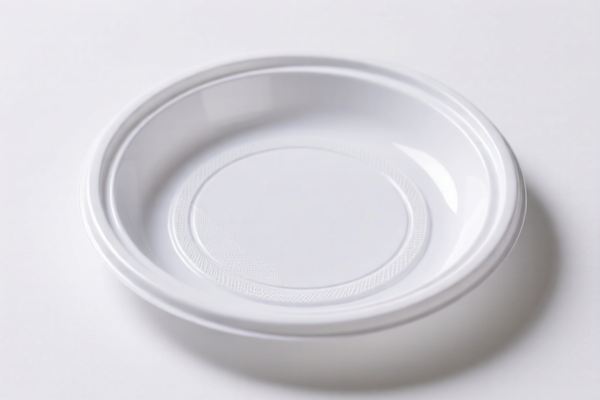
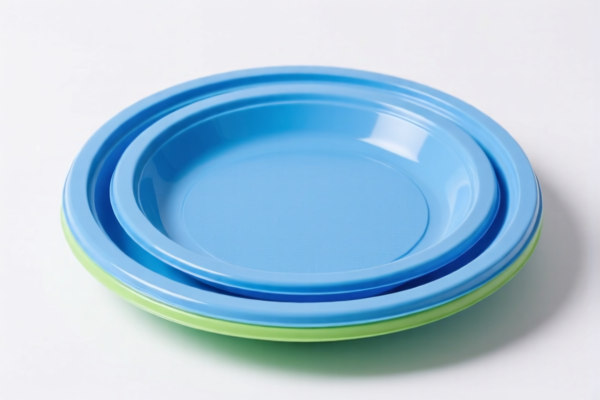

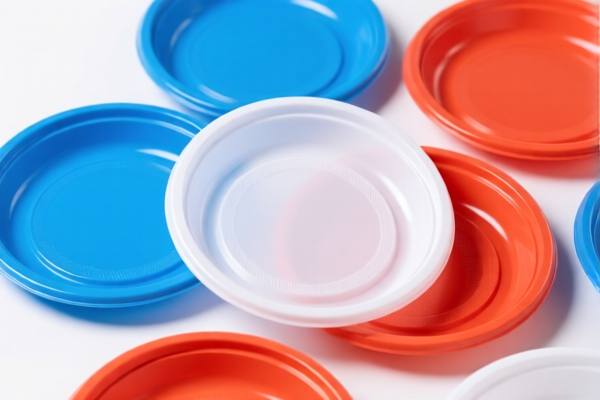
AI Analysis
Here is a comprehensive, Wiki-style guide for Plastic Plates, strictly based on the provided data and formatted for clarity, engagement, and strategic clarity.
🍽️ Plastic Plates (Plastic Dinnerware & Tableware)
🌐 HS Code Reference & Clearance Guide | 2026 Tax Rate Analysis | Strategic Customs Strategy
📌 I. Product Definition & Classification: Do You Know Your "Plastic Plate"?
In international trade, "Plastic Plates" are not a single entity. They fall into distinct categories based on physical morphology (is it a sheet or a finished dish?) and specific usage (dining vs. general packaging). The classification determines whether you face a 24% tariff or a 40.8% tariff.
The Critical Distinction:
- Category A: Finished Tableware (Rigid, shaped, used for serving food) → Usually 3924.10.x0.
- Category B: Packaging/Containers (Boxes, lids, trays used to hold goods) → Usually 3923.x0.
- Category C: Raw/Semi-Finished Sheets (Semi-finished plates/discs) → Usually 3920.99.50.
⚠️ Key Differentiator:
- If the item is a finished, molded dish for eating → Go to 3924.10.
- If the item is a box, lid, or generic container → Go to 3923.10/3923.90.
- If the item is a sheet/foil/disc meant to be processed further → Go to 3920.99.
📦 II. HS Code Classification Details (Strictly Based on Provided Data)
| HS Code | Product Description (Based on Data) | Total Tax Rate | Tax Breakdown |
|---|---|---|---|
| 3924.10.20.00 | Plastic Plates (Tableware) · Material: Plastic · Morphology: Defined as "Dishes" under Plastic Cutlery |
24.0% | • Base: 6.5% • Add-on: 7.5% • 122 Clause: 10% |
| 3924.10.40.00 | Plastic Plates (Dining) · Material: Plastic · Usage/Morphology: Fits "Dishes" definition under Tableware |
13.4% | • Base: 3.4% • Add-on: 0.0% • 122 Clause: 10% |
| 3923.10.90.00 | Plastic Boxes/Pallets/Containers · Material: Plastic · Morphology: Boxes, Trays, Similar Items (Other types) |
38.0% | • Base: 3.0% • Add-on: 25.0% • 122 Clause: 10% |
| 3923.90.00.80 | Plastic Packaging Articles · Material: Plastic · Usage: Packaging/Containers (Other Articles) |
38.0% | • Base: 3.0% • Add-on: 25.0% • 122 Clause: 10% |
| 3920.99.50.00 | Plastic Sheets/Foils/Discs · Material: Plastic · Morphology: Fits "Sheet/Film/Foil" attribute (Plate/Disc form) |
40.8% | • Base: 5.8% • Add-on: 25.0% • 122 Clause: 10% |
🔍 Critical Insight:
- 3923 Series (3923.10/3923.90): These are Packaging Codes. Even if the "plate" looks like a tray, if it's primarily for packaging goods, the tax is 38.0%.
- 3920 Series (3920.99): This is a Raw Material Code. If your "plate" is actually a semi-finished disc (not yet molded for dining), tax jumps to 40.8%.
- 3924 Series (3924.10): This is the Tableware Code. For actual dining plates, taxes vary significantly between 13.4% and 24.0% depending on specific sub-classification.
💰 III. 2026 Latest Tariff Rate Breakdown (Detailed Policy Analysis)
✅ Scope: Applies to goods exported to the US (Based on provided "122 Clause" and "Add-on" structure).
✅ Origin: China (Implied by "122 Clause" & specific tax rates in data).
✅ Effective: Current Data Cycle.
🎯 1. 3924.10.40.00 —— The "Sweet Spot" for Tableware
Best Scenario for Dining Plates
| Item | Content |
|---|---|
| Base Rate | 3.4% (Low duty for finished tableware) |
| Additional Duty | 0.0% (No Section 301 or 349 add-ons) |
| 122 Clause Duty | +10% (Specific Section 301/China-specific tariff) |
| TOTAL RATE | 13.4% |
| Calculation | CIF Value × 13.4% |
| Legal Path | 3924.10.40 → Base 3.4% + 122 Clause 10% |
📌 Analysis: This is the most economical route for finished plastic dining plates. The absence of the 25% "Add-on" tariff makes it highly competitive.
🎯 2. 3924.10.20.00 —— The "Standard" Tableware Route
Standard Dining Plates
| Item | Content |
|---|---|
| Base Rate | 6.5% |
| Additional Duty | +7.5% (Section 301/Add-on) |
| 122 Clause Duty | +10% |
| TOTAL RATE | 24.0% |
| Calculation | CIF Value × 24.0% |
| Legal Path | 3924.10.20 → Base 6.5% + Add-on 7.5% + 122 10% |
📌 Analysis: Slightly higher cost. Often applies if the plate has specific features or fails the strict criteria of the 40.00 subheading.
🎯 3. 3923.10.90.00 & 3923.90.00.80 —— The "Packaging" Trap
Boxes, Trays, and General Containers
| Item | Content |
|---|---|
| Base Rate | 3.0% |
| Additional Duty | +25.0% (High Section 301 Add-on) |
| 122 Clause Duty | +10% |
| TOTAL RATE | 38.0% |
| Legal Path | 3923 Category → Base 3% + Add-on 25% + 122 10% |
📌 Warning: If your "plate" is classified as a tray for packaging or a container, you lose the "Tableware" advantage. The 25% Add-on tax crushes the margin.
🎯 4. 3920.99.50.00 —— The "Raw Sheet" Penalty
Semi-finished Plates/Discs
| Item | Content |
|---|---|
| Base Rate | 5.8% |
| Additional Duty | +25.0% (High Section 301 Add-on) |
| 122 Clause Duty | +10% |
| TOTAL RATE | 40.8% (Highest in List) |
| Legal Path | 3920 Category → Base 5.8% + Add-on 25% + 122 10% |
📌 Warning: This code applies if the item is a sheet, foil, or disc that has not yet been fully finished into a dining plate. Avoid this classification if you are selling finished goods!
🛠️ IV. Customs Clearance Practical Advice (Avoiding Pitfalls)
✅ 1. Strategic Classification (The "Plate" vs. "Tray" Debate)
| Scenario | Correct HS Code | Tax Impact | Why? |
|---|---|---|---|
| Serving a meal (Standard dinner plate) | 3924.10.40.00 |
13.4% ✅ | Fits "Tableware/Dish" definition perfectly. |
| Serving a meal (Specific type/feature) | 3924.10.20.00 |
24.0% ✅ | Fits "Tableware" but triggers 7.5% add-on. |
| Packaging a product (e.g., cupcake box with lid) | 3923.10.90.00 |
38.0% ❌ | Classified as "Box/Container". High tax. |
| Bulk raw material (Plastic discs before molding) | 3920.99.50.00 |
40.8% ❌❌ | Classified as "Sheet/Foil". Highest tax. |
🔥 Golden Rule:
"If it's for eating, it's 3924. If it's for packing, it's 3923. If it's raw, it's 3920."
Misclassifying a dining plate as a "packaging tray" saves nothing; misclassifying raw discs as plates causes seizure.
✅ 2. Required Documentation for Smooth Clearance
| Document | Requirement | Purpose |
|---|---|---|
| Product Photos | High-res images of the item in use (on a table) | Proves it is "Tableware" (3924), not a "Container". |
| Material Certificate | Proof of "Plastic" material | Mandatory for all codes. |
| Mold Drawing | Technical drawing of the shape | Confirms it is a finished "Plate", not a semi-finished "Disc". |
| Commercial Invoice | Clear description: "Plastic Dinner Plate" (Not "Plastic Tray") | Avoids ambiguity with "Packaging" codes. |
| Declaration of Use | Statement: "For dining service, not packaging" | Crucial for 3924 classification. |
✅ 3. "122 Clause" & Tax Breakdown Explanation
The total tax includes three distinct layers: 1. Base Tariff: The standard duty (3.0% - 6.5%). 2. Add-on Tariff (Section 301/349): The 25% or 7.5% surcharge. This is the most volatile part. * 3924.10.40.00 is the only plate code with 0.0% add-on. * 3923 and 3920 codes carry the heavy 25% load. 3. 122 Clause (Section 301 Phase 3/4): A flat 10% surcharge on Chinese goods (as per your data). * Note: This applies to ALL 5 HS Codes listed.
🌍 V. Global Market Comparison (Contextual Data)
| Market | Recommended Code | Approx. Total Tax | Notes |
|---|---|---|---|
| 🇺🇸 USA (Data Source) | 3924.10.40.00 |
13.4% | Best rate for finished plates. |
| 🇺🇸 USA (Packaging) | 3923.10.90.00 |
38.0% | Very expensive for packaging trays. |
| 🇺🇸 USA (Raw Material) | 3920.99.50.00 |
40.8% | Do not export raw discs to US as "plates". |
| 🇪🇺 EU (General) | 3924.10 |
~0% - 4% | Generally lower duties (No 122 Clause). |
| 🇨🇳 China (Export) | Varies | ~5% - 10% | Base export duties usually low. |
📌 Conclusion: The USA is the only market in this dataset with the 122 Clause and Add-on Tariffs. This makes accurate classification critical to avoiding the 38-40% tax trap.
📌 VI. Common Mistakes & "Blood-Stain" Lessons
❌ Mistake 1: Labeling a dinner plate as a "Plastic Tray" or "Packaging Container".
👉 Consequence: Tax jumps from 13.4% to 38.0%.
👉 Fix: Use "Dinnerware", "Tableware", or "Plate" in the description.
❌ Mistake 2: Exporting raw plastic discs as "Plastic Plates".
👉 Consequence: Tax jumps to 40.8% + potential "Incomplete Goods" seizure.
👉 Fix: Classify as "Sheet/Foil" if unfinished, or finish the product before export.
❌ Mistake 3: Ignoring the 122 Clause.
👉 Consequence: Underestimating total cost by 10%.
👉 Fix: Always add 10% to your cost model for Chinese-origin goods.
✅ Correct Strategy:
"Ship finished, molded plastic dining plates.
Declare as 'Plastic Tableware'.
Aim for HS 3924.10.40.00 to pay only 13.4%."
🎯 VII. Final Conclusion: Precision is Profit
🎯 The Bottom Line:
- Finished Plates = 13.4% (The Winner)
- Packaging Trays = 38.0% (The Loser)
- Raw Discs = 40.8% (The Danger Zone)
🔹 "Know your morphology: Plate vs. Tray vs. Sheet."
🔹 "Avoid the 25% Add-on: Target 3924.10.40.00."
🔹 "Don't let a 10% Clause eat your margin."
📌 Action Item:
🚀 Review your product molds. Are they fully finished for dining?
📝 Update your HS Code to3924.10.40.00if possible.
💰 Re-calculate your FOB price including the 13.4% total tax.
✨ Expert Customs, Smart Logistics, Maximum Profit!
💼 Every percentage point counts in the world of plastic trade.
Customer Reviews
About HS Code Classification
The Harmonized System (HS) is an internationally standardized nomenclature developed by the World Customs Organization (WCO) to classify traded products. Over 200 countries use the HS system as the basis for customs tariffs, trade statistics, and import/export regulations.
Each HS code follows a hierarchical structure:
- Chapter (2 digits) — Broad category of goods (e.g., Chapter 84: Machinery and Mechanical Appliances)
- Heading (4 digits) — More specific grouping within the chapter
- Subheading (6 digits) — Internationally standardized breakdown, used by all WCO member countries
- National subdivisions (8-10 digits) — Country-specific extensions for further classification, such as US HTSUS 10-digit codes
Correct HS code classification is essential for smooth customs clearance, accurate duty payment, and compliance with trade regulations. Misclassification can lead to customs delays, overpayment of duties, or penalties.
When importing from CN to US, the applicable tariff rates may include:
- Most-Favored-Nation (MFN) rate — The standard duty rate applied to WTO members
- General rate — Applied to countries without trade agreements
- Trade remedy duties — Additional tariffs such as Section 301 (anti-dumping), Section 232 (national security), or countervailing duties
The information provided on this page is for reference purposes only. For official classification, please consult with your local customs authority or a licensed customs broker.