plastic potted plants
CN → US| HS Code | Tariff Rate | Origin | Destination | Doc |
|---|---|---|---|---|
| 3924905650 | 20.9% | CN | US | Official Doc |
| 3924104000 | 13.4% | CN | US | Official Doc |
| 6702104000 | 13.4% | CN | US | Official Doc |
| 6702102000 | 18.4% | CN | US | Official Doc |
| 3926400090 | 15.3% | CN | US | Official Doc |
Product Images
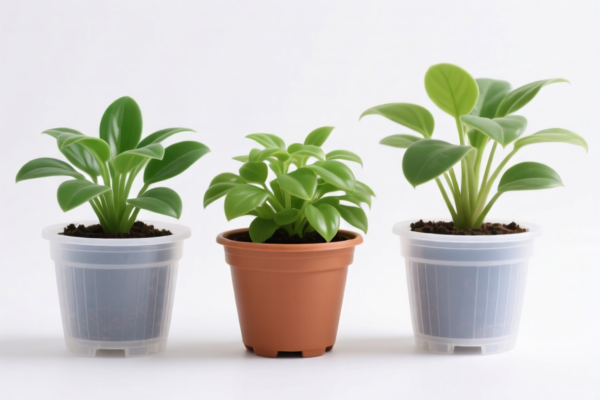

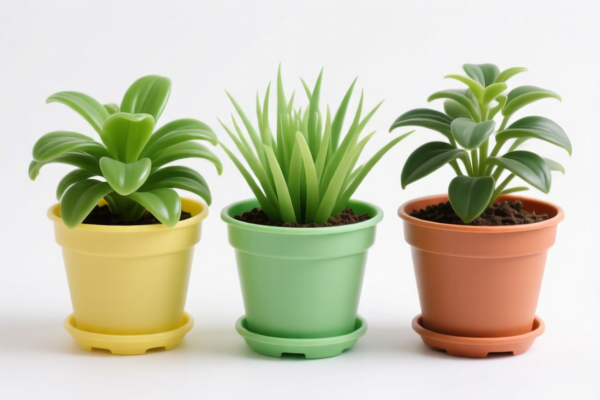
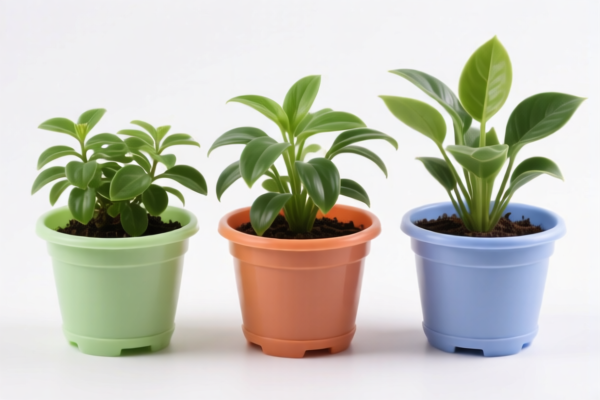
AI Analysis
🌿 Plastic Potted Plants (Artificial Foliage & Home Decor)
🌐 HS Code Reference & Customs Clearance Guide | 2026 Latest Tariff Analysis | Professional Logistics Strategy
📌 I. Product Definition & Classification: What Exactly Are "Plastic Potted Plants"?
In international trade, "Plastic Potted Plants" are not a single standardized commodity. They are classified based on material composition, function, and structural integrity. The critical distinction lies between:
- Artificial Florals (Chapter 67): Sets consisting of plastic flowers, leaves, or fruits arranged in pots. These are treated as "manufactured articles of other materials."
- Home Decor/Accessories (Chapter 39/3926): Plastic pots, trays, or decorative items containing the plant, or sets where the pot is the primary container.
- Complete Home Goods (Chapter 39/3924): General household plastic items used for holding plants, lacking the "floral" component's specific classification.
⚠️ Key Distinction Point:
- If the product is primarily plastic flowers/leaves/fruit arranged in a pot → Look at Chapter 67 (6702.10).
- If the product is primarily a plastic pot/container (even if empty or holding soil) → Look at Chapter 39 (3924.90 / 3924.10).
- If it is a decorative plastic item (non-floral, non-container specific) → Look at Chapter 39 (3926.40).
📦 II. HS Code Classification Details (2026 Latest Tariff Authority Comparison)
Based on the provided data, here are the four valid HS Codes for "Plastic Potted Plants" and their specific tax implications.
| HS Code | Product Description (Summary) | Tax Detail Breakdown | Total Tax Rate |
|---|---|---|---|
| 3924.90.56.50 | Plastic material, household items for potted plant sets | Base: 3.4% Additional: 7.5% Section 122: 10% |
20.9% |
| 3924.10.40.00 | Plastic material, other household items (potted plant sets) | Base: 3.4% Additional: 0.0% Section 122: 10% |
13.4% |
| 6702.10.40.00 | Potted plant sets composed of plastic artificial flowers, leaves, fruits, and parts | Base: 3.4% Additional: 0.0% Section 122: 10% |
13.4% |
| 6702.10.20.00 | Potted plant sets of plastic artificial flowers/leaves/fruits and components | Base: 8.4% Additional: 0.0% Section 122: 10% |
18.4% |
| 3926.40.00.90 | Decorative potted plant sets made of plastic | Base: 5.3% Additional: 0.0% Section 122: 10% |
15.3% |
🔍 Critical Note:
- All classifications include a Section 122 Tariff of 10% (often associated with specific trade remedies or additional duties on Chinese goods, depending on the origin).
- Base Tariffs vary significantly (from 3.4% to 8.4%), directly impacting the final landed cost.
- Additional Tariffs are only applied to 3924.90.56.50 (7.5%).
💰 III. 2026 Latest Tariff Rate Detailed Analysis (Including Surcharges & Policy Add-ons)
✅ Applicable Country: United States (US)
✅ Origin: China (CN) [Inferred from "Section 122" and typical trade context]
✅ Effective Time: Current regulations apply
🎯 1. 3924.90.56.50 —— Household Plastic Items for Potted Plant Sets
| Item | Content |
|---|---|
| Base Tariff | 3.4% |
| Additional Tariff | +7.5% |
| Section 122 Tariff | +10% |
| Total Rate | 20.9% |
| Calculation | CIF Value × 20.9% |
| De Minimis Exemption | ❌ Not Applicable (High-value goods subject to full duty) |
| Legal Basis | Standard HTSUS 3924.90.56.50 + Section 122 Add-on |
📌 Explanation:
- This code captures general plastic household items used in potted plant sets (e.g., plastic saucers, decorative trays, or generic pots).
- It carries the highest total tax (20.9%) due to the 7.5% Additional Tariff.
- Risk: High. Ensure the product is not misclassified as "artificial flowers" to avoid duty evasion penalties.
🎯 2. 3924.10.40.00 —— Other Plastic Household Items (Potted Plant Sets)
| Item | Content |
|---|---|
| Base Tariff | 3.4% |
| Additional Tariff | +0.0% |
| Section 122 Tariff | +10% |
| Total Rate | 13.4% |
| Calculation | CIF Value × 13.4% |
| De Minimis Exemption | ❌ Not Applicable |
| Legal Basis | Standard HTSUS 3924.10.40.00 + Section 122 Add-on |
📌 Explanation:
- This code is for "Other" plastic household items, likely smaller or less specific containers.
- Benefit: No additional 7.5% tariff. Lower total tax (13.4%) than 3924.90.56.50.
- Strategy: If the product is a simple plastic pot without complex decorative floral elements, this is a cost-effective classification.
🎯 3. 6702.10.40.00 —— Plastic Artificial Flowers/Leaves/Fruits Potted Sets
| Item | Content |
|---|---|
| Base Tariff | 3.4% |
| Additional Tariff | +0.0% |
| Section 122 Tariff | +10% |
| Total Rate | 13.4% |
| Calculation | CIF Value × 13.4% |
| De Minimis Exemption | ❌ Not Applicable |
| Legal Basis | Standard HTSUS 6702.10.40.00 + Section 122 Add-on |
📌 Explanation:
- This is the most common classification for artificial plants.
- It covers sets where the floral/leaf component is made of plastic.
- Benefit: Same low tax rate (13.4%) as3924.10.40.00.
- Key Requirement: The product must be demonstrably an artificial flower/leaf set, not just a plastic pot.
🎯 4. 6702.10.20.00 —— Plastic Artificial Flowers/Leaves/Fruits Components Potted Sets
| Item | Content |
|---|---|
| Base Tariff | 8.4% |
| Additional Tariff | +0.0% |
| Section 122 Tariff | +10% |
| Total Rate | 18.4% |
| Calculation | CIF Value × 18.4% |
| De Minimis Exemption | ❌ Not Applicable |
| Legal Basis | Standard HTSUS 6702.10.20.00 + Section 122 Add-on |
📌 Explanation:
- This code is for components or specific types of artificial floral sets under Chapter 67.
- Higher Base Tariff (8.4%) leads to a higher total rate (18.4%).
- Avoidance Strategy: If possible, classify under6702.10.40.00(13.4%) instead, unless the product structure strictly matches6702.10.20.00.
🎯 5. 3926.40.00.90 —— Decorative Plastic Potted Plant Sets
| Item | Content |
|---|---|
| Base Tariff | 5.3% |
| Additional Tariff | +0.0% |
| Section 122 Tariff | +10% |
| Total Rate | 15.3% |
| Calculation | CIF Value × 15.3% |
| De Minimis Exemption | ❌ Not Applicable |
| Legal Basis | Standard HTSUS 3926.40.00.90 + Section 122 Add-on |
📌 Explanation:
- This is a catch-all for decorative plastic items that don't fit neatly into household containers (3924) or artificial flowers (6702).
- Middle Ground Tax (15.3%).
- Use only if the product is purely decorative and doesn't clearly qualify as a "potted plant set" in the botanical sense.
🛠️ IV. Customs Clearance Practical Advice (Avoid Pitfalls)
✅ 1. Documentation Checklist (Mandatory)
| Document | Required | Description |
|---|---|---|
| Product Spec Sheet | ✔️ | Must detail materials (e.g., "PE plastic pot," "PVC artificial leaves"). |
| Product Photos | ✔️ | Clear images of the entire set (pot + plant). Show if the plant is artificial. |
| Commercial Invoice | ✔️ | Must accurately describe the item (e.g., "Artificial Potted Plant, Plastic Pot, PVC Leaves"). |
| Packing List | ✔️ | Itemized list of components (pot, soil, artificial plant, decorative stones). |
| Origin Certificate | ✔️ | If claiming preferential treatment (not applicable here due to Section 122). |
✅ 2. Declaration Strategy (Key Rules)
🔥 Rule: "Artificial = Chapter 67; Container = Chapter 39"
| Scenario | Correct HS Code | Risk if Misclassified |
|---|---|---|
| Plastic pot + Artificial plant | 6702.10.40.00 (13.4%) | Misclassifying as pot only (3924) → Potential audit for undervaluation. |
| Just a plastic pot (empty) | 3924.10.40.00 (13.4%) or 3924.90.56.50 (20.9%) | Classifying as artificial plant → Duty evasion penalty. |
| Decorative plastic statue | 3926.40.00.90 (15.3%) | Classifying as plant → Incorrect duty rate. |
| Mixed set with real soil | 6702.10.40.00 (13.4%) | Soil may be ignored if the set is primarily decorative/artificial. |
📌 Warning:
- Do not split the shipment into "pot" and "plant" for separate declarations.
- The primary function determines the classification. For "potted plants," the artificial floral aspect usually dominates, pushing it to Chapter 67.
✅ 3. Special Cases
| Case | Recommendation |
|---|---|
| Wooden Pot + Plastic Plant | The pot material may shift classification to Chapter 46 or 44, but the floral part often remains 6702.10.40.00 if the plant is the main value. Consult a specialist. |
| Metal Pot + Plastic Plant | Similar to wood. If the metal pot is integral, it may fall under Chapter 73 or 76. However, 6702.10.40.00 is often still accepted if the set is sold as a "plant." |
| Eco-friendly/Biodegradable Pot | If the pot is biodegradable plastic, it may still fall under Chapter 39 (3924), but verify with the CBP. |
🌍 V. Global Market Comparison (2026)
| Country/Region | Recommended HS Code | Tariff (China Origin) | Key Certification | Notes |
|---|---|---|---|---|
| 🇺🇸 USA | 6702.10.40.00 |
13.4% (Base 3.4% + S122 10%) | None specific | Best rate for artificial plants. |
| 🇨🇳 China | 6702.10.40.00 |
13.4% (Export/Import varies) | CCC (if applicable) | Domestic trade may have different rules. |
| 🇪🇺 EU | 6702.10.00 |
0% (Most FTA partners) | CE (if applicable) | No Section 122 equivalent. |
| 🇬🇧 UK | 6702.10.00 |
0% (Post-Brexit FTA) | UKCA | Similar to EU. |
| 🇦🇺 Australia | 6702.10.00 |
5% | RCM | Lower duties than US. |
📌 Conclusion:
- The USA imposes the Section 122 Tariff (10%) on all these categories, making it the most expensive market for plastic potted plants.
- Chapter 67 (6702.10.40.00) is generally the optimal classification for artificial plants in the US, offering the lowest total tax (13.4%) among the options provided.
- Avoid3924.90.56.50(20.9%) unless the product is purely a plastic container with no floral component.
📌 VI. Common Mistakes & Pitfalls (Lessons Learned)
❌ Mistake 1: Classifying artificial plants as "Household Containers" (3924.90.56.50)
👉 Consequence: Pay 20.9% instead of 13.4%. Overpay 7.5% duty.
❌ Mistake 2: Claiming "De Minimis" for high-value sets
👉 Consequence: Section 122 tariffs do not apply to de minimis. Shipment will be held or taxed.
❌ Mistake 3: Describing the item as "Home Decor" vague terms
👉 Consequence: Customs may reclassify to 3926.40.00.90 (15.3%) or 6702.10.20.00 (18.4%) based on their assessment, leading to back taxes + penalties.
✅ Correct Practice:
"Artificial Potted Plant Set, Plastic Pot, PVC Artificial Flowers, Model XYZ, HS Code 6702.10.40.00"
🎯 VII. Conclusion: Precision in Classification Saves Money
🎯 Key Takeaway:
🔹 "Artificial Plant = 6702.10.40.00 (13.4%)" is the sweet spot for US imports.
🔹 Avoid3924.90.56.50(20.9%) unless it's just a plastic pot.
🔹 Always include Section 122 (10%) in your cost calculations for China-origin goods to the US.
📌 Pro Tip:
If your artificial plants are made from biodegradable materials, check for Chapter 46 or 3920 classifications, which may have different tariff rates. Always request a Pre-Ruling from US Customs (CBP) for new product lines.
📣 Immediate Action:
📞 Consult a Licensed Customs Broker to verify your specific product structure.
🚀 Optimize your supply chain by choosing the right HS Code to minimize duty costs.
✨ Accurate Classification is the First Step to Profitable Trade!
💼 Every percentage point of duty saved is pure profit!
Customer Reviews
About HS Code Classification
The Harmonized System (HS) is an internationally standardized nomenclature developed by the World Customs Organization (WCO) to classify traded products. Over 200 countries use the HS system as the basis for customs tariffs, trade statistics, and import/export regulations.
Each HS code follows a hierarchical structure:
- Chapter (2 digits) — Broad category of goods (e.g., Chapter 84: Machinery and Mechanical Appliances)
- Heading (4 digits) — More specific grouping within the chapter
- Subheading (6 digits) — Internationally standardized breakdown, used by all WCO member countries
- National subdivisions (8-10 digits) — Country-specific extensions for further classification, such as US HTSUS 10-digit codes
Correct HS code classification is essential for smooth customs clearance, accurate duty payment, and compliance with trade regulations. Misclassification can lead to customs delays, overpayment of duties, or penalties.
When importing from CN to US, the applicable tariff rates may include:
- Most-Favored-Nation (MFN) rate — The standard duty rate applied to WTO members
- General rate — Applied to countries without trade agreements
- Trade remedy duties — Additional tariffs such as Section 301 (anti-dumping), Section 232 (national security), or countervailing duties
The information provided on this page is for reference purposes only. For official classification, please consult with your local customs authority or a licensed customs broker.