plastic raw material polyethylene
CN → US| HS Code | Tariff Rate | Origin | Destination | Doc |
|---|---|---|---|---|
| 3901101000 | 41.5% | CN | US | Official Doc |
| 3901201000 | 41.5% | CN | US | Official Doc |
| 3901105010 | 41.5% | CN | US | Official Doc |
| 3902900050 | 41.5% | CN | US | Official Doc |
| 3904100000 | 41.5% | CN | US | Official Doc |
Product Images


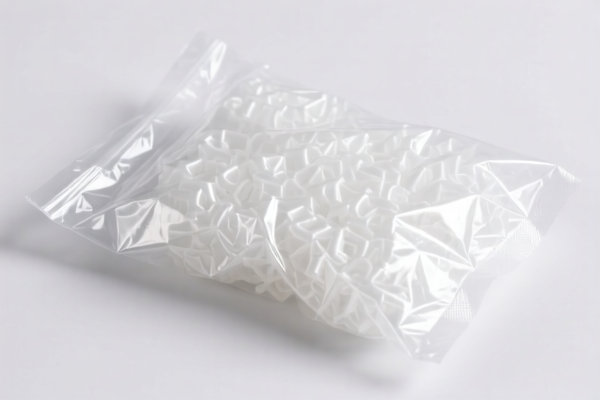
AI Analysis
🧪 Plastic Raw Material: Polyethylene (PE)
🌐 HS Code Reference & Customs Clearance Guide | 2026 Latest Tariff Analysis | Professional Entry Strategy
📌 I. Product Definition & Classification: Do You Really Understand "Polyethylene"?
Polyethylene (PE) is the world's most widely produced plastic polymer, known for its versatility, chemical resistance, and ease of processing. In international trade, it is primarily classified based on its specific chemical structure (density and polymerization method) and physical form (raw material/primary form).
Key Classification Logic: * Primary Form (Raw Material): Includes powders, granules, pellets, or irregular solid shapes that are ready for manufacturing (injection molding, extrusion, etc.). * Material Attribute: Must be identified as a polymer of ethylene (for HS 3901) or other olefins (for HS 3902/3904).
⚠️ Critical Distinction:
- If the product is granules/powders specifically identified as Polyethylene, it falls under Chapter 39, Heading 3901.
- If the product is granules but made of Polypropylene or other olefins, it falls under Heading 3902.
- If the product is Polyvinyl Chloride (PVC), it falls under Heading 3904.
- Do not confuse PE with finished plastic parts, films, or tubes, which have different HS codes.
📦 II. HS Code Classification Details (2026 Latest Tariff Authority)
Based on the provided data, here are the potential HS Code classifications for "Plastic Raw Material Polyethylene," depending on the specific polymer type and market regulations.
| HS Code | Product Description | Application Scenario | Key Classification Logic |
|---|---|---|---|
3901.10.10.00 |
Primary forms of Polyethylene (PE), Linear, with density < 0.94 | High-Density Polyethylene (HDPE) or Linear Low-Density Polyethylene (LLDPE) raw materials. | Matches material (PE) and form (Raw Material/Primary Form). |
3901.20.10.00 |
Primary forms of Polyethylene (PE), Non-Linear, with density ≥ 0.94 | Low-Density Polyethylene (LDPE) or Very Low-Density Polyethylene (VLDPE). | Matches material (PE) and form (Primary Form). |
3901.10.50.10 |
Other Polyethylene Primary Forms | Generic "Plastic Raw Material" where PE is confirmed as the main component. | "Raw material" shape + Polymer attribute matches PE. |
3902.90.00.50 |
Other Polymers of Propylene or of Other Olefins | Misclassification Risk: If the material is actually Polypropylene (PP) but mislabeled as PE. | Matches "Raw Material" shape, but material is "Other Olefin" (PP), not PE. |
3904.10.00.00 |
Primary Forms of Polyvinyl Chloride (PVC) | Misclassification Risk: If the material is PVC but mislabeled as PE. | Matches "Raw Material" shape, but material is PVC, not PE. |
🔍 Key Reminder:
- Accurate Identification is Crucial: You must provide the Material Safety Data Sheet (MSDS) or Technical Data Sheet (TDS) proving the polymer is Ethylene (PE).
- Form Matters: It must be in primary form (granules, powder). If it is in sheets, rods, or films, it may be classified differently (e.g., 3920 or 3921).
- Avoid Ambiguity: Do not just say "Plastic Raw Material." Specify "Polyethylene Granules" or "HDPE Resin."
💰 III. 2026 Latest Tariff Rate Breakdown (Including Surcharges & Policy Add-ons)
✅ Applicable Country: United States (US)
✅ Origin: China (CN)
✅ Effective Date: 2025/2026 (Current Trade Policy)
All listed HS codes below share the same total tax rate under current US trade policies for Chinese-origin goods.
🎯 1. 3901.10.10.00 / 3901.20.10.00 / 3901.10.50.10 — Polyethylene (PE) Primary Forms
| Item | Content |
|---|---|
| Base Duty Rate | 6.5% (Standard MFN Rate) |
| Section 301 Surcharge | +25.0% (Retaliatory tariffs on Chinese goods) |
| Section 122 Tariff | +10.0% (Specific trade remedy/Section 122 authority, if applicable) |
| Total Tax Rate | 41.5% |
| Tax Calculation | CIF Value × 41.5% |
| De Minimis Exemption | ❌ Not Eligible (Value > $800, subject to full duty) |
| Legal Authority Path | HTSUS: 3901 → Section 301: Footnote 9903.01.25 → Section 122 |
📌 Explanation:
- 6.5% is the standard Most Favored Nation (MFN) duty for plastics.
- +25% is the high-profile Section 301 tariff imposed on many Chinese industrial goods.
- +10% is the Section 122 tariff, often applied to steel and aluminum but sometimes extended to related industrial materials depending on specific administrative rulings.
- Total: 41.5% is a very high tariff. This significantly impacts profit margins.
🎯 2. 3902.90.00.50 — Other Olefin Polymers (e.g., PP)
| Item | Content |
|---|---|
| Base Duty Rate | 6.5% |
| Section 301 Surcharge | +25.0% |
| Section 122 Tariff | +10.0% |
| Total Tax Rate | 41.5% |
| Tax Calculation | CIF Value × 41.5% |
📌 Note:
- Even if misclassified as PP (3902.90.00.50), the total tax remains 41.5%.
- Risk: If the product is actually PE but declared as PP, or vice versa, you risk customs penalties, seizure, or back-taxes if the discrepancy is found.
🎯 3. 3904.10.00.00 — PVC Primary Forms
| Item | Content |
|---|---|
| Base Duty Rate | 6.5% |
| Section 301 Surcharge | +25.0% |
| Section 122 Tariff | +10.0% |
| Total Tax Rate | 41.5% |
| Tax Calculation | CIF Value × 41.5% |
📌 Note:
- PVC also carries the same 41.5% rate.
- Crucial: Ensure the chemical composition matches the declared HS Code. PE and PVC have different processing temperatures and properties.
🛠️ IV. Customs Clearance Practical Advice (Real-World Pitfall Guide)
✅ 1. Required Documentation Checklist (Non-Negotiable)
| Document | Must Provide? | Description |
|---|---|---|
| ✅ Commercial Invoice | ✔️ | Must clearly state: "Polyethylene Raw Material, Granules, HS Code: 3901.10.10.00" |
| ✅ Packing List | ✔️ | Show net weight, gross weight, and number of pallets/bags. |
| ✅ Certificate of Origin (CO) | ✔️ | Essential for proving Chinese origin (which triggers 41.5%). |
| ✅ MSDS (Material Safety Data Sheet) | ✔️ | Critical. Proves the material is non-hazardous and identifies the polymer type (PE vs. PP vs. PVC). |
| ✅ Technical Data Sheet (TDS) | ✔️ | Specifies Melt Flow Index (MFI), Density, and Tensile Strength to confirm PE characteristics. |
| ✅ Bill of Lading (B/L) | ✔️ | Match invoice and CO details exactly. |
| ✅ Importer Security Filing (ISF) | ✔️ | Must be filed 24 hours before loading at the foreign port. |
✅ 2. Declaration Tips (Key Mnemonics)
🔥 “Be Specific, Be Accurate, Avoid ‘Plastic’ Generalization!”
| Scenario | Correct Declaration | Wrong Declaration | Consequence |
|---|---|---|---|
| HDPE Granules | Polyethylene Resin, HDPE, Granules |
Plastic Raw Material |
❌ High risk of misclassification & delay. |
| LLDPE Pellets | Linear Low-Density Polyethylene (LLDPE) Pellets |
Polymer Powder |
❌ Ambiguous description leads to 20%+ duty audit. |
| Mixed Plastics | Declare each polymer type separately | Mixed Plastic Scrap |
❌ Scrap has different (higher) duties and restrictions. |
| Pre-colored PE | Colored Polyethylene Granules |
Plastic Parts |
❌ Parts have different HS codes (3926) and potentially lower rates, but this is smuggling if misdeclared. |
✅ 3. Special Circumstances Handling
| Scenario | Handling Advice |
|---|---|
| OEM Private Label | Provide authorization letter. Do not list the brand name if not required, but must specify the material type. |
| Color Masterbatch | If the product is PE carrier + color pigment, it may still be classified as PE (3901) if the PE is the essential character. Provide ratio details. |
| Recycled PE (Post-Consumer) | If recycled, check if it falls under 3902.90 or 3901.90. Recycled plastics may have additional environmental compliance requirements (EPA). |
| Sample Shipments | No De Minimis! Even small samples from China are subject to the 41.5% tariff if value > $800. For < $800, de minimis may apply, but ensure proper filing. |
🌍 V. Global Market Comparison (2026 Latest)
| Country/Region | Recommended HS Code | Tariff (China Origin) | Certification Requirements | Remarks |
|---|---|---|---|---|
| 🇺🇸 USA | 3901.10.10.00 |
41.5% | None specific for PE, but FDA may apply if for food contact. | Highest tariff. Consider supply chain diversification. |
| 🇨🇳 China | 3901.10.10.00 |
0% (Import) / 13% VAT | None for raw material import. | No Section 301/122. |
| 🇪🇺 EU | 3901.10.10 |
0% (Most cases) | REACH Registration required for substances >1 ton/year. | No surcharges, but high compliance cost. |
| 🇦🇺 Australia | 3901.10.10 |
5% | None. | Moderate duty. |
| 🇯🇵 Japan | 3901.10.10 |
0-5.5% | None. | Low duty, efficient customs. |
📌 Conclusion:
- The USA is the most expensive market for Chinese Polyethylene due to 41.5% combined tariffs.
- For US-bound goods, consider Third-Country Transshipment (e.g., via Vietnam or Mexico) if eligible, but ensure substantial transformation occurs to avoid US Customs penalties.
📌 VI. Common Errors & Pitfall Guide (Lessons Learned)
❌ Error 1: Declaring as "Plastic Raw Material" without specifying the polymer type.
👉 Consequence: Customs will assess the riskiest code or request detailed lab tests, causing 30-60 day delays.
❌ Error 2: Mislabeling PE as PP or PVC to try and find a different duty rate.
👉 Consequence: Since all three have 41.5%, there is no benefit, but there is a huge risk of fraud penalties if detected by lab analysis.
❌ Error 3: Ignoring the Section 122 Tariff.
👉 Consequence: Assuming only Section 301 (25%) applies. The total is 41.5%, not 31.5%. This leads to budget shortfalls.
❌ Error 4: Using "Recycled Plastic" for Virgin PE.
👉 Consequence: Recycled plastics have different environmental regulations and may be subject to additional restrictions or higher duties.
✅ Correct Practice:
“High-Density Polyethylene (HDPE) Granules, Virgin, Unplasticized, For Injection Molding, HS Code: 3901.10.10.00, Origin: China”
🎯 VII. Conclusion: Professional Declaration Saves Money!
🎯 Remember the Mnemonic:
🔹 “Specify the Polymer, Declare the Form, 41.5% is the Norm!”
🔹 “HS Code 3901 for PE, 3902 for PP, 3904 for PVC – Know Your Polymer!”
📌 Pro Tip:
If your PE is destined for the US market, consider:
1. Applying for an Exclusion (if available under Section 301).
2. Negotiating Price with suppliers to absorb the 41.5% tariff.
3. Exploring Alternative Markets (EU, ASEAN, LATAM) with lower tariffs.
📣 Immediate Action:
📞 Contact a licensed customs broker.
📄 Request the MSDS and TDS from your supplier.
🚀 Accurate classification ensures smooth clearance and avoids costly surprises!
✨ Professional Customs Clearance Starts with Accurate Classification!
💼 Your every dollar of cost is worth precise calculation!
Customer Reviews
About HS Code Classification
The Harmonized System (HS) is an internationally standardized nomenclature developed by the World Customs Organization (WCO) to classify traded products. Over 200 countries use the HS system as the basis for customs tariffs, trade statistics, and import/export regulations.
Each HS code follows a hierarchical structure:
- Chapter (2 digits) — Broad category of goods (e.g., Chapter 84: Machinery and Mechanical Appliances)
- Heading (4 digits) — More specific grouping within the chapter
- Subheading (6 digits) — Internationally standardized breakdown, used by all WCO member countries
- National subdivisions (8-10 digits) — Country-specific extensions for further classification, such as US HTSUS 10-digit codes
Correct HS code classification is essential for smooth customs clearance, accurate duty payment, and compliance with trade regulations. Misclassification can lead to customs delays, overpayment of duties, or penalties.
When importing from CN to US, the applicable tariff rates may include:
- Most-Favored-Nation (MFN) rate — The standard duty rate applied to WTO members
- General rate — Applied to countries without trade agreements
- Trade remedy duties — Additional tariffs such as Section 301 (anti-dumping), Section 232 (national security), or countervailing duties
The information provided on this page is for reference purposes only. For official classification, please consult with your local customs authority or a licensed customs broker.