plastic raw materials hs 3909200000
CN → US| HS Code | Tariff Rate | Origin | Destination | Doc |
|---|---|---|---|---|
| 3906100000 | 41.3% | CN | US | Official Doc |
| 3909200000 | 41.5% | CN | US | Official Doc |
| 3909400000 | 41.5% | CN | US | Official Doc |
Product Images
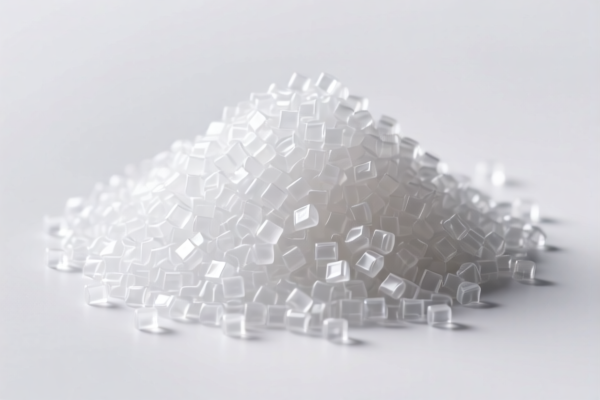

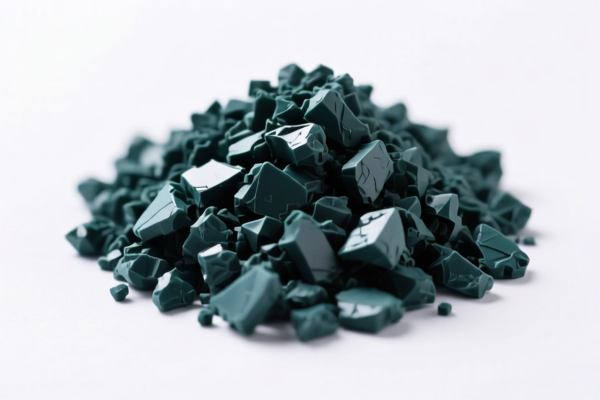
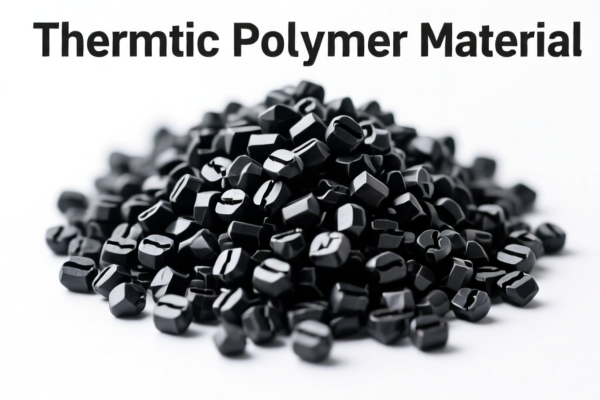
AI Analysis
🧪 Plastic Raw Materials (Amino Resins, Primary Forms)
🌐 HS Code Reference & Customs Clearance Guide | 2026 Latest Tariff Analysis | Professional Entry Strategy
📌 I. Product Definition & Classification: Do You Really Know "Amino Resins"?
Amino resins are synthetic polymers formed by the condensation of an amine or amide with an aldehyde (usually formaldehyde). In international trade, these are classified as primary forms (raw materials) used primarily in coatings, adhesives, laminates, and molding powders.
Key Types Include:
Melamine-Formaldehyde (MF) High heat resistance, used in laminates (e.g., Formica), tableware, and textiles.
Urea-Formaldehyde (UF) Low cost, used in wood adhesives (plywood, particleboard) and moldings.
Melamine-Urea-Formaldehyde *(MUF) Balanced properties, outdoor-grade adhesives.
⚠️ Critical Distinction:
- If the product is in primary form (powder, granules, liquid solution, flakes) → Classified under 3909.
- If the product is a finished article (e.g., a molded melamine cup) → Classified under Chapter 39 Articles or Chapter 69/70 depending on use.
- Do NOT confuse with Phenolic resins (3909.40) or Acrylic polymers (3906).
📦 II. HS Code Classification Details (2026 Latest Tariff Authority Match)
Based on the provided data, the correct classification is:
| HS Code | Product Description | Application Scenario | Form Status |
|---|---|---|---|
3909.20.00.00 |
Plastic raw materials, Amino resins, primary forms | Melamine/Urea formaldehyde powders, resins, adhesives precursors | ✅ Primary Form (Raw Material) |
🔍 Key Reminder:
- This code specifically covers Amino Resins.
- If your product is Phenolic Resin (e.g., Bakelite raw material), use 3909.40.00.00.
- If your product is Acrylic Polymer (e.g., PMMA pellets), use 3906.10.00.00.
- Do not misclassify finished parts made from amino resins; raw material status is key to this code.
💰 III. 2026 Latest Tariff Rate Breakdown (Including Surtaxes & Policy Add-ons)
✅ Applicable Country: United States (US)
✅ Origin: China (CN)
✅ Effective Date: Current rates apply (see detail below)
🎯 1. 3909.20.00.00 —— Amino Resins, Primary Forms
| Item | Content |
|---|---|
| Base Duty Rate | 6.5% (Ad Valorem) |
| Section 301 Surtax | +25.0% (Retaliatory Tariff on Chinese Goods) |
| Section 122 Tariff | +10.0% (Specific statutory surcharge) |
| Total Effective Tax | 41.5% |
| Tax Calculation | CIF Value × 41.5% |
| De Minimis Eligibility | ❌ Not Eligible (High tariff threshold prevents low-value exemption) |
| Legal Basis Path | HTSUS:3909.20.00.00 → Section 301: Footnote 9903.88.01 → Section 122: Statutory Add-on |
📌 Explanation:
- "Base Duty: 6.5%": The standard Most Favored Nation (MFN) rate for amino resins.
- "Section 301: 25%": Imposed under U.S. Trade Act Section 301 to address trade practices. This is the largest cost driver.
- "Section 122: 10%": A specific statutory surcharge applicable to imports from China under certain trade remedies.
- Total: 41.5%: This is a very high tariff burden. Importers must factor this into their landed cost calculations immediately.
🛠️ IV. Customs Clearance Practical Advice (Real-World Pitfall Avoidance)
✅ 1. Required Documentation Checklist (Must-Haves)
| Document | Mandatory? | Notes |
|---|---|---|
| ✅ Product Specification Sheet | ✔️ | Must explicitly state "Amino Resin" type (Melamine/Urea) and chemical composition. |
| ✅ Certificate of Origin (CO) | ✔️ | To prove origin (China) and apply specific tariff rates accurately. |
| ✅ Safety Data Sheet (SDS) | ✔️ | Essential for chemical imports. Must include UN number if hazardous. |
| ✅ Commercial Invoice | ✔️ | Clearly describe as "Amino Resin, Primary Form, for Adhesive/Coating Use". Avoid vague terms like "Plastic". |
| ✅ Packing List | ✔️ | Detail weight, dimensions, and container type. |
| ✅ Manufacturing Process Diagram | ✔️ | To prove "Primary Form" status (not a finished plastic part). |
✅ 2. Declaration Tips (Key Mnemonics)
🔥 "Raw Material, Not Article; Form Matters, Rate Starts!"
| Scenario | Correct Declaration | Wrong Practice |
|---|---|---|
| Amino Resin Powder/Granules | 3909.20.00.00 |
Misclassify as "Plastic Articles" (higher duty, more scrutiny) |
| Finished Melamine Dish | Not 3909. Likely Chapter 69/39 Articles | Use 3909.20.00.00 for finished goods → Illegal Misclassification |
| Phenolic Resin | 3909.40.00.00 |
Use 3909.20.00.00 → Wrong HS Code (Different base rate) |
| Acrylic Resin | 3906.10.00.00 |
Use 3909.20.00.00 → Wrong HS Code |
✅ 3. Special Circumstances Handling
| Situation | Handling Advice |
|---|---|
| Mixed Shipments (Amino + Phenolic) | Separate declarations. Do not lump different resin types under one HS code. Each has its own duty rate and regulatory requirement. |
| Hazardous Chemicals | If the amino resin contains free formaldehyde above threshold, additional EPA/OSHA documentation may be required. |
| Pre-Formed Parts | If the resin is already molded into a specific shape (e.g., a gear), it is no longer a primary form. Classify as an article. |
| Origin Tracing | Ensure the chemical synthesis occurred in China. Re-exports from third countries may have different rules. |
🌍 V. Global Market Comparison (2026 Latest)
| Country/Region | Recommended HS Code | Tariff (China Origin) | Certifications Required | Notes |
|---|---|---|---|---|
| 🇺🇸 USA | 3909.20.00.00 |
41.5% (6.5% Base + 25% Sec301 + 10% Sec122) | EPA, SDS | High tariff burden; strict chemical regulation. |
| 🇨🇳 China | 3909.20.00.00 |
~0-5% (Varies by trade agreement) | CCC (if applicable) | No major surtaxes for domestic trade. |
| 🇪🇺 EU | 3909.40 (Check 3909.20) |
6.5% (Standard MFN) | REACH Registration | REACH compliance is critical for chemical imports. |
| 🇯🇵 Japan | 3909.20.00.00 |
0-5.5% | Fertilizer Control Law (if applicable) | Lower tariff than US; focus on purity specs. |
📌 Conclusion:
- USA has the highest landed cost due to the 41.5% combined tariff.
- EU requires REACH compliance, which can be costly and time-consuming.
- China/Japan have more favorable tariff environments for amino resins.
📌 VI. Common Errors & Pitfalls (Lessons Learned)
❌ Error 1: Declaring "Plastic Pellets" without specifying the chemical type (Amino vs. Phenolic vs. Acrylic).
👉 Consequence: Customs may flag for misclassification, leading to delays, fines, or retroactive duty adjustments.
❌ Error 2: Classifying finished melamine plates under 3909.20.00.00.
👉 Consequence: Fraudulent declaration. Finished goods are articles, not primary forms. Penalty risk is high.
❌ Error 3: Ignoring Section 122 and Section 301 add-ons.
👉 Consequence: Underpayment of duties. Customs will demand back payments + interest. Total tax is 41.5%, not just 6.5%.
✅ Correct Approach:
"Melamine-Formaldehyde Resin, Powder, Primary Form, For Use in Laminates, HS 3909.20.00.00, Origin: China"
🎯 VII. Conclusion: Professional Declaration, Save Costs!
🎯 Remember:
🔹 "Amino Resin, Primary Form: HS 3909.20"
🔹 "Total Tax 41.5%: Base 6.5% + Sec301 25% + Sec122 10%"
🔹 "Don't mix with Phenolic (3909.40) or Acrylic (3906.10)"
📌 Pro Tip:
If you are importing Phenolic Resins, use 3909.40.00.00 (Also 41.5% total: 6.5% Base + 25% Sec301 + 10% Sec122).
If you are importing Acrylic Polymers, use 3906.10.00.00 (Also 41.3% total: 6.3% Base + 25% Sec301 + 10% Sec122).
Always verify the exact resin type before declaring.
📣 Immediate Action:
📞 Contact a licensed customs broker.
📄 Provide SDS and Technical Data Sheet.
📋 Apply for ISF (Importer Security Filing) 24 hours before loading.
✨ Professional Clearance Starts with Accurate Classification!
💼 Your Cost Margins Depend on Precise Tariff Calculations!
Customer Reviews
About HS Code Classification
The Harmonized System (HS) is an internationally standardized nomenclature developed by the World Customs Organization (WCO) to classify traded products. Over 200 countries use the HS system as the basis for customs tariffs, trade statistics, and import/export regulations.
Each HS code follows a hierarchical structure:
- Chapter (2 digits) — Broad category of goods (e.g., Chapter 84: Machinery and Mechanical Appliances)
- Heading (4 digits) — More specific grouping within the chapter
- Subheading (6 digits) — Internationally standardized breakdown, used by all WCO member countries
- National subdivisions (8-10 digits) — Country-specific extensions for further classification, such as US HTSUS 10-digit codes
Correct HS code classification is essential for smooth customs clearance, accurate duty payment, and compliance with trade regulations. Misclassification can lead to customs delays, overpayment of duties, or penalties.
When importing from CN to US, the applicable tariff rates may include:
- Most-Favored-Nation (MFN) rate — The standard duty rate applied to WTO members
- General rate — Applied to countries without trade agreements
- Trade remedy duties — Additional tariffs such as Section 301 (anti-dumping), Section 232 (national security), or countervailing duties
The information provided on this page is for reference purposes only. For official classification, please consult with your local customs authority or a licensed customs broker.