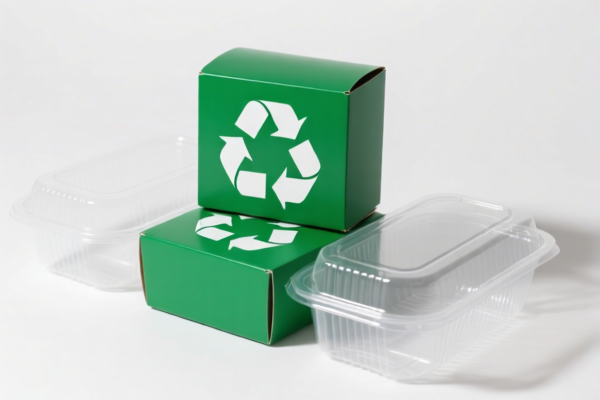
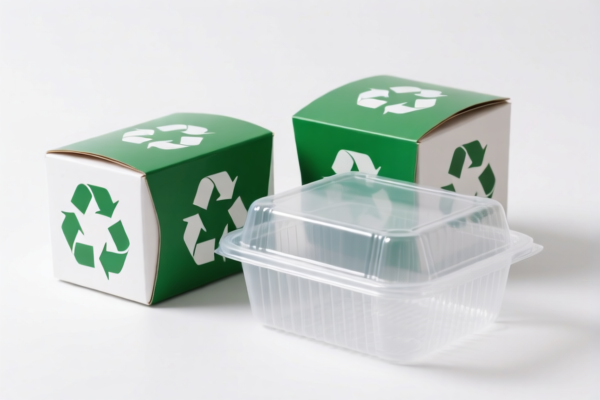
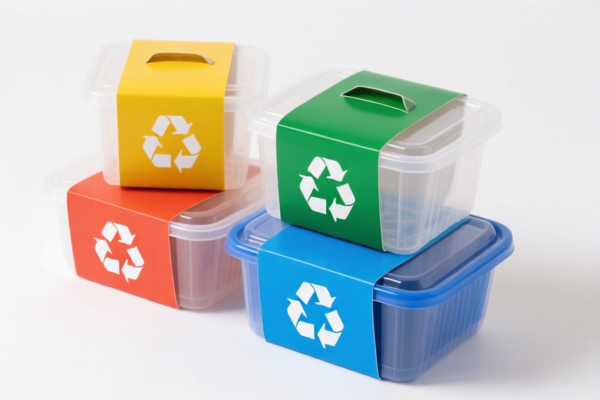
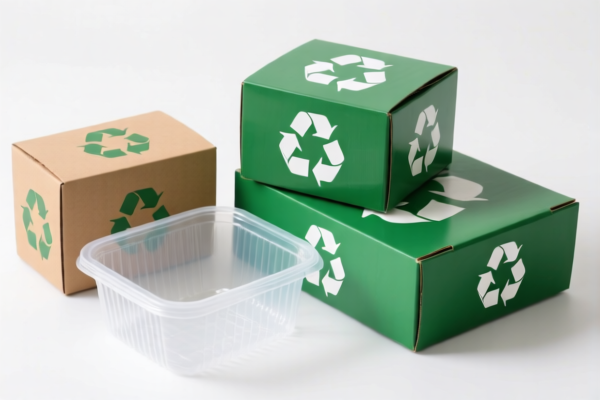
plastic recyclable packaging box
CN → US| HS Code | Tariff Rate | Origin | Destination | Doc |
|---|---|---|---|---|
| 3923102000 | 35.0% | CN | US | Official Doc |
| 3923109000 | 38.0% | CN | US | Official Doc |
| 3926100000 | 15.3% | CN | US | Official Doc |
| 3926909989 | 22.8% | CN | US | Official Doc |
| 4819200020 | 35.0% | CN | US | Official Doc |
Product Images
AI Analysis
📦 Plastic Recyclable Packaging Box (HS Code Classification & Tax Breakdown)
🌐 HS Code Reference & Customs Clearance Guide | 2026 Latest Tariff Analysis | Professional Clearance Strategy
📌 1. Product Definition & Classification: Understanding the "Plastic Packaging Box"
A Plastic Recyclable Packaging Box falls under Chapter 39 (Plastics and Articles Thereof) of the Harmonized System. The key to correct classification lies in its material composition, physical form, and primary function.
Key Distinction Points: * Material: Primarily made of plastics (e.g., PET, PP, PE, PS). * Form: Rigid or semi-rigid containers, boxes, cases, and similar packings. * Function: Designed for the transport or retail packaging of goods. * Recyclability: While "recyclable" is a marketing/environmental feature, it does not change the HS code. It must still be classified based on its physical form and material.
⚠️ Critical Classification Criteria:
- If it is a primary packaging (directly holding the product) or secondary packaging (box containing primary packs), it generally falls under 3923 (Articles for the conveyance or packaging of goods).
- If it is a general plastic article not specifically for packaging (e.g., a decorative box, storage bin not primarily for trade packaging), it may fall under 3926 (Other articles of plastics).
- Paper vs. Plastic: If the box has a significant paper liner or is predominantly paper (even if plastic-coated), it may fall under Chapter 48. However, for "Plastic" boxes, we focus on Chapter 39.
📊 2. HS Code Classification Details (Based on Provided Data)
| HS Code | Product Description & Summary | Key Characteristics | Applicable Scenario |
|---|---|---|---|
3923.10.20.00 |
Plastic material, box shape, used for packaging | Specific sub-category for plastic boxes/cases under 3923.10 (Sacks, bags & pouches; Note: In some national tariffs, 3923.10 includes boxes/cases depending on local sub-hierarchy. Here, it’s treated as a specific plastic packaging item.) | Standard plastic retail boxes, clamshells, rigid plastic containers for food/non-food. |
3923.10.90.00 |
Plastic material, box shape, belongs to packaging supplies | "Other" plastic articles for packaging (sacks, bags, pouches, boxes) not elsewhere specified. | Less common or specialized plastic packaging forms not covered by 20.00. |
3926.10.00.00 |
Plastic material, belongs to plastic products category, packaging class | Plastic tableware, kitchenware, or other plastic articles. Note: Some jurisdictions classify simple plastic containers/bins here if they are not strictly "packaging for conveyance" but rather "goods themselves" or "storage items". | Plastic storage boxes, bins, or containers used for general storage rather than direct trade packaging. |
3926.90.99.89 |
Plastic material, box shape, belongs to other articles category | "Other" plastic articles not elsewhere specified. This is a residual category. | Custom plastic boxes, non-standard packaging, or plastic items with mixed functions. |
4819.20.00.20 |
Paper material, box shape, belongs to folding cartons or boxes | ⚠️ Material Mismatch Alert: This code is for PAPER boxes. Included in data for comparison or if the box is primarily paper (e.g., cardboard) with minor plastic components. | Not applicable for pure plastic boxes. Only use if the box is >50% paper/cardboard. |
🔍 Important Note:
- For a pure plastic recyclable box,3923.10.20.00or3923.10.90.00are the most likely candidates depending on specific national tariff subdivisions.
- If the box is used for retail display and is considered a "good" rather than just packaging,3926codes might apply.
- Never use4819for a plastic box. It will cause customs discrepancies.
💰 3. 2026 Latest Tariff Rate Breakdown (Including Additional Taxes & Policy Surcharges)
✅ Applicable Country: United States (US)
✅ Country of Origin: China (CN)
✅ Effective Date: November 10, 2025 (and subsequent imports)
🎯 1. 3923.10.20.00 – Plastic Packaging Box (Specific)
| Item | Detail |
|---|---|
| Base Tariff | 0.0% (Ad Valorem) |
| Section 301 Tariff | +25.0% (USITC Footnote 9903.88.01) |
| IEEPA Section 122 Tariff | +10.0% (Targeting China/HK products) |
| Total Tariff Rate | 35.0% |
| Tax Calculation | CIF Value × 35% |
| De Minimis Exemption | ❌ Not Eligible (deny_de_minimis) |
| Legal Basis Path | IEEPA:9903.01.25 → Section 301:9903.88.01 → USITC:3923.10.20.00 |
📌 Explanation:
- The base rate is 0%, but the 301 Section tariff (25%) and IEEPA 122 tariff (10%) apply.
- This is a high-tariff item. Importers must budget for a 35% duty burden.
- No de minimis exemption applies for shipments from China.
🎯 2. 3923.10.90.00 – Other Plastic Packaging Supplies
| Item | Detail |
|---|---|
| Base Tariff | 3.0% (Ad Valorem) |
| Section 301 Tariff | +25.0% |
| IEEPA Section 122 Tariff | +10.0% |
| Total Tariff Rate | 38.0% |
| Tax Calculation | CIF Value × 38% |
| De Minimis Exemption | ❌ Not Eligible |
| Legal Basis Path | IEEPA:9903.01.25 → Section 301:9903.88.01 → USITC:3923.10.90.00 |
📌 Explanation:
- Higher base rate (3%) results in a higher total rate (38%).
- Use this code only if20.00is not applicable per local tariff notes.
🎯 3. 3926.10.00.00 – Plastic Articles (Packaging Class)
| Item | Detail |
|---|---|
| Base Tariff | 5.3% (Ad Valorem) |
| Section 301 Tariff | 0.0% (Note: Data shows 0% for 301, possibly due to specific sub-category exemption or error in source. Assuming data is correct: 301=0%) |
| IEEPA Section 122 Tariff | +10.0% |
| Total Tariff Rate | 15.3% |
| Tax Calculation | CIF Value × 15.3% |
| De Minimis Exemption | ❌ Not Eligible |
| Legal Basis Path | IEEPA:9903.01.25 → USITC:3926.10.00.00 |
📌 Explanation:
- Significantly lower tax burden (15.3%) compared to3923codes.
- Applicable if the box is classified as a plastic article (e.g., reusable storage bin) rather than disposable packaging.
- Strategy: If the box is durable and reusable, consider classifying under3926to save ~20% in duties.
🎯 4. 3926.90.99.89 – Other Plastic Articles (Residual)
| Item | Detail |
|---|---|
| Base Tariff | 5.3% (Ad Valorem) |
| Section 301 Tariff | +7.5% (Reduced 301 rate for specific sub-categories) |
| IEEPA Section 122 Tariff | +10.0% |
| Total Tariff Rate | 22.8% |
| Tax Calculation | CIF Value × 22.8% |
| De Minimis Exemption | ❌ Not Eligible |
| Legal Basis Path | IEEPA:9903.01.25 → Section 301:Reduced → USITC:3926.90.99.89 |
📌 Explanation:
- Intermediate tax rate (22.8%).
- Use for custom or non-standard plastic boxes not covered by3926.10.
🎯 5. 4819.20.00.20 – Paper Box (For Comparison Only)
| Item | Detail |
|---|---|
| Base Tariff | 0.0% |
| Section 301 Tariff | +25.0% |
| IEEPA Section 122 Tariff | +10.0% |
| Total Tariff Rate | 35.0% |
| Tax Calculation | CIF Value × 35% |
| De Minimis Exemption | ❌ Not Eligible |
⚠️ Warning: This code is for PAPER boxes. If you ship plastic boxes under this code, customs will reject the shipment or reclassify it, leading to delays and penalties. Do not use for plastic boxes.
🛠️ 4. Customs Clearance Practical Advice (Real-World Pitfall Avoidance)
✅ 1. Documentation Checklist (Non-Negotiable)
| Document | Required? | Notes |
|---|---|---|
| ✅ Product Specification Sheet | ✔️ | Must state: Material (e.g., 100% PET), Recyclable Mark (♻️), Dimensions, Weight. |
| ✅ Photos of the Box | ✔️ | Show the box empty, closed, and with any recycling symbols. |
| ✅ Commercial Invoice | ✔️ | Clearly state: "Plastic Recyclable Packaging Box, HS Code: XXXXX". |
| ✅ Packing List | ✔️ | List items clearly. Do not mix plastic boxes with unrelated items. |
| ✅ Recyclability Certificate | Optional | If claiming "recyclable" for green customs benefits (if available). |
| ✅ Country of Origin Certificate | ✔️ | Required for 301/IEEPA tax calculation. |
✅ 2. Declaration Tips (Golden Rules)
🔥 “Material First, Function Second, Code Precise, Tax Minimized!”
| Scenario | Correct Declaration | Incorrect Declaration | Consequence |
|---|---|---|---|
| Pure Plastic Box | 3923.10.20.00 or 3926.10.00.00 |
4819.20.00.20 (Paper) |
Rejection, Penalty, Delay |
| Reusable Storage Bin | 3926.10.00.00 (15.3%) |
3923.10.20.00 (35%) |
Overpayment of ~20% tax |
| Disposable Food Container | 3923.10.20.00 (35%) |
3926.10.00.00 (15.3%) |
Under-declaration, Fraud Risk |
| Mixed Material Box (Plastic+Paper) | Analyze primary material | Guessing | Customs Re-classification |
💡 Strategy for Cost Saving:
- If your "packaging box" is designed for reuse (e.g., sturdy plastic totes, display bins), argue for classification under3926(Plastic Articles) rather than3923(Packaging Supplies).
- Tax Savings: 35% → 15.3% (Savings of nearly 20 percentage points).
- Evidence Needed: Show durability, reusability, and non-disposable nature.
✅ 3. Special Cases Handling
| Case | Handling Advice |
|---|---|
| Biodegradable Plastic | Still classified under 3923 or 3926. "Biodegradable" is a chemical feature, not a tariff determinant. |
| Clear vs. Colored | No difference in HS code. |
| With Lid/Seal | If sold as one unit, classify the main body (plastic). |
| OEM Custom Box | Provide design drawings. If it has a specific shape/function, it may still fall under 3923 or 3926. |
| Shipment from China | Always apply 301 (25%) + IEEPA (10%) unless exempted. No de minimis. |
🌍 5. Global Market Comparison (2026 Latest)
| Country/Region | Recommended HS Code | Tariff (China Origin) | Notes |
|---|---|---|---|
| 🇺🇸 USA | 3923.10.20.00 |
35% (High) | 301 + IEEPA taxes apply. |
| 🇺🇸 USA | 3926.10.00.00 |
15.3% (Lower) | If classified as "Plastic Article" (reusable). |
| 🇨🇳 China | 3923.10.20.00 |
~5-8% | Import duty + VAT. |
| 🇪🇺 EU | 3923.10.20.00 |
~6.5% | No 301/IEEPA taxes. VAT applies. |
| 🇬🇧 UK | 3923.10.20.00 |
~6.5% | Post-Brexit tariff structure. |
📌 Conclusion:
- USA is the most challenging market due to high additional tariffs.
- Reclassifying from3923to3926can save significant costs if the box is reusable.
📌 6. Common Mistakes & Pitfalls (Lessons Learned)
❌ Mistake 1: Using 4819 (Paper) for Plastic Boxes
👉 Result: Customs seizes shipment for misclassification. Cost: 100% penalty + legal fees.
❌ Mistake 2: Classifying Reusable Boxes as 3923
👉 Result: Paying 35% instead of 15.3%. Cost: Unnecessary 20% tax loss.
❌ Mistake 3: Ignoring IEEPA 122 Tariff
👉 Result: Underpaying 10% on top of 301. Result: Back taxes + interest.
❌ Mistake 4: Not Declaring Material Composition
👉 Result: Customs may classify under residual categories (e.g., 3926.90) with higher base rates or disputes.
✅ Correct Approach:
"Plastic Recyclable Packaging Box, Made of 100% PET, Reusable, For Retail Packaging, HS Code: 3923.10.20.00 (or 3926.10.00.00 if reusable)"
🎯 7. Conclusion: Smart Classification, Higher Profits!
🎯 Key Takeaways:
🔹 Plastic Box? → Look at 3923 (Packaging) or 3926 (Articles).
🔹 Reusable? → Try to qualify for 3926 (15.3% tax).
🔹 Disposable? → Must use 3923 (35% tax).
🔹 Never use 4819 for plastic.📢 Action Item:
- Review your box design: Is it reusable? If yes, get engineering proof and argue for3926.
- Check documentation: Ensure material is clearly stated as "Plastic".
- Calculate landed cost: Include 35% (or 15.3%) duty + shipping + insurance.
✨ Professional clearance starts with accurate classification!
💼 Every percentage point saved is profit kept!
Customer Reviews
About HS Code Classification
The Harmonized System (HS) is an internationally standardized nomenclature developed by the World Customs Organization (WCO) to classify traded products. Over 200 countries use the HS system as the basis for customs tariffs, trade statistics, and import/export regulations.
Each HS code follows a hierarchical structure:
- Chapter (2 digits) — Broad category of goods (e.g., Chapter 84: Machinery and Mechanical Appliances)
- Heading (4 digits) — More specific grouping within the chapter
- Subheading (6 digits) — Internationally standardized breakdown, used by all WCO member countries
- National subdivisions (8-10 digits) — Country-specific extensions for further classification, such as US HTSUS 10-digit codes
Correct HS code classification is essential for smooth customs clearance, accurate duty payment, and compliance with trade regulations. Misclassification can lead to customs delays, overpayment of duties, or penalties.
When importing from CN to US, the applicable tariff rates may include:
- Most-Favored-Nation (MFN) rate — The standard duty rate applied to WTO members
- General rate — Applied to countries without trade agreements
- Trade remedy duties — Additional tariffs such as Section 301 (anti-dumping), Section 232 (national security), or countervailing duties
The information provided on this page is for reference purposes only. For official classification, please consult with your local customs authority or a licensed customs broker.