plastic reducing fitting
CN → US| HS Code | Tariff Rate | Origin | Destination | Doc |
|---|---|---|---|---|
| 3926305000 | 22.8% | CN | US | Official Doc |
| 3917400095 | 40.3% | CN | US | Official Doc |
| 3917400080 | 40.3% | CN | US | Official Doc |
| 8481909085 | 85.0% | CN | US | Official Doc |
| 8481905000 | 20.5% | CN | US | Official Doc |
| 3926902500 | 24.0% | CN | US | Official Doc |
Product Images


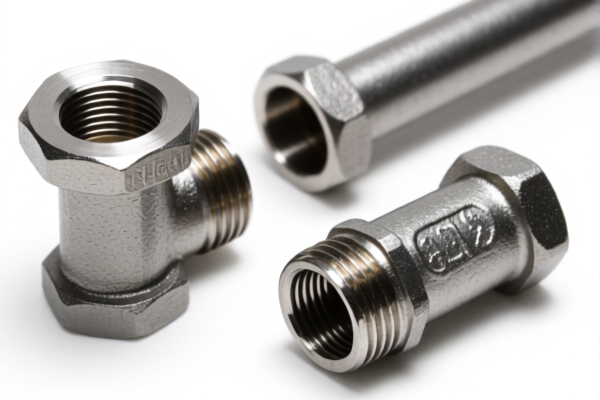
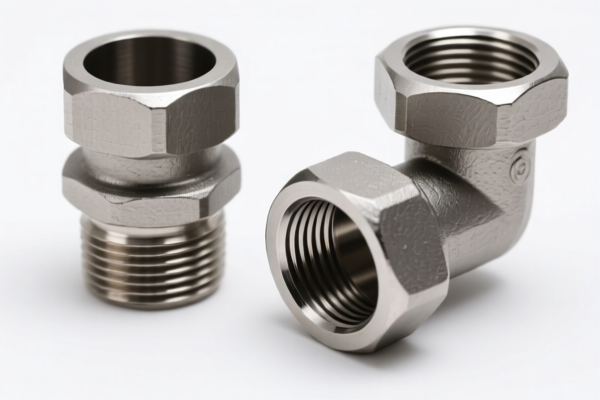
AI Analysis
🧩 Plastic Reducing Fitting (Plastic Pipe Fittings)
🌐 HS Code Reference & Clearance Guide | 2026 Latest Tariff Analysis | Professional-Level Customs Strategy
📌 I. Product Definition & Classification: Do You Really Know What a "Reducing Fitting" Is?
A Plastic Reducing Fitting is a crucial component in piping systems, designed to connect two pipes of different diameters. In international trade, it is generally classified under Chapter 39 (Plastics) or Chapter 84 (Valves/Pumps), depending on its specific structural design, intended use, and material composition.
Key Distinctions:
- Pipe Accessories (Chapter 39): If the item is simply a connector, adapter, or coupling made of plastic, without complex mechanical functions (like flow control via internal mechanisms), it falls under 3917 or 3926.
- Valve Parts (Chapter 84): If the fitting is explicitly designed as a part for a valve (e.g., a threaded end for a valve body) or is classified as a "part of valves," it falls under 8481.
⚠️ Critical Differentiation Point:
- If it is a simple pipe connector/adapter (no moving parts, just for joining pipes) → HS 3917.40 or 3926.30.
- If it is a valve component (specifically listed as a part of a valve in customs rulings) → HS 8481.90.
📦 II. HS Code Classification Details (2026 Latest Tariff Authority Comparison)
Based on the provided data, here are the five possible classifications for Plastic Reducing Fittings, along with their rationale and tax implications.
| HS Code | Product Description & Rationale | Applicable Scenario | Total Tax Rate (US Import from China) |
|---|---|---|---|
| 3926.30.50.00 | Plastic Articles (Other): Classified as "Connecting Parts." The rationale states it belongs to the category of "plastic products and connectors." | General plastic connectors, adapters, or couplings that do not fit strictly into the "pipes/tubes" chapter. | 22.8% |
| 3917.40.00.95 | Plastic Pipes & Fittings: Classified as "Plastic Pipe Accessories." The name explicitly includes material (Plastic) and form (Fitting/Adapter). | Standard plastic pipe fittings (elbows, tees, reducers) used in plumbing or industrial piping. | 40.3% |
| 3917.40.00.80 | Plastic Pipe Fittings (Reducer): Specifically "Fittings in the category of pipe accessories," material is plastic, usage and classification explanation are fully consistent. | Direct match for plastic reducing fittings used in pipe networks. | 40.3% |
| 8481.90.90.85 | Parts of Valves: Classified under "Parts of Valves and Similar Devices." Material is plastic, matching the logic for parts made of other materials. | If customs authorities rule that the reducing fitting is a part of a valve (e.g., integral part of a valve assembly) rather than a pipe connector. | 85.0% |
| 8481.90.50.00 | Parts of Valves/Pipes: Classified under "Parts of Valves/Pipe Accessories." Material is plastic, consistent with inference for "made of other materials." | Alternative valve part classification; possibly for specific valve-related plastic components. | 20.5% |
🔍 Key Reminder:
- Chapter 39 (3917/3926) is the most common classification for general plastic pipe fittings (reducers, elbows, couplings).
- Chapter 84 (8481) applies only if the item is deemed a part of a valve (not just a pipe connector). This carries a massive tax burden in some cases (85%) but can be lower in others (20.5%).
- Misclassification Risk: Declaring a simple plastic reducer as a "valve part" (8481) to avoid Chapter 39 tariffs is risky and may lead to penalties if it lacks valve-specific functional characteristics.
💰 III. 2026 Latest Tariff Rate Details (Including Surtaxes, Policy Additions)
✅ Applicable Country: United States (US)
✅ Origin: China (CN)
✅ Effective Date: 2025/2026 (Current Trade Policies)
🎯 1. 3926.30.50.00 —— Plastic Articles (Connecting Parts)
| Item | Content |
|---|---|
| Base Tariff | 5.3% |
| Section 301 Surtax | 7.5% |
| Section 122 Tariff | 10% |
| Total Rate | 22.8% |
| Tax Calculation | CIF Value × 22.8% |
| De Minimis Exemption? | ❌ No (High-risk category for de minimis claims due to high volume) |
| Legal Basis Path | USITC:3926.30.50.00 → Section 301: 7.5% → Section 122: 10% |
📌 Explanation:
- This is a moderate-rate classification.
- The "Section 122 Tariff" (10%) is a specific U.S. trade measure often applied to strategic materials or specific plastic products.
- Recommendation: If your fitting is a simple connector, this might be a viable, lower-cost alternative to 3917 if you can justify it as a "general plastic article" rather than a "pipe fitting."
🎯 2. 3917.40.00.95 & 3917.40.00.80 —— Plastic Pipe Fittings
| Item | Content |
|---|---|
| Base Tariff | 5.3% |
| Section 301 Surtax | 25.0% |
| Section 122 Tariff | 10% |
| Total Rate | 40.3% |
| Tax Calculation | CIF Value × 40.3% |
| De Minimis Exemption? | ❌ No |
| Legal Basis Path | USITC:3917.40.00.XX → Section 301: 25.0% → Section 122: 10% |
📌 Explanation:
- This is the standard classification for most plastic pipe fittings.
- The 25% Section 301 Surtax is the dominant cost driver.
- Recommendation: This is the safest and most accurate classification for standard plastic reducers. However, the tax burden is significant. Consider supply chain diversification if volume is high.
🎯 3. 8481.90.90.85 —— Parts of Valves (High-Risk/High-Tax)
| Item | Content |
|---|---|
| Base Tariff | 0.0% |
| Section 301 Surtax | 25.0% |
| Section 122 Tariff | 10% |
| Steel/Aluminum/Copper Surtax | 50% (If applicable, but this is plastic, so 0%) |
| Total Rate | 85.0% |
| Tax Calculation | CIF Value × 85.0% |
| De Minimis Exemption? | ❌ No |
| Legal Basis Path | USITC:8481.90.90.85 → Section 301: 25.0% → Section 122: 10% |
📌 Explanation:
- Extremely High Tax! This classification should only be used if the item is definitively a part of a valve and not a general pipe connector.
- Warning: Do not use this classification to save money. It is the most expensive option for plastic fittings.
- Risk: If misclassified (i.e., it's actually a pipe fitting), you face severe penalties, back taxes, and potential audits.
🎯 4. 8481.90.50.00 —— Parts of Valves (Lower-Tax Valve Part)
| Item | Content |
|---|---|
| Base Tariff | 3.0% |
| Section 301 Surtax | 7.5% |
| Section 122 Tariff | 10% |
| Total Rate | 20.5% |
| Tax Calculation | CIF Value × 20.5% |
| De Minimis Exemption? | ❌ No |
| Legal Basis Path | USITC:8481.90.50.00 → Section 301: 7.5% → Section 122: 10% |
📌 Explanation:
- This is an interesting anomaly. If customs accepts the item as a "valve part" under this specific subheading, the tax is lower (20.5%) than even the pipe fitting category (40.3%).
- However, the definition of "part of a valve" is strict. A simple reducing fitting may not qualify.
- Strategy: Only pursue this if you have a strong technical argument that the fitting is integral to a valve system and not a general pipe connector.
🛠️ IV. Customs Clearance Practical Advice (Battle-Tested Pitfall Guide)
✅ 1. Documentation Checklist (Non-Negotiable)
| Document | Must Provide? | Explanation |
|---|---|---|
| ✅ Product Specification Sheet | ✔️ | Must detail: Material (e.g., PVC, PP, PE), Dimensions (Outer/Inner Diameter), Pressure Rating, Temperature Range. |
| ✅ Technical Diagram | ✔️ | Clear drawing showing the fitting is a connector (no internal moving parts) vs. a valve part. |
| ✅ Product Photos (With Label) | ✔️ | Show the item clearly as a "Reducer Fitting," not a "Valve." |
| ✅ Commercial Invoice | ✔️ | Description must be precise: "Plastic Reducing Fitting for Pipe Connection, Made of PVC." Avoid vague terms like "Plastic Part." |
| ✅ Packing List | ✔️ | Ensure quantity matches invoice. |
| ✅ Material Test Report | ✔️ | Optional but helpful: Proof of material composition to confirm Chapter 39 classification. |
✅ 2. Declaration Tactics (Key Mantra)
🔥 “Pipe Fitting = 3917 (40.3%), Valve Part = 8481 (20.5%-85%). Be precise!”
| Scenario | Correct Declaration | Wrong Practice |
|---|---|---|
| Standard Plastic Reducer | 3917.40.00.80 or 3917.40.00.95 | Misdeclare as "Valve Part" (8481) → Risk of 85% tax or penalties. |
| Simple Connector | 3926.30.50.00 | If it’s a generic plastic connector, this offers a lower tax (22.8%) if justified. |
| Valve Component | 8481.90.50.00 | Only if it’s truly a valve part. If not, high risk of audit. |
| High-Tax Valve Part | 8481.90.90.85 | Avoid! Only for specific valve parts with high strategic classification. |
✅ 3. Special Case Handling
| Situation | Handling Advice |
|---|---|
| OEM Custom Fittings | Provide customer order + design drawing. Clarify if it’s for a specific valve system or general piping. |
| Mixed Shipment (Pipes + Fittings) | Declare separately! Fittings go to Chapter 39/84, Pipes to 3917. Do not mix. |
| Plastic vs. Metal Parts | If the fitting has a metal insert, declare based on the primary material or as a composite. Plastic reduces generally fall under Chapter 39. |
| Pre-Ruling Application | Strongly Recommended. Apply for an Advance Ruling (CBP Ruling Letter) from U.S. Customs and Border Protection (CBP) before shipping. This locks in the HS Code and avoids surprise taxes. |
🌍 V. Global Market Comparison (2026 Latest)
| Country/Region | Recommended HS Code | Tariff (Approx.) | Certification Requirements | Remarks |
|---|---|---|---|---|
| 🇺🇸 United States | 3917.40.00.80 |
40.3% | N/A (Standard) | High tax due to Section 301. Pre-ruling advised. |
| 🇨🇳 China | 3917.40.00.80 |
5-10% | N/A | Lower tariffs for domestic/re-export. |
| 🇪🇺 EU | 3917.40.00.80 |
0-2.5% | REACH, RoHS | Low tariffs. Strict chemical compliance. |
| 🇬🇧 UK | 3917.40.00.80 |
0-2.5% | UKCA, REACH | Post-Brexit rules apply. |
| 🇦🇺 Australia | 3917.40.00.80 |
5% | N/A | Standard duty. |
📌 Conclusion:
- USA is the most challenging market due to Section 301 and 122 tariffs.
- Chapter 39 (3917) is the standard, but expensive.
- Chapter 84 (8481.90.50.00) offers a lower rate (20.5%) but is risky if the item is not a true valve part.
- 3926.30.50.00 (22.8%) is a potential "middle ground" if the fitting can be classified as a general plastic article.
📌 VI. Common Errors & Pitfall Guide (Lessons Learned)
❌ Error 1: Declaring a standard plastic reducer as a "Valve Part" to avoid 40.3% tax, resulting in an 85% tax liability.
👉 Consequence: Massive overpayment + potential fraud allegations.
❌ Error 2: Using "Plastic Fitting" without specifying "Reducing" or "Pipe Connector."
👉 Consequence: Customs may assign a generic code with higher duties or hold the shipment for clarification.
❌ Error 3: Assuming all plastic parts are Chapter 39.
👉 Consequence: If it’s a valve part, Chapter 84 applies. Misclassification leads to penalties.
❌ Error 4: Ignoring Section 122 Tariff (10%).
👉 Consequence: Underestimating total landed cost. Always add 10% to Section 301 tariffs if applicable.
✅ Correct Practice:
"Plastic Reducing Pipe Fitting, PVC, 2-inch to 1-inch, for Water Supply System, Made in China"
→ HS Code:3917.40.00.80
→ Tax: 40.3%
🎯 VII. Conclusion: Professional Declaration, Save Time, Reduce Costs!
🎯 Remember the Mantra:
🔹 "Pipe Fitting = 3917 (40.3%). General Plastic = 3926 (22.8%). Valve Part = 8481 (20.5%-85%). Choose wisely!"
🔹 "HS Code Determines Fate, Tax Difference is Huge, One Mistake Costs Thousands!"
📌 Pro Tip:
If your Plastic Reducing Fitting is not destined for the U.S., or if you can source from Vietnam, Mexico, or Thailand, you may avoid Section 301 tariffs.
Strongly Recommend: Apply for an Advance Ruling from CBP to confirm whether your specific fitting qualifies for 3917.40.00.80 (40.3%) or 3926.30.50.00 (22.8%). This can save you 17.5% on your CIF value!
📣 Take Action Now:
📞 Contact a professional customs broker + Provide Product Photos + Apply for HS Code Advance Ruling
🚀 Let your fittings clear smoothly, export efficiently, and maximize profits!
✨ Professional Customs Clearance Starts with Accurate Classification!
💼 Every Dollar of Your Cost Deserves Precise Calculation!
Customer Reviews
About HS Code Classification
The Harmonized System (HS) is an internationally standardized nomenclature developed by the World Customs Organization (WCO) to classify traded products. Over 200 countries use the HS system as the basis for customs tariffs, trade statistics, and import/export regulations.
Each HS code follows a hierarchical structure:
- Chapter (2 digits) — Broad category of goods (e.g., Chapter 84: Machinery and Mechanical Appliances)
- Heading (4 digits) — More specific grouping within the chapter
- Subheading (6 digits) — Internationally standardized breakdown, used by all WCO member countries
- National subdivisions (8-10 digits) — Country-specific extensions for further classification, such as US HTSUS 10-digit codes
Correct HS code classification is essential for smooth customs clearance, accurate duty payment, and compliance with trade regulations. Misclassification can lead to customs delays, overpayment of duties, or penalties.
When importing from CN to US, the applicable tariff rates may include:
- Most-Favored-Nation (MFN) rate — The standard duty rate applied to WTO members
- General rate — Applied to countries without trade agreements
- Trade remedy duties — Additional tariffs such as Section 301 (anti-dumping), Section 232 (national security), or countervailing duties
The information provided on this page is for reference purposes only. For official classification, please consult with your local customs authority or a licensed customs broker.