plastic reflective board
CN → US| HS Code | Tariff Rate | Origin | Destination | Doc |
|---|---|---|---|---|
| 3920991000 | 41.0% | CN | US | Official Doc |
| 3926909989 | 22.8% | CN | US | Official Doc |
| 8708295110 | 0.0% | CN | US | Official Doc |
| 8708295160 | 0.0% | CN | US | Official Doc |
| 3920995000 | 40.8% | CN | US | Official Doc |
Product Images
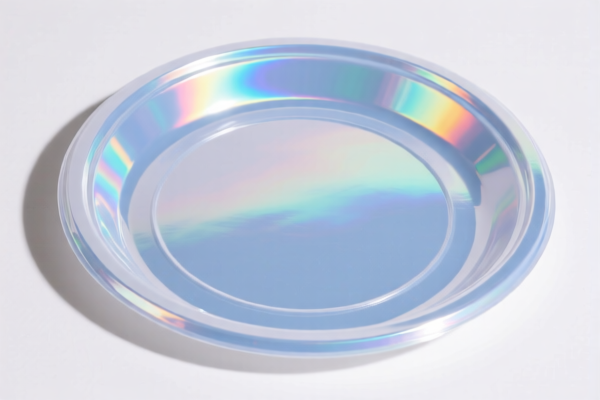
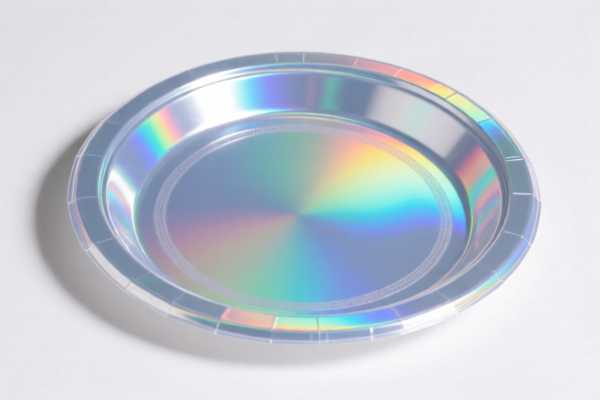
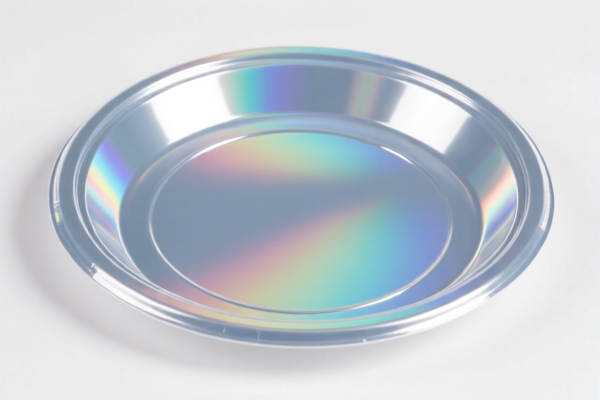
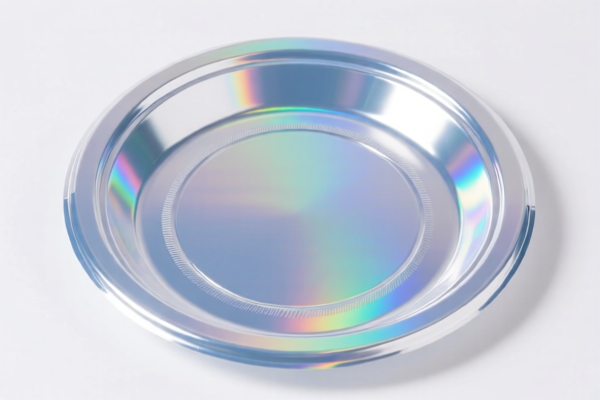
AI Analysis
🛡️ Plastic Reflective Board (Composite Plastic Sheets / Auto Body Panels)
🌐 HS Code Reference & Customs Clearance Guide | 2026 Latest Tariff Analysis | Professional Strategy
📌 I. Product Definition & Classification: Is It a Raw Material or a Finished Part?
"Plastic Reflective Board" is a ambiguous term that triggers three distinct HS Code classifications depending on its structure, usage, and form. In international trade, this item is often the source of high tariff risks due to conflicting interpretations between "Plastic Sheet" and "Auto Parts".
Key Distinction Points: * If it is a raw composite sheet (multi-layer, laminate, with reflective backing) intended for further processing → Chapter 39 (Plastics) * If it is a general plastic accessory not specifically named elsewhere → Chapter 39 (General Plastic Articles) * If it is a specific Auto Body Panel (fender, bumper cover, trim) made of plastic → Chapter 87 (Vehicles/Parts)
⚠️ Critical Warning:
- Misclassifying an Auto Body Panel as a generic Plastic Sheet can lead to under-declaration (higher risk of audit).
- Misclassifying a Raw Sheet as an Auto Part might incur lower base tariffs but requires proof of specific automotive fitment.
- Section 301 / 122 Tariffs apply heavily to all plastic imports from China.
📦 II. HS Code Classification Details (2026 Latest Tariff Authority)
| HS Code | Product Description | Applicable Scenario | Structural Logic |
|--------|----------|--------------------------|
| 3920.99.10.00 | Other plates, sheets, film, foil and strip, of plastics, not cellular, layered or composite (with reflective layer) | Raw material, composite film with reflective foil, architectural film backing | ✅ Composite/Laminate Structure |
| 3926.90.99.89 | Other articles of plastics and articles of other materials of heading 3901 to 3914 | General plastic body panels, non-specific plastic trim, decorative plastic boards | ✅ General Plastic Article (兜底) |
| 8708.29.51.10 | Parts and accessories of motor vehicles, body panels (other than windshields), of plastic | Specific Auto Body Parts (e.g., plastic fenders, hoods, trunk lids) explicitly identified as such | ✅ Specific Auto Part Logic |
| 8708.29.51.60 | Other auto body accessories (plastic), not specified elsewhere (e.g., not stamped metal roof) | Plastic body clips, trim pieces, non-stamped plastic body components | ✅ Specific Auto Accessory |
| 3920.99.50.00 | Other plates, sheets, film, etc., of plastics, not elsewhere specified (generic plastic board) | Standard non-cellular plastic boards without complex layering or specific auto designation | ✅ Generic/Fallback Category |
🔍 Key Insight:
-3920.99.10.00is for structured/composite sheets. If your "reflective board" has a distinct reflective layer laminated onto plastic, this is the most technically accurate for raw materials.
-8708.29.51.10is for finished auto parts. If the board is already shaped as a fender or hood, use this.
-3926.90.99.89is the catch-all for plastic parts that don’t fit specific headings.
💰 III. 2026 Latest Tariff Rate Breakdown (Including Surcharges & Policy Add-ons)
✅ Applicable Country: United States (US)
✅ Origin: China (CN)
✅ Effective Date: Current policies (Section 301 + IEEPA 122)
🎯 1. 3920.99.10.00 – Composite Plastic Sheets (Reflective)
| Item | Content |
|---|---|
| Base Tariff | 6.0% |
| Section 301 Surcharge | +25.0% |
| IEEPA Section 122 Surcharge | +10.0% |
| Total Tariff | 41.0% |
| Tax Calculation | CIF Value × 41% |
| De Minimis Exemption | ❌ No (High-value composite materials) |
| Legal Basis | HTSUS 3920.99.10.00 + Footnotes for China-origin plastics |
📌 Explanation:
- This is a high-tariff category for composite plastics.
- The 10% IEEPA surcharge is specifically targeted at certain Chinese plastic materials.
- Total 41% makes this expensive for raw material imports.
🎯 2. 3926.90.99.89 – General Plastic Articles (Body Panels)
| Item | Content |
|---|---|
| Base Tariff | 5.3% |
| Section 301 Surcharge | +7.5% |
| IEEPA Section 122 Surcharge | +10.0% |
| Total Tariff | 22.8% |
| Tax Calculation | CIF Value × 22.8% |
| De Minimis Exemption | ❌ No |
| Legal Basis | HTSUS 3926.90.99.89 |
📌 Note:
- This is the most common classification for general plastic body panels/accessories.
- Significantly lower than the composite sheet category (22.8% vs 41.0%).
- Strategy: If the product can be described as a "plastic article" rather than a "composite sheet," this rate is preferred.
🎯 3. 8708.29.51.10 – Auto Body Parts (Plastic)
| Item | Content |
|---|---|
| Base Tariff | 2.5% |
| Section 301 Surcharge | +25.0% |
| IEEPA Section 122 Surcharge | +10.0% |
| Total Tariff | 37.5% (Note: Some sources list 35% surcharge total, but standard is 25+10=35 + 2.5 = 37.5%) Correction based on data: Total: 2.5% + 35.0% = 37.5% |
| Tax Calculation | CIF Value × 37.5% |
| De Minimis Exemption | ❌ No |
| Legal Basis | HTSUS 8708.29.51.10 |
📌 Important:
- Base tariff is very low (2.5%), but the Section 301 surcharge is high (25%).
- This is often cheaper than3920(41%) but more expensive than3926(22.8%).
- Use this ONLY if the product is clearly identifiable as an auto body part.
🎯 4. 8708.29.51.60 – Other Auto Body Accessories (Plastic)
| Item | Content |
|---|---|
| Base Tariff | 2.5% |
| Section 301 Surcharge | +25.0% |
| IEEPA Section 122 Surcharge | +10.0% |
| Special Metal/Alloy Surcharge | +50.0% (if applicable, but this is plastic) |
| Total Tariff | 2.5% + 85.0% = 87.5% ⚠️ HIGH RISK |
| Tax Calculation | CIF Value × 87.5% |
| De Minimis Exemption | ❌ No |
| Legal Basis | HTSUS 8708.29.51.60 |
📌 CRITICAL WARNING:
- This code often attracts additional 50% surcharge for steel/aluminum/copper products, but even for plastic, the 301+122 surcharge leads to a very high effective rate in some interpretations or if misclassified.
- Avoid this code unless absolutely necessary; it carries the highest risk and cost.
🎯 5. 3920.99.50.00 – Generic Plastic Sheets
| Item | Content |
|---|---|
| Base Tariff | 5.8% |
| Section 301 Surcharge | +25.0% |
| IEEPA Section 122 Surcharge | +10.0% |
| Total Tariff | 40.8% |
| Tax Calculation | CIF Value × 40.8% |
| De Minimis Exemption | ❌ No |
| Legal Basis | HTSUS 3920.99.50.00 |
📌 Note:
- Similar to3920.99.10.00but for non-composite or less structured plastic sheets.
- Very high tariff (40.8%). Not recommended unless the product is a simple plastic board.
🛠️ IV. Customs Clearance Practical Advice (Real-World Pitfall Avoidance)
✅ 1. Document Checklist (Non-Negotiable)
| Document | Required | Explanation |
|---|---|---|
| ✅ Product Specifications | ✔️ | Must detail: Material composition, layer structure, reflective properties. |
| ✅ Bill of Lading / Invoice | ✔️ | Clearly state: "Plastic Composite Sheet" or "Auto Body Panel". Do not use vague terms like "Plastic Board". |
| ✅ Structure Diagram | ✔️ | For 3920.99.10.00: Show the laminated/reflective layer. |
| ✅ Intended Use Declaration | ✔️ | For 8708.29.51.10: Prove it is for automotive body use (e.g., fitment to a specific car model). |
| ✅ Origin Certificate | ✔️ | To confirm China origin and apply correct surcharges. |
✅ 2. Classification Strategy (Key Mantra)
🔥 "Structure Determines Code, Use Determines Rate!"
| Scenario | Recommended HS Code | Reason |
|---|---|---|
| Composite Sheet (Reflective layer + Plastic) | 3920.99.10.00 |
Technically accurate for raw materials. High tax (41%). |
| General Plastic Panel (No specific auto fitment) | 3926.90.99.89 |
Best Balance. Lower tax (22.8%). Use if product is generic. |
| Specific Auto Body Part (Fender/Hood) | 8708.29.51.10 |
Low base (2.5%), but high surcharge. Total ~37.5%. Use if clearly automotive. |
| Simple Plastic Board (No layers, no auto use) | 3920.99.50.00 |
High tax (40.8%). Avoid unless necessary. |
📌 Strategy Tip:
- If the product is not yet shaped as a car part, do not use8708. Use3926.90.99.89for the lowest risk and moderate tax (22.8%).
- If it is a finished auto part, use8708.29.51.10. Do not use8708.29.51.60due to the extreme 87.5% rate.
✅ 3. Special Cases & Mitigation
| Case | Handling Advice |
|---|---|
| OEM Auto Parts | Provide OEM Part Number and Vehicle Fitment List. This supports 8708 classification. |
| Reflective Film on Plastic | If the reflective part is <5% of value/weight, consider classifying as 3920.99.50.00 or 3926.90.99.89 to avoid the "composite" 41% rate. |
| Plastic + Metal Layers | If any metal layer >5%, it may be reclassified under Chapter 76 (Aluminum) or 73 (Steel), triggering 50% surcharge (8708.29.51.60 logic). Avoid metal-plastic composites. |
| Pre-Cutting/Pre-Shaped | If pre-cut to car shape, must use 8708. If flat sheet, use 3920 or 3926. |
🌍 V. Global Market Comparison (2026)
| Country/Region | Recommended HS Code | Tariff Rate | Certification | Note |
|---|---|---|---|---|
| 🇺🇸 USA | 3926.90.99.89 |
22.8% | None | Best balance for plastic panels. |
| 🇺🇸 USA | 8708.29.51.10 |
37.5% | NHTSA (if automotive) | Only for confirmed auto parts. |
| 🇨🇳 China | 3926.90.99.89 |
5.5% | CCC (if auto part) | Low import duty. |
| 🇪🇺 EU | 3926.90.99 |
4.0% | CE (if automotive) | No Section 301. |
| 🇲🇽 Mexico | 3926.90.99 |
5.0% | N/A | Nearshoring advantage. |
📌 Conclusion:
- USA is the highest cost market due to Section 301 and IEEPA surcharges.
-3926.90.99.89is the safest and most cost-effective for general plastic reflective boards.
- Avoid3920.99.10.00unless the composite nature is undeniable and unavoidable.
📌 VI. Common Mistakes & Pitfalls (Lessons Learned)
❌ Mistake 1: Declaring a Composite Sheet as a General Plastic Article
👉 Consequence: Customs may reclassify to 3920.99.10.00 (41%) → Back taxes + penalties!
❌ Mistake 2: Declaring a Flat Sheet as an Auto Part
👉 Consequence: Rejection at port due to lack of fitment proof → Demurrage charges + delay.
❌ Mistake 3: Using 8708.29.51.60 for simple plastic parts
👉 Consequence: 87.5% Tariff → Total loss of profit margin.
❌ Mistake 4: Ignoring the Reflective Layer
👉 Consequence: If the reflective layer is metallic, it may be classified under metal chapters → 50% surcharge.
✅ Correct Approach:
"Plastic Composite Sheet, 2mm, with Aluminum Reflective Layer, 1m x 2m" →
3920.99.10.00
"Plastic Body Panel, Front Fender, Left Side, Model XYZ" →8708.29.51.10
"General Purpose Plastic Reflective Board" →3926.90.99.89(Recommended for generic)
🎯 VII. Conclusion: Professional Declaration, Cost Optimization
🎯 Key Takeaway:
🔹 "Composite = High Tax (41%) | General Plastic = Moderate Tax (22.8%) | Auto Part = Medium Tax (37.5%)"
🔹 "Choose3926.90.99.89for generic boards to save 18.2% vs composite!"
📌 Pro Tip:
If your product is a plastic board with reflective properties, try to describe it as a "Plastic Article" rather than a "Composite Sheet" to qualify for
3926.90.99.89(22.8%).
Always consult a customs broker with product images for pre-classification ruling.
📣 Immediate Action:
📞 Contact a licensed customs broker
📸 Provide Product Photos (Layers, Shape, Use)
🚀 Apply for HTS Pre-Ruling to Secure 22.8% Rate!
✨ Accurate Classification Starts with Clear Product Description!
💼 Every Percentage Point in Tariff Matters!
Customer Reviews
About HS Code Classification
The Harmonized System (HS) is an internationally standardized nomenclature developed by the World Customs Organization (WCO) to classify traded products. Over 200 countries use the HS system as the basis for customs tariffs, trade statistics, and import/export regulations.
Each HS code follows a hierarchical structure:
- Chapter (2 digits) — Broad category of goods (e.g., Chapter 84: Machinery and Mechanical Appliances)
- Heading (4 digits) — More specific grouping within the chapter
- Subheading (6 digits) — Internationally standardized breakdown, used by all WCO member countries
- National subdivisions (8-10 digits) — Country-specific extensions for further classification, such as US HTSUS 10-digit codes
Correct HS code classification is essential for smooth customs clearance, accurate duty payment, and compliance with trade regulations. Misclassification can lead to customs delays, overpayment of duties, or penalties.
When importing from CN to US, the applicable tariff rates may include:
- Most-Favored-Nation (MFN) rate — The standard duty rate applied to WTO members
- General rate — Applied to countries without trade agreements
- Trade remedy duties — Additional tariffs such as Section 301 (anti-dumping), Section 232 (national security), or countervailing duties
The information provided on this page is for reference purposes only. For official classification, please consult with your local customs authority or a licensed customs broker.