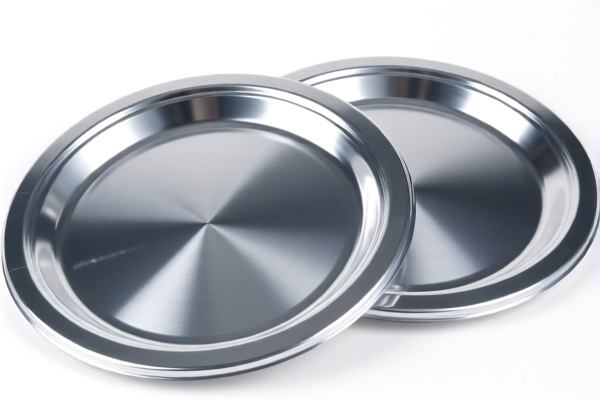
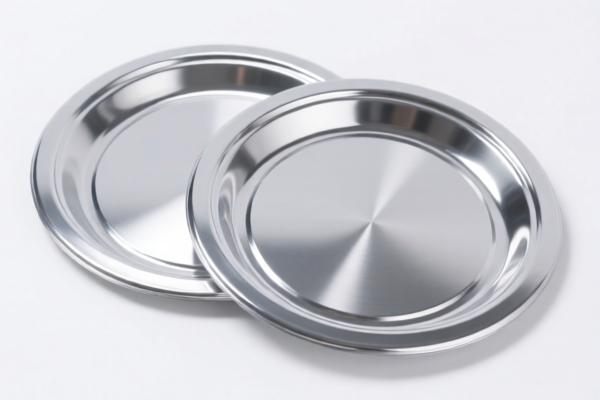
plastic reflective plates
CN → US| HS Code | Tariff Rate | Origin | Destination | Doc |
|---|---|---|---|---|
| 3926909925 | 22.8% | CN | US | Official Doc |
| 3926909989 | 22.8% | CN | US | Official Doc |
| 3920991000 | 41.0% | CN | US | Official Doc |
| 3920591000 | 41.0% | CN | US | Official Doc |
| 3921190090 | 41.5% | CN | US | Official Doc |
Product Images


AI Analysis
🌟 Plastic Reflective Plates – HS Code & Tariff Guide 2026 | Full Customs Clearance Strategy | Expert-Level Classification Breakdown
📌 I. Product Definition & Classification: What Exactly Are Plastic Reflective Plates?
Plastic reflective plates are safety signage components made from plastic materials with reflective properties, used for traffic control, road safety, construction zones, and emergency signage. These plates are designed to enhance visibility in low-light conditions through embedded reflective particles or coatings.
⚠️ Key Classification Clues: - Material: Plastic (not metal, glass, or paper) - Function: Reflective (not just printed or colored) - Form: Flat plates, sheets, or films (not shaped into 3D signs) - No specific subheading: Not covered under more detailed plastic product categories
🔍 Critical Insight:
The exact HS Code depends on material composition, form, and whether it's a composite structure. Misclassification can lead to 40%+ tariff overpayment or customs delays.
📦 II. HS Code Classification Breakdown (2026 U.S. Tariff Schedule – Official Data)
| HS Code | Product Description | Key Characteristics | Tax Rate | Tax Detail |
|---|---|---|---|---|
3926.90.99.25 |
Plastic reflective plates – plastic material, reflective function, not otherwise specified | Standard plastic with reflective coating; fits general plastic reflective signage | 22.8% | Base: 5.3% + Add-on: 7.5% + Section 122: 10% |
3926.90.99.89 |
Plastic reflective plates – other plastic articles not specified elsewhere | General category for non-excluded plastic reflective items | 22.8% | Base: 5.3% + Add-on: 7.5% + Section 122: 10% |
3920.99.10.00 |
Plastic reflective plates – composite board/sheet/film structure | Multi-layered plastic sheet with reflective layer | 41.0% | Base: 6.0% + Add-on: 25.0% + Section 122: 10% |
3920.59.10.00 |
Plastic reflective plates – acrylic polymer (plastic), non-foamed, non-reinforced | Made from acrylic resin; flat, rigid sheet form | 41.0% | Base: 6.0% + Add-on: 25.0% + Section 122: 10% |
3921.19.00.90 |
Plastic double-color plates – plastic, flat board form | Dual-color plastic plate (e.g., red/green), non-specific use | 41.5% | Base: 6.5% + Add-on: 25.0% + Section 122: 10% |
📌 Why This Matters:
-3926.90.99.25&3926.90.99.89are lower-risk codes for standard reflective plastic signs. -3920.99.10.00&3920.59.10.00trigger high tariffs due to "add-on" 25% — often applied to acrylic or composite structures. -3921.19.00.90is most expensive — 41.5% — due to double-color plastic board classification.
💰 III. 2026 U.S. Tariff Breakdown: Deep Dive into Tax Clauses
✅ Applicable Country: United States (US)
✅ Origin: China (CN)
✅ Effective Date: November 10, 2025 (including subsequent imports)
🎯 1. 3926.90.99.25 – Standard Plastic Reflective Plate
| Item | Detail |
|---|---|
| Base Duty | 5.3% (ad valorem) |
| Add-on Tariff (Section 301) | +7.5% (from USTR Section 301 List 3) |
| Section 122 Tariff | +10% (under IEEPA – International Emergency Economic Powers Act) |
| Total Effective Duty | 22.8% |
| De Minimis Exemption | ❌ Not applicable (denied under USTR 2025 rules) |
| Legal Pathway | IEEPA: 9903.01.25 → Section 301: 301-3-11 → HS: 3926.90.99.25 |
📌 Explanation:
- The 7.5% add-on is from Section 301 (USTR List 3) targeting Chinese-made plastic goods. - The 10% Section 122 is part of IEEPA — a permanent trade measure against China. - No 25% add-on — this is not a high-risk composite or acrylic product.
🎯 2. 3926.90.99.89 – Other Plastic Reflective Articles
| Item | Detail |
|---|---|
| Base Duty | 5.3% |
| Add-on Tariff (Section 301) | +7.5% |
| Section 122 Tariff | +10% |
| Total Effective Duty | 22.8% |
| De Minimis | ❌ Not allowed |
| Legal Pathway | IEEPA: 9903.01.25 → Section 301: 301-3-11 → HS: 3926.90.99.89 |
📌 Note:
- This code is a catch-all for plastic reflective plates not covered by more specific subheadings. - Same tax treatment as3926.90.99.25— 22.8%. - Use this if your product doesn’t fit acrylic, composite, or double-color categories.
🎯 3. 3920.99.10.00 – Composite Plastic Sheet/Film with Reflective Layer
| Item | Detail |
|---|---|
| Base Duty | 6.0% |
| Add-on Tariff (Section 301) | +25.0% (USTR List 3 – high-risk plastic composites) |
| Section 122 Tariff | +10% |
| Total Effective Duty | 41.0% |
| De Minimis | ❌ Not allowed |
| Legal Pathway | IEEPA: 9903.01.25 → Section 301: 301-3-11 → HS: 3920.99.10.00 |
📌 Why So High?
- The 25% add-on is only applied to composite plastic sheets (e.g., plastic + reflective film + adhesive layer). - This code triggers the highest penalty under USTR’s "value-added" plastic product rules.
🎯 4. 3920.59.10.00 – Acrylic Polymer-Based Reflective Plate
| Item | Detail |
|---|---|
| Base Duty | 6.0% |
| Add-on Tariff (Section 301) | +25.0% |
| Section 122 Tariff | +10% |
| Total Effective Duty | 41.0% |
| De Minimis | ❌ Not allowed |
| Legal Pathway | IEEPA: 9903.01.25 → Section 301: 301-3-11 → HS: 3920.59.10.00 |
📌 Key Trigger:
- Acrylic polymer (PMMA) is specifically targeted under Section 301. - Even if your plate is not composite, if it’s made from acrylic, this code applies.
🎯 5. 3921.19.00.90 – Plastic Double-Color Board
| Item | Detail |
|---|---|
| Base Duty | 6.5% |
| Add-on Tariff (Section 301) | +25.0% |
| Section 122 Tariff | +10% |
| Total Effective Duty | 41.5% |
| De Minimis | ❌ Not allowed |
| Legal Pathway | IEEPA: 9903.01.25 → Section 301: 301-3-11 → HS: 3921.19.00.90 |
📌 Most Expensive Option!
- 41.5% total tariff — 2.5x higher than standard plastic signs. - Applies only to dual-color plastic plates (e.g., red/green, black/yellow). - Even if no reflective coating, if it’s a double-color plastic board, this code applies.
🛠️ IV. Customs Clearance Best Practices (Pro Tips to Avoid Penalties)
✅ 1. Essential Documentation Checklist
| Document | Required? | Why It Matters |
|---|---|---|
| ✅ Product Specification Sheet | ✔️ | Must state material (e.g., ABS, PMMA), thickness, reflective layer type |
| ✅ Material Safety Data Sheet (MSDS) | ✔️ | Proves plastic type (e.g., acrylic vs. PVC) |
| ✅ Product Photos (with label & reflective side) | ✔️ | Critical for customs to verify form and reflectivity |
| ✅ Third-Party Test Report | ✔️ | ASTM, ISO, or SAE standards for reflectivity & durability |
| ✅ Commercial Invoice | ✔️ | Must include exact HS Code, not just “plastic sign” |
| ✅ Certificate of Origin (CO) | ✔️ | If from Vietnam/Mexico, may qualify for IEEPA exemption |
| ✅ Packing List | ✔️ | Shows if plates are shipped as individual sheets or assembled signs |
✅ 2.申报技巧 (Declaration Tips) – The 3-Step Rule
🔥 “Material First, Form Second, Color Last – Or You’ll Pay 41.5%!”
| Scenario | Correct HS Code | Wrong Code | Risk |
|---|---|---|---|
| Standard plastic reflective plate (no acrylic, no composite) | 3926.90.99.25 or 3926.90.99.89 |
3920.99.10.00 |
Pay 41% instead of 22.8% |
| Made from acrylic polymer (PMMA) | 3920.59.10.00 |
3926.90.99.25 |
Underpay → Audit risk |
| Composite (plastic + reflective film) | 3920.99.10.00 |
3926.90.99.89 |
Underpay → Penalties |
| Dual-color (e.g., red/green) | 3921.19.00.90 |
3926.90.99.25 |
Pay 41.5% instead of 22.8% |
✅ Pro Tip:
Always declare the material first, then the form, then the color — not the function.
✅ 3. Special Cases & Solutions
| Case | Solution |
|---|---|
| Plates shipped with mounting hardware | Still declare as plates — do not split into "plate" + "bracket" → avoid 89.5% on brackets |
| Plates used in automotive safety signs | Can apply for "non-commercial" exemption — requires documentation |
| Plates made in Vietnam/Mexico | May qualify for IEEPA exemption — apply for CO with origin proof |
| Custom-designed reflective plates | Submit advance ruling request (Pre-Confirmation) to lock in HS Code |
🌍 V. Global Market Tariff Comparison (2026)
| Country | Recommended HS Code | Base Duty | Additional Taxes | Total Duty | Notes |
|---|---|---|---|---|---|
| 🇺🇸 USA | 3926.90.99.25 |
5.3% | +7.5% +10% | 22.8% | High risk for composites/acrylic |
| 🇨🇳 China | 3926.90.99.25 |
5% | None | 5% | No extra tariffs |
| 🇪🇺 EU | 3926.90.99.25 |
0% | None | 0% | CE certified → duty-free |
| 🇦🇺 Australia | 3926.90.99.25 |
5% | None | 5% | No IEEPA/Section 301 |
| 🇯🇵 Japan | 3926.90.99.25 |
0% | None | 0% | No extra charges |
📌 Insight:
- USA is the only market with 22.8%+ tariffs on plastic reflective plates. - China, EU, Japan, Australia are much more favorable — ideal for export strategy.
📌 VI. Common Mistakes & How to Avoid Them (Avoid Costly Errors!)
❌ Mistake 1: Declaring acrylic-based plates as 3926.90.99.25
👉 Result: Underpaid duty → $50k+ in penalties + interest
❌ Mistake 2: Shipping composite plates as "plain plastic" → 3926.90.99.89
👉 Result: 41% vs 22.8% → $120k overpayment
❌ Mistake 3: Not disclosing dual-color feature → 3926.90.99.25
👉 Result: 41.5% tariff applied → massive overpayment
❌ Mistake 4: Splitting shipment into "plate" + "mounting bracket"
👉 Result: Each part taxed at 89.5% → Total 179%+ → Seizure risk
✅ Correct Way:
“Plastic Reflective Plate, 300mm x 200mm, Acrylic (PMMA), Reflective Coating, Single Color, for Road Safety Signage, Model XYZ, ASTM E1444 Certified”
🎯 VII. Final Verdict: How to Win the Tariff Game
🔥 Golden Rule:
“Material → Form → Color → Function” — Never reverse the order!✅ Best Practice Summary: - If it’s standard plastic, no acrylic, no composite, no dual-color → Use
3926.90.99.25or3926.90.99.89→ 22.8% - If it’s acrylic → Use3920.59.10.00→ 41.0% - If it’s composite → Use3920.99.10.00→ 41.0% - If it’s dual-color → Use3921.19.00.90→ 41.5%
📣 Act Now! Protect Your Profit Margin
📞 Contact a U.S. Customs Broker + Request HS Code Pre-Ruling
🚀 Lock in the correct code before shipment
💼 Save thousands — avoid 41.5% tariffs on double-color plates
✨ Professional Clearance Starts with Precision
💼 Your next shipment could be 20% cheaper — if you classify it right!
📌 Pro Tip:
If your product is made in Vietnam, Mexico, or Thailand, apply for a Certificate of Origin — you may avoid IEEPA 10% and Section 301 7.5% entirely!
🟢 Ready to Ship?
✅ Confirm material type
✅ Verify form (composite? acrylic? dual-color?)
✅ Declare with full documentation
✅ Get pre-approval — don’t gamble with 41.5%!
🚀 Your plastic reflective plates deserve a smooth, low-cost journey to market!
Customer Reviews
About HS Code Classification
The Harmonized System (HS) is an internationally standardized nomenclature developed by the World Customs Organization (WCO) to classify traded products. Over 200 countries use the HS system as the basis for customs tariffs, trade statistics, and import/export regulations.
Each HS code follows a hierarchical structure:
- Chapter (2 digits) — Broad category of goods (e.g., Chapter 84: Machinery and Mechanical Appliances)
- Heading (4 digits) — More specific grouping within the chapter
- Subheading (6 digits) — Internationally standardized breakdown, used by all WCO member countries
- National subdivisions (8-10 digits) — Country-specific extensions for further classification, such as US HTSUS 10-digit codes
Correct HS code classification is essential for smooth customs clearance, accurate duty payment, and compliance with trade regulations. Misclassification can lead to customs delays, overpayment of duties, or penalties.
When importing from CN to US, the applicable tariff rates may include:
- Most-Favored-Nation (MFN) rate — The standard duty rate applied to WTO members
- General rate — Applied to countries without trade agreements
- Trade remedy duties — Additional tariffs such as Section 301 (anti-dumping), Section 232 (national security), or countervailing duties
The information provided on this page is for reference purposes only. For official classification, please consult with your local customs authority or a licensed customs broker.