plastic reusable plate
CN → US| HS Code | Tariff Rate | Origin | Destination | Doc |
|---|---|---|---|---|
| 3924102000 | 24.0% | CN | US | Official Doc |
| 3924104000 | 13.4% | CN | US | Official Doc |
| 3924104000 | 13.4% | CN | US | Official Doc |
| 3924102000 | 24.0% | CN | US | Official Doc |
| 3924104000 | 13.4% | CN | US | Official Doc |
Product Images
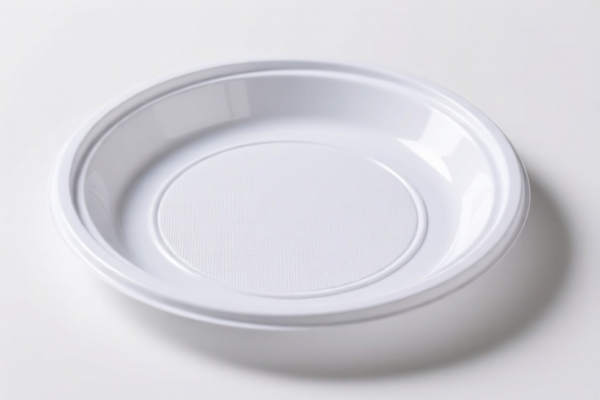
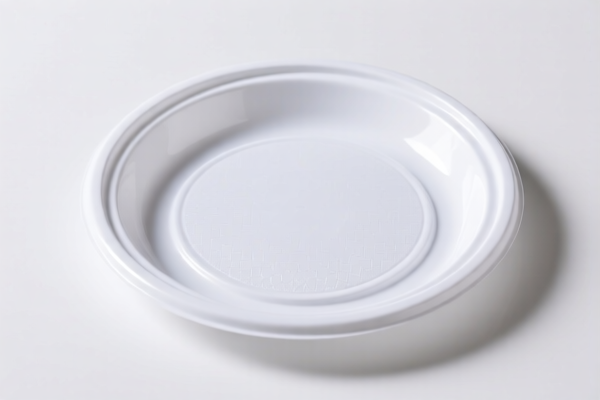
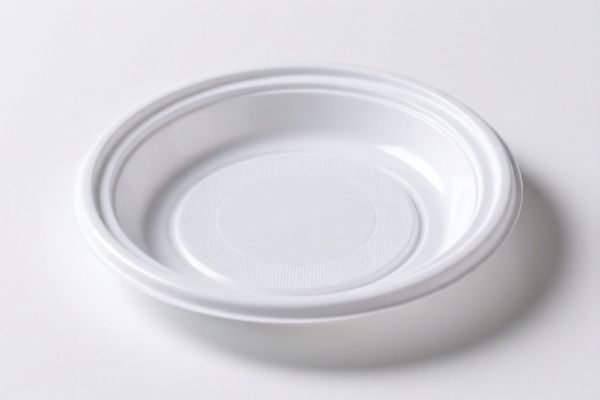
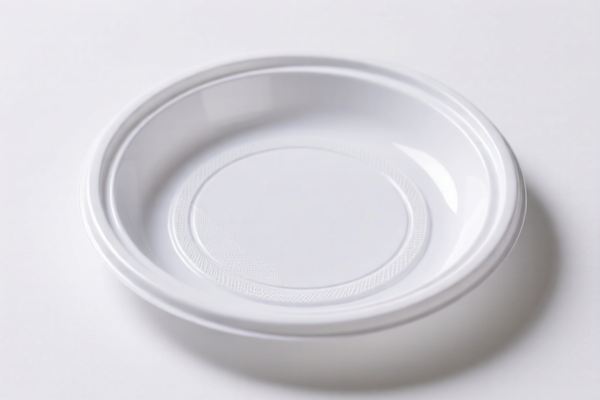
AI Analysis
🍽️ Plastic Reusable Plate (Plastic Tableware)
🌐 HS Code Reference & Customs Clearance Guide | 2026 Latest Tariff Analysis | Professional Customs Strategy
📌 I. Product Definition & Classification: Is It a "Plate" or "Tableware"?
Plastic Reusable Plates are versatile kitchenware items used in dining, catering, and food service. In international trade, they are often categorized under two distinct HS codes based on their specific shape/terminology and functional definition. The key difference lies in whether the customs authority prioritizes the item as a generic "plate" (often attracting higher duties due to trade restrictions) or broadly as "plastic tableware."
⚠️ Key Distinction Point:
- If declared specifically as a "Plate" (distinct dish shape) → Likely falls under 3924.10.20.00 → Higher Tax (24.0%).
- If declared broadly as "Plastic Tableware" (functional category) → Likely falls under 3924.10.40.00 → Lower Tax (13.4%).
- Crucial: The description in your commercial invoice and product documentation dictates the classification. "Plate" is a specific subset, while "Tableware" is the broader chapter.
📦 II. HS Code Classification Details (2026 Latest Tariff Authority对照)
| HS Code | Product Description | Application Scenario | Tax Rate |
|---|---|---|---|
3924.10.20.00 |
Plastic plates, classified as plastic tableware items | Specific "plate" shape, kitchenware | 24.0% |
3924.10.40.00 |
Plastic tableware, matching plate usage | General plastic dining items, reusable | 13.4% |
3924.10.40.00 |
Plastic tableware, classified based on material and form | Generic plastic dining ware | 13.4% |
3924.10.20.00 |
Plastic dinner plates, fitting tableware/plate description | Standard dinner plates | 24.0% |
3924.10.40.00 |
Plastic tableware, suitable for reusable plates | Heavy-duty/reusable plastic dishes | 13.4% |
🔍 Key Reminder:
- Both HS codes are under Chapter 39 (Plastics and Articles Thereof).
- The 13.4% rate (3924.10.40.00) is significantly more favorable than the 24.0% rate (3924.10.20.00).
- However, customs may enforce the 24.0% rate if the product is explicitly labeled only as "Plastic Plates" without broader "Tableware" context.
💰 III. 2026 Latest Tariff Rate Breakdown (Including Surcharges, Policy Add-ons)
✅ Applicable Country: United States (US)
✅ Country of Origin: China (CN)
✅ Effective Date: Post-November 2025 (Including subsequent imports)
🎯 1. 3924.10.20.00 —— Plastic Plates (Higher Risk Category)
| Item | Detail |
|---|---|
| Base Tariff | 6.5% |
| Section 301 Surcharge | 7.5% |
| Section 122 Tariff | 10% |
| Total Tax Rate | 24.0% |
| Tax Calculation | CIF Value × 24.0% |
| De Minimis Eligibility | ❌ Not Eligible (deny_de_minimis) |
| Legal Basis Path | Base Tariff → Section 301 → Section 122 |
📌 Explanation:
- This classification attracts a higher combined tariff due to stricter classification of "plates" as specific consumer goods subject to multiple surcharges.
- The Section 122 tariff (10%) is a specific administrative surcharge applicable to certain plastic items.
- Total Cost Impact: High. Importers must budget for nearly 25% of the CIF value in duties alone.
🎯 2. 3924.10.40.00 —— Plastic Tableware (Optimized Category)
| Item | Detail |
|---|---|
| Base Tariff | 3.4% |
| Section 301 Surcharge | 0.0% |
| Section 122 Tariff | 10% |
| Total Tax Rate | 13.4% |
| Tax Calculation | CIF Value × 13.4% |
| De Minimis Eligibility | ❌ Not Eligible (deny_de_minimis) |
| Legal Basis Path | Base Tariff → Section 122 |
📌 Note:
- Despite the Section 122 tariff (10%) still applying, this code benefits from a lower base tariff (3.4%) and zero Section 301 surcharge.
- Total Cost Impact: Moderate. Significantly more cost-effective than the "Plate" classification.
- Strategy: Justify the classification as "Tableware" (a functional term) rather than just "Plate" (a shape term) in your documentation to qualify for this lower rate.
🛠️ IV. Customs Clearance Practical Advice (Battle-Tested Pitfall Guide)
✅ 1. Document Checklist (Mandatory)
| Document | Required | Description |
|---|---|---|
| ✅ Product Specification Sheet | ✔️ | Must include material (e.g., PP, PS), dimensions, stackability, heat resistance. |
| ✅ Commercial Invoice | ✔️ | CRITICAL: Use the term "Plastic Tableware" or "Reusable Plastic Dining Ware" instead of just "Plastic Plate" to support 3924.10.40.00. |
| ✅ Product Photos | ✔️ | Show the item in use (with food/drink) to emphasize its function as tableware, not just a molded plate. |
| ✅ Packing List | ✔️ | Clearly state quantity, weight, and packaging type. |
| ✅ Declaration Statement | ✔️ | "Plastic reusable tableware for food service, not single-use disposable." |
✅ 2. Declaration Tips (Key Mantras)
🔥 "Describe Function, Not Just Shape; 'Tableware' Saves the Day!"
| Scenario | Correct Declaration | Wrong Approach |
|---|---|---|
| Standard Round Plates | "Plastic Tableware, Reusable, PP Material" | "Plastic Plates" → Risk of 24.0% |
| Square Dinner Plates | "Plastic Dining Ware, Square Shape" | "Square Plastic Plates" → Risk of 24.0% |
| Stackable Travel Plates | "Plastic Tableware for Outdoor Use" | "Plastic Plates for Travel" → Risk of 24.0% |
| Set of Plates + Forks | "Plastic Tableware Set" | "Plastic Plates" → Risk of 24.0% |
⚠️ Warning:
- If your product is clearly a "plate" but you declare it as "tableware" to avoid taxes, ensure your product images and specs support the "tableware" classification (i.e., show it being used for dining, not just as a decorative object).
- Customs officers may inspect the physical goods. If the label says "Plate" and the invoice says "Tableware," it may raise red flags.
✅ 3. Special Cases Handling
| Situation | Handling Advice |
|---|---|
| OEM Custom Shapes | Provide design drawings. If the shape is unique, argue it as "Specialty Tableware" to support 3924.10.40.00. |
| Disposable vs. Reusable | Clearly mark as "Reusable" in all docs. Disposable items may fall under different subheadings or face stricter scrutiny. |
| Material Specifics | If made from Polystyrene (PS) or Polypropylene (PP), specify this. Some specific plastic types may have different tariff nuances, but both codes above cover general plastic tableware. |
| Set of Items | If importing plates + bowls + cups, declare as a "Tableware Set" under 3924.10.40.00 for the entire set. |
🌍 V. Global Market Clearance Comparison (2026 Latest)
| Country/Region | Recommended HS Code | Total Duty (China Origin) | Certification | Notes |
|---|---|---|---|---|
| 🇺🇸 USA | 3924.10.40.00 |
13.4% | FDA (if food contact) | Avoid 3924.10.20.00 (24.0%) |
| 🇺🇸 USA | 3924.10.20.00 |
24.0% | FDA | Higher risk, higher cost |
| 🇪🇺 EU | 3924.10.00 |
0% - 6.5% | EU Food Contact Reg | No Section 122/301 surcharges |
| 🇨🇳 China | 3924.10.00 |
6.5% | China Compulsory Certification (if applicable) | Domestic trade rules apply |
| 🇬🇧 UK | 3924.10.00 |
0% - 5% | UKCA Mark | Post-Brexit tariffs may vary |
📌 Conclusion:
- USA is the primary market with high tariffs due to Section 301 and Section 122.
- Strategy for US Imports: Use3924.10.40.00("Plastic Tableware") to save 10.6% in duties compared to3924.10.20.00.
- EU/UK: Much lower barriers, but ensure Food Contact Material (FCM) compliance.
📌 VI. Common Mistakes & Pitfall Guide (Lessons Learned)
❌ Mistake 1: Declaring "Plastic Plates" without mentioning "Tableware"
👉 Consequence: Customs defaults to 3924.10.20.00 → 24.0% tax instead of 13.4%.
❌ Mistake 2: Using "Disposable" in the description for reusable goods
👉 Consequence: Customs may classify as single-use plastic, triggering environmental surcharges or bans in certain jurisdictions.
❌ Mistake 3: Ignoring FDA Compliance for US Imports
👉 Consequence: Goods held at customs for FDA testing → Delays of 2-4 weeks, storage fees, and potential fines.
❌ Mistake 4: Inconsistent Invoice Descriptions
👉 Consequence: Invoice says "Plastic Tableware," but packing list says "Plastic Plates" → Customs Audit → Possible penalty.
✅ Correct Practice:
"Plastic Reusable Tableware, Made of PP, Food-Grade, FDA Compliant, Model: XYZ, Set of 12"
🎯 VII. Conclusion: Precise Classification Saves Money!
🎯 Remember the Mantra:
🔹 "Call it 'Tableware' to Save 10%; 'Plate' Costs Extra!"
🔹 "13.4% vs 24.0% – That's a 10.6% Margin Booster!"
🔹 "Document Your Function, Not Just Your Shape!"
📌 Pro Tip:
If your plastic plates are made from recycled materials or are biodegradable, check if they qualify for Green Trade Incentives or different HS codes in non-US markets. However, for the US, stick to 3924.10.40.00 for the best tariff outcome.
📣 Immediate Action:
📞 Review Your Invoice Wording: Change "Plastic Plates" to "Plastic Tableware" if accurate.
📄 Provide FDA Docs: Ensure your supplier has FDA compliance documentation for food-contact plastics.
🚀 Optimize Your Supply Chain: Use the 13.4% rate to improve your profit margins in the US market.
✨ Professional Clearance Starts with Precise Classification!
💼 Every Percent Saved is Pure Profit!
Customer Reviews
About HS Code Classification
The Harmonized System (HS) is an internationally standardized nomenclature developed by the World Customs Organization (WCO) to classify traded products. Over 200 countries use the HS system as the basis for customs tariffs, trade statistics, and import/export regulations.
Each HS code follows a hierarchical structure:
- Chapter (2 digits) — Broad category of goods (e.g., Chapter 84: Machinery and Mechanical Appliances)
- Heading (4 digits) — More specific grouping within the chapter
- Subheading (6 digits) — Internationally standardized breakdown, used by all WCO member countries
- National subdivisions (8-10 digits) — Country-specific extensions for further classification, such as US HTSUS 10-digit codes
Correct HS code classification is essential for smooth customs clearance, accurate duty payment, and compliance with trade regulations. Misclassification can lead to customs delays, overpayment of duties, or penalties.
When importing from CN to US, the applicable tariff rates may include:
- Most-Favored-Nation (MFN) rate — The standard duty rate applied to WTO members
- General rate — Applied to countries without trade agreements
- Trade remedy duties — Additional tariffs such as Section 301 (anti-dumping), Section 232 (national security), or countervailing duties
The information provided on this page is for reference purposes only. For official classification, please consult with your local customs authority or a licensed customs broker.