plastic rollerball pen
CN → US| HS Code | Tariff Rate | Origin | Destination | Doc |
|---|---|---|---|---|
| 9608200000 | 21.5% | CN | US | Official Doc |
| 9608300039 | 0.0% | CN | US | Official Doc |
Product Images
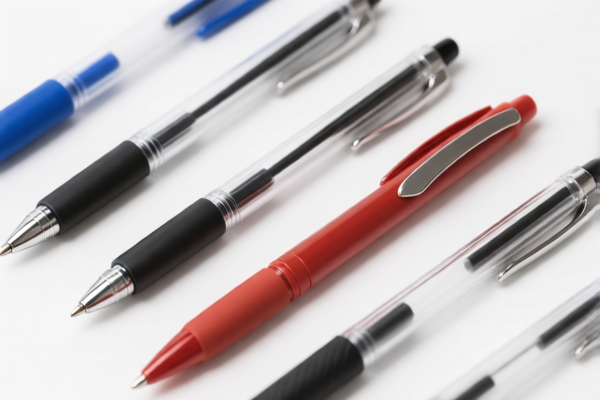
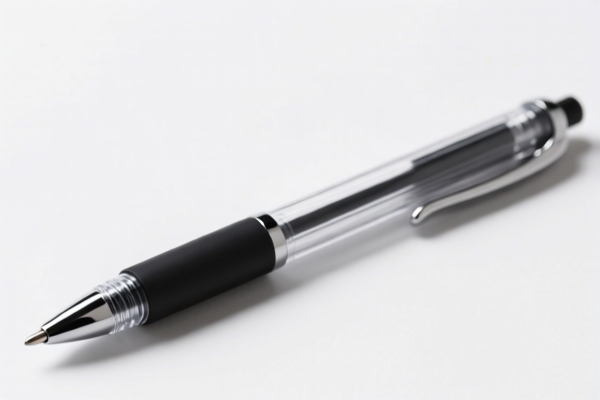
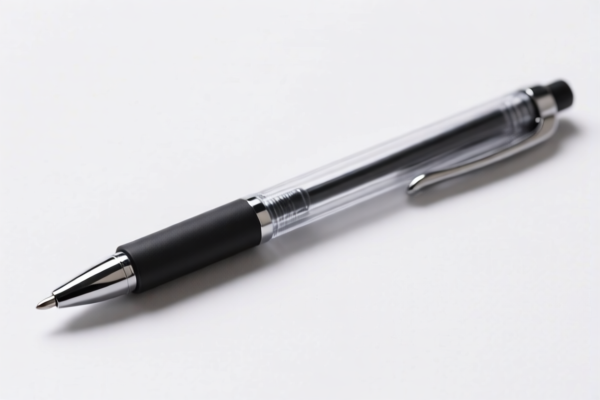
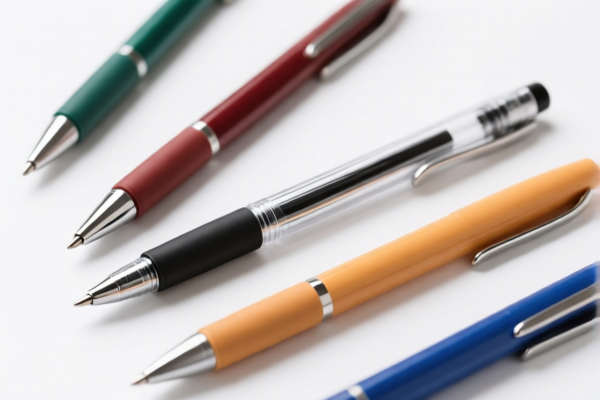
AI Analysis
🖊️ Plastic Rollerball Pen (Gel/Rollerball Ink Pens)
🌐 HS Code Reference & Customs Clearance Guide | 2026 Latest Tariff Analysis | Professional Entry Strategy
📌 I. Product Definition & Classification: Do You Really Understand "Rollerball Pens"?
Plastic rollerball pens are writing instruments that use a rolling ball tip to deliver liquid ink or gel ink, offering a smoother writing experience than traditional ballpoints but with the convenience of a disposable plastic body. In international trade, these are often confused with "felt-tipped pens" or standard "ballpoint pens."
Key Distinction: * Rollerball/Gel Pens: Use liquid or gel ink flowing from a reservoir through a ball. They fall under Heading 9608. * Felt-Tipped Pens (Markers): Use a porous tip (felt, fiber) that draws ink up via capillary action. They also fall under Heading 9608 but have different sub-headings. * Standard Ballpoints: Use viscous oil-based ink. Also under 9608.
⚠️ Critical Classification Point:
- If the pen uses a rolling ball mechanism (regardless of plastic body), it is generally classified as a "Fountain pen, stylograph pen and other pens" or "Ball point pens" depending on the specific ink delivery mechanism defined by local customs.
- However, many customs authorities group standard disposable plastic rollerballs under "Fountain pens, stylograph pens and other pens" if they do not fit the strict "ballpoint" definition, OR under "Felt tipped..." if the tip is considered porous.
- Based on the provided DATA: We must distinguish between "Felt tipped/porous" (9608.20) and "Other pens" (9608.30).
📦 II. HS Code Classification Details (Based on Provided Data)
The provided data limits our analysis to two specific sub-headings under Heading 9608. Here is how a Plastic Rollerball Pen is classified based on the ink delivery mechanism:
| HS Code | Product Description | Applicable Scenario | Ink/Tip Type |
|---|---|---|---|
| 9608.20.00.00 | Felt tipped and other porous-tipped pens and markers | Pens with a felt, fiber, or porous plastic tip that draws ink via capillary action (e.g., permanent markers, felt-tip gel pens) | ❌ NOT a rolling ball. Porous tip. |
| 9608.30.00.39 | Fountain pens, stylograph pens and other pens Other | Rollerball pens, gel pens with a rolling ball, fountain pens, and other writing instruments not classified elsewhere. | ✅ YES for standard plastic rollerball pens with a metal/plastic rolling ball. |
🔍 Key Insight for Rollerball Pens:
- A standard plastic rollerball pen (with a tiny rotating ball at the tip) typically falls under 9608.30.00.39 ("Other pens"), NOT 9608.20, because it is not a "felt-tipped or porous-tipped" pen.
- Exception: If the "rollerball" is actually a felt core wrapped in a porous sleeve (common in some "gel" pens marketed as rollerballs), customs may classify it as 9608.20. Verify the tip structure!
💰 III. 2026 Latest Tariff Rate Breakdown (Detailed Tax Clauses)
✅ Applicable Country: United States (US)
✅ Origin: China (CN) (Assumed based on typical trade context; adjust if different)
✅ Effective Date: Current rates as per provided data
🎯 1. If Classified as 9608.20.00.00 (Porous-Tipped/Felt-Tipped)
| Item | Detail |
|---|---|
| HS Code | 9608.20.00.00 |
| Product | Felt tipped and other porous-tipped pens and markers |
| Basic Tariff | 0.0% |
| Additional Tariff (Section 301/Trump Tariff) | 0.0% |
| Total Tax Rate | 0.0% |
| Tax Detail | 基础关税: 0.0%, 加征关税: 0.0% |
| Total Tax Summary | 0.0% |
📌 Explanation:
- This category enjoys zero duty.
- Risk: If a rollerball pen (9608.30) is misclassified here, you face underpayment penalties.
- Requirement: Must prove the tip is felt or porous (no rolling ball).
🎯 2. If Classified as 9608.30.00.39 (Other Pens, e.g., Rollerball)
| Item | Detail |
|---|---|
| HS Code | 9608.30.00.39 |
| Product | Fountain pens, stylograph pens and other pens Other |
| Basic Tariff | 0.4¢ each + 2.7% (Ad valorem + Specific) |
| Additional Tariff (Section 301) | 7.5% |
| Total Tax Rate | 0.4¢ each + 10.2% (2.7% + 7.5%) |
| Tax Detail | 基础关税: 0.4¢ each + 2.7%, 加征关税: 7.5% |
| Total Tax Summary | 0.4¢ each + 2.7% + 7.5% |
📌 Explanation:
- This is the correct category for most plastic rollerball pens.
- Complex Tax Structure:
1. Specific Duty: $0.004 per pen (per unit).
2. Ad Valorem Duty: 2.7% of the CIF value.
3. Additional Duty: 7.5% of the CIF value (likely due to trade restrictions).
- Total Cost Calculation:
Total Duty = (0.004 × Quantity) + (CIF Value × 10.2%)⚠️ Critical Warning:
- The 10.2% total ad valorem rate (2.7% + 7.5%) is significantly higher than the 0% for felt-tip pens.
- Misclassification Risk: Importers often try to classify rollerballs as "felt-tip" (9608.20) to avoid the 7.5% additional tariff. This is high-risk and likely to result in audits, back-taxes, and penalties.
🛠️ IV. Customs Clearance Practical Advice (Avoid Pitfalls)
✅ 1. Preparation Checklist (Must-Have Documents)
| Document | Required | Purpose |
|---|---|---|
| ✅ Product Photos (Close-up of Tip) | ✔️ | CRITICAL: Prove whether it is a rolling ball or felt/porous tip. |
| ✅ Specifications Sheet | ✔️ | Describe ink type (liquid/gel/oil) and tip mechanism. |
| ✅ Commercial Invoice | ✔️ | Clear description: "Plastic Rollerball Pen, Gel Ink, Rolling Ball Tip." |
| ✅ Packing List | ✔️ | Count per unit for specific duty calculation (0.4¢/pen). |
| ✅ Origin Certificate | ✔️ | To determine if additional tariffs apply (e.g., US-China trade). |
✅ 2. Declaration Strategy (Key Tips)
🔥 Golden Rule:
"Check the Tip! Ball = 9608.30 (Taxed). Felt = 9608.20 (Zero Tax)."
| Scenario | Correct HS Code | Duty Rate | Action |
|---|---|---|---|
| Standard Plastic Rollerball (Metal ball, liquid ink) | 9608.30.00.39 |
0.4¢/ea + 10.2% | Declare accurately. No way around it. |
| Gel Pen with Felt Core (No rolling ball, porous tip) | 9608.20.00.00 |
0.0% | Provide tip close-up photos to prove porous nature. |
| Ballpoint Pen (Viscous oil ink, rolling ball) | 9608.10 or 9608.30 |
Varies | Check if classified as "ballpoint" (often 9608.10) or "other" (9608.30). |
✅ 3. Special Handling for High-Volume Imports
- Specific Duty Calculation: For large shipments, the 0.4¢ per pen adds up.
Example: 100,000 pens = $400 specific duty + CIF × 10.2%. - Anti-Dumping/Countervailing Duties: Check if your specific supplier is under an anti-dumping order.
- Valuation: Ensure the CIF value is accurate. The 10.2% is applied to the transaction value, not a reference price.
🌍 V. Global Market Comparison (2026 Context)
| Market | HS Code (Similar) | Duty Rate | Notes |
|---|---|---|---|
| 🇺🇸 USA | 9608.30.00.39 |
0.4¢/ea + 10.2% | High additional tariff due to trade policies. |
| 🇪🇺 EU | 9608.30 |
0-2.5% | Generally low duties. No "Section 301" equivalent. |
| 🇨🇳 China | 9608.30 |
0-5% | Import duties vary by origin; may have exemptions for ASEAN. |
📌 Conclusion:
- USA is the most expensive market for rollerball pens due to the 7.5% additional tariff.
- Strategy: If possible, source from countries not subject to Section 301 tariffs (e.g., Vietnam, Mexico) to reduce costs.
- Alternative: If your pen can be technically classified as a "felt-tip" (porous), it saves 10.2% ad valorem tax. However, this requires strict compliance.
📌 VI. Common Mistakes & Pitfalls (Learn from Others)
❌ Mistake 1: Classifying a rollerball pen as a felt-tip pen (9608.20) to save tax.
👉 Result: Customs seizure, back-taxes, and penalties. Do not do this.
✅ Fix: Provide clear photos of the rolling ball mechanism.
❌ Mistake 2: Ignoring the specific duty (0.4¢/pen).
👉 Result: Underpayment for high-volume shipments.
✅ Fix: Calculate total duties as (0.004 × Qty) + (Value × 10.2%).
❌ Mistake 3: Using vague descriptions like "Writing Instrument."
👉 Result: Delays for customs examination.
✅ Fix: Use precise terms: "Plastic Rollerball Pen, Gel Ink, Rolling Ball Tip, Model XYZ."
🎯 VII. Conclusion: Professional Declaration for Cost Efficiency
🎯 Key Takeaway:
🔹 Rollerball Pens = 9608.30.00.39
🔹 Duty = 0.4¢/pen + 10.2% of Value
🔹 Do NOT misclassify as felt-tip (9608.20) unless truly porous.🔹 "Accurate classification saves you from fines, even if the tax is higher. Misclassification costs 3x more in the long run."
📌 Pro Tip:
If you are importing large volumes, consider Advance Rulings from US Customs to confirm the HS Code classification. This provides legal certainty and prevents post-import audits.
📣 Immediate Action:
📞 Verify the Tip Type: Is it a rolling ball or a felt core?
📊 Calculate Total Cost: Include both specific and ad valorem duties.
📄 Document Everything: Photos, specs, and invoices must match the declaration.
✨ Professional clearance starts with precise classification!
💼 Every cent counts in global trade!
Customer Reviews
About HS Code Classification
The Harmonized System (HS) is an internationally standardized nomenclature developed by the World Customs Organization (WCO) to classify traded products. Over 200 countries use the HS system as the basis for customs tariffs, trade statistics, and import/export regulations.
Each HS code follows a hierarchical structure:
- Chapter (2 digits) — Broad category of goods (e.g., Chapter 84: Machinery and Mechanical Appliances)
- Heading (4 digits) — More specific grouping within the chapter
- Subheading (6 digits) — Internationally standardized breakdown, used by all WCO member countries
- National subdivisions (8-10 digits) — Country-specific extensions for further classification, such as US HTSUS 10-digit codes
Correct HS code classification is essential for smooth customs clearance, accurate duty payment, and compliance with trade regulations. Misclassification can lead to customs delays, overpayment of duties, or penalties.
When importing from CN to US, the applicable tariff rates may include:
- Most-Favored-Nation (MFN) rate — The standard duty rate applied to WTO members
- General rate — Applied to countries without trade agreements
- Trade remedy duties — Additional tariffs such as Section 301 (anti-dumping), Section 232 (national security), or countervailing duties
The information provided on this page is for reference purposes only. For official classification, please consult with your local customs authority or a licensed customs broker.