plastic self adhesive tape for car roof
CN → US| HS Code | Tariff Rate | Origin | Destination | Doc |
|---|---|---|---|---|
| 3926305000 | 22.8% | CN | US | Official Doc |
| 3926909989 | 22.8% | CN | US | Official Doc |
| 3919102055 | 40.8% | CN | US | Official Doc |
| 5604909000 | 40.0% | CN | US | Official Doc |
| 3919905060 | 40.8% | CN | US | Official Doc |
Product Images
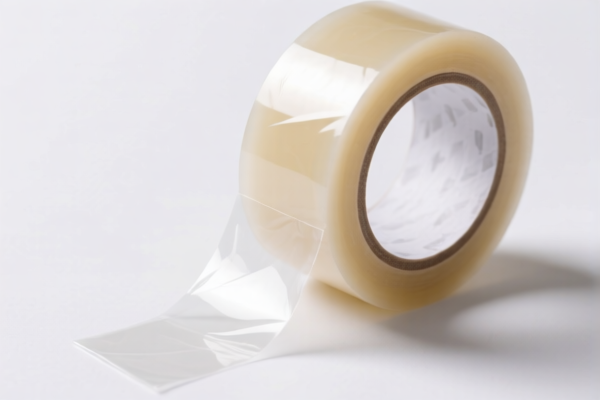
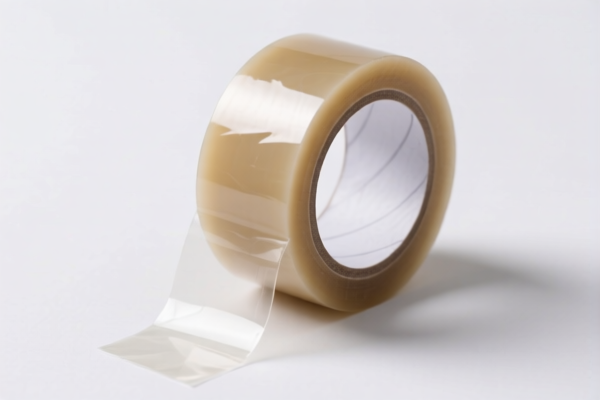

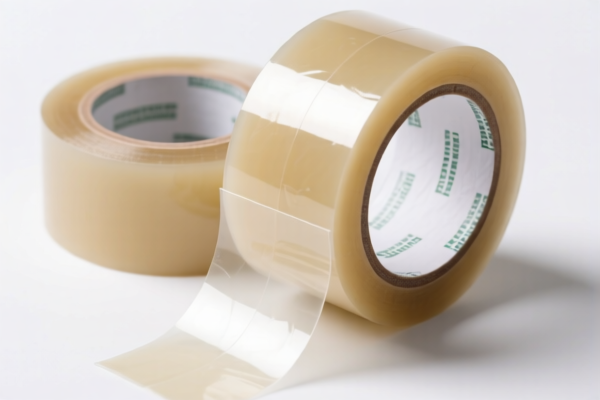
AI Analysis
🚗 Plastic Self Adhesive Tape for Car Roof (Automotive Exterior Trim)
🌐 HS Code Reference & Clearance Guide | 2026 Latest Tariff Analysis | Professional Customs Strategy
📌 I. Product Definition & Classification: Is It Just "Tape"?
Plastic self-adhesive tape for automotive exterior trim is not a simple office supply. In international trade, its classification depends heavily on its material composition, physical form, and manufacturing process.
There are two main categories for this product under Chapter 39 (Plastics) and Chapter 56 (Textiles/Impregnated Goods):
- Standard Self-Adhesive Plastic Tapes: Flat, plastic-based tapes with an adhesive backing, regardless of specific usage (automotive or otherwise). These fall under Heading 3919.
- Plastic Articles Not Elsewhere Specified (N.E.S.): General plastic articles, including tapes that may not fit the strict definition of "self-adhesive" in Heading 3919, or other plastic trim parts. These fall under Heading 3926.
- Impregnated/Covered Strip: Plastic tapes that have been specifically impregnated, coated, covered, or sheathed with plastic, forming a distinct structural strip. These may fall under Heading 5604 if classified as textile/plastic hybrid strips, or 3919 if purely plastic but processed differently.
⚠️ Key Distinction Point:
- If it is a standard flat self-adhesive tape made of plastic → HS 3919.10 or 3919.90.
- If it is a general plastic accessory (e.g., a specific shaped clip/tape assembly) → HS 3926.30 or 3926.90.
- If it is a plastic-impregnated strip treated as a different article → HS 5604.90.
📦 II. HS Code Classification Details (2026 Latest Tariff Cross-Reference)
| HS Code | Product Description | Application Scenario | Classification Logic |
|---|---|---|---|
3919.10.20.55 |
Plastic self-adhesive tape, flat shape | General automotive exterior trim tape, standard flat form | ✅ Standard Self-Adhesive Tape (Flat) |
3919.90.50.60 |
Plastic self-adhesive tape, other shapes | Automotive exterior trim, non-flat or complex shapes | ✅ Other Self-Adhesive Tapes |
3926.30.50.00 |
Plastic articles for connections/adhesives | General plastic connection/adhesive parts for cars | ✅ Other Plastic Articles (Connection/Adhesive) |
3926.90.99.89 |
Other plastic articles, including tape | General plastic trim/tape not specified elsewhere | ✅ Other Plastic Articles (N.E.S.) |
5604.90.90.00 |
Plastic-impregnated strips/bands | Tape impregnated/coated with plastic, structured as strip | ✅ Impregnated/Covered Strip |
🔍 Important Note:
- The highest tariff risk comes from misclassifying a standard self-adhesive tape (3919) as a "plastic article" (3926) or vice versa, but more critically, the differences in additional duties based on the specific HS code subheading. -3919.10.20.55and3919.90.50.60attract higher additional tariffs due to specific footnote interpretations for self-adhesive tapes. -3926.30.50.00and3926.90.99.89are considered "other plastic articles" and have a lower additional tariff component compared to the self-adhesive tape categories.
💰 III. 2026 Latest Tariff Rate Breakdown (Including Surtaxes & Policy Surcharges)
✅ Applicable Country: United States (US)
✅ Country of Origin: China (CN)
✅ Effective Date: 2025 November 10 onwards (including subsequent imports)
🎯 1. 3919.10.20.55 & 3919.90.50.60 —— Plastic Self-Adhesive Tape
| Item | Detail |
|---|---|
| Basic Tariff Rate | 5.8% (ad valorem) |
| Section 301 Surcharge | +25.0% (USITC Footnote 9903.88.01) |
| IEEPA Surcharge | +10.0% (China/HK products, effective Nov 10, 2025) |
| Total Tax Rate | 40.8% |
| Tax Calculation | CIF Value × 40.8% |
| De Minimis Exemption | ❌ Not Eligible (deny_de_minimis) |
| Legal Basis Path | IEEPA:9903.01.25 → IEEPA:9903.01.24 → USITC:3919.10.20.55/3919.90.50.60 → FOOTNOTE:9903.88.01 |
📌 Explanation:
- These HS codes are classified as self-adhesive tapes, which are subject to the 25% Section 301 surcharge. - The 10% IEEPA surcharge applies on top of this. - Total 40.8% is a very high tariff, significantly impacting profit margins.
🎯 2. 3926.30.50.00 & 3926.90.99.89 —— Other Plastic Articles (Connection/Adhesive)
| Item | Detail |
|---|---|
| Basic Tariff Rate | 5.3% (ad valorem) |
| Section 301 Surcharge | +7.5% (USITC Footnote 9903.88.01) |
| IEEPA Surcharge | +10.0% (China/HK products, effective Nov 10, 2025) |
| Total Tax Rate | 22.8% |
| Tax Calculation | CIF Value × 22.8% |
| De Minimis Exemption | ❌ Not Eligible (deny_de_minimis) |
| Legal Basis Path | IEEPA:9903.01.25 → IEEPA:9903.01.24 → USITC:3926.30.50.00/3926.90.99.89 → FOOTNOTE:9903.88.01 |
📌 Explanation:
- These HS codes are classified as "other plastic articles" rather than "self-adhesive tapes." - The Section 301 surcharge is lower at 7.5% compared to 25% for self-adhesive tapes. - Total 22.8% is significantly lower than the 40.8% for self-adhesive tapes. - Strategic Tip: If the product can be legitimately classified under3926(e.g., as a specific plastic connector/adhesive part rather than a generic tape), the tax saving is 18%.
🎯 3. 5604.90.90.00 —— Plastic-Impregnated Strips/Bands
| Item | Detail |
|---|---|
| Basic Tariff Rate | 5.0% (ad valorem) |
| Section 301 Surcharge | +25.0% (USITC Footnote 9903.88.01) |
| IEEPA Surcharge | +10.0% (China/HK products, effective Nov 10, 2025) |
| Total Tax Rate | 40.0% |
| Tax Calculation | CIF Value × 40.0% |
| De Minimis Exemption | ❌ Not Eligible (deny_de_minimis) |
| Legal Basis Path | IEEPA:9903.01.25 → IEEPA:9903.01.24 → USITC:5604.90.90.00 → FOOTNOTE:9903.88.01 |
📌 Explanation:
- This code applies if the tape is impregnated or coated with plastic and classified as a strip/band under Chapter 56. - It attracts the 25% Section 301 surcharge, same as self-adhesive tapes. - Total 40.0% is still very high, similar to3919codes.
🛠️ IV. Customs Clearance Practical Advice (Real-World Pitfall Avoidance)
✅ 1. Document Preparation Checklist (Non-Negotiable)
| Document | Required | Description |
|---|---|---|
| ✅ Product Specification Sheet | ✔️ | Details material (PP, PE, etc.), thickness, width, adhesive type, and tensile strength. |
| ✅ Product Photos (Clear) | ✔️ | Must show the tape roll, label, and application on a car. |
| ✅ Commercial Invoice | ✔️ | Clearly state "Plastic Self-Adhesive Tape for Automotive Exterior Trim." |
| ✅ Packing List | ✔️ | Weight, dimensions, and number of rolls per carton. |
| ✅ Certificate of Origin (CO) | ✔️ | To confirm origin as China (CN) for surcharge assessment. |
| ✅ HS Code Ruling/Justification | ✔️ | If possible, provide a pre-ruling or technical justification for 3926 vs 3919. |
✅ 2. Declaration Strategy (Key Mantra)
🔥 "Material Determines Code, Form Defines Tax: Tape 40%, Article 22%!"
| Situation | Correct Declaration | Wrong Declaration |
|---|---|---|
| Standard Flat Self-Adhesive Tape | 3919.10.20.55 or 3919.90.50.60 |
Declare as 3926 → Risk of penalty for misclassification |
| Specific Plastic Adhesive Connector/Trim Piece | 3926.30.50.00 or 3926.90.99.89 |
Declare as 3919 → Overpay 18% |
| Plastic-Impregnated Strip | 5604.90.90.00 |
Declare as 3926 → Risk of penalty |
| Mixed Shipment | Separate declarations for each type | Mixed declaration → Customs seizure or audit |
✅ 3. Special Circumstances Handling
| Situation | Handling Advice |
|---|---|
| OEM Custom Tape | Provide customer order + design specs. If it has a specific shape/function beyond "tape," argue for 3926 to save 18%. |
| Tape with Special Adhesive | If the adhesive is the primary feature, 3919 is more likely. If the plastic substrate/shape is key, 3926 may be argued. |
| Impregnated Tape | If the tape is heavily coated/impregnated, 5604 might apply, but still high tax. Ensure documentation supports the "impregnated" claim. |
| Pre-Ruling Application | Strongly Recommended. Apply for an Advance Ruling with CBP to confirm 3926 classification if the product has unique features. |
🌍 V. Global Market Clearance Comparison (2026 Latest)
| Country/Region | Recommended HS Code | Tariff (China Origin) | Certification Requirements | Notes |
|---|---|---|---|---|
| 🇺🇸 USA | 3926.30.50.00 / 3926.90.99.89 |
22.8% (Lower Risk) | No specific certification | 3919 codes incur 40.8% |
| 🇨🇳 China | 3926.30.50.00 / 3926.90.99.89 |
5% (Import Duty) | CCC (if applicable) | No additional surcharges |
| 🇪🇺 EU | 3926.90 / 3919.10 |
0% (if符合 CE) | CE + REACH | No additional surcharges |
| 🇦🇺 Australia | 3926.90 / 3919.10 |
5% | RCM | No additional surcharges |
📌 Conclusion:
- USA is the only market with significant additional tariffs.
- Classification under3926(Other Plastic Articles) saves 18% vs3919(Self-Adhesive Tapes).
- China, EU, Australia, Australia do not have these additional surcharges.
📌 VI. Common Errors & Pitfall Avoidance (Lessons Learned)
❌ Error 1: Declaring a standard self-adhesive tape as 3926 without justification.
👉 Consequence: Customs may reject the declaration, impose penalties, or reclassify to 3919 → Back pay 18% + fines!
❌ Error 2: Using "Plastic Tape" in the description without specifying material or form.
👉 Consequence: Customs may default to the highest risk code (3919.10) → 40.8% tax.
❌ Error 3: Ignoring the IEEPA 10% surcharge in cost calculations.
👉 Consequence: Underestimating landed cost → Profit margin erosion.
❌ Error 4: Not providing technical specifications for impregnated vs. non-impregnated tapes.
👉 Consequence: Misclassification under 5604 → 40.0% tax instead of potential lower rates if correctly classified.
✅ Correct Practice:
"Plastic Self-Adhesive Tape for Automotive Exterior Trim, Material: PP, Thickness: 0.5mm, Width: 50mm, Adhesive: Acrylic-based, Model: XYZ"
🎯 VII. Conclusion: Professional Declaration, Save Time, Reduce Costs!
🎯 Remember the Mantra:
🔹 "Self-Adhesive 40%, Other Plastic 22%, Save 18% with Right Code!"
🔹 "HS Code Dictates Profit, 18% Difference is Huge, Declare Accurately or Pay Up!"
📌 Pro Tip:
If your tape is specifically shaped for car exterior trim (not just a roll), or functions as a connector/adhesive part, argue for
3926.30.50.00or3926.90.99.89to save 18% in tariffs.
Apply for an Advance Ruling to secure the lower tariff classification and avoid customs disputes.
📣 Take Action Now:
📞 Contact a professional customs broker + Provide product specs + Apply for HS Code Advance Ruling
🚀 Clear Customs Smoothly, Maximize Profits, and Export Efficiently!
✨ Professional Clearance Starts with Accurate Classification!
💼 Every Percent of Tax Saved is Pure Profit!
Customer Reviews
About HS Code Classification
The Harmonized System (HS) is an internationally standardized nomenclature developed by the World Customs Organization (WCO) to classify traded products. Over 200 countries use the HS system as the basis for customs tariffs, trade statistics, and import/export regulations.
Each HS code follows a hierarchical structure:
- Chapter (2 digits) — Broad category of goods (e.g., Chapter 84: Machinery and Mechanical Appliances)
- Heading (4 digits) — More specific grouping within the chapter
- Subheading (6 digits) — Internationally standardized breakdown, used by all WCO member countries
- National subdivisions (8-10 digits) — Country-specific extensions for further classification, such as US HTSUS 10-digit codes
Correct HS code classification is essential for smooth customs clearance, accurate duty payment, and compliance with trade regulations. Misclassification can lead to customs delays, overpayment of duties, or penalties.
When importing from CN to US, the applicable tariff rates may include:
- Most-Favored-Nation (MFN) rate — The standard duty rate applied to WTO members
- General rate — Applied to countries without trade agreements
- Trade remedy duties — Additional tariffs such as Section 301 (anti-dumping), Section 232 (national security), or countervailing duties
The information provided on this page is for reference purposes only. For official classification, please consult with your local customs authority or a licensed customs broker.