plastic sheet hs 3920594000
CN → US| HS Code | Tariff Rate | Origin | Destination | Doc |
|---|---|---|---|---|
| 3926909989 | 22.8% | CN | US | Official Doc |
| 3921905050 | 39.8% | CN | US | Official Doc |
| 3920598000 | 41.5% | CN | US | Official Doc |
| 3920594000 | 35.0% | CN | US | Official Doc |
| 3921190090 | 41.5% | CN | US | Official Doc |
Product Images
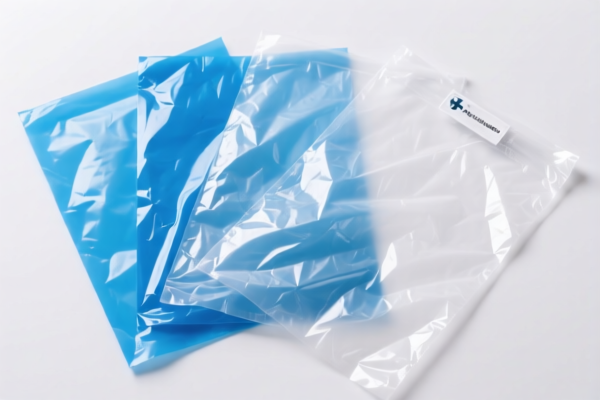
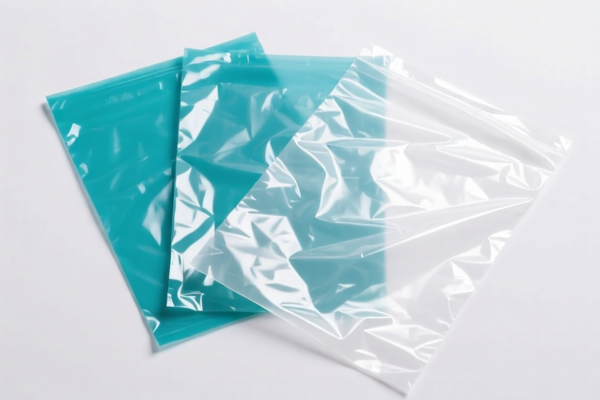
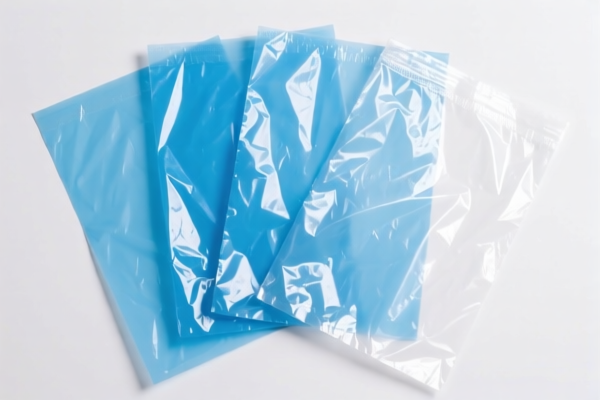
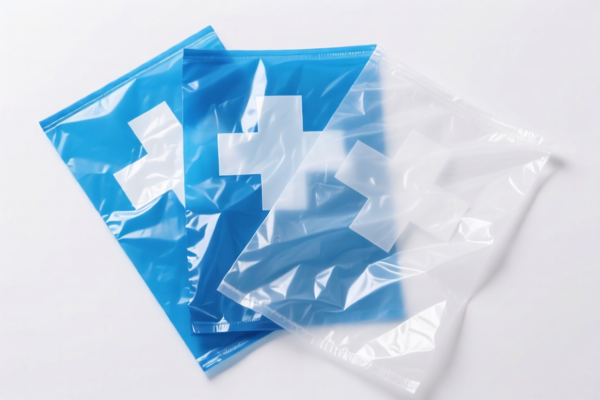
AI Analysis
📦 Plastic Sheet (HS Code: 3920.59.40.00)
🌐 HS Code Reference & Customs Clearance Guide | 2026 Updated Tariff Analysis | Professional Import Strategy
📌 One, Product Definition & Classification: What Exactly Is This Plastic Sheet?
Plastic sheets made from acrylic polymers (e.g., PMMA – Polymethyl Methacrylate) are widely used in industrial, architectural, medical, and security applications due to their high transparency, impact resistance, and weatherability.
However, not all acrylic sheets are treated equally under customs rules — especially when they contain 30% or more by weight of lead.
⚠️ Critical Distinction:
- If the sheet contains ≥30% lead by weight → Must be classified under 3920.59.40.00
- If lead content is <30% → Classified under 3920.59.80.00 (0% tariff)
- No lead? → Still falls under 3920.59.80.00
🔍 Two, HS Code Breakdown (2026 Official Tariff Table)
| HS Code | Product Description | Application | Lead Content | Key Feature |
|---|---|---|---|---|
3920.59.40.00 |
Other plates, sheets, film, foil and strip, of plastics, noncellular and not reinforced, laminated, supported or similarly combined with other materials: Of acrylic polymers: Other: Other: Transparent sheeting containing 30% or more by weight of lead | Security windows, bulletproof glass, radiation shielding, medical equipment, high-security display panels | ✅ ≥30% lead | Highly regulated, high tariff |
3920.59.80.00 |
Other acrylic polymer sheets (non-transparent, or <30% lead) | General signage, decorative panels, lighting diffusers, non-security applications | ❌ <30% lead | 0% tariff |
🔍 Key Clarification:
- “Transparent sheeting” is not limited to optical clarity — it includes light-transmitting sheets used in safety, medical, or industrial shielding. - Lead content is measured by weight, not volume — must be verified via lab test.
💰 Three, 2026 Updated Tariff Breakdown (With附加 Taxes & Legal Basis)
✅ Applicable Country: United States (US)
✅ Origin: China (CN)
✅ Effective Date: November 10, 2025 (and ongoing)
🎯 1. 3920.59.40.00 — Transparent Acrylic Sheet with ≥30% Lead
| Item | Detail |
|---|---|
| Base Duty | 0.0% (ad valorem) |
| USITC Additional Tariff | +25.0% (under Section 301, China-specific tariffs) |
| IEEPA Additional Tariff | +25.0% (under International Emergency Economic Powers Act) |
| Total Effective Tariff | 50.0% |
| Tax Calculation | CIF Value × 50.0% |
| De Minimis Exemption? | ❌ No (denied under US law) |
| Legal Basis Path | IEEPA:9903.01.25 → USITC:3920.59.40.00 → FOOTNOTE:9903.88.01 |
📌 Explanation:
- The 25% USITC tariff is triggered by the Section 301 Investigation on Chinese imports deemed to have unfair trade practices. - The 25% IEEPA tariff is applied due to national security concerns, especially for materials with high lead content (often used in radiation shielding or military-grade protection). - Combined, this creates a 50% tariff, making this one of the highest-taxed plastic products in the US.
🛠️ Four, Customs Clearance Best Practices (Pro Tips to Avoid Penalties)
✅ 1. Required Documentation (Must-Have Checklist)
| Document | Required? | Notes |
|---|---|---|
| ✅ Product Specification Sheet | ✔️ | Must include lead content, material composition, thickness, dimensions |
| ✅ Material Safety Data Sheet (MSDS) | ✔️ | Must confirm lead % by weight |
| ✅ Third-Party Lab Test Report | ✔️ | Essential — must show lead content ≥30% |
| ✅ Commercial Invoice | ✔️ | Clearly state: "Transparent acrylic sheeting, ≥30% lead by weight" |
| ✅ Certificate of Origin (CO) | ✔️ | If from China, expect high tariffs; if from Vietnam/Mexico, check for exemptions |
| ✅ Packing List | ✔️ | Show total weight, number of sheets, packaging type |
| ✅ Customs Declaration (Form 7501) | ✔️ | Must match HS Code and lead content |
✅ 2.申报技巧 (Smart Filing Strategy)
🔥 "Lead Content First, HS Code Second, No Guessing!"
| Scenario | Correct HS Code | Risk of Error |
|---|---|---|
| Sheet with 32% lead | 3920.59.40.00 |
✅ Correct |
| Sheet with 28% lead | 3920.59.80.00 |
❌ Wrong → 50% overpayment |
| No lead data provided | Assumed 30%+ → 3920.59.40.00 |
⚠️ High risk of audit |
| Claiming "non-leaded" without test | ❌ High audit risk | ⚠️ Possible penalties |
📌 Pro Tip:
- Never assume lead content — always verify with lab testing. - Use "Acrylic sheet, transparent, 32% lead by weight, for radiation shielding" in invoice and packing list.
✅ 3. Special Cases & Solutions
| Case | Solution |
|---|---|
| OEM product with unknown lead content | Request supplier to provide certified lab report before shipment |
| Re-export from US to EU | EU does not impose IEEPA/USITC tariffs — 0% tariff if no lead |
| Used in medical imaging equipment | May qualify for non-commercial use exemption — require documentation |
| High-value shipment (>$1,000) | Apply for Advance Ruling (Pre-Approval) to lock in HS Code and tariff |
🌍 Five, Global Customs Comparison (2026)
| Country | Recommended HS Code | Tariff | Certification | Notes |
|---|---|---|---|---|
| 🇺🇸 USA | 3920.59.40.00 |
50.0% | FDA/IEEPA/USITC | Highest tariff globally |
| 🇨🇳 China | 3920.59.40.00 |
5% | CCC | No IEEPA/USITC |
| 🇪🇺 EU | 3920.59.40.00 |
0% | CE | No additional tariffs |
| 🇦🇺 Australia | 3920.59.40.00 |
5% | RCM | No extra tariffs |
| 🇯🇵 Japan | 3920.59.40.00 |
0% | PSE | No additional taxes |
📌 Insight:
- The USA is the only market imposing 50% tariff on this product. - China, EU, Japan, Australia impose no additional tariffs — ideal for re-export.
🚨 Six, Common Mistakes & Pitfalls (Avoid These!)
❌ Mistake 1: Declaring a 32% lead sheet as 3920.59.80.00
👉 Result: 50% underpayment → Audits, penalties, back taxes
❌ Mistake 2: Not providing lab report for lead content
👉 Result: Detention at port, delay, possible rejection
❌ Mistake 3: Using generic name like "acrylic sheet" without mentioning lead
👉 Result: Customs may reclassify and apply 50% tariff retroactively
❌ Mistake 4: Assuming all transparent acrylic sheets are the same
👉 Result: Wrong HS Code → Customs dispute, fines
✅ Correct Declaration Example:
"Transparent PMMA sheet, 32% lead by weight, 5mm thick, for radiation shielding, used in medical facilities, lab-tested, MSDS available"
🎯 Seven, Final Verdict: Be Smart, Be Safe, Be Profitable!
🎯 Remember the Golden Rule:
🔹 "If lead ≥30%, HS Code is 3920.59.40.00 — 50% tariff in the US!"
🔹 "No lab report? No clearance!"
🔹 "One wrong HS Code = 50% extra cost!"
📌 Pro Tip:
If your product originates from Vietnam, Mexico, or Malaysia, you may qualify for IEEPA/USITC tariff exemptions — apply for a Certificate of Origin (CO) and pre-approval.
📣 Take Action Now:
📞 Contact a licensed customs broker + Provide product specs + Request HS Code pre-ruling
🚀 Avoid delays, penalties, and massive tariff overpayments!
✨ Professional Customs, Precise Classification, Profit Protection!
💼 Your product’s fate starts with the right HS Code!
Customer Reviews
About HS Code Classification
The Harmonized System (HS) is an internationally standardized nomenclature developed by the World Customs Organization (WCO) to classify traded products. Over 200 countries use the HS system as the basis for customs tariffs, trade statistics, and import/export regulations.
Each HS code follows a hierarchical structure:
- Chapter (2 digits) — Broad category of goods (e.g., Chapter 84: Machinery and Mechanical Appliances)
- Heading (4 digits) — More specific grouping within the chapter
- Subheading (6 digits) — Internationally standardized breakdown, used by all WCO member countries
- National subdivisions (8-10 digits) — Country-specific extensions for further classification, such as US HTSUS 10-digit codes
Correct HS code classification is essential for smooth customs clearance, accurate duty payment, and compliance with trade regulations. Misclassification can lead to customs delays, overpayment of duties, or penalties.
When importing from CN to US, the applicable tariff rates may include:
- Most-Favored-Nation (MFN) rate — The standard duty rate applied to WTO members
- General rate — Applied to countries without trade agreements
- Trade remedy duties — Additional tariffs such as Section 301 (anti-dumping), Section 232 (national security), or countervailing duties
The information provided on this page is for reference purposes only. For official classification, please consult with your local customs authority or a licensed customs broker.