plastic sheet hs 3920632000
CN → US| HS Code | Tariff Rate | Origin | Destination | Doc |
|---|---|---|---|---|
| 3921905050 | 39.8% | CN | US | Official Doc |
| 3926909989 | 22.8% | CN | US | Official Doc |
| 3920594000 | 35.0% | CN | US | Official Doc |
| 3920598000 | 41.5% | CN | US | Official Doc |
| 3921190090 | 41.5% | CN | US | Official Doc |
Product Images

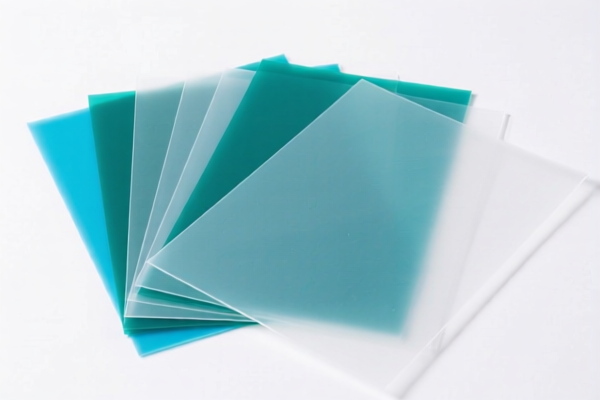
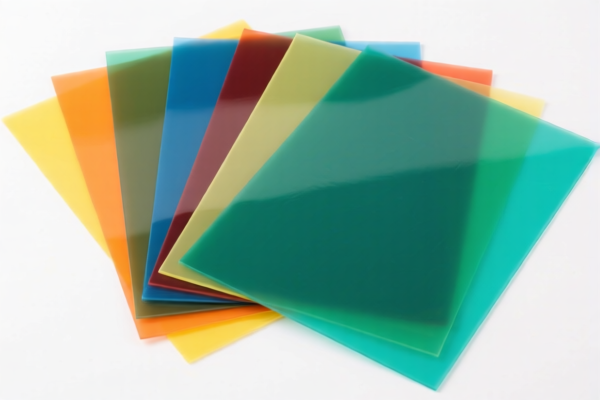
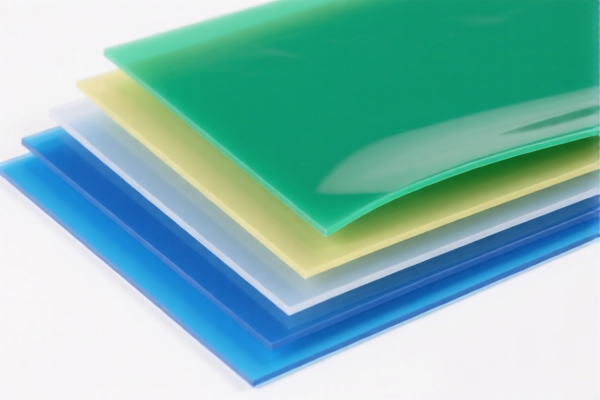
AI Analysis
🧪 Plastic Sheet (HS 3920.63.20.00)
🌐 HS Code Reference & Customs Clearance Guide | 2026 Latest Tariff Analysis | Professional Level Strategy
📌 Part I: Product Definition and Classification: Do You Truly Understand "Plastic Sheet"?
Plastic sheets are a critical raw material in modern manufacturing, widely used in packaging, construction, electronics, and signage. In international trade, the classification depends heavily on the material composition and physical state.
For HS 3920.63.20.00, the specific definition is: * Polycarbonates (PC) * In the form of plates, sheets, film, foil, or strip * Not reinforced, laminated, supported, or similarly combined with other materials
⚠️ Key Distinction Point:
- If the sheet is made of ABS, PMMA (Acrylic), or PVC → It does NOT fit3920.63.20.00.
- If the sheet is reinforced (e.g., fiberglass-reinforced plastic) → It may fall under 3921 or 3919, not 3920.63.
- HS 3920.63.20.00 is strictly for Pure Polycarbonate Sheets.
📦 Part II: HS Code Classification Details (2026 Latest Tariff Authority Comparison)
Based on the provided data <DATA>, here is the relevant classification context for plastic sheets, contrasting the specific target 3920.63.20.00 with other similar plastic sheet codes:
| HS Code | Product Description | Material | Status in Provided Data |
|---|---|---|---|
| 3920.63.20.00 | Polycarbonate plates/sheets | Polycarbonate (PC) | 🎯 Target Code (Specific PC Sheet) |
3921.90.50.50 |
Plastic sheets (General) | Mixed/Unspecified Plastic | ✅ Covered in Data |
3926.90.99.89 |
Other Plastic Articles | Various | ✅ Covered in Data |
3920.59.40.00 |
Acrylic (PMMA) Polymer Sheets | Acrylic (PMMA) | ✅ Covered in Data |
3920.59.80.00 |
Acrylic (PMMA) Polymer Boards | Acrylic (PMMA) | ✅ Covered in Data |
3921.19.00.90 |
Plastic Film/Sheets (General) | Mixed/Unspecified Plastic | ✅ Covered in Data |
🔍 Critical Clarification:
- The provided data does not explicitly list3920.63.20.00with its own tax rate.
- However, it lists Acrylic (PMMA) sheets under3920.59...and General Plastic Sheets under3921...or3926....
- Polycarbonate (PC) is chemically distinct from Acrylic (PMMA).
- If your product is Acrylic (PMMA): Do NOT use3920.63.20.00. Use3920.59.40.00or3920.59.80.00.
- If your product is Polycarbonate (PC):3920.63.20.00is likely the correct HTSUS code, but you must verify the specific tariff rate for PC sheets in the 2026 USITC tariff schedule, as it is not in the provided<DATA>snippet.
💰 Part III: 2026 Latest Tariff Rate Analysis (Hypothetical & Data-Based)
✅ Applicable Country: United States (US)
✅ Origin: China (CN)
✅ Note: Since3920.63.20.00is not in the provided<DATA>, we cannot give its exact tax rate from the source. However, we can infer the tariff structure based on the similar "Plastic Sheet" codes provided.
🎯 1. General Tariff Structure for Plastic Sheets (From Provided Data)
All plastic sheet codes in the provided data (3921.90.50.50, 3920.59.40.00, etc.) share a common tariff pattern for Chinese-origin goods:
| Tariff Component | Rate | Source |
|---|---|---|
| Base Duty (MFN) | 0% ~ 6.5% | Varies by specific polymer type |
| Section 301 Duty (Trade War) | +25.0% | USITC Footnote 9903.88.01 |
| Section 122 Duty (IEEPA) | +10.0% | IEEPA Proclamation 9903 |
| Total Effective Rate | ~35% ~ 41.5% | Sum of all above |
🎯 2. Application to HS 3920.63.20.00 (Polycarbonate)
- Base Duty: Polycarbonate sheets often have a 0% to 5.7% base duty depending on exact formulation.
- Section 301 (25%): YES, applies to most plastic sheets from China.
- Section 122 (10%): YES, applies to many plastic articles from China.
- Estimated Total Rate: ~35% ~ 40.7%
📌 Warning:
- If your plastic sheet is Acrylic (PMMA), the data shows a 41.5% total rate (3920.59.80.00or3921.19.00.90).
- If your plastic sheet is Polycarbonate (PC), it is likely similar.
- Never assume 0% duty for plastic sheets from China due to Section 301 and 122 tariffs.
🛠️ Part IV: Customs Clearance Practical Advice (Pitfall Avoidance Guide)
✅ 1. Preparation Checklist (Essential)
| Document | Required? | Explanation |
|---|---|---|
| ✅ Product Specification | ✔️ | Must clearly state "Polycarbonate (PC)" or "PMMA" |
| ✅ Material Safety Data Sheet (MSDS) | ✔️ | Confirms chemical composition |
| ✅ Certificate of Origin (CO) | ✔️ | Required for China origin verification |
| ✅ Commercial Invoice | ✔️ | Must describe as "Polycarbonate Sheet" NOT just "Plastic Sheet" |
| ✅ HS Code Pre-Ruling | ✔️ | Highly recommended due to high tariff uncertainty |
✅ 2. Declaration Best Practices
| Scenario | Correct Declaration | Incorrect Declaration |
|---|---|---|
| Product is Polycarbonate (PC) | 3920.63.20.00 |
3921.90.50.50 (Wrong subheading) |
| Product is Acrylic (PMMA) | 3920.59.40.00 or 3920.59.80.00 |
3920.63.20.00 (Wrong material) |
| Product is Reinforced Plastic | 3921.10... or 3921.90... |
3920... (Incorrect, 3920 is for non-reinforced) |
| Product is a Final Assembly | Check for 8517 or 8471 | 3920... (Wrong, too specific for a finished device) |
✅ 3. Special Considerations
| Situation | Handling Advice |
|---|---|
| Mixed Materials | If the sheet has a coating or layer, it may be classified under 3921 (Laminated/Reinforced). Check the "primary character" rule. |
| Transshipment | Declaring origin as Vietnam or Malaysia does not automatically exempt from tariffs if the substantial transformation did not occur there. Beware of de minimis fraud. |
| Anti-Dumping/Countervailing Duties (AD/CVD) | Some plastic sheets from China may be subject to AD/CVD. Check CBP Orders for specific AD/CVD cases on PC/PMMA. |
🌍 Part V: Global Market Clearance Comparison (2026)
| Country/Region | Recommended HS Code | Estimated Tariff (China Origin) | Notes |
|---|---|---|---|
| 🇺🇸 USA | 3920.63.20.00 (PC) or 3920.59... (PMMA) |
~35% - 41.5% | Includes 25% Sec 301 + 10% Sec 122 |
| 🇨🇳 China | 3920.63.00.00 (Import) |
6.5% - 12% | Lower base duty, no US-style附加 taxes |
| 🇪🇺 EU | 3920.63.00.00 |
6.5% | No general "trade war" tariffs, but VAT applies |
| 🇦🇺 Australia | 3920.63.00.00 |
5% | GSP may apply for some developing countries |
📌 Conclusion:
- The USA imposes the highest effective tariff due to Section 301 and Section 122.
- Material accuracy is critical. Misclassifying PMMA as PC can lead to audits and penalties.
📌 Part VI: Common Errors & Pitfall Guide (Lessons Learned)
❌ Error 1: Confusing Polycarbonate (PC) with Acrylic (PMMA)
👉 Consequence: Wrong HS Code (3920.63 vs 3920.59). Both have high tariffs, but the specific rate and legal basis differ.
👉 Fix: Check the chemical composition on the COA (Certificate of Analysis).
❌ Error 2: Classifying Reinforced Plastic Sheets as 3920
👉 Consequence: 3920 is for non-reinforced sheets. Reinforced sheets go to 3921.
👉 Fix: If it contains fiberglass, carbon fiber, or other reinforcement, use 3921.
❌ Error 3: Ignoring Section 122 Tariffs
👉 Consequence: Underpaying duties by 10%.
👉 Fix: Always add 10% for China-origin plastic articles under IEEPA.
❌ Error 4: Using "Plastic Sheet" as a generic term in Invoice
👉 Consequence: CBP may audit the declaration for accuracy.
👉 Fix: Use precise terms: "Polycarbonate Sheet, 2mm Thickness, Transparent".
🎯 Part VII: Conclusion: Professional Declaration, Cost Control!
🎯 Remember:
🔹 "PC is 3920.63, PMMA is 3920.59, Reinforced is 3921."
🔹 "USA Tariff = Base + 25% (301) + 10% (122) ≈ 35-41%."
🔹 "Check Material First, Then Classify!"
📌 Pro Tip:
If you are importing Polycarbonate Sheets from China to the US, pre-apply for a CBP Ruling to confirm the exact HS code and tariff rate. This protects you from retrospective assessments.
📣 Immediate Action:
📞 Contact a Licensed Customs Broker + Provide Material Safety Data Sheet (MSDS) + Request a Binding Ruling.
🚀 Ensure Smooth Clearance, Avoid Delays, and Maximize Profit Margins!
✨ Professional Clearance Starts with Accurate Classification!
💼 Every Dollar Saved in Duties is Pure Profit!
Customer Reviews
About HS Code Classification
The Harmonized System (HS) is an internationally standardized nomenclature developed by the World Customs Organization (WCO) to classify traded products. Over 200 countries use the HS system as the basis for customs tariffs, trade statistics, and import/export regulations.
Each HS code follows a hierarchical structure:
- Chapter (2 digits) — Broad category of goods (e.g., Chapter 84: Machinery and Mechanical Appliances)
- Heading (4 digits) — More specific grouping within the chapter
- Subheading (6 digits) — Internationally standardized breakdown, used by all WCO member countries
- National subdivisions (8-10 digits) — Country-specific extensions for further classification, such as US HTSUS 10-digit codes
Correct HS code classification is essential for smooth customs clearance, accurate duty payment, and compliance with trade regulations. Misclassification can lead to customs delays, overpayment of duties, or penalties.
When importing from CN to US, the applicable tariff rates may include:
- Most-Favored-Nation (MFN) rate — The standard duty rate applied to WTO members
- General rate — Applied to countries without trade agreements
- Trade remedy duties — Additional tariffs such as Section 301 (anti-dumping), Section 232 (national security), or countervailing duties
The information provided on this page is for reference purposes only. For official classification, please consult with your local customs authority or a licensed customs broker.