plastic sheet stamping
CN → US| HS Code | Tariff Rate | Origin | Destination | Doc |
|---|---|---|---|---|
| 3921905050 | 39.8% | CN | US | Official Doc |
| 3921904010 | 39.2% | CN | US | Official Doc |
| 3920992000 | 39.2% | CN | US | Official Doc |
| 3920200055 | 39.2% | CN | US | Official Doc |
Product Images
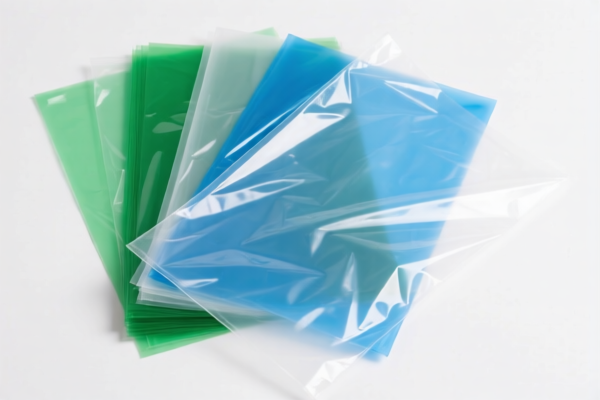

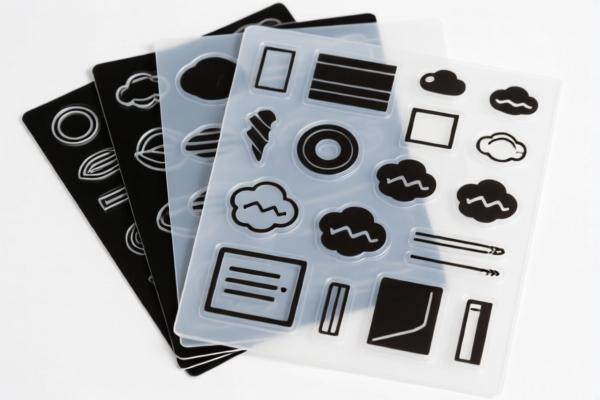
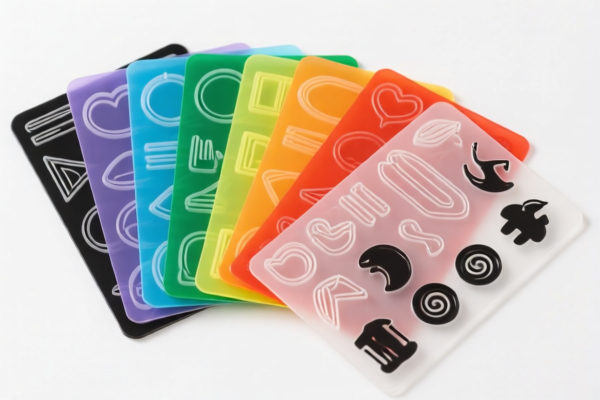
AI Analysis
📦 Plastic Sheet Stamping (冲压塑料片材)
🌐 HS Code Reference & Customs Clearance Guide | 2026 Latest Tariff Analysis | Professional Clearance Strategy
📌 I. Product Definition & Classification: Do You Really Understand "Plastic Sheet Stamping"?
"Plastic Sheet Stamping" refers to plastic materials processed into sheet forms, often involving punching, cutting, or forming operations. In international trade, these products are classified under Chapter 39 (Plastics and Articles Thereof), specifically focusing on plates, sheets, films, and similar flat shapes.
Key Distinction Criteria:
- Form: Flat sheets, plates, or films (not tubes, rods, or complex 3D molded parts);
- Material: Pure plastic or plastic-based composites;
- Processing: May include stamping/punching but must remain within the "sheet/plate/film" category.
⚠️ Critical Classification Point:
- If the product is a raw or semi-finished plastic sheet (even if stamped/cut), it falls under 3920 or 3921;
- If it is a finished component with specific functional use (e.g., electrical insulator, machine part), it may fall under different chapters;
- In this guide, we focus on plastic sheets in raw/semi-finished sheet form, as per the provided data.
📦 II. HS Code Classification Details (2026 Latest Tariff Authority Comparison)
| HS Code | Product Description | Application Scenario | Tax Detail |
|---|---|---|---|
3921.90.50.50 |
Plastic sheets (stamped), material: plastic, form: sheet, reasonable classification under other categories | General-purpose stamped plastic sheets, non-specialized | Base: 4.8%, Section 301: 25%, Section 122: 10% |
3921.90.40.10 |
Plastic sheets (stamped), material: plastic, form: sheet, fits Chapter 39 description of plates/sheets/films | Standard plastic sheets under Chapter 39 | Base: 4.2%, Section 301: 25%, Section 122: 10% |
3920.99.20.00 |
Plastic sheets (stamped), material: plastic, form: sheet, belongs to other plastic categories of plates/sheets/films | Other plastic plates/sheets/films not elsewhere specified | Base: 4.2%, Section 301: 25%, Section 122: 10% |
3920.20.00.55 |
Plastic sheets (stamped), form: sheet, material: plastic, belongs to other categories of non-reinforced types | Non-reinforced plastic sheets under Chapter 39 | Base: 4.2%, Section 301: 25%, Section 122: 10% |
🔍 Key Reminder:
- All four HS codes refer to plastic sheets that have undergone stamping/punching but remain in sheet/plate/film form;
- Do not misclassify as finished plastic parts (e.g., gears, casings) which may fall under different chapters;
- Stamping does not change the fundamental classification if the product remains a sheet/plate/film.
💰 III. 2026 Latest Tariff Rate Breakdown (Including Additional Taxes & Policy Surcharges)
✅ Applicable Country: United States (US)
✅ Origin: China (CN)
✅ Effective Date: From November 10, 2025 (including subsequent imports)
🎯 1. 3921.90.50.50 —— Plastic Sheets (Stamped), General Category
| Item | Content |
|---|---|
| Base Tariff Rate | 4.8% (ad valorem) |
| Section 301 Additional Tariff | +25% (from USITC Footnote 9903.88.01) |
| Section 122 Tariff | +10% (targeting Chinese products) |
| Total Tariff Rate | 39.8% |
| Tax Calculation | CIF Value × 39.8% |
| Eligible for De Minimis Exemption | ❌ No (deny_de_minimis) |
| Legal Basis Path | Section 301: 9903.01.25 → Section 122: 9903.01.24 → USITC: 3921.90.50.50 → FOOTNOTE: 9903.88.01 |
📌 Explanation:
- The 25% Section 301 tariff is imposed under the US Trade Act Section 301 against China;
- The 10% Section 122 tariff is a specific surcharge on certain Chinese plastic products;
- Total 39.8% is a high tariff rate, requiring advance planning!
🎯 2. 3921.90.40.10 —— Plastic Sheets (Stamped), Chapter 39 Standard Category
| Item | Content |
|---|---|
| Base Tariff Rate | 4.2% |
| Section 301 Additional Tariff | +25% |
| Section 122 Tariff | +10% |
| Total Tariff Rate | 39.2% |
| Tax Calculation | CIF × 39.2% |
| Eligible for De Minimis Exemption | ❌ No |
| Legal Basis Path | Section 301: 9903.01.25 → Section 122: 9903.01.24 → USITC: 3921.90.40.10 → FOOTNOTE: 9903.88.01 |
📌 Note:
- Same as above, total tariff is 39.2%;
- Applies to standard plastic sheets under Chapter 39, regardless of specific plastic type (unless specified otherwise).
🎯 3. 3920.99.20.00 —— Plastic Sheets (Stamped), Other Plastic Categories
| Item | Content |
|---|---|
| Base Tariff Rate | 4.2% |
| Section 301 Additional Tariff | +25% |
| Section 122 Tariff | +10% |
| Total Tariff Rate | 39.2% |
| Tax Calculation | CIF × 39.2% |
| Eligible for De Minimis Exemption | ❌ No |
| Legal Basis Path | Section 301: 9903.01.25 → Section 122: 9903.01.24 → USITC: 3920.99.20.00 → FOOTNOTE: 9903.88.01 |
📌 Note:
- Total tariff is 39.2%;
- Applicable to "other" plastic sheets not specified in more detailed subheadings.
🎯 4. 3920.20.00.55 —— Plastic Sheets (Stamped), Non-Reinforced Category
| Item | Content |
|---|---|
| Base Tariff Rate | 4.2% |
| Section 301 Additional Tariff | +25% |
| Section 122 Tariff | +10% |
| Total Tariff Rate | 39.2% |
| Tax Calculation | CIF × 39.2% |
| Eligible for De Minimis Exemption | ❌ No |
| Legal Basis Path | Section 301: 9903.01.25 → Section 122: 9903.01.24 → USITC: 3920.20.00.55 → FOOTNOTE: 9903.88.01 |
📌 Note:
- Total tariff is 39.2%;
- Specifically for non-reinforced plastic sheets.
🛠️ IV. Customs Clearance Practical Advice (Real-World Pitfall Avoidance Guide)
✅ 1. Required Documentation Checklist (None Can Be Omitted)
| Document | Required | Explanation |
|---|---|---|
| ✅ Product Specification Sheet | ✔️ | Includes dimensions, thickness, material type, stamping process details |
| ✅ Material Safety Data Sheet (MSDS) | ✔️ | For plastic material safety compliance |
| ✅ Product Photos (with labels) | ✔️ | Clear display of model, brand, dimensions, stamping pattern |
| ✅ Third-Party Test Report | ✔️ | RoHS, REACH, FDA (if food-contact), UL (if applicable) |
| ✅ Commercial Invoice | ✔️ | Clearly state "Plastic Sheet, Stamped, for Industrial/Commercial Use" |
| ✅ Certificate of Origin (CO) | ✔️ | If not Chinese origin, may qualify for preferential rates |
| ✅ Packing List | ✔️ | Detail sheet dimensions, weight, packaging method |
✅ 2. Declaration Tips (Key Mnemonic)
🔥 “Sheet Form, Stamp OK, Chapter 39, Tax High!”
| Scenario | Correct Declaration | Wrong Practice |
|---|---|---|
| Stamped plastic sheets (raw/semi-finished) | 3920.xxxx.xx.xx or 3921.xxxx.xx.xx |
Misdeclare as "finished parts" → different chapter |
| Plastic sheets with specific functions (e.g., electrical) | Still 3920/3921 if sheet form |
Misdeclare as "electrical equipment" → higher tax |
| Reinforced vs. Non-Reinforced | Specify in description | No specification → potential audit |
| Stamped vs. Unstamped | Declare "Stamped" if applicable | No declaration → customs may reclassify |
✅ 3. Special Case Handling
| Scenario | Handling Advice |
|---|---|
| OEM Custom Stamped Sheets | Provide customer order + design drawings to avoid "non-standard" classification |
| Food-Contact Plastic Sheets | Declare "FDA Compliant" + provide test reports to avoid rejection |
| Electrical Insulation Sheets | Declare "Electrical Application" + provide UL/IEC certificates |
| Sheets for Automotive Parts | Declare "Automotive Industry Use" + provide IATF 16949 certification if available |
🌍 V. Global Market Customs Clearance Comparison (2026 Latest)
| Country/Region | Recommended HS Code | Tariff | Certification Requirements | Remarks |
|---|---|---|---|---|
| 🇺🇸 United States | 3920/3921 series |
39.2%–39.8% (Chinese origin) | RoHS, REACH, FDA (if applicable) | High tariffs due to Section 301 & 122 |
| 🇨🇳 China | 3920/3921 series |
5%–6% | CCC (if applicable) | No additional surcharges |
| 🇪🇺 European Union | 3920/3921 series |
6.5% | CE, REACH, RoHS | No additional surcharges |
| 🇦🇺 Australia | 3920/3921 series |
5% | RCM (if applicable) | No additional surcharges |
| 🇯🇵 Japan | 3920/3921 series |
5% | PSE (if applicable) | No additional surcharges |
📌 Conclusion:
- The US imposes the highest tariffs on Chinese plastic sheets due to Section 301 and Section 122;
- China, EU, Australia, and Japan have significantly lower tariffs;
- Consider supply chain diversification (e.g., Vietnam, Thailand) for US-bound goods.
📌 VI. Common Mistakes & Pitfall Avoidance (Blood & Tears Lessons)
❌ Mistake 1: Declaring stamped plastic sheets as "finished plastic parts"
👉 Consequence: Misclassification → Higher tariffs + penalties!
❌ Mistake 2: Failing to specify "Stamped" in the description
👉 Consequence: Customs may reclassify → Delay or additional duties!
❌ Mistake 3: Not providing material safety data (MSDS)
👉 Consequence: Customs holds shipment → Storage fees + delays!
❌ Mistake 4: Using vague terms like "Plastic Product"
👉 Consequence: Customs demands clarification → Clearance delays!
✅ Correct Practice:
“Plastic Sheet, Stamped, PP Material, 0.5mm Thick, Industrial Use, RoHS Compliant, Model XYZ”
🎯 VII. Conclusion: Professional Declaration Saves Time, Effort & Money!
🎯 Remember the Mnemonic:
🔹 “Sheet Form, Stamp OK, Chapter 39, Tax High!”
🔹 “HS Code determines fate, 39% tax difference, one step wrong, thousands in extra cost!”
📌 Pro Tip:
If your plastic sheets are originating from Vietnam, Mexico, Thailand, or Malaysia, you may qualify for IEEPA exemptions, reducing tariffs to 0%–5%;
It is highly recommended to apply for an Advance Ruling to avoid clearance risks.
📣 Immediate Action Required:
📞 Contact professional customs brokers + Provide product images + Apply for HS Code Advance Ruling
🚀 Ensure your plastic sheets clear customs smoothly, export efficiently, and maximize profits!
✨ Professional Clearance Starts with Accurate Classification!
💼 Every cent of your cost deserves precise calculation!
Customer Reviews
About HS Code Classification
The Harmonized System (HS) is an internationally standardized nomenclature developed by the World Customs Organization (WCO) to classify traded products. Over 200 countries use the HS system as the basis for customs tariffs, trade statistics, and import/export regulations.
Each HS code follows a hierarchical structure:
- Chapter (2 digits) — Broad category of goods (e.g., Chapter 84: Machinery and Mechanical Appliances)
- Heading (4 digits) — More specific grouping within the chapter
- Subheading (6 digits) — Internationally standardized breakdown, used by all WCO member countries
- National subdivisions (8-10 digits) — Country-specific extensions for further classification, such as US HTSUS 10-digit codes
Correct HS code classification is essential for smooth customs clearance, accurate duty payment, and compliance with trade regulations. Misclassification can lead to customs delays, overpayment of duties, or penalties.
When importing from CN to US, the applicable tariff rates may include:
- Most-Favored-Nation (MFN) rate — The standard duty rate applied to WTO members
- General rate — Applied to countries without trade agreements
- Trade remedy duties — Additional tariffs such as Section 301 (anti-dumping), Section 232 (national security), or countervailing duties
The information provided on this page is for reference purposes only. For official classification, please consult with your local customs authority or a licensed customs broker.