plastic sheets for external decoration
CN → US| HS Code | Tariff Rate | Origin | Destination | Doc |
|---|---|---|---|---|
| 3920995000 | 40.8% | CN | US | Official Doc |
| 3920992000 | 39.2% | CN | US | Official Doc |
| 3926909989 | 22.8% | CN | US | Official Doc |
| 4410110030 | 35.0% | CN | US | Official Doc |
| 4410190030 | 35.0% | CN | US | Official Doc |
Product Images
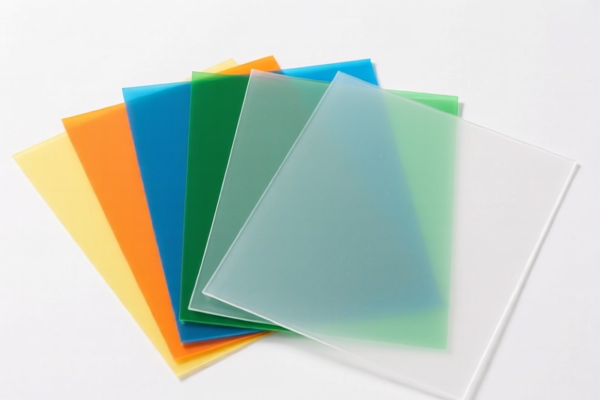
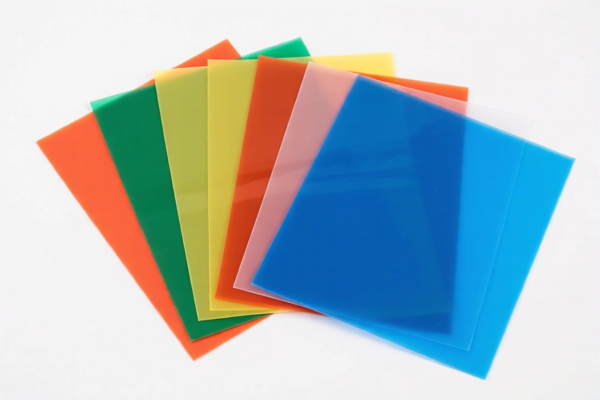
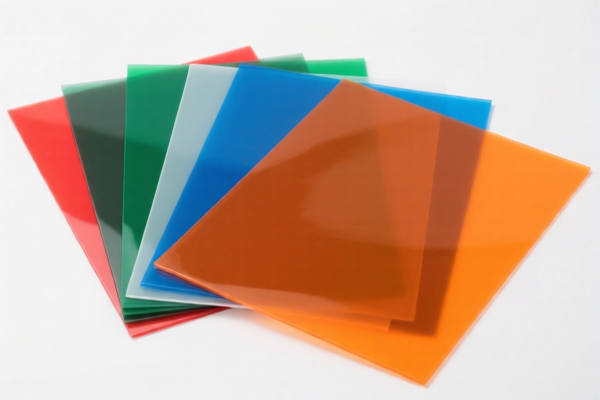
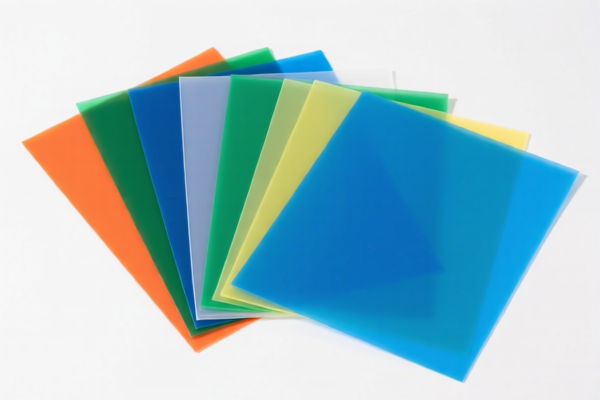
AI Analysis
🎨 Plastic Sheets for External Decoration
🌐 HS Code Reference & Customs Clearance Guide | 2026 Latest Tariff Analysis | Professional-Level Compliance Strategy 📌 I. Product Definition & Classification: What Exactly Are "Plastic Sheets for External Decoration"?
"Plastic sheets for external decoration" is a broad commercial term. In international trade and customs valuation, it refers to non-structural plastic materials used primarily for aesthetic enhancement of buildings, facades, or fixtures. However, the specific HS Code depends entirely on the material composition, structure (cellular vs. non-cellular), and binding method.
Key Distinction: * Decorative Laminate (Surface Covering): If the plastic sheet is a thin layer glued to a wood/board substrate, it may fall under wood products (e.g., Particle Board with decorative laminates). * Standalone Plastic Film/Sheet: If it is a standalone sheet made of plastic (PVC, PE, PP, etc.) used for cladding or decoration, it falls under Chapter 39 (Plastics).
⚠️ Critical Classification Point: - If the product is non-cellular (solid density) and not reinforced → Look at 3920. - If the product is cellular (foam core) or reinforced → Look at 3919 or 3916. - If the product is a laminate on wood → Look at 4410. - If it is a final article (e.g., pre-cut sign, finished panel) → Look at 3926.
📦 II. HS Code Classification Details (Based on Provided Data)
The following HS Codes are derived strictly from the provided <DATA> set. Each code corresponds to a specific interpretation of "plastic sheets for external decoration."
| HS Code | Product Description | Application Scenario | Structural Type | Tax Rate (Total) |
|---|---|---|---|---|
| 4410.11.00.30 | Particle Board Surface-covered with decorative laminates of plastic | Wood-based boards with plastic decorative surface | Wood Core + Plastic Laminate | 25.0% |
| 4410.19.00.30 | Other Particle Board Surface-covered with decorative laminates of plastic | Other wood boards (OSB/Waferboard) with plastic surface | Wood Core + Plastic Laminate | 25.0% |
| 3926.90.99.89 | Other articles of plastics... Other | Decorative plastic components, trims, or non-sheet items | Finished Article | 12.8% |
| 3920.99.50.00 | Other plates, sheets, film... of other plastics | Solid plastic sheets/films (e.g., PVC, Acrylic) for decoration | Non-cellular, Solid | 0.0% |
| 3920.99.20.00 | Film, strip, sheets... flexible... of other plastics | Flexible plastic films/strips for decorative wrapping or cladding | Non-cellular, Flexible | 29.2% |
🔍 Important Note: - 4410.xxxxxx.30: These are wood products with a plastic surface. If your "plastic sheet" is actually a thin veneer glued to MDF/Particle Board, use this. - 3920.xxxxxx.00: These are pure plastic sheets. If the sheet is 100% plastic (no wood core), use this. - 3926.90.99.89: This is a "catch-all" for plastic articles that don't fit other specific headings (e.g., decorative plastic trim pieces, not raw sheets).
💰 III. 2026 Latest Tariff Rate Breakdown
✅ Applicable Country: United States (US)
✅ Origin: China (CN)
✅ Effective Date: Current rates apply as per provided data.
🎯 1. 4410.11.00.30 & 4410.19.00.30
Product: Particle Board/OSB with Decorative Plastic Laminate
| Item | Detail |
|---|---|
| Product Description | Particle board, oriented strand board (OSB) and similar board of wood or other ligneous materials, whether or not agglomerated with resins or other organic binding substances: Of wood: [Specific Type] Surface-covered with decorative laminates of plastic |
| Base Tariff | 0.0% |
| Additional Tariff | 25.0% |
| Total Tariff | 25.0% |
| Tax Detail | Base: 0.0%, Additional: 25.0% |
📌 Explanation:
- These items are classified as Wood Products (Chapter 44) because the primary material is wood/board, even though the surface is plastic. - The 25% additional tariff is likely due to Section 301 or similar trade measures on Chinese wood/composite products.
🎯 2. 3926.90.99.89
Product: Other Articles of Plastics (Decorative Components)
| Item | Detail |
|---|---|
| Product Description | Other plates, sheets, film, foil and strip... (Note: Data shows this code under "Other articles of plastics...") |
| Base Tariff | 5.3% |
| Additional Tariff | 7.5% |
| Total Tariff | 12.8% |
| Tax Detail | Base: 5.3%, Additional: 7.5% |
📌 Explanation:
- This code is used if the product is a finished plastic article (e.g., a decorative panel, trim, or molding) rather than a raw sheet. - Warning: Ensure the product is not a simple sheet. If it is a raw sheet, this code may be incorrect, leading to potential audits.
🎯 3. 3920.99.50.00
Product: Other Non-Cellular Plastic Plates, Sheets, Film (Solid)
| Item | Detail |
|---|---|
| Product Description | Other plates, sheets, film, foil and strip, of plastics, noncellular and not reinforced, laminated, supported or similarly combined with other materials: Of other plastics: Of other plastics: Other |
| Base Tariff | 0.0% |
| Additional Tariff | 0.0% |
| Total Tariff | 0.0% |
| Tax Detail | Base: 0.0%, Additional: 0.0% |
📌 Explanation:
- This is the most favorable code if the product is a solid, non-cellular, non-reinforced plastic sheet. - Crucial Condition: The sheet must not be cellular (foam) and not reinforced (e.g., with fiberglass). If it is, a different code applies.
🎯 4. 3920.99.20.00
Product: Flexible Plastic Film, Strip, Sheets
| Item | Detail |
|---|---|
| Product Description | Other plates, sheets, film, foil and strip, of plastics, noncellular and not reinforced... Film, strip and sheets, all the foregoing which are flexible: Other |
| Base Tariff | 4.2% |
| Additional Tariff | 25.0% |
| Total Tariff | 29.2% |
| Tax Detail | Base: 4.2%, Additional: 25.0% |
📌 Explanation:
- Use this if the plastic sheet is flexible (e.g., thin PVC film, vinyl wrap). - The high additional tariff (25%) makes this less attractive for cost-sensitive imports.
🛠️ IV. Customs Clearance Practical Advice (Real-World Pitfall Guide)
✅ 1. Preparation Checklist (Required Documents)
| Document | Required? | Purpose |
|---|---|---|
| ✅ Product Specification Sheet | ✔️ | Must state: Material (e.g., PVC, PE), Thickness, Cellular/Non-Cellular, Reinforced/Non-Reinforced. |
| ✅ Photos (Front/Back/Side) | ✔️ | To prove whether it is a solid sheet or has a wood core. |
| ✅ Composition Statement | ✔️ | Declare % of plastic vs. wood (if composite). |
| ✅ Commercial Invoice | ✔️ | Clearly describe as "Plastic Sheet for Decoration" or "Decorative Laminate Board" depending on HS Code. |
| ✅ Packing List | ✔️ | Weight and dimensions to verify density (cellular vs. solid). |
✅ 2. Declaration Strategy (Key Formulas)
🔥 "Material Dictates Code, Structure Defines Tax!"
| Scenario | Correct HS Code | Declaration Name | Risk |
|---|---|---|---|
| Solid Plastic Sheet (No foam, no wood) | 3920.99.50.00 |
"Solid Non-Cellular Plastic Sheet for Decoration" | Low (0% Tax) |
| Flexible Plastic Film/Wrap | 3920.99.20.00 |
"Flexible Plastic Film for Decorative Cladding" | High (29.2% Tax) |
| Wood Board with Plastic Surface | 4410.11.00.30 / 4410.19.00.30 |
"Particle Board with Decorative Plastic Laminate" | Medium (25% Tax) |
| Finished Plastic Decorative Piece | 3926.90.99.89 |
"Decorative Plastic Trim/Article" | Low (12.8% Tax) |
⚠️ Common Mistake:
Calling a "Wood Board with Plastic Surface" a "Plastic Sheet" → Misclassification Risk!
If you declare3920.99.50.00(0%) but it's actually4410.11.00.30(25%), customs will assess back taxes + penalties.
✅ 3. Special Considerations
| Situation | Handling Advice |
|---|---|
| Is it Cellular (Foam)? | If yes, 3920 codes do not apply. You need a different HS code (not in current data). Check if it's 3916 or 3919. |
| Is it Reinforced (Fiberglass)? | If yes, 3920 codes do not apply. Look for "Reinforced" codes in Chapter 39. |
| Is it a Composite (Wood+Plastic)? | Use 4410 codes. The wood substrate determines the chapter. |
| Thickness Matters | Very thin films (<0.1mm) may be classified differently. Ensure "Sheet" vs. "Film" distinction is accurate. |
🌍 V. Global Market Comparison (Quick Reference)
| Market | Recommended HS Code | Est. Tariff | Note |
|---|---|---|---|
| 🇺🇸 USA | 3920.99.50.00 |
0.0% | Best for solid sheets. |
| 🇺🇸 USA | 3920.99.20.00 |
29.2% | High tax for flexible films. |
| 🇺🇸 USA | 4410.11.00.30 |
25.0% | High tax for wood-based decor boards. |
| 🇪🇺 EU | Varies | 0-6% | Check EU TARIC for specific plastic sheets. |
| 🇨🇳 China | Varies | 0-5% | Import duties may differ. |
📌 Conclusion:
- USA offers 0% tariff for solid, non-cellular, non-reinforced plastic sheets (3920.99.50.00).
- Flexible films and wood-composite boards face 25-29.2% tariffs.
📌 VI. Common Errors & Pitfalls (Lessons Learned)
❌ Mistake 1: Declaring a wood-based decorative board as a plastic sheet.
👉 Consequence: Classify as 3920 (0%) but customs reclassifies to 4410 (25%). Back taxes + penalties!
❌ Mistake 2: Declaring a cellular (foam) sheet as a non-cellular sheet.
👉 Consequence: 3920 codes exclude cellular plastics. Customs will reject declaration. Delay/Shipment Return!
❌ Mistake 3: Ignoring reinforcement.
👉 Consequence: If reinforced with fiberglass, it’s not 3920.99. Misclassification Risk!
✅ Correct Practice:
“Solid, Non-Cellular, Non-Reinforced Plastic Sheet, PVC, 2mm, for Exterior Decoration”
→ Use3920.99.50.00→ 0% Tax“Particle Board, MDF, Surface with Decorative Melamine/Plastic Laminate”
→ Use4410.11.00.30→ 25% Tax
🎯 VII. Conclusion: Precise Classification Saves Money!
🎯 Remember the Formula:
🔹 Solid Plastic = 0% (
3920.99.50.00)
🔹 Flexible Film = 29.2% (3920.99.20.00)
🔹 Wood+Plastic Laminate = 25% (4410.11.00.30)
🔹 Finished Plastic Part = 12.8% (3926.90.99.89)
📌 Pro Tip:
If you are importing solid plastic sheets for decoration, ensure the declaration explicitly states "Non-Cellular, Non-Reinforced" to justify the 0% tariff. If there is any doubt, request a Customs Ruling before shipment.
📣 Immediate Action:
📞 Provide product specs (Material, Structure, Thickness) to your customs broker.
🚀 Choose the right HS Code to minimize tariff costs!
✨ Accurate Classification is the Key to Smooth Customs Clearance!
💼 Save Costs, Avoid Delays, Ensure Compliance!
Customer Reviews
About HS Code Classification
The Harmonized System (HS) is an internationally standardized nomenclature developed by the World Customs Organization (WCO) to classify traded products. Over 200 countries use the HS system as the basis for customs tariffs, trade statistics, and import/export regulations.
Each HS code follows a hierarchical structure:
- Chapter (2 digits) — Broad category of goods (e.g., Chapter 84: Machinery and Mechanical Appliances)
- Heading (4 digits) — More specific grouping within the chapter
- Subheading (6 digits) — Internationally standardized breakdown, used by all WCO member countries
- National subdivisions (8-10 digits) — Country-specific extensions for further classification, such as US HTSUS 10-digit codes
Correct HS code classification is essential for smooth customs clearance, accurate duty payment, and compliance with trade regulations. Misclassification can lead to customs delays, overpayment of duties, or penalties.
When importing from CN to US, the applicable tariff rates may include:
- Most-Favored-Nation (MFN) rate — The standard duty rate applied to WTO members
- General rate — Applied to countries without trade agreements
- Trade remedy duties — Additional tariffs such as Section 301 (anti-dumping), Section 232 (national security), or countervailing duties
The information provided on this page is for reference purposes only. For official classification, please consult with your local customs authority or a licensed customs broker.