plastic shell document storage case
CN → US| HS Code | Tariff Rate | Origin | Destination | Doc |
|---|---|---|---|---|
| 3924104000 | 13.4% | CN | US | Official Doc |
| 3926901000 | 20.9% | CN | US | Official Doc |
| 3924905650 | 20.9% | CN | US | Official Doc |
| 3923109000 | 38.0% | CN | US | Official Doc |
| 3926909989 | 22.8% | CN | US | Official Doc |
Product Images
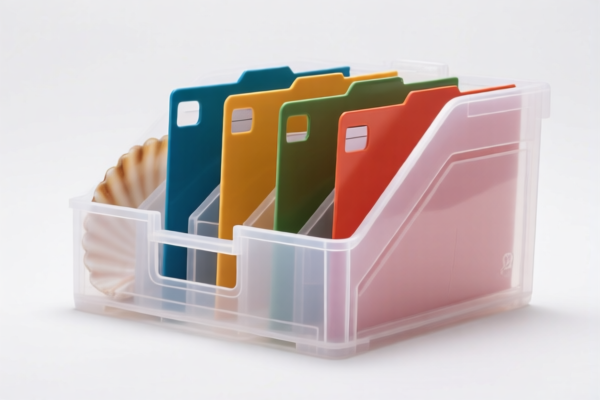
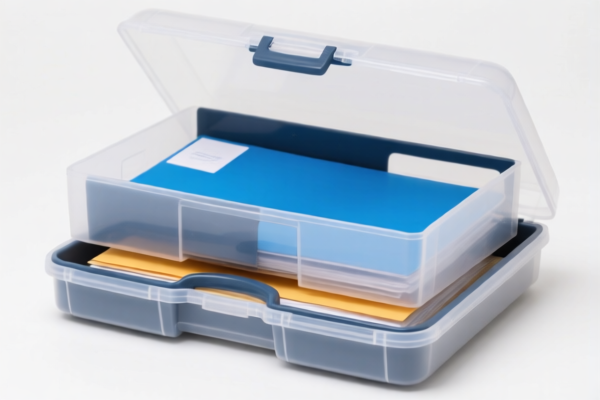
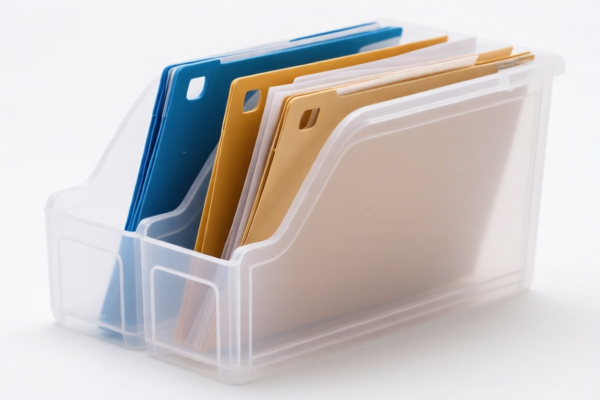
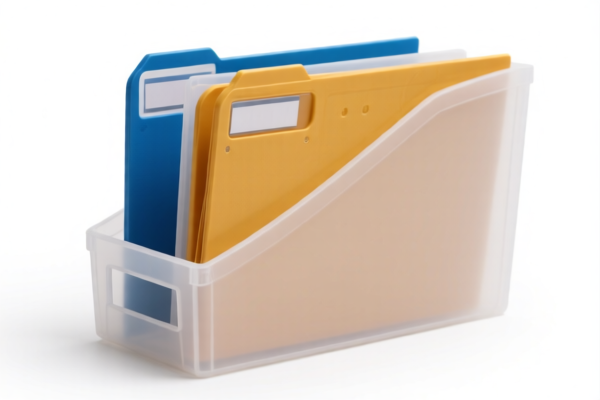
AI Analysis
📦 Plastic Shell Document Storage Case (Plastic Storage Boxes)
🌐 HS Code Reference & Customs Clearance Guide | 2026 Latest Tariff Analysis | Professional-Level Strategy
📌 I. Product Definition: What is a "Plastic Shell Document Storage Case"?
A "Plastic Shell Document Storage Case" typically refers to rigid or semi-rigid plastic containers used for organizing, storing, or transporting documents, files, or general household items. In international trade, the classification hinges on two critical factors: 1. Function: Is it purely for storage/organization (Household Article)? 2. Design: Is it designed for packaging/transportation (Packaging Article)?
⚠️ Key Distinction:
- If it is a decorative or organizational unit intended for long-term home/office use → Classified as Household Plastic Articles (3924 or 3926).
- If it is a rigid container intended for shipping, logistics, or single-use packaging → Classified as Plastic Packaging (3923).
📊 II. HS Code Classification Matrix (2026 Latest Tariff Mapping)
Based on the provided data, here are the precise mappings for "Plastic Shell Document Storage Cases" based on their specific utility and design:
| HS Code | Product Description | Applicability | Tax Rate (Total) | Key Tax Components |
|---|---|---|---|---|
3924.10.40.00 |
Plastic material, household storage boxes | Primary Choice: Rigid organizers, file boxes, home storage bins | 13.4% | Base: 3.4% + Section 301: 0% + 122 Clause: 10% |
3926.90.10.00 |
Plastic material, storage containers/barrels (extensions) | Alternative: Bulkier plastic containers, tub-like organizers | 20.9% | Base: 3.4% + Section 301: 7.5% + 122 Clause: 10% |
3924.90.56.50 |
Plastic material, other household articles | Fallback: Non-specific household plastic items not listed elsewhere | 20.9% | Base: 3.4% + Section 301: 7.5% + 122 Clause: 10% |
3923.10.90.00 |
Plastic material, boxes for packaging/transport | High Risk: If declared as "shipping containers" or "packaging" | 38.0% | Base: 3.0% + Section 301: 25.0% + 122 Clause: 10% |
3926.90.99.89 |
Plastic material, other unspecified plastic articles | Least Preferred: Catch-all for miscellaneous plastics | 22.8% | Base: 5.3% + Section 301: 7.5% + 122 Clause: 10% |
🔍 Critical Insight:
- Do NOT misclassify a household storage box as "Packaging" (3923). While physically similar, the intent of use determines the code. Misclassification here triggers a massive tax jump (from ~13-21% to 38%). - The 122 Clause Tariff (10%) applies uniformly to all these codes for products originating from China, representing a baseline penalty on top of Base and Section 301 duties.
💰 III. 2026 Detailed Tariff Breakdown (USA Market)
✅ Applicable Country: United States (US)
✅ Origin: China (CN)
✅ Effective Date: Current 2026 Tariff Structure
🎯 1. The "Sweet Spot": 3924.10.40.00 (Household Storage Boxes)
This is the most advantageous code for standard document organizers.
| Item | Detail |
|---|---|
| Base Duty | 3.4% (General Ad Valorem) |
| Section 301 Duty | 0.0% (Specific exemption for this subheading) |
| Section 122 Clause | 10.0% (Additional duty on Chinese plastic articles) |
| Total Landed Tax | 13.4% |
| Calculation | CIF Value × 13.4% |
| De Minimis Eligibility | ⚠️ Check Carefully: Small parcels may qualify, but bulk shipments do not. |
| Legal Path | HTSUS:3924.10.40 → Section 122 Note |
📌 Why this is best:
Despite being plastic, this specific household category often escapes the heavier Section 301 (7.5%-25%) tariffs that apply to other plastics. The total cost is significantly lower than other categories.
🎯 2. The "Middle Ground": 3926.90.10.00 / 3926.90.99.89 (Other Plastic Articles)
| Item | 3926.90.10.00 (Container Extensions) |
3926.90.99.89 (Other Unspecified) |
|---|---|---|
| Base Duty | 3.4% | 5.3% |
| Section 301 | +7.5% | +7.5% |
| Section 122 | +10.0% | +10.0% |
| Total Tax | 20.9% | 22.8% |
📌 Explanation:
- These codes incur the standard 7.5% Section 301 tariff on top of the base rate.
- Use this if the item does not fit the strict definition of "Household Storage Box" (e.g., if it's a specialized industrial plastic container).
🎯 3. The "Danger Zone": 3923.10.90.00 (Plastic Packaging)
| Item | Detail |
|---|---|
| Base Duty | 3.0% |
| Section 301 | +25.0% (High penalty tariff) |
| Section 122 | +10.0% |
| Total Tax | 38.0% |
🚨 WARNING:
- If you declare a storage box as "Packaging" or "Shipping Container," you pay 38%.
- This is nearly 3x the tax of3924.10.40.00.
- Only use this code if the item is strictly a disposable or transport-only crate with no long-term consumer use.
🛠️ IV. Customs Clearance Practical Advice (Avoid Pitfalls)
✅ 1. Documentation Checklist (Mandatory)
| Document | Requirement | Reason |
|---|---|---|
| Product Photos | ✔️ Clear images of the box, including interior and exterior | To prove it is a "storage unit," not a "shipping crate" |
| Commercial Invoice | ✔️ Explicitly state: "Plastic Household Storage Box" | Avoid vague terms like "Plastic Box" |
| Materials Spec | ✔️ Specify Plastic Type (PP, PE, ABS, etc.) | Determines HS code accuracy within 3924/3926 |
| Usage Declaration | ✔️ "Intended for household office organization" | Supports classification under 3924 |
| Origin Certificate | ✔️ Proof of Origin (China) | Required for accurate 122 Clause application |
✅ 2. Naming & Description Tips
🔥 "Name Precisely, Pay Less!"
| ❌ Bad Description | ✅ Good Description | Expected HS Code |
|---|---|---|
| "Plastic Box" | "Plastic Household Document Organizer" | 3924.10.40.00 |
| "Shipping Container" | "Plastic Storage Bin for Home Use" | 3924.10.40.00 |
| "Plastic Packaging" | "Reusable Plastic File Storage Case" | 3924.10.40.00 |
| "Industrial Barrel" | "Plastic Storage Container (Household Grade)" | 3926.90.10.00 |
✅ 3. Strategic Classification Advice
- Prioritize
3924.10.40.00: For standard document folders, accordion files, or desktop organizers, this is the gold standard. It avoids the 7.5% Section 301 surcharge. - Avoid
3923Unless Necessary: Only use3923if the product is explicitly designed for logistics (e.g., a large, rugged crate for shipping electronics). Even then, be prepared to justify why it is not reusable for household purposes. - Leverage the 122 Clause: Note that the 10% Section 122 tariff is unavoidable for Chinese plastic goods in this category. Factor this into your pricing model immediately. Do not try to evade it; it is a known, fixed cost.
🌍 V. Global Market Comparison (2026 Outlook)
| Market | Recommended HS Code | Est. Total Duty | Notes |
|---|---|---|---|
| 🇺🇸 USA | 3924.10.40.00 |
13.4% | Best rate for household storage. |
| 🇺🇸 USA | 3923.10.90.00 |
38.0% | Avoid unless it's pure packaging. |
| 🇪🇺 EU | 3924.10.00 |
~3-5% + VAT | No Section 301/122. Lower burden. |
| 🇨🇳 China | 3924.10.00 |
~5% | Import duty only. No extra tariffs. |
📌 Conclusion:
The US market is the most complex due to the layered tariffs (Base + 301 + 122).
Strategy: Ensure your product is marketed and described as "Household Storage" to qualify for3924.10.40.00and minimize costs.
📌 VI. Common Mistakes & Pitfalls (Lessons Learned)
❌ Mistake 1: Describing the item as "Packaging" to hide the true nature.
👉 Consequence: If caught, customs will reclassify to 3923 and charge 38%, plus penalties.
❌ Mistake 2: Assuming all plastic boxes are the same.
👉 Consequence: Mixing "Transport Crates" with "Home Organizers" leads to inconsistent declarations and audits.
❌ Mistake 3: Ignoring the "122 Clause".
👉 Consequence: Underquoting by 10% on every shipment.
✅ Correct Approach:
"Plastic Document Storage Box, Reusable, for Home Office Organization, Made of PP Plastic."
🎯 VII. Conclusion: Precision Saves Money
🎯 Remember the Golden Rule:
🔹 "Household Use = 13.4% (Best)"
🔹 "Other Plastic = ~21% (Okay)"
🔹 "Packaging Use = 38.0% (Expensive)"
📌 Pro Tip:
If you are unsure, request a Binding Ruling (Advance Ruling) from US Customs and Border Protection (CBP). The cost of a ruling is negligible compared to the risk of a 25% tax error.
📣 Immediate Action:
📞 Review your product photos.
📝 Update your Commercial Invoice to read: "Plastic Household Storage Box".
🚀 Secure the 13.4% rate and maximize your profit margin!
✨ Smart Classification, Smarter Profits!
💼 Every percent saved in duty is pure profit!
Customer Reviews
About HS Code Classification
The Harmonized System (HS) is an internationally standardized nomenclature developed by the World Customs Organization (WCO) to classify traded products. Over 200 countries use the HS system as the basis for customs tariffs, trade statistics, and import/export regulations.
Each HS code follows a hierarchical structure:
- Chapter (2 digits) — Broad category of goods (e.g., Chapter 84: Machinery and Mechanical Appliances)
- Heading (4 digits) — More specific grouping within the chapter
- Subheading (6 digits) — Internationally standardized breakdown, used by all WCO member countries
- National subdivisions (8-10 digits) — Country-specific extensions for further classification, such as US HTSUS 10-digit codes
Correct HS code classification is essential for smooth customs clearance, accurate duty payment, and compliance with trade regulations. Misclassification can lead to customs delays, overpayment of duties, or penalties.
When importing from CN to US, the applicable tariff rates may include:
- Most-Favored-Nation (MFN) rate — The standard duty rate applied to WTO members
- General rate — Applied to countries without trade agreements
- Trade remedy duties — Additional tariffs such as Section 301 (anti-dumping), Section 232 (national security), or countervailing duties
The information provided on this page is for reference purposes only. For official classification, please consult with your local customs authority or a licensed customs broker.