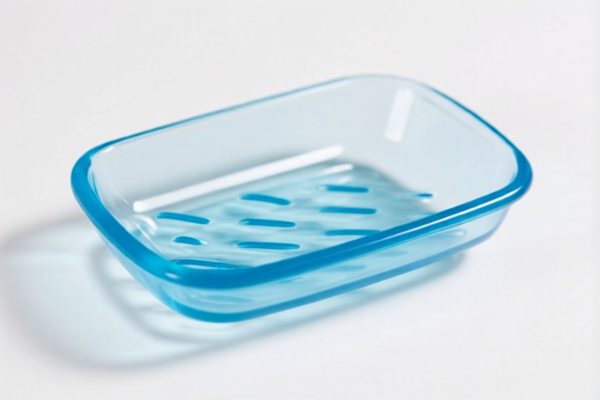
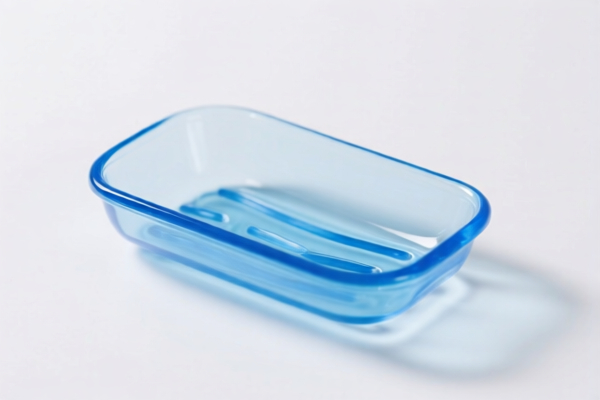
plastic soap dish
CN → US| HS Code | Tariff Rate | Origin | Destination | Doc |
|---|---|---|---|---|
| 6914108000 | 44.0% | CN | US | Official Doc |
| 3924104000 | 13.4% | CN | US | Official Doc |
| 3924905650 | 20.9% | CN | US | Official Doc |
| 3926305000 | 22.8% | CN | US | Official Doc |
| 3926909989 | 22.8% | CN | US | Official Doc |
Product Images


AI Analysis
🧼 Plastic Soap Dish (Resin Soap Holder)
🌐 HS Code Reference & Customs Clearance Guide | 2026 Latest Tariff Analysis | Professional Entry Strategy
📌 I. Product Definition & Classification: Do You Truly Understand "Plastic Soap Dishes"?
A plastic (resin) soap dish is a common household accessory used to hold soap bars, allowing water to drain and preventing the soap from becoming soggy. In international trade, resin is chemically classified as a type of plastic. Therefore, these items are primarily regulated under Chapter 39 (Plastics and Articles Thereof), specifically as plastic sanitary ware or general plastic articles.
⚠️ Critical Classification Distinction:
- Resin/Plastic Soap Dish: Must be classified under Chapter 39. Do NOT classify as ceramic (Chapter 69) unless it is explicitly coated or made entirely of ceramic material. If the main material is resin/plastic, Chapter 69 is incorrect. - Specific vs. General: Some classifications target "sanitary/ceremonial" use (Chapter 39.24), while others fall under "general plastic articles" (Chapter 39.26).
📦 II. HS Code Classification Details (2026 Latest Tariff Authority Comparison)
| HS Code | Product Description | Application Scenario | Tax Category |
|---|---|---|---|
6914.10.80.00 |
Ceramic Soap Dish (Other ceramic articles) | ❌ Incorrect for Plastic. Only applies if the product is actually ceramic. Included here for contrast. | High Tariff |
3924.10.40.00 |
Plastic Table, Kitchen, or Other Household Articles | Dishwasher-safe, high-quality plastic sanitary ware | Lowest Tariff |
3924.90.56.50 |
Other Plastic Table/Kitchen/Sanitary Articles | General plastic soap dishes not covered in 3924.10 | Moderate Tariff |
3926.30.50.00 |
Plastic Furniture Fittings | Soap dishes classified as "fittings" or accessories | Moderate Tariff |
3926.90.99.89 |
Other Plastic Articles | Catch-all category for plastic goods not specified elsewhere | Moderate Tariff |
🔍 Key Reminder:
- Resin = Plastic: Customs authorities universally treat "resin" as plastic (Chapter 39).
- Avoid Chapter 69: Do not use6914(Ceramics) for plastic/resin items, as this leads to severe penalties and re-classification delays.
- Best Option:3924.10.40.00offers the lowest base tariff if the item qualifies as "household articles."
💰 III. 2026 Latest Tariff Rate Breakdown (Including Additional Taxes, Policy Add-ons)
✅ Applicable Country: United States (US)
✅ Origin: China (CN)
✅ Effective Date: November 10, 2025 (for subsequent imports)
🎯 1. 3924.10.40.00 —— Plastic Household Articles (Sanitary/Kitchen)
| Item | Content |
|---|---|
| Base Rate | 3.4% (Ad Valorem) |
| Section 301 Additional Tariff | 0.0% (Not subject to 25% tariff) |
| 122 Clause Tariff | +10% (Section 301 Extension) |
| Total Tax Rate | 13.4% |
| Tax Calculation | CIF Value × 13.4% |
| De Minimis Exemption | ❌ Not Applicable (Deny de minimis for Chinese plastic goods) |
| Legal Basis Path | USITC:3924.10.40.00 → SECTION:301 → SECTION:122 |
📌 Explanation:
- This is the most favorable classification for plastic soap dishes.
- Base 3.4% is low for plastic goods.
- 0% Section 301 means it is not on the list of products subject to the traditional 25% tariffs.
- 10% 122 Clause: This is a newer/additional tariff layer affecting many Chinese consumer goods.
- Total 13.4% is significantly lower than the 44% ceramic equivalent.
🎯 2. 3924.90.56.50 —— Other Plastic Household/Sanitary Articles
| Item | Content |
|---|---|
| Base Rate | 3.4% |
| Section 301 Additional Tariff | +7.5% |
| 122 Clause Tariff | +10% |
| Total Tax Rate | 20.9% |
| Tax Calculation | CIF Value × 20.9% |
| De Minimis Exemption | ❌ Not Applicable |
| Legal Basis Path | USITC:3924.90.56.50 → SECTION:301 → SECTION:122 |
📌 Note:
- If the soap dish does not fit the "tableware/kitchen" definition strictly, it may fall here.
- Higher cost than3924.10.40.00due to the 7.5% Section 301 add-on.
🎯 3. 3926.30.50.00 & 3926.90.99.89 —— General Plastic Articles
| Item | Content |
|---|---|
| Base Rate | 5.3% |
| Section 301 Additional Tariff | +7.5% |
| 122 Clause Tariff | +10% |
| Total Tax Rate | 22.8% |
| Tax Calculation | CIF Value × 22.8% |
| De Minimis Exemption | ❌ Not Applicable |
| Legal Basis Path | USITC:3926.xx → SECTION:301 → SECTION:122 |
📌 Note:
- These are "catch-all" categories.
- Higher base rate (5.3%) + Section 301 (7.5%) + 122 Clause (10%) = 22.8%.
- Only use if3924classifications are strictly inapplicable.
🎯 4. 6914.10.80.00 —— Ceramic Soap Dish (For Comparison/Warning)
| Item | Content |
|---|---|
| Base Rate | 9.0% |
| Section 301 Additional Tariff | +25% |
| 122 Clause Tariff | +10% |
| Total Tax Rate | 44.0% |
| Tax Calculation | CIF Value × 44.0% |
| De Minimis Exemption | ❌ Not Applicable |
| Legal Basis Path | USITC:6914.10.80.00 → SECTION:301 → SECTION:122 |
📌 Warning:
- DO NOT CLASSIFY PLASTIC AS CERAMIC.
- If you misdeclare a resin soap dish as6914, you pay 44%.
- If customs auditors identify it as plastic, they will reclassify to Chapter 39, charge the correct rate, and impose penalties for misdeclaration.
- Correct classification saves ~30% in taxes.
🛠️ IV. Customs Clearance Practical Advice (Combat Pitfall Guide)
✅ 1. Required Documentation Checklist (No Exceptions)
| Document | Mandatory? | Description |
|---|---|---|
| ✅ Product Specification Sheet | ✔️ | Material: 100% Resin/Plastic; Dimensions; Weight |
| ✅ Material Declaration | ✔️ | Explicitly state "Resin (Plastic)" to avoid Chapter 69 confusion |
| ✅ Product Photos | ✔️ | Show flexibility (bend test) if possible, to prove it's plastic not ceramic |
| ✅ Commercial Invoice | ✔️ | Description: "Plastic/Resin Soap Dish, Household Use" |
| ✅ Packing List | ✔️ | Include net/gross weight carefully |
✅ 2. Declaration Tips (Key Mantra)
🔥 “Material Matters, Chapter 39 Wins, Avoid 69, Save 30%!”
| Scenario | Correct Declaration | Wrong Action |
|---|---|---|
| Resin/Plastic Soap Dish | 3924.10.40.00 or 3924.90.56.50 |
Declaring as 6914 (Ceramic) → 44% Tax |
| Mixed Material (Plastic base + Ceramic top) | Analyze "Essential Character" | Splitting shipment → Complexity |
| "Bamboo Fiber" Soap Dish | Likely 3924 (if plastic dominant) |
Declaring as 4602 (Basketware) → Risk |
| Generic "Soap Holder" | Specify Material: "Resin" | Vague "Holder" → Customs Inspection Delay |
✅ 3. Special Case Handling
| Situation | Handling Advice |
|---|---|
| OEM Custom Resin Dish | Provide mold photos to prove it’s a plastic article, not ceramic |
| Multi-Color/Printed Design | Still 3924. Printing does not change chapter |
| Set with Wooden Tray | Essential Character Test: If plastic dish is main value/use, still 3924. If wood is primary, 4415/4421. |
| Gift Sets | Declared as a set, but tax calculated on dominant component. Usually plastic dominates. |
🌍 V. Global Market Clearance Comparison (2026 Latest)
| Country/Region | Recommended HS Code | Tariff Rate | Certification Required | Notes |
|---|---|---|---|---|
| 🇺🇸 USA | 3924.10.40.00 |
13.4% (Best) | None specific | Avoid 6914 (44%) |
| 🇨🇳 China | 3924.10.40.00 |
5% | CCC (if applicable) | Low import duty |
| 🇪🇺 EU | 3924.10.00 |
0% | CE (if contact food) | No Section 301/122 |
| 🇬🇧 UK | 3924.10.00 |
0% | UKCA | Post-Brexit rules |
| 🇦🇺 Australia | 3924.10.00 |
5% | SAA | No high add-ons |
📌 Conclusion:
- USA is the hardest market due to Section 301 and 122 Clause tariffs.
- China-origin plastic soap dishes face 13.4% to 22.8% in the US, depending on precise classification.
- Misclassification as Ceramic (6914) results in 44%, which is financially disastrous.
📌 VI. Common Errors & Pitfall Guide (Lessons Learned)
❌ Error 1: Calling "Resin" "Ceramic" to try to fit old templates
👉 Consequence: 44% tax + Customs Audit + Penalties.
👉 Fix: Resin is plastic. Use Chapter 39.
❌ Error 2: Using 3926.90.99.89 when 3924 applies
👉 Consequence: Paying 22.8% instead of 13.4%. Unnecessary cost.
👉 Fix: If it’s for table/kitchen/bathroom hygiene, 3924 is preferred.
❌ Error 3: Ignoring the 122 Clause
👉 Consequence: Underestimating total landed cost by 10%.
👉 Fix: Always add 10% to your profit margin calculation for US imports.
✅ Correct Declaration Example:
“Plastic/Resin Soap Dish, Household Use, Model ABC, 100% Polypropylene, Not Ceramic”
🎯 VII. Conclusion: Professional Declaration, Cost Saving!
🎯 Remember the Mantra:
🔹 “Resin is Plastic, Chapter 39 is King, 13.4% is the Goal, 44% is the Trap!”
🔹 “Declare Material Clearly, Avoid Ceramic Codes, Save Your Margins!”
📌 Pro Tip:
- If your soap dish is made of biodegradable plastic or bamboo-plastic composite, consult a specialist. Classification may shift, but resin-based items stay in Chapter 39.
- Apply for Advance Ruling with US Customs if the product shape is unusual (e.g., looks like a ceramic bowl but is plastic) to avoid future disputes.
📣 Immediate Action:
📞 Contact your customs broker with material specs
🚀 Declare as Plastic (3924), not Ceramic
💰 Secure the 13.4% Rate, not the 44% Penalty
✨ Professional Clearance Starts with Accurate Classification!
💼 Every Percent Saved is Pure Profit!
Customer Reviews
About HS Code Classification
The Harmonized System (HS) is an internationally standardized nomenclature developed by the World Customs Organization (WCO) to classify traded products. Over 200 countries use the HS system as the basis for customs tariffs, trade statistics, and import/export regulations.
Each HS code follows a hierarchical structure:
- Chapter (2 digits) — Broad category of goods (e.g., Chapter 84: Machinery and Mechanical Appliances)
- Heading (4 digits) — More specific grouping within the chapter
- Subheading (6 digits) — Internationally standardized breakdown, used by all WCO member countries
- National subdivisions (8-10 digits) — Country-specific extensions for further classification, such as US HTSUS 10-digit codes
Correct HS code classification is essential for smooth customs clearance, accurate duty payment, and compliance with trade regulations. Misclassification can lead to customs delays, overpayment of duties, or penalties.
When importing from CN to US, the applicable tariff rates may include:
- Most-Favored-Nation (MFN) rate — The standard duty rate applied to WTO members
- General rate — Applied to countries without trade agreements
- Trade remedy duties — Additional tariffs such as Section 301 (anti-dumping), Section 232 (national security), or countervailing duties
The information provided on this page is for reference purposes only. For official classification, please consult with your local customs authority or a licensed customs broker.