plastic sole short boots with protective metal toe, pair
CN → US| HS Code | Tariff Rate | Origin | Destination | Doc |
|---|---|---|---|---|
| 6401929060 | 55.0% | CN | US | Official Doc |
| 6402914067 | 16.0% | CN | US | Official Doc |
| 6401929030 | 55.0% | CN | US | Official Doc |
| 3926909989 | 22.8% | CN | US | Official Doc |
| 6402914050 | 16.0% | CN | US | Official Doc |
Product Images
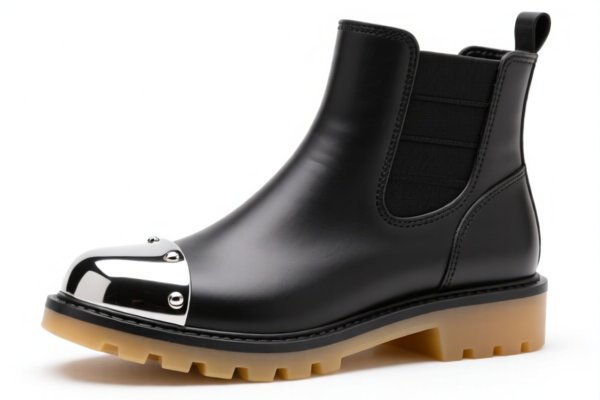
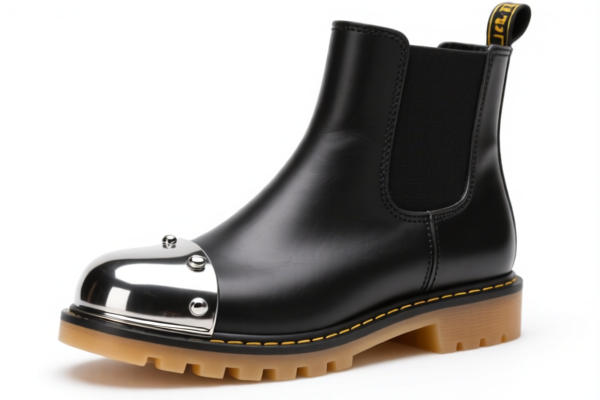
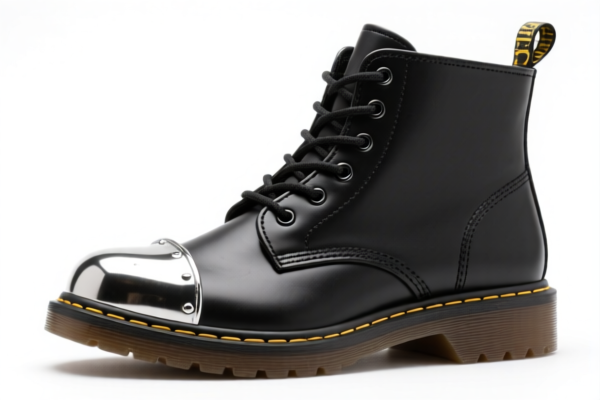
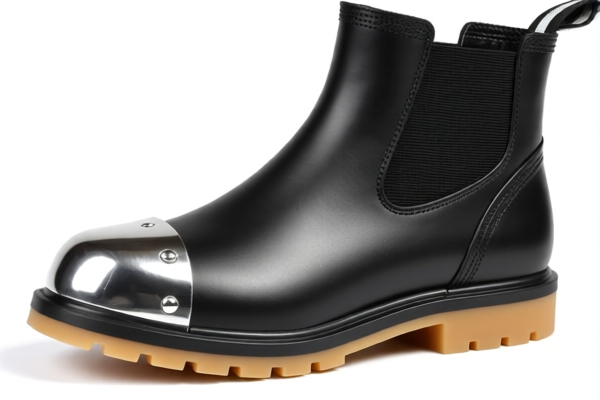
AI Analysis
👢 Plastic Sole Short Boots with Protective Metal Toe Cap
🌐 HS Code Reference & Customs Clearance Guide | 2026 Latest Tariff Analysis | Professional Compliance Strategy
📌 I. Product Definition and Classification: What Are "Protective Plastic Boots"?
Plastic short boots with a protective metal toe cap are specialized Safety Footwear designed for industrial, construction, or hazardous environments. The defining characteristic is the integration of a protective toe cap (usually steel or composite) within a boot having a plastic exterior and sole.
In international trade, these are strictly regulated under Chapter 64 (Footwear). They are NOT classified as simple plastic accessories or general clothing. The presence of the protective element and the specific material composition (plastic upper and sole) dictate the HS Code.
⚠️ Critical Distinction:
- If the boot has a rubber/leather upper but plastic sole → It falls under different subheadings (e.g., 6402.19).
- If the boot is 100% plastic (upper + sole) + safety toe → It falls under 6401 (Waterproof Footwear) or 6402 (Other Footwear with outer sole of plastic/rubber), depending on specific construction nuances.
- Note: The provided data suggests classification under 6401.92 (Plastic short boots) and 6402.91 (Other plastic/rubber boots). The key differentiator is often whether the boot is considered "Waterproof Footwear designed to protect the foot" (6401) or "Other" (6402). In many US customs interpretations, plastic safety boots are often scrutinized under 6401.92 if they are fully plastic/waterproof.
📦 II. HS Code Classification Details (Based on Provided Data)
| HS Code | Product Description | Application/Context | Tax Rate (China Origin to US) |
|---|---|---|---|
6401.92.90.60 |
Plastic Short Boots Material: Plastic Feature: Covers ankle Purpose: General Footwear |
Standard plastic safety/short boots ⚠️ High Tariff Regime |
55.0% |
6401.92.90.30 |
Plastic Short Boots Material: Plastic Feature: Covers ankle Purpose: Work/Safety Shoes |
Safety/Work Boots with protective toe ⚠️ High Tariff Regime |
55.0% |
6402.91.40.67 |
Plastic/Rubber Short Boots Upper: Rubber or Plastic Covers Ankle Category: Other Footwear |
Alternative classification for plastic boots ⚠️ Lower Tariff Regime |
16.0% |
6402.91.40.50 |
Plastic Short Boots Material: Plastic Feature: Covers Ankle Purpose: Footwear |
General plastic footwear ⚠️ Lower Tariff Regime |
16.0% |
3926.90.99.89 |
Plastic Articles Material: Plastic Form: Finished Boot-like Product Category: Other Plastic Articles |
⚠️ Misclassification Risk (Only if deemed NOT footwear) |
22.8% |
🔍 Key Insight:
- 6401.92.90 codes attract a 55% total tariff due to Section 301/122 tariffs.
- 6402.91.40 codes attract a 16% total tariff, offering significant savings.
- 3926.90 is generally incorrect for wearable boots intended as shoes, but may apply if the item is non-wearable or purely decorative. Do not use 3926 for functional footwear.
💰 III. 2026 Latest Tariff Rate Breakdown (Detailed)
✅ Applicable Country: United States (US)
✅ Origin: China (CN)
✅ Effective Date: November 10, 2025 onwards
🎯 1. High-Tariff Category: 6401.92.90.60 / 6401.92.90.30
(Plastic Short Boots, General/Work)
| Item | Detail |
|---|---|
| Base MFN Rate | 37.5% |
| Section 301 Additional Duty | 7.5% |
| Section 122 (IEEPA) Additional Duty | 10.0% |
| Total Effective Tariff | 55.0% |
| Calculation Base | CIF Value × 55% |
| De Minimis Exemption? | ❌ NO (Deny De Minimis) |
| Legal Basis Path | USITC:6401.92.90.60 → Footnote:301 (7.5%) → IEEPA:9903.01.10 (10%) |
📌 Explanation:
- These codes fall under Chapter 64, Heading 6401 (Waterproof Footwear).
- The 7.5% Section 301 tariff applies to most Chinese-made footwear.
- The 10% Section 122 tariff is an additional levy on specific plastic/rubber goods.
- Total 55% is extremely high and significantly impacts profitability.
🎯 2. Lower-Tariff Category: 6402.91.40.67 / 6402.91.40.50
(Other Plastic/Rubber Footwear)
| Item | Detail |
|---|---|
| Base MFN Rate | 6.0% |
| Section 301 Additional Duty | 0.0% |
| Section 122 (IEEPA) Additional Duty | 10.0% |
| Total Effective Tariff | 16.0% |
| Calculation Base | CIF Value × 16% |
| De Minimis Exemption? | ❌ NO (Deny De Minimis) |
| Legal Basis Path | USITC:6402.91.40.67 → IEEPA:9903.01.10 (10%) |
📌 Explanation:
- These codes fall under Chapter 64, Heading 6402 (Other Footwear with Outer Sole of Plastic/Rubber).
- Crucially, the 7.5% Section 301 tariff is 0% for these specific subheadings (due to exclusions or different classification logic).
- Only the 10% IEEPA/122 tariff applies.
- Total 16% is much more favorable than 55%.
🎯 3. Misclassified Category: 3926.90.99.89
(Other Plastic Articles)
| Item | Detail |
|---|---|
| Base MFN Rate | 5.3% |
| Section 301 Additional Duty | 7.5% |
| Section 122 (IEEPA) Additional Duty | 10.0% |
| Total Effective Tariff | 22.8% |
| Risk Level | 🔴 HIGH |
📌 Warning:
- Classifying functional footwear as "Plastic Articles" is a common customs error.
- While the rate (22.8%) is better than 55%, it is legally risky. Customs may audit and reclassify to 6401.92, demanding the difference in duties + penalties.
- Recommendation: Avoid this code unless the product is clearly non-footwear (e.g., decorative boot-shaped planter).
🛠️ IV. Customs Clearance Practical Advice
✅ 1. Preparation Checklist (Non-Negotiable)
| Document | Required? | Purpose |
|---|---|---|
| ✅ Product Specification Sheet | ✔️ | Must specify: Material (100% Plastic/Rubber), Sole Type, Presence of Metal Toe Cap, Intended Use (Safety/Work). |
| ✅ Construction Diagram | ✔️ | Shows layer structure: Outer plastic, midsole, protective toe cap, inner lining. |
| ✅ Photos (Front, Side, Inside, Toe Cap Detail) | ✔️ | Visual proof of plastic construction and safety feature. |
| ✅ Commercial Invoice | ✔️ | Clear description: "Plastic Safety Short Boots with Steel Toe, Model XYZ". |
| ✅ Safety Certification (e.g., ASTM F2413) | ✔️ | Critical for "Work/Safety" classification. Proves it is a safety boot, which may influence customs interpretation under 6401.90.30. |
| ✅ Origin Certificate | ✔️ | For USHTS compliance. |
✅ 2. Classification Strategy: How to Achieve the 16% Rate
🔥 Golden Rule:
"If it's 100% plastic/rubber and NOT primarily 'waterproof protective footwear' in the strict 6401 sense, argue for 6402.91."
| Scenario | Recommended HS Code | Why? |
|---|---|---|
| Boots made of PVC/TPU, plastic sole, plastic upper, with safety toe | 6402.91.40.50 or 6402.91.40.67 | Argue that they are "Other Footwear" with plastic/rubber soles. The key is to avoid the "Waterproof Footwear" definition of 6401 if possible, or if 6401 is mandatory, ensure the subheading matches the 16% rate if applicable (note: provided data shows 6402.91 has 0% Sec 301). |
| Boots explicitly marketed as "Rain Boots" but with safety toe | 6401.92.90.30 | If classified as waterproof footwear, it falls under 6401. Be prepared for 55% tariff. |
| Boots with rubber upper and plastic sole | 6402.91.40.xxxx | Rubber upper falls under 6402, not 6401. |
⚠️ Note on the Provided Data:
The data shows 6401.92 at 55% and 6402.91 at 16%.
- 6401 typically covers "Waterproof Footwear".
- 6402 covers "Other Footwear".
- Strategy: If your boots are not strictly "waterproof" (e.g., they have vents, or are not fully sealed for wading), you may argue for 6402. If they are fully sealed PVC rain boots with a safety toe, 6401 is more likely, and you must accept the 55% cost.
✅ 3. Special Cases
| Situation | Advice |
|---|---|
| OEM for Safety Brands (e.g., Red Wing, Timberland Pro) | Provide the brand's safety certification (ASTM/EN). Customs may scrutinize "Safety" claims. Ensure the description matches the certification. |
| Mixed Materials (Plastic Upper, Leather Sole) | Do NOT use 6401/6402. It would fall under 6403 (Leather Upper) or 6404 (Textile Upper). But your input specifies Plastic Sole, so 6401/6402 is correct. |
| Plastic "Boot Covers" (Over-shoes) | If it's an overlay, not a boot, it might be 3926. But if it's a full boot, 6401/6402. |
🌍 V. Global Market Comparison (2026)
| Country/Region | Recommended HS Code | Tariff (China Origin) | Key Requirement |
|---|---|---|---|
| 🇺🇸 USA | 6402.91.40.50 / 6402.91.40.67 |
16% (vs 55% for 6401) | ASTM F2413 Certification for safety claims. Avoid 3926. |
| 🇨🇳 China | 6402.91 or 6401.92 |
10-15% (Import Tariff) | CCC Certification if sold domestically as safety gear. |
| 🇪🇺 EU | 6402.99 (General) |
6-14% | CE Marking (PPE Regulation) for safety boots. |
| 🇬🇧 UK | 6402.99 |
14% | UKCA Marking. |
📌 Conclusion:
- The USA is the most complex market due to Section 301 and Section 122 tariffs.
- Classifying under 6402.91 instead of 6401.92 can save 39% in duties.
- Do not use 3926 for wearable boots; it invites audits.
📌 VI. Common Mistakes & Pitfalls (Blood & Tears Lessons)
❌ Mistake 1: Classifying plastic safety boots as 3926.90 (Plastic Articles)
👉 Consequence: Initial low duty (22.8%), but customs reclassifies to 6401.92 (55%) upon audit. Back taxes + penalties!
❌ Mistake 2: Using 6401.92.90.30 (Work Shoes) for non-waterproof plastic boots
👉 Consequence: Incorrectly applying the 55% rate when a 16% rate might be available under 6402.91 if the "waterproof" definition isn't met.
❌ Mistake 3: Omitting "Protective Metal Toe" in the declaration
👉 Consequence: Customs may classify as general footwear, leading to discrepancies with safety certifications. Or, worse, if safety features are missing, misrepresentation claims.
❌ Mistake 4: Not providing ASTM/ANSI Certification for "Safety" claims
👉 Consequence: Customs may disregard the "Safety" label, affecting duty determination or triggering additional scrutiny for PPE (Personal Protective Equipment) regulations.
✅ Correct Description Example:
"Plastic Short Safety Boots, 100% PVC Upper and Sole, with ASTM F2413 Compliant Steel Toe Cap, Non-Slip, Model SB-100, Black, Size 10"
🎯 VII. Conclusion: Professional Classification, Cost Savings
🎯 Key Takeaway:
🔹 "Plastic Safety Boots: Fight for 6402.91 (16%), Avoid 6401.92 (55%) and 3926 (Risk)."
🔹 "Certification is King: ASTM F2413 proves safety, but material composition dictates HS Code."
🔹 "No De Minimis: All these codes deny de minimis. Plan for full duty payment."
📌 Pro Tip:
If your boots are 100% plastic/rubber and not strictly waterproof (e.g., breathable, or not designed for wading), argue for 6402.91.40 to benefit from the 0% Section 301 tariff.
If they are fully sealed PVC rain boots with a safety toe, you will likely be stuck with 6401.92.90 (55%).
Action: Consult a customs broker for a Pre-Ruling if the distinction between 6401 and 6402 is ambiguous for your specific design.
📣 Immediate Action:
📞 Contact your customs broker with product photos and ASTM certification.
🚀 Verify if your boots meet the 'Waterproof' definition of 6401. If not, push for 6402.91.
💼 Your bottom line depends on this 39% tariff difference!
✨ Professional Clearance Starts with Precise Classification!
💼 Every Dollar Saved in Duties is Pure Profit!
Customer Reviews
About HS Code Classification
The Harmonized System (HS) is an internationally standardized nomenclature developed by the World Customs Organization (WCO) to classify traded products. Over 200 countries use the HS system as the basis for customs tariffs, trade statistics, and import/export regulations.
Each HS code follows a hierarchical structure:
- Chapter (2 digits) — Broad category of goods (e.g., Chapter 84: Machinery and Mechanical Appliances)
- Heading (4 digits) — More specific grouping within the chapter
- Subheading (6 digits) — Internationally standardized breakdown, used by all WCO member countries
- National subdivisions (8-10 digits) — Country-specific extensions for further classification, such as US HTSUS 10-digit codes
Correct HS code classification is essential for smooth customs clearance, accurate duty payment, and compliance with trade regulations. Misclassification can lead to customs delays, overpayment of duties, or penalties.
When importing from CN to US, the applicable tariff rates may include:
- Most-Favored-Nation (MFN) rate — The standard duty rate applied to WTO members
- General rate — Applied to countries without trade agreements
- Trade remedy duties — Additional tariffs such as Section 301 (anti-dumping), Section 232 (national security), or countervailing duties
The information provided on this page is for reference purposes only. For official classification, please consult with your local customs authority or a licensed customs broker.