plastic spool anti static
CN → US| HS Code | Tariff Rate | Origin | Destination | Doc |
|---|---|---|---|---|
| 3916903000 | 41.5% | CN | US | Official Doc |
| 3926909989 | 22.8% | CN | US | Official Doc |
| 3926906090 | 39.2% | CN | US | Official Doc |
| 8448399000 | 17.5% | CN | US | Official Doc |
| 3916905000 | 40.8% | CN | US | Official Doc |
Product Images
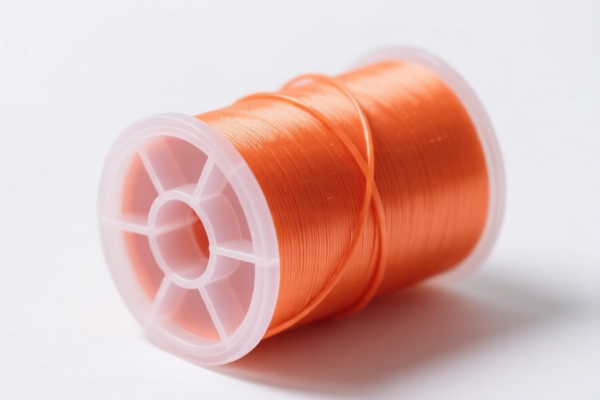
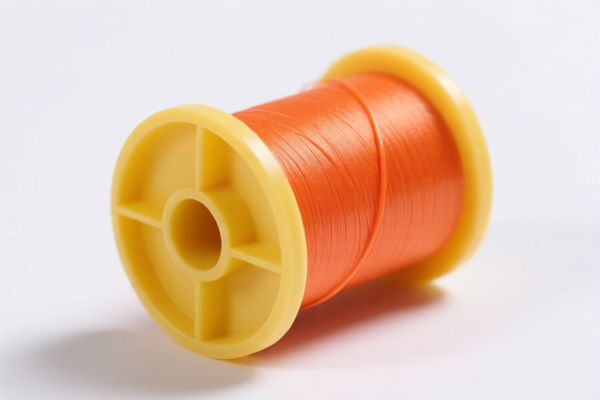
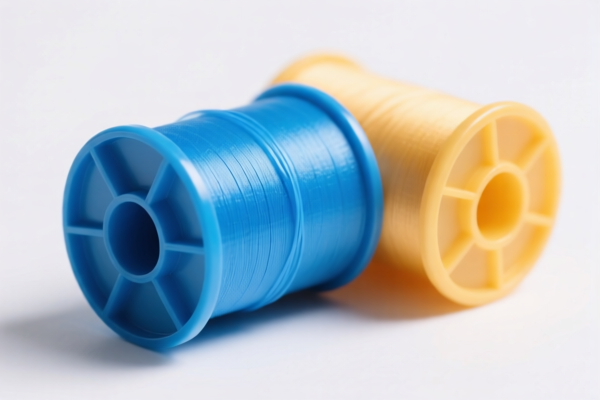
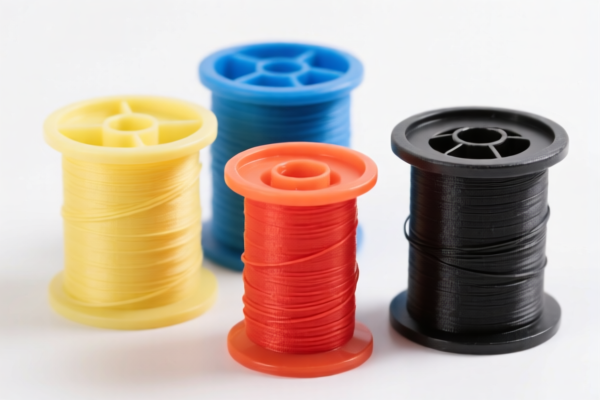
AI Analysis
🧵 Plastic Spool Anti Static (Anti-Static Plastic Reels/Bobbins)
🌐 HS Code Reference & Customs Clearance Guide | 2026 Latest Tariff Analysis | Professional Clearance Strategy
📌 I. Product Definition & Classification: Do You Really Understand “Anti-Static Plastic Spools”?
Anti-static plastic spools are critical components in electronics manufacturing, textile processing, and wire/cable winding. Their classification depends heavily on their intended use, material composition, and structural form. In international trade, they are often misclassified due to the ambiguity between "plastic articles" and "machine parts."
Key Distinctions: 1. General Plastic Articles: If used for general winding (e.g., sewing thread, simple wiring) and not specifically designed as a spare part for a specific machine. 2. Textile Machinery Accessories: If specifically designed as an accessory for textile machinery (e.g., looms, spinning frames), regardless of material. 3. Specific Plastic Shapes: If it falls under specific sub-categories like "reels" or "spools" within the plastic chapter.
⚠️ Critical Classification Point:
- If it is a standalone plastic reel without specific machinery integration → Chapter 39 (Plastics).
- If it is a component/accessory for textile machinery (even if plastic) → Chapter 84 (Machinery).
- Anti-static property does not change the HS Code directly but may affect the description and compliance requirements (e.g., ESD safety standards).
📦 II. HS Code Classification Details (Based on Provided Data)
Based on the provided dataset, here are the 5 possible HS Codes for "High-Strength Anti-Static Plastic Spools," along with the rationale for each:
| HS Code | Product Description | Rationale for Classification | Total Tax Rate (Est.)* |
|---|---|---|---|
3916.90.30.00 |
Plastic Rods, Bars, and Shapes; Plastic Spools (High-Strength Plastic Spool, Material: Plastic, Form: Spool) |
Classified under "Other rods, bars, and shapes" of plastic. The item is viewed as a plastic product in the form of a spool/reel, not necessarily a machine part. | 41.5% |
3926.90.99.89 |
Other Plastic Articles (High-Strength Plastic Spool, Material: Plastic, Form: Other Articles, Fits Spool/Reel Characteristics) |
Classified as a "Other made-up plastic articles" because it doesn't fit specific sub-headings for rods/bars or mechanical belts. It is a generic plastic accessory. | 22.8% |
3926.90.60.90 |
Other Plastic Articles for Mechanical/Industrial Use (High-Strength Plastic Spool, Material: Plastic, Form: Other, No Mechanical Belt Conflict) |
Classified under plastic articles for mechanical/industrial use, but explicitly notes no conflict with mechanical belts. Often used for industrial winding. | 39.2% |
8448.39.90.00 |
Auxiliary Machinery/Accessories for Textile Machines (High-Strength Plastic Spool, Form: Textile Machine Accessory, Material: Plastic, No Metal Conflict) |
Strategic Classification: Viewed as an accessory to textile machinery (e.g., bobbin/pin). Even though it's plastic, if it's essential for textile machinery operation, it falls under Chapter 84. | 17.5% |
3916.90.50.00 |
Other Plastic Shapes (High-Strength Plastic Spool, Material: Plastic, Form: Other Shape) |
A generic fallback for plastic shapes not otherwise specified in Chapter 39. Broad categorization. | 40.8% |
📌 Note on Tax Rates:
The total tax rates listed above include:
- Base Duty (varies by HS Code)
- Section 301 Additional Duty (25% or 7.5% depending on classification)
- Section 122 Duty (10% for China-origin goods under specific provisions)
These rates apply to imports into the United States from China.
💰 III. 2026 Latest Tariff Rate Breakdown (Including Additional Taxes)
✅ Applicable Country: United States (US)
✅ Origin: China (CN)
✅ Effective Date: Current tariffs apply (as per 2025-2026 framework)
🎯 1. 3916.90.30.00 – Plastic Spools/Rods (Chapter 39)
| Item | Detail |
|---|---|
| Base Duty | 6.5% |
| Section 301 Additional Duty | +25.0% |
| Section 122 Duty | +10.0% |
| Total Tax Rate | 41.5% |
| Tax Calculation | CIF Value × 41.5% |
| De Minimis Exemption | ❌ Not Eligible (Deny de minimis for China-origin goods under Section 301) |
| Legal Basis | USITC Tariff Schedule → Section 301 Footnotes → IEEPA Authorizations |
📌 Explanation:
- This classification incurs the highest duty among the options.
- The 25% Section 301 duty is applied because it is a plastic product of Chinese origin.
- High Cost Warning: This is not recommended unless no other classification is valid.
🎯 2. 3926.90.99.89 – Other Plastic Articles (Chapter 39)
| Item | Detail |
|---|---|
| Base Duty | 5.3% |
| Section 301 Additional Duty | +7.5% |
| Section 122 Duty | +10.0% |
| Total Tax Rate | 22.8% |
| Tax Calculation | CIF Value × 22.8% |
| De Minimis Exemption | ❌ Not Eligible |
| Legal Basis | USITC Tariff Schedule → Section 301 Footnotes (Lower rate for certain plastic articles) |
📌 Explanation:
- This is a more favorable classification if the spool is considered a "general plastic article" rather than a specific shape or textile accessory.
- The Section 301 rate is lower (7.5%) compared to 25%, significantly reducing costs.
🎯 3. 3926.90.60.90 – Industrial Plastic Articles (Chapter 39)
| Item | Detail |
|---|---|
| Base Duty | 4.2% |
| Section 301 Additional Duty | +25.0% |
| Section 122 Duty | +10.0% |
| Total Tax Rate | 39.2% |
| Tax Calculation | CIF Value × 39.2% |
| De Minimis Exemption | ❌ Not Eligible |
| Legal Basis | USITC Tariff Schedule → Section 301 Footnotes |
📌 Explanation:
- Despite a lower base duty (4.2%), the 25% Section 301 duty brings the total cost close to3916.90.30.00.
- Only consider if the product is clearly for industrial use and not eligible for the lower 7.5% rate in3926.90.99.89.
🎯 4. 8448.39.90.00 – Textile Machinery Accessories (Chapter 84) ⭐ RECOMMENDED
| Item | Detail |
|---|---|
| Base Duty | 0.0% |
| Section 301 Additional Duty | +7.5% |
| Section 122 Duty | +10.0% |
| Total Tax Rate | 17.5% |
| Tax Calculation | CIF Value × 17.5% |
| De Minimis Exemption | ❌ Not Eligible |
| Legal Basis | USITC Tariff Schedule → Chapter 84 Footnotes → Section 301 |
📌 Explanation:
- Lowest Tax Rate: This is the most cost-effective classification if the spool can be justified as an accessory to textile machinery.
- Base Duty is 0%: Crucial advantage.
- Condition: Must provide documentation proving it is used as an accessory to textile machinery (e.g., bobbin for spinning, reel for weaving).
- Anti-static feature does not disqualify it from this category.
🎯 5. 3916.90.50.00 – Other Plastic Shapes (Chapter 39)
| Item | Detail |
|---|---|
| Base Duty | 5.8% |
| Section 301 Additional Duty | +25.0% |
| Section 122 Duty | +10.0% |
| Total Tax Rate | 40.8% |
| Tax Calculation | CIF Value × 40.8% |
| De Minimis Exemption | ❌ Not Eligible |
| Legal Basis | USITC Tariff Schedule → Section 301 Footnotes |
📌 Explanation:
- Similar to3916.90.30.00, this incurs high Section 301 duties.
- Avoid unless no other classification fits.
🛠️ IV. Customs Clearance Practical Advice (Pitfall Avoidance Guide)
✅ 1. Preparation Checklist (Non-negotiable)
| Document | Required | Purpose |
|---|---|---|
| Product Specification Sheet | ✔️ | Must state material (e.g., "ABS Plastic, Anti-Static"), dimensions, weight. |
| Intended Use Declaration | ✔️ | Critical for 8448.39.90.00. Must state: "Used as accessory for textile machinery." |
| Product Photos | ✔️ | Show shape, anti-static labeling (if any), and overall structure. |
| ESD Safety Data Sheet | ✔️ | Proves "anti-static" property, which may be relevant for electronic industry buyers. |
| Commercial Invoice | ✔️ | Clear description: "Plastic Spool for Textile Machinery, Anti-Static, No Metal Parts." |
| Packing List | ✔️ | Detail net/gross weight, number of units. |
✅ 2. Declaration Strategy (Key Mnemonic)
🔥 "Chapter 84 Wins, Chapter 39 Rides! Prove Machinery Use, Cut Taxes in Half!"
| Scenario | Correct Declaration | Wrong Action | Result |
|---|---|---|---|
| Spool for Textile Machine | 8448.39.90.00 (Textile Accessory) |
Declare as "Plastic Spool" under Chapter 39 | 17.5% vs 41.5% → Save 24% |
| Spool for General Wiring | 3926.90.99.89 (Other Plastic Article) |
Declare as "Machinery Part" without proof | 22.8% vs Potential 45%+ |
| Spool with Metal Axle | Check if metal part dominates classification | Ignore metal component | Misclassification Risk |
| OEM Custom Spool | Provide Customer PO + Design Spec | Generic description "Plastic Spool" | Delayed Customs Release |
✅ 3. Special Considerations
| Situation | Handling Advice |
|---|---|
| Anti-Static Labeling | Ensure packaging labels indicate "ESD Safe" to avoid confusion with conductive materials. |
| Metal Core/Axle | If the spool has a significant metal core, it may no longer qualify as a "plastic" article or "textile accessory" under pure plastic. Re-evaluate classification. |
| Pre-Ruling Application | Highly Recommended: Apply for an Advance Ruling from CBP, especially to justify 8448.39.90.00. |
| Country of Origin | Tariffs apply only to China-origin goods. If manufactured in Vietnam/Malaysia, tariffs may be lower or exempt. |
🌍 V. Global Market Comparison (2026)
| Market | Recommended HS Code | Estimated Duty (China Origin) | Key Requirement |
|---|---|---|---|
| 🇺🇸 USA | 8448.39.90.00 |
17.5% | Proof of textile machinery accessory use |
| 🇺🇸 USA | 3926.90.99.89 |
22.8% | General plastic article declaration |
| 🇨🇳 China | 3926.90.99.89 |
~5-10% | Standard import declaration |
| 🇪🇺 EU | 3926.90.99.97 |
0-6.5% | CE marking, REACH compliance |
| 🇬🇧 UK | 3926.90.99.97 |
0-6.5% | Post-Brexit import rules apply |
📌 Conclusion:
- USA: Classification as a textile machine accessory (8448.39.90.00) offers the lowest duty (17.5%).
- EU/UK: Generally lower duties, but stricter environmental compliance (REACH) for plastics.
📌 VI. Common Mistakes & Pitfalls
❌ Mistake 1: Declaring as "Plastic Spool" without specifying machinery use → Higher Tax (41.5%)
👉 Fix: Provide evidence of use in textile machinery to claim 8448.39.90.00.
❌ Mistake 2: Ignoring the Section 122 Duty (10%) in calculations → Unexpected Cost
👉 Fix: Include all three components (Base + 301 + 122) in cost modeling.
❌ Mistake 3: Misidentifying "Anti-Static" as a separate category → Confusion
👉 Fix: Anti-static is a property, not a classification criterion. Focus on form and function.
❌ Mistake 4: Assuming "De Minimis" applies → Seizure Risk
👉 Fix: Section 301 goods from China never qualify for de minimis exemption in the US.
🎯 VII. Conclusion: Smart Classification Saves Money!
🎯 Key Takeaway:
🔹 If your plastic spool is used in textile machinery, declare it as
8448.39.90.00to pay only 17.5% duty.
🔹 If it’s for general use,3926.90.99.89(22.8%) is better than3916.90.30.00(41.5%).
🔹 Anti-static properties do not change the HS Code but may affect documentation requirements.
📌 Pro Tip:
📞 Apply for an Advance Ruling from US Customs and Border Protection (CBP) to lock in the
8448.39.90.00classification.
📄 Provide Detailed Use Cases in your commercial invoice: "Plastic Bobbin, Anti-Static, for Use in Looms/Spinning Machines."
📣 Take Action Now:
✅ Review your product’s intended use.
✅ Prepare documentation proving textile machinery accessory status.
✅ Consult a licensed customs broker for pre-clearance.
🚀 Minimize tariffs, maximize profits!
✨ Precision in Classification is Precision in Profit!
💼 Every percentage point saved is pure margin!
Customer Reviews
About HS Code Classification
The Harmonized System (HS) is an internationally standardized nomenclature developed by the World Customs Organization (WCO) to classify traded products. Over 200 countries use the HS system as the basis for customs tariffs, trade statistics, and import/export regulations.
Each HS code follows a hierarchical structure:
- Chapter (2 digits) — Broad category of goods (e.g., Chapter 84: Machinery and Mechanical Appliances)
- Heading (4 digits) — More specific grouping within the chapter
- Subheading (6 digits) — Internationally standardized breakdown, used by all WCO member countries
- National subdivisions (8-10 digits) — Country-specific extensions for further classification, such as US HTSUS 10-digit codes
Correct HS code classification is essential for smooth customs clearance, accurate duty payment, and compliance with trade regulations. Misclassification can lead to customs delays, overpayment of duties, or penalties.
When importing from CN to US, the applicable tariff rates may include:
- Most-Favored-Nation (MFN) rate — The standard duty rate applied to WTO members
- General rate — Applied to countries without trade agreements
- Trade remedy duties — Additional tariffs such as Section 301 (anti-dumping), Section 232 (national security), or countervailing duties
The information provided on this page is for reference purposes only. For official classification, please consult with your local customs authority or a licensed customs broker.