plastic spool recyclable
CN → US| HS Code | Tariff Rate | Origin | Destination | Doc |
|---|---|---|---|---|
| 3923400050 | 40.3% | CN | US | Official Doc |
| 4822100000 | 35.0% | CN | US | Official Doc |
| 3923400010 | 40.3% | CN | US | Official Doc |
| 3926909989 | 22.8% | CN | US | Official Doc |
| 3926908300 | 40.3% | CN | US | Official Doc |
Product Images
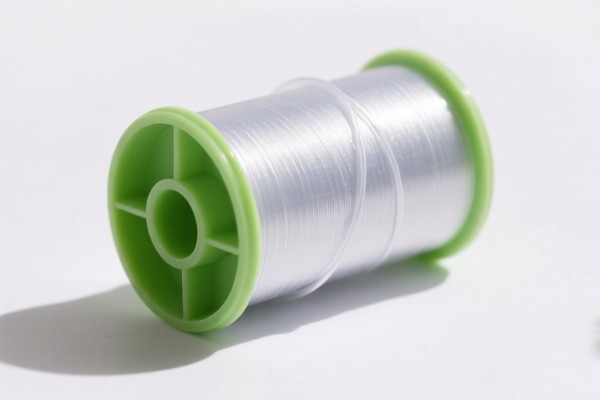
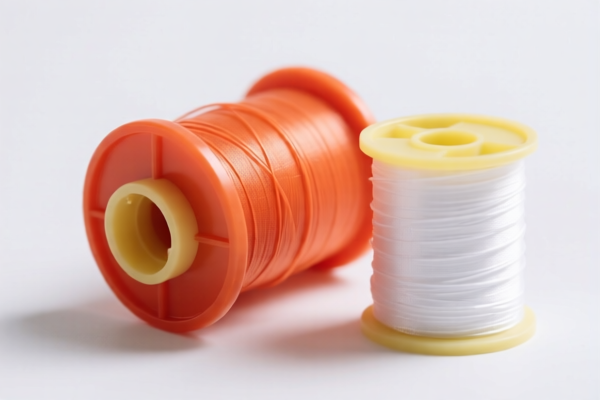


AI Analysis
🧵 Plastic Spools (Recyclable) – HS Code & Tariff Breakdown
🌐 HS Code Classification & Customs Clearance Guide | 2026 Latest Tariff Analysis | Professional Customs Strategy
📌 I. Product Definition & Classification: What Exactly is a "Recyclable Plastic Spool"?
A plastic spool is a cylindrical object used for winding thread, wire, cable, or yarn. When described as "recyclable," it implies the material is a polymer suitable for reprocessing, but from a customs perspective, the physical form and material composition determine the HS Code.
In international trade, plastic spools are generally categorized based on whether they are considered: 1. Supports/Reels for threads/wires (Chapter 39 or 48). 2. Packaging/Transport containers (Chapter 39). 3. General Plastic Articles (Chapter 39 or 3926).
⚠️ Key Distinction Point:
- If the spool is specifically for thread/yarn and made of plastic, it may fall under 3923.40 (Reels, spindles, bobbins, etc.) or 3926.90 (Other plastic articles).
- If the spool is made of paper pulp/cardboard (even if labeled "recyclable"), it falls under 4822.
- The term "recyclable" is not a classification criterion for HS Codes; only material and function matter.
📦 II. HS Code Classification Details (2026 Latest Tariff Reference)
| HS Code | Product Description | Applicable Scenario | Material Form |
|---|---|---|---|
4822.10.00.00 |
Reels, spools, bobbins, etc., of paper pulp, paper, or paperboard | Paper-based spools (even if labeled "recyclable") | ❌ Not Plastic |
3923.40.00.10 |
Reels, spools, bobbins, etc., of plastic, for packaging/transport use | Plastic spools specifically classified as packaging/transport supports | ✅ Plastic |
3923.40.00.50 |
Reels, spools, bobbins, etc., of plastic, other than for specific packaging | Plastic spools as general supports, no specific packaging conflict | ✅ Plastic |
3926.90.99.89 |
Other articles of plastics (e.g., general plastic spools not fitting other categories) | Plastic spools considered general plastic goods (non-specific function) | ✅ Plastic |
3926.90.83.00 |
Other plastic articles (generic category) | Plastic spools falling under catch-all plastic articles | ✅ Plastic |
🔍 Critical Note:
- "Recyclable" does not qualify for a special tax rate or HS code. It is a marketing/environmental term.
- If your spool is 100% plastic, it cannot be classified under4822.10.00.00(paper). Misclassification here leads to severe penalties.
- For plastic spools, the most common classifications are3923.40(specific supports) or3926.90(general articles).
💰 III. 2026 Latest Tariff Rate Details (Including Surcharges)
✅ Applicable Country: United States (US)
✅ Origin: China (CN)
✅ Effective Date: 2025–2026 (Including subsequent imports)
🎯 1. 4822.10.00.00 – Reels/Spools of Paper/Pulp
| Item | Content |
|---|---|
| Base Tariff | 0.0% |
| USITC Surcharge | +25.0% (Section 301) |
| IEEPA Surcharge | +10.0% (China-specific, effective Nov 10, 2025) |
| Total Tariff | 35.0% |
| Calculation | CIF Value × 35% |
| De Minimis Eligibility | ❌ No (Denied) |
| Legal Basis | IEEPA:9903.01.25 → USITC:4822.10.00.00 |
📌 Explanation:
- Only applicable if the spool is MADE OF PAPER.
- If you ship plastic spools under this code, customs will reclassify it, leading to back taxes + fines.
- 35% Total is still high due to Section 301 + IEEPA surcharges.
🎯 2. 3923.40.00.10 – Plastic Reels/Spools (Packaging/Transport Use)
| Item | Content |
|---|---|
| Base Tariff | 5.3% |
| USITC Surcharge | +25.0% (Section 301) |
| IEEPA Surcharge | +10.0% (China-specific) |
| Total Tariff | 40.3% |
| Calculation | CIF Value × 40.3% |
| De Minimis Eligibility | ❌ No (Denied) |
| Legal Basis | IEEPA:9903.01.25 → USITC:3923.40.00.10 |
📌 Explanation:
- This code is for plastic spools used as supports for packaging or transport.
- Total 40.3% includes base tariff + Section 301 + IEEPA surcharges.
- High tariff cost! Must be factored into pricing.
🎯 3. 3923.40.00.50 – Plastic Reels/Spools (Other Supports)
| Item | Content |
|---|---|
| Base Tariff | 5.3% |
| USITC Surcharge | +25.0% (Section 301) |
| IEEPA Surcharge | +10.0% (China-specific) |
| Total Tariff | 40.3% |
| Calculation | CIF Value × 40.3% |
| De Minimis Eligibility | ❌ No (Denied) |
| Legal Basis | IEEPA:9903.01.25 → USITC:3923.40.00.50 |
📌 Explanation:
- Same tariff as3923.40.00.10but for non-packaging plastic supports.
- If your spool is for industrial winding (not packaging), use this code.
- Same 40.3% total tariff.
🎯 4. 3926.90.99.89 – Other Plastic Articles (General)
| Item | Content |
|---|---|
| Base Tariff | 5.3% |
| USITC Surcharge | +7.5% (Section 301, lower tier) |
| IEEPA Surcharge | +10.0% (China-specific) |
| Total Tariff | 22.8% |
| Calculation | CIF Value × 22.8% |
| De Minimis Eligibility | ❌ No (Denied) |
| Legal Basis | IEEPA:9903.01.25 → USITC:3926.90.99.89 |
📌 Explanation:
- Lowest tariff for plastic spools!
- Applicable if the spool is considered a general plastic article (not specifically a reel/spindle under 3923).
- Savings: 17.5% less than 3923.40 codes.
- Risk: Must prove it doesn’t fit 3923.40 definition. Customs may challenge this.
🎯 5. 3926.90.83.00 – Other Plastic Articles (Generic)
| Item | Content |
|---|---|
| Base Tariff | 5.3% |
| USITC Surcharge | +25.0% (Section 301) |
| IEEPA Surcharge | +10.0% (China-specific) |
| Total Tariff | 40.3% |
| Calculation | CIF Value × 40.3% |
| De Minimis Eligibility | ❌ No (Denied) |
| Legal Basis | IEEPA:9903.01.25 → USITC:3926.90.83.00 |
📌 Explanation:
- Generic catch-all for plastic items.
- Same high tariff (40.3%) as 3923.40.
- Less favorable than3926.90.99.89(22.8%).
🛠️ IV. Customs Clearance Practical Advice (Pitfall Avoidance Guide)
✅ 1. Preparation Checklist (Non-Negotiable)
| Document | Required | Explanation |
|---|---|---|
| ✅ Product Specifications | ✔️ | Material (PP/PE/PET?), dimensions, weight, recycling code |
| ✅ Material Certificate | ✔️ | Proof of plastic vs. paper. Critical! |
| ✅ Product Photos | ✔️ | Clear images showing spool structure, label, and any markings |
| ✅ Commercial Invoice | ✔️ | Must state "Plastic Spool" or "Paper Spool" accurately. Do NOT write "Recyclable Spool" without material spec. |
| ✅ Packing List | ✔️ | Detailed breakdown of units, gross/net weight |
| ✅ Third-Party Test Report | ✔️ | If claiming "recyclable," provide certification (optional but helpful) |
✅ 2. Declaration Tips (Key Mantra)
🔥 “Material First, Function Second, Code Precision Saves Money!”
| Scenario | Correct HS Code | Incorrect Code | Risk |
|---|---|---|---|
| Paper Spool | 4822.10.00.00 |
3923.40.00.10 |
Under-declaration penalty |
| Plastic Spool (Packaging Use) | 3923.40.00.10 |
3926.90.99.89 |
Over-declaration risk, but 40.3% vs 22.8% |
| Plastic Spool (General Use) | 3926.90.99.89 |
3923.40.00.50 |
Savings of 17.5%! |
| Mixed Shipment (Paper+Plastic) | Split Declaration | Combined | Customs seizure, fine |
📌 Warning:
- Do not declare plastic spools as paper spools (4822). Customs will inspect material density/melting point.
- Do not declare paper spools as plastic (3923). Paper absorbs moisture, plastic does not. Easy to detect.
✅ 3. Special Cases
| Case | Handling Advice |
|---|---|
| OEM Custom Spools | Provide design drawings to prove material and function. |
| Recyclable Label | Attach certification if possible, but HS code depends on material, not label. |
| Empty vs. Wound Spools | Both are classified as "spools/reels." No difference in HS code. |
| Biodegradable Plastic | Still classified as plastic (3923 or 3926), not paper. Tariff remains 22.8%–40.3%. |
🌍 V. Global Customs Comparison (2026)
| Country/Region | Recommended HS Code | Tariff | Certification | Notes |
|---|---|---|---|---|
| 🇺🇸 USA | 3926.90.99.89 |
22.8% | No special | Best rate for plastic. Avoid 3923.40 (40.3%) if possible. |
| 🇨🇳 China | 3926.90.99.89 |
5% | None | Low base tariff. No surcharges. |
| 🇪🇺 EU | 3926.90.99.90 |
4.0% | REACH | Low tariff. No surcharges. |
| 🇦🇺 Australia | 3926.90.99.90 |
5.0% | None | No surcharges. |
| 🇯🇵 Japan | 3926.90.90.90 |
0–5% | JIS | No surcharges. |
📌 Conclusion:
- USA is the most expensive market due to Section 301 + IEEPA surcharges.
- Plastic spools in USA face 22.8%–40.3% tariffs.
- Strategy: Use3926.90.99.89(22.8%) if function allows, instead of3923.40(40.3%).
📌 VI. Common Errors & Pitfalls (Lessons Learned)
❌ Error 1: Declaring plastic spools as paper (4822.10.00.00) to avoid surcharges.
👉 Consequence: Customs lab test reveals plastic → Back taxes (35% to 40.3%) + fines + detention.
❌ Error 2: Using "Recyclable" as the product name without specifying material.
👉 Consequence: Customs unclear → Audit delay + random inspection.
❌ Error 3: Misclassifying plastic spools as 3923.40 (40.3%) when 3926.90.99.89 (22.8%) is applicable.
👉 Consequence: Overpaying 17.5% tariff. Always argue for 3926.90 if spool is not strictly "packaging/transport."
❌ Error 4: Mixed shipment (Paper + Plastic) declared as one HS Code.
👉 Consequence: Rejection of entry, separate fees for both items.
✅ Correct Approach:
“Plastic Spool, PP Material, 100mm Diameter, Empty, Recyclable Type, Model XYZ”
🎯 VII. Conclusion: Professional Classification, Cost Optimization!
🎯 Remember the Mantra:
🔹 “Material determines Code, not ‘Recyclable’ label.”
🔹 “Plastic Spool: Use3926.90.99.89(22.8%) if possible, avoid3923.40(40.3%).”
🔹 “Paper Spool: Use4822.10.00.00(35%). Never mix materials.”
📌 Pro Tip:
If your plastic spool is biodegradable or compostable, it is still plastic under US Customs rules. No special tariff.
For USA imports, apply for a Binding Ruling (Advance Ruling) for 3926.90.99.89 to secure the 22.8% rate.
📣 Immediate Action:
📞 Contact your customs broker + Provide Material Certificate + Apply for Advance Ruling
🚀 Clear customs smoothly, minimize tariff burden, maximize profit!
✨ Professional clearance starts with precise classification!
💼 Every dollar saved is pure profit!
Customer Reviews
About HS Code Classification
The Harmonized System (HS) is an internationally standardized nomenclature developed by the World Customs Organization (WCO) to classify traded products. Over 200 countries use the HS system as the basis for customs tariffs, trade statistics, and import/export regulations.
Each HS code follows a hierarchical structure:
- Chapter (2 digits) — Broad category of goods (e.g., Chapter 84: Machinery and Mechanical Appliances)
- Heading (4 digits) — More specific grouping within the chapter
- Subheading (6 digits) — Internationally standardized breakdown, used by all WCO member countries
- National subdivisions (8-10 digits) — Country-specific extensions for further classification, such as US HTSUS 10-digit codes
Correct HS code classification is essential for smooth customs clearance, accurate duty payment, and compliance with trade regulations. Misclassification can lead to customs delays, overpayment of duties, or penalties.
When importing from CN to US, the applicable tariff rates may include:
- Most-Favored-Nation (MFN) rate — The standard duty rate applied to WTO members
- General rate — Applied to countries without trade agreements
- Trade remedy duties — Additional tariffs such as Section 301 (anti-dumping), Section 232 (national security), or countervailing duties
The information provided on this page is for reference purposes only. For official classification, please consult with your local customs authority or a licensed customs broker.