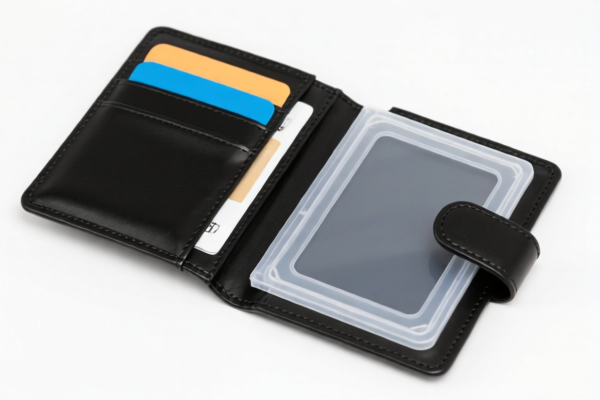
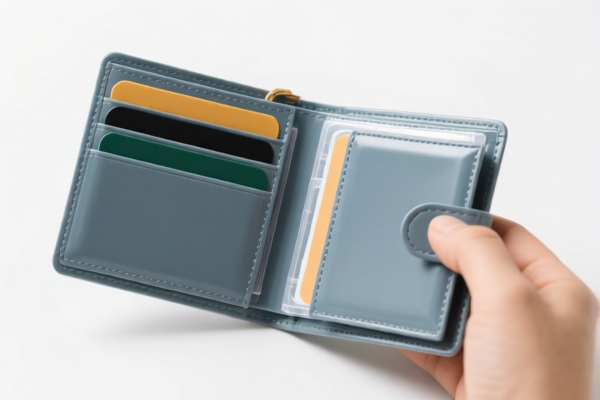
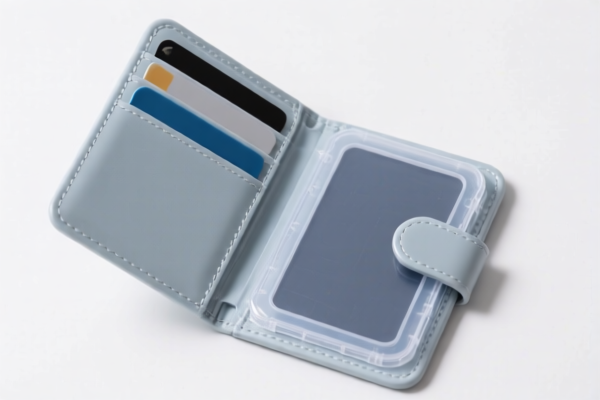
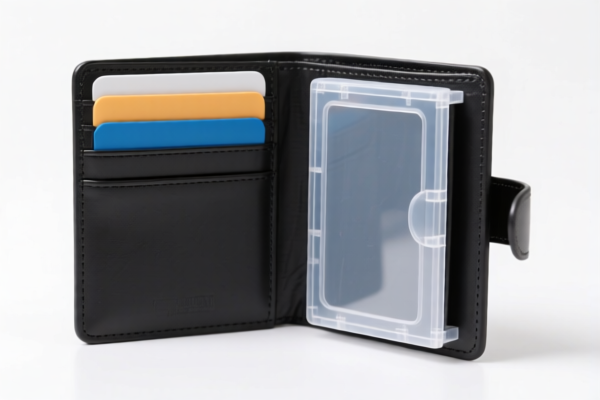
plastic surface multifunctional wallet
CN → US| HS Code | Tariff Rate | Origin | Destination | Doc |
|---|---|---|---|---|
| 3923900080 | 38.0% | CN | US | Official Doc |
| 3923109000 | 38.0% | CN | US | Official Doc |
| 4202322000 | 55.0% | CN | US | Official Doc |
| 4202321000 | 0.0% | CN | US | Official Doc |
| 3923210011 | 38.0% | CN | US | Official Doc |
Product Images
AI Analysis
💼 Plastic Surface Multifunctional Wallet: HS Code Classification & Duty Analysis (USA)
🌐 HS Code Reference & Customs Clearance Guide | 2026 Latest Tariff Analysis | Professional Clearance Strategy
📌 I. Product Definition & Classification: What Exactly is a "Plastic Surface Multifunctional Wallet"?
A "Plastic Surface Multifunctional Wallet" is a versatile accessory designed for carrying personal items such as cards, cash, and coins. In international trade, the classification depends heavily on the primary material, construction method, and intended use.
The key distinction lies in whether the wallet is considered: 1. General Packaging/Container: If made primarily of plastics and used for general storage (less likely for dedicated wallets). 2. Articles of Leather or Plastics (Chapter 42): If it is a specifically manufactured article for personal use (cards/cash), even if made of plastic sheets or laminates.
⚠️ Key Distinction Point:
- If the wallet is a simple plastic bag or pouch without rigid structure or specific "wallet" features (card slots, coin pockets) → May fall under Chapter 39 (Plastics).
- If it is a structured wallet with card slots, made of plastic sheets, laminated plastic, or synthetic leather → Must fall under Chapter 42 (Articles of Leather; Travel Goods, Handbags).
📦 II. HS Code Classification Details (2026 Latest Tariff Authority Comparison)
Based on the provided data, here are the five possible HS Codes with their corresponding tax implications:
| HS Code | Product Description | Applicable Scenario | Material/Construction |
|---|---|---|---|
3923.90.00.80 |
Other plastic packing materials and articles (e.g., cases, boxes) | General plastic storage cases; not specifically designed as a "wallet" with card slots | Plastic, generic packing |
3923.10.90.00 |
Other plastic packing materials and articles | Plastic pouches or bags for carrying items; no clear form conflict but not a dedicated wallet | Plastic, flexible packaging |
4202.32.20.00 |
Wallets with outer surface of plastic sheeting | Standard Plastic Wallets: Made of plastic sheets, designed for pocket/handbag carrying | Plastic sheets, structured |
4202.32.10.00 |
Wallets of reinforced or laminated plastic | High-Durability/Laminated Wallets: Reinforced plastic or plastic laminates | Laminated plastic, robust |
3923.21.00.11 |
Sacks and bags (incl. cones), of polymers of ethylene | Plastic bags or pouches used for multifunctional packaging | Polyethylene bags, flexible |
🔍 Critical Reminder:
- Most dedicated wallets (even if made of plastic) are classified under Chapter 42 (4202.32.xx) because they are "articles of travel goods/handbags" specifically shaped for personal use.
- Generic plastic pouches/bags that lack specific wallet features (like card slots) may fall under Chapter 39 (3923.xx).
- Misclassification Risk: Declaring a structured wallet as a "plastic bag" (3923.21.00.11) to avoid higher Chapter 42 duties may lead to customs audits and penalties.
💰 III. 2026 Latest Tariff Rate Breakdown (Including Additional Taxes)
✅ Applicable Country: USA (US)
✅ Origin: China (CN)
✅ Effective Date: From November 10, 2025 (and subsequent imports)
🎯 1. 3923.90.00.80 / 3923.10.90.00 / 3923.21.00.11 — General Plastic Packing/Storage
| Item | Content |
|---|---|
| Base Tariff | 3.0% (ad valorem) |
| Section 301 Additional Tariff | +25% |
| IEEPA Additional Tariff | +10% (Section 1221 Tariff for China) |
| Total Tax Rate | 38.0% |
| Tax Calculation | CIF Value × 38% |
| De Minimis Exemption | ❌ Not Applicable |
| Legal Basis Path | USITC:3923.xx → Section 301: Footnote 9903.88.01 → IEEPA:9903.01.24 |
📌 Explanation:
- These codes are treated as "plastic packing materials."
- They attract the standard 3% base duty.
- Plus 25% Section 301 tariff (trade war tariff).
- Plus 10% IEEPA tariff (special China surcharge).
- Total: 38%. High, but potentially lower than Chapter 42 for some items.
🎯 2. 4202.32.20.00 — Wallets, Outer Surface of Plastic Sheeting
| Item | Content |
|---|---|
| Base Tariff | 20.0% (ad valorem) |
| Section 301 Additional Tariff | +25% |
| IEEPA Additional Tariff | +10% (Section 1221 Tariff for China) |
| Total Tax Rate | 55.0% |
| Tax Calculation | CIF Value × 55% |
| De Minimis Exemption | ❌ Not Applicable |
| Legal Basis Path | USITC:4202.32.20.00 → Section 301: Footnote 9903.88.01 → IEEPA:9903.01.24 |
📌 Explanation:
- This is the most common classification for standard plastic wallets.
- Base duty is 20%, significantly higher than plastic packaging (3%).
- Total: 55%. This is a very high tariff.
- Warning: Many importers try to avoid this code by misclassifying as Chapter 39, but customs scrutiny is high.
🎯 3. 4202.32.10.00 — Wallets of Reinforced or Laminated Plastic
| Item | Content |
|---|---|
| Base Tariff | 12.1¢/kg + 4.6% (ad valorem) |
| Section 301 Additional Tariff | +25% |
| IEEPA Additional Tariff | +10% (Section 1221 Tariff for China) |
| Total Tax Rate | 12.1¢/kg + 4.6% + 35.0% |
| Tax Calculation | (12.1¢/kg × Weight) + (CIF Value × 4.6%) + (CIF Value × 35%) |
| De Minimis Exemption | ❌ Not Applicable |
| Legal Basis Path | USITC:4202.32.10.00 → Section 301 → IEEPA:9903.01.24 |
📌 Explanation:
- Applies to laminated or reinforced plastic wallets (e.g., plastic laminated with fabric or other materials for durability).
- Base duty is mixed: Specific duty (per kg) + Ad Valorem (4.6%).
- Additional duties: 25% + 10% = 35% on the ad valorem portion.
- Total: Complex calculation, but generally lower than 55% for lightweight wallets, making it a potentially advantageous code if the product qualifies.
🛠️ IV. Customs Clearance Practical Advice (Real-World Pitfall Guide)
✅ 1. Preparation Checklist (Required Documents)
| Document | Required | Notes |
|---|---|---|
| ✅ Product Specifications | ✔️ | Must detail material composition (e.g., "100% PVC," "Laminated Plastic") |
| ✅ Product Photos | ✔️ | Clear images showing card slots, zipper, closure mechanism |
| ✅ Commercial Invoice | ✔️ | Must accurately describe the item as "Wallet" or "Plastic Pouch" |
| ✅ Packing List | ✔️ | List net/gross weight, essential for 4202.32.10.00 (specific duty) |
| ✅ Certificate of Origin | ✔️ | To confirm China origin and apply correct IEEPA/Section 301 rates |
| ✅ Material Declaration | ✔️ | Confirm if plastic is "sheeting" vs. "laminated" vs. "bag-like" |
✅ 2. Declaration Strategy (Key Rules)
🔥 “Structure Defines Chapter, Material Defines Rate”
| Scenario | Correct Declaration | Incorrect Practice |
|---|---|---|
| Standard Plastic Wallet (PVC/PU sheets with card slots) | 4202.32.20.00 |
Misdeclare as 3923.90.00.80 → Risk of penalty for misclassification |
| Laminated/Durable Wallet (Plastic + Fabric/Reinforced) | 4202.32.10.00 |
Misdeclare as 3923.10.90.00 → Miss out on potential lower specific duty |
| Simple Plastic Pouch (No card slots, just a bag) | 3923.10.90.00 or 3923.21.00.11 |
Overstate as "Wallet" → Unnecessary 20% base duty |
| Hard Plastic Case (Rigid, not flexible) | 3923.90.00.80 |
Misdeclare as 4202.32.20.00 → Wrong chapter |
✅ 3. Special Handling Cases
| Case | Handling Advice |
|---|---|
| Mixed Materials (e.g., Plastic surface + Leather trim) | If plastic is the principal character, classify under Chapter 42 (4202.32.xx). If leather is principal, it may be different. |
| Sample/Prototype | Still subject to duties. Declare as "Commercial Sample" but duties apply. |
| High-Value Luxury Wallet | Ensure accurate valuation. Customs may challenge CIF value if undervalued. |
| Weight-Sensitive Items | For 4202.32.10.00, accurate net weight is crucial for the 12.1¢/kg duty. Underweighting leads to penalties. |
🌍 V. Global Market Comparison (2026 Latest)
| Country/Region | Recommended HS Code | Tariff (China Origin) | Key Certifications | Notes |
|---|---|---|---|---|
| 🇺🇸 USA | 4202.32.20.00 |
55% (Total) | None specific | Highest duty due to Section 301 + IEEPA |
| 🇺🇸 USA | 4202.32.10.00 |
~35% + 12.1¢/kg | None specific | Potential savings if laminated |
| 🇪🇺 EU | 4202.32.20.00 |
12.5% | CE (if applicable) | No Section 301 or IEEPA |
| 🇨🇳 China | 4202.32.20.00 |
20% | CCC (if electronic) | Base duty only |
| 🇦🇺 Australia | 4202.32.20.00 |
5% | None | Free Trade Agreement benefits possible |
📌 Conclusion:
- USA is the most expensive market for plastic wallets due to Section 301 (25%) and IEEPA (10%) surcharges.
- EU, Australia, and China have significantly lower or zero additional tariffs.
- Strategy: If importing to the USA, consider laminated/reinforced wallets (4202.32.10.00) to reduce the ad valorem portion, or ensure strict compliance with Chapter 39 if the product is truly a "packaging pouch" and not a "wallet."
📌 VI. Common Mistakes & Pitfall Guide (Lessons Learned)
❌ Mistake 1: Declaring a structured wallet with card slots as a "Plastic Bag" (3923.21.00.11)
👉 Consequence: Customs flags mismatch between description and HS Code → Seizure or Penalty.
❌ Mistake 2: Ignoring the "Laminated" feature
👉 Consequence: Missing out on 4202.32.10.00 which may have a lower effective rate due to specific duty structure.
❌ Mistake 3: Incorrect Net Weight Declaration
👉 Consequence: For 4202.32.10.00, underweighting leads to retroactive duties + fines.
❌ Mistake 4: Assuming "Plastic Wallet" = "Low Duty"
👉 Consequence: Chapter 42 base duty is 20%, plus 35% additional = 55%. Much higher than expected.
✅ Correct Approach:
"Plastic Surface Wallet, 100% PVC, with Card Slots, Laminated Finish, Model XYZ"
(Ensure material and structure match the chosen HS Code exactly.)
🎯 VII. Conclusion: Professional Declaration, Save Time and Money!
🎯 Remember These Key Points:
🔹 "Structure determines Chapter, Material determines Rate"
🔹 "USA Tariffs are High: 55% for standard plastic wallets!"
🔹 "Laminated wallets may save costs via specific duty structure"
🔹 "Never misclassify a wallet as a bag to avoid duties – Customs is smart!"
📌 Pro Tip:
If your product is laminated plastic, always declare under 4202.32.10.00 to benefit from the mixed duty structure.
For standard PVC/PU wallets, expect 55% total duty in the USA.
Consider supply chain diversification (e.g., Vietnam, Mexico) for USA-bound goods to avoid Section 301 + IEEPA surcharges.
📣 Immediate Action:
📞 Consult a licensed customs broker
📤 Provide detailed product photos and material specs
🚀 Accurate classification saves thousands in duties!
✨ Professional Clearance Starts with Accurate Classification!
💼 Every Dollar Counted, Every Duty Optimized!
Customer Reviews
About HS Code Classification
The Harmonized System (HS) is an internationally standardized nomenclature developed by the World Customs Organization (WCO) to classify traded products. Over 200 countries use the HS system as the basis for customs tariffs, trade statistics, and import/export regulations.
Each HS code follows a hierarchical structure:
- Chapter (2 digits) — Broad category of goods (e.g., Chapter 84: Machinery and Mechanical Appliances)
- Heading (4 digits) — More specific grouping within the chapter
- Subheading (6 digits) — Internationally standardized breakdown, used by all WCO member countries
- National subdivisions (8-10 digits) — Country-specific extensions for further classification, such as US HTSUS 10-digit codes
Correct HS code classification is essential for smooth customs clearance, accurate duty payment, and compliance with trade regulations. Misclassification can lead to customs delays, overpayment of duties, or penalties.
When importing from CN to US, the applicable tariff rates may include:
- Most-Favored-Nation (MFN) rate — The standard duty rate applied to WTO members
- General rate — Applied to countries without trade agreements
- Trade remedy duties — Additional tariffs such as Section 301 (anti-dumping), Section 232 (national security), or countervailing duties
The information provided on this page is for reference purposes only. For official classification, please consult with your local customs authority or a licensed customs broker.