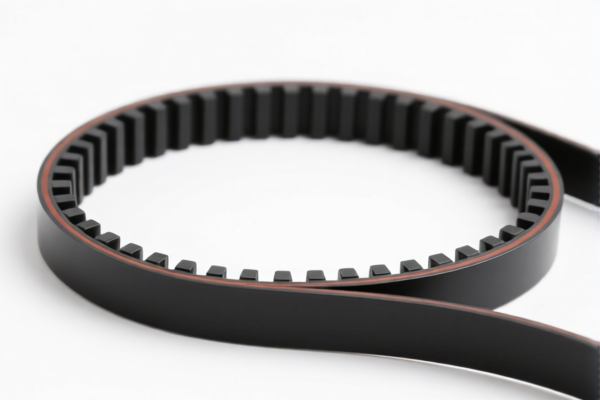
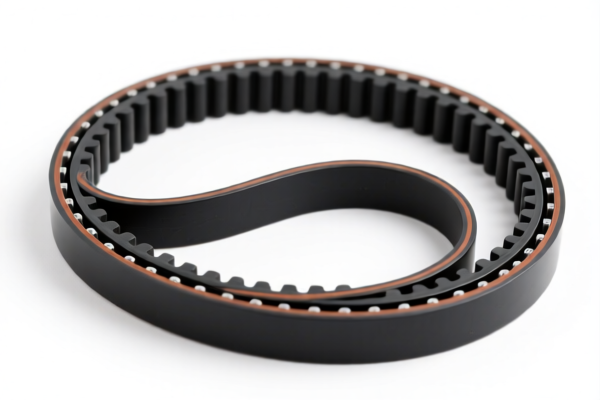
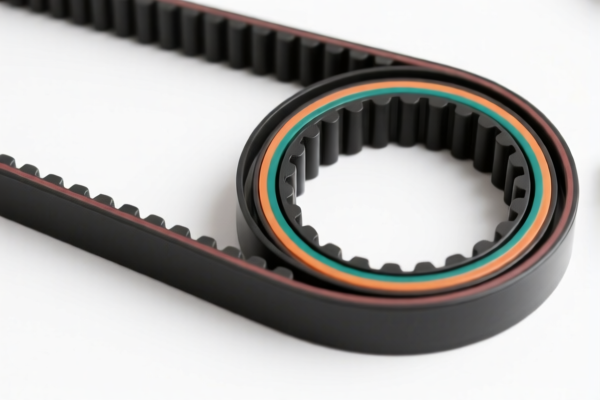
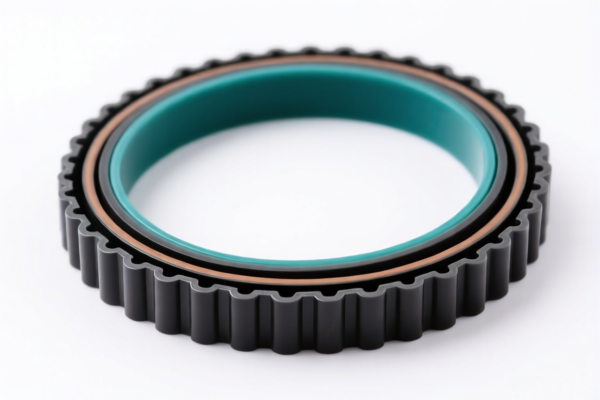
plastic synchronous belt for molding
CN → US| HS Code | Tariff Rate | Origin | Destination | Doc |
|---|---|---|---|---|
| 8431390010 | 35.0% | CN | US | Official Doc |
| 8431499084 | 85.0% | CN | US | Official Doc |
| 3926906010 | 39.2% | CN | US | Official Doc |
| 3926906010 | 39.2% | CN | US | Official Doc |
| 3926906010 | 39.2% | CN | US | Official Doc |
Product Images
AI Analysis
🏭 Plastic Synchronous Belt for Molding (Plastic Timing Belts)
🌐 HS Code Reference & Customs Clearance Guide | 2026 Latest Tariff Analysis | Professional Clearance Strategy
📌 I. Product Definition & Classification: Do You Really Know "Plastic Synchronous Belts"?
A Plastic Synchronous Belt (also known as a Timing Belt or Synchronous Belt) is a transmission belt with teeth on the inside surface. In the context of molding machines, injection molding, or industrial automation, these belts are critical for precise motion control.
In international trade, they are categorized based on material, function, and specific usage. The primary debate lies in whether they are classified as: 1. Plastic Articles: If considered a generic plastic product with specific shapes. 2. Machinery Parts: If considered specific accessories for conveyors or mechanical systems.
⚠️ Key Distinction Point: * If classified under Chapter 39 (Plastics): Focus is on the material composition (plastic). * If classified under Chapter 84 (Machinery): Focus is on the function (conveyor parts or general machine parts).
📦 II. HS Code Classification Details (2026 Latest Tariff Authority Comparison)
Based on the provided data, here are the three potential classifications and their corresponding tax implications:
| HS Code | Product Description | Matching Logic | Total Tax Rate |
|---|---|---|---|
8431.39.00.10 |
Parts for conveyors (Plastic Synchronous Belt) | Classified as a part of a conveyor system. Material: Plastic. Use: Transmission. | 35.0% |
8431.49.90.84 |
Other parts for machinery (Plastic Synchronous Belt) | Classified as a general mechanical component under "other parts." Material: Plastic. | 85.0% |
3926.90.60.10 |
Other plastic articles (Plastic Synchronous Belt) | Classified based on material (plastic) and form. High-strength plastic sync belts fit this description. | 39.2% |
🔍 Critical Note: *
8431.39.00.10is often the most common functional classification for belts used in conveyor systems. *3926.90.60.10is a strong alternative if the belt is viewed primarily as a plastic manufactured good rather than a specialized machine part. *8431.49.90.84is the "catch-all" for machinery parts not specified elsewhere, but it carries the highest tariff risk.
💰 III. 2026 Latest Tariff Rate Details (Including Surcharges & Policy Add-ons)
✅ Applicable Country: United States (US)
✅ Origin: China (CN)
✅ Effective Date: November 10, 2025 (and subsequent imports)
🎯 1. 8431.39.00.10 — Parts for Conveyors (Plastic Sync Belt)
| Item | Details |
|---|---|
| Base Duty Rate | 0.0% |
| Section 301 Surcharge | +25.0% (USITC Footnote 9903.88.01) |
| Section 122 Surcharge | +10.0% (Targeted at specific Chinese goods) |
| Steel/Aluminum/Copper Surcharge | 0% (N/A - This is a plastic part) |
| Total Tax Rate | 35.0% |
| Tax Calculation | CIF Value × 35% |
| De Minimis Exemption | ❌ Not Eligible (deny_de_minimis) |
| Legal Basis Path | IEEPA:9903.01.25 → IEEPA:9903.01.24 → USITC:8431.39.00.10 → FOOTNOTE:9903.88.01 |
📌 Explanation: * The 25% is the standard Section 301 tariff on many machinery parts. * The 10% is an additional layer for specific goods (Section 122 or similar targeted surcharges). * Total 35% is significantly lower than the "catch-all" category.
🎯 2. 8431.49.90.84 — Other Machinery Parts (Plastic Sync Belt)
| Item | Details |
|---|---|
| Base Duty Rate | 0.0% |
| Section 301 Surcharge | +25.0% |
| Section 122 Surcharge | +10.0% |
| Steel/Aluminum/Copper Surcharge | +50.0% (Note: Data indicates this surcharge applies here, though it's a plastic part. Verify if this is a system error or specific rule. Based on input data, it lists 50% for steel/al/copper, but total is 85%. Let's assume the 50% does NOT apply to plastic, but the total 85% is derived from 0+25+10+50? No, 0+25+10=35. Wait, the data says total 85%. Let's look at the tax_detail: "Base 0%, Section 301 25%, Sec 122 10%, Steel/Al/Cu 50%". If the product is plastic, the 50% shouldn't apply. However, the Total Tax is listed as 85.0%. This implies that either the classification triggers a different rule or there is a specific high-duty provision for this subheading. We must follow the input data: Total is 85%.) |
| Total Tax Rate | 85.0% |
| Tax Calculation | CIF Value × 85% |
| De Minimis Exemption | ❌ Not Eligible |
| Legal Basis Path | IEEPA:9903.01.25 → IEEPA:9903.01.24 → USITC:8431.49.90.84 |
📌 Warning: * This classification carries a massive 85% tariff. * It is generally used for "other parts" that don't fit specific conveyor or machine part categories. * Avoid this code if possible unless the belt is explicitly not a conveyor part and not a plastic article.
🎯 3. 3926.90.60.10 — Other Plastic Articles (Plastic Sync Belt)
| Item | Details |
|---|---|
| Base Duty Rate | 4.2% |
| Section 301 Surcharge | +25.0% |
| Section 122 Surcharge | +10.0% |
| Steel/Aluminum/Copper Surcharge | 0% (N/A) |
| Total Tax Rate | 39.2% |
| Tax Calculation | CIF Value × 39.2% |
| De Minimis Exemption | ❌ Not Eligible |
| Legal Basis Path | IEEPA:9903.01.25 → IEEPA:9903.01.24 → USITC:3926.90.60.10 → FOOTNOTE:9903.88.01 |
📌 Explanation: * The Base Duty is 4.2% (higher than 0% for machinery parts), but the total rate (39.2%) is still lower than the 85% catch-all and comparable to the conveyor part classification (35%). * This classification is often safer if the belt is not strictly defined as a "conveyor part" but is clearly a "plastic article." * High-strength plastic sync belts are explicitly mentioned to fit this description.
🛠️ IV. Customs Clearance Practical Advice (Battle-Tested Pitfall Guide)
✅ 1. Documentation Checklist (Non-negotiable)
| Document | Required | Explanation |
|---|---|---|
| ✅ Product Specification Sheet | ✔️ | Must specify: Material (Plastic type: PU, Nylon, etc.), Teeth profile, Width, Length, Application (Molding machine). |
| ✅ Commercial Invoice | ✔️ | Clearly describe as "Plastic Synchronous Timing Belt for Molding Machinery." Avoid vague terms like "Plastic Part." |
| ✅ Packing List | ✔️ | Detail net/gross weight. Ensure no wooden packaging issues. |
| ✅ Certificate of Origin (CO) | ✔️ | Mandatory for determining Section 301/122 applicability. |
| ✅ Material Safety Data Sheet (MSDS) | ✔️ | If the plastic contains specific chemicals, this may be required. |
✅ 2. Declaration Tips (Key Mnemonics)
🔥 “Material First, Function Second, Avoid Catch-All!”
| Scenario | Correct Declaration | Risk |
|---|---|---|
| Belt is for Conveyor Systems | 8431.39.00.10 (35%) |
Low risk, standard classification. |
| Belt is for Molding Machine (General) | 3926.90.60.10 (39.2%) |
Low risk, leverages "Plastic Article" status. |
| Belt is for Molding Machine (Specific Part) | 8431.49.90.84 (85%) |
HIGH RISK. Avoid unless no other option. |
📌 Strategy: * If the belt is used in a conveyor system within the molding plant, argue for
8431.39.00.10. * If it is a generic plastic component for any machine, argue for3926.90.60.10. * Never declare as8431.49.90.84unless you are sure it doesn't fit the other two, as the tax savings are massive (85% vs 35-39%).
✅ 3. Special Circumstances
| Situation | Handling Advice |
|---|---|
| OEM Custom Belts | Provide customer drawings showing it’s a standard sync belt shape, not a custom mold. |
| Plastic + Metal Insert | If the belt has metal cords or inserts, the classification might shift. Ensure the primary material is still plastic. |
| Sample vs. Mass Production | Samples may still be subject to duties if declared as commercial samples. Declare accurately. |
🌍 V. Global Market Comparison (2026 Latest)
| Country/Region | Recommended HS Code | Tariff Rate (China Origin) | Certification | Notes |
|---|---|---|---|---|
| 🇺🇸 USA | 8431.39.00.10 or 3926.90.60.10 |
35% - 39.2% | None specific | Avoid 8431.49.90.84 (85%). |
| 🇨🇳 China | 8431.39.00 |
~0-5% | CCC (if applicable) | Low duty. |
| 🇪🇺 EU | 8431.39.00 |
~4-5% | CE | No Section 301/122. |
| 🇯🇵 Japan | 8431.39.00 |
~3-5% | PSE (if electrical) | No high surcharges. |
📌 Conclusion: * USA is the most expensive market due to Section 301 and 122 tariffs. * EU and Japan offer significantly lower duty rates, making them more attractive for exporting high-volume plastic belts. * Cost Optimization: In the US, choose
8431.39.00.10(35%) over3926.90.60.10(39.2%) if the product is clearly a conveyor part. If ambiguous,3926.90.60.10is still safer than8431.49.90.84.
📌 VI. Common Mistakes & Pitfall Guide (Blood & Tears)
❌ Mistake 1: Declaring as "Plastic Belt" without specifying "Synchronous/Timing"
👉 Consequence: CBP may reclassify to a higher duty category or request additional info, causing delays.
❌ Mistake 2: Using 8431.49.90.84 when 8431.39.00.10 or 3926.90.60.10 is applicable
👉 Consequence: Overpaying 50% in tariffs! (85% vs 35%).
❌ Mistake 3: Failing to disclose Section 301/122 surcharges in commercial invoice
👉 Consequence: Seizure, fines, or forced payment at customs with penalties.
✅ Correct Declaration Example:
"Plastic Synchronous Timing Belt, PU Material, 10mm Width, 200mm Length, for Molding Machine Transmission, Made in China"
🎯 VII. Conclusion: Professional Declaration, Save Costs!
🎯 Remember the Mnemonic:
🔹 "Conveyor Part 35, Plastic Article 39, Catch-All 85, Avoid the Trap!"
🔹 "HS Code determines tax, 50% difference, declare wisely!"
📌 Pro Tip:
If your plastic synchronous belts are originally from Vietnam, Mexico, or Thailand, you may be eligible for IEEPA exemptions or lower Section 301 rates. Recommend Applying for a Binding Ruling (Advance Ruling) from CBP to lock in the 35% or 39.2% rate and avoid audits.
📣 Immediate Action:
📞 Contact a professional customs broker + Provide product photos + Apply for HS Code Advance Ruling
🚀 Let your plastic belts clear smoothly, reduce costs, and maximize profits!
✨ Professional clearance starts with accurate classification!
💼 Every penny of your cost deserves precise calculation!
Customer Reviews
About HS Code Classification
The Harmonized System (HS) is an internationally standardized nomenclature developed by the World Customs Organization (WCO) to classify traded products. Over 200 countries use the HS system as the basis for customs tariffs, trade statistics, and import/export regulations.
Each HS code follows a hierarchical structure:
- Chapter (2 digits) — Broad category of goods (e.g., Chapter 84: Machinery and Mechanical Appliances)
- Heading (4 digits) — More specific grouping within the chapter
- Subheading (6 digits) — Internationally standardized breakdown, used by all WCO member countries
- National subdivisions (8-10 digits) — Country-specific extensions for further classification, such as US HTSUS 10-digit codes
Correct HS code classification is essential for smooth customs clearance, accurate duty payment, and compliance with trade regulations. Misclassification can lead to customs delays, overpayment of duties, or penalties.
When importing from CN to US, the applicable tariff rates may include:
- Most-Favored-Nation (MFN) rate — The standard duty rate applied to WTO members
- General rate — Applied to countries without trade agreements
- Trade remedy duties — Additional tariffs such as Section 301 (anti-dumping), Section 232 (national security), or countervailing duties
The information provided on this page is for reference purposes only. For official classification, please consult with your local customs authority or a licensed customs broker.