plastic table runner decorations
CN → US| HS Code | Tariff Rate | Origin | Destination | Doc |
|---|---|---|---|---|
| 5903102010 | 35.0% | CN | US | Official Doc |
| 5903102090 | 35.0% | CN | US | Official Doc |
| 3920100000 | 39.2% | CN | US | Official Doc |
| 3920200055 | 39.2% | CN | US | Official Doc |
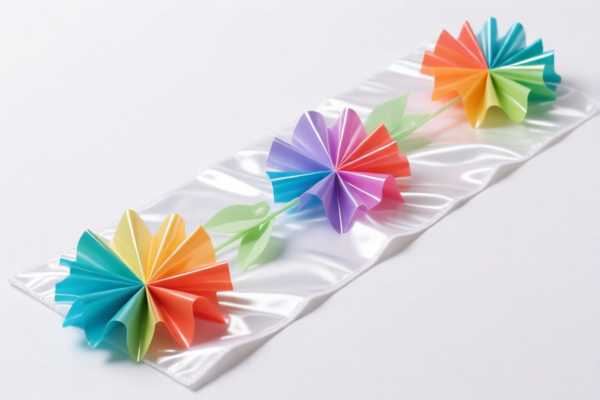
Product Images



AI Analysis
🍽️ Plastic Table Runners & Decorations (Plastic Tablecloths)
🌐 HS Code Reference & Customs Clearance Guide | 2026 Latest Tariff Analysis | Professional Clearance Strategy
📌 Part 1: Product Definition & Classification: What Exactly Is a "Plastic Table Runner"?
In international trade, "plastic table runners" are generally classified under two main categories based on their manufacturing process and material composition. Confusion often arises between purely plastic products and textile products coated with plastic.
1. Pure Plastic Sheets/Films (Chapter 39):
These are products made entirely of plastic polymers (such as Polypropylene or Polyethylene), formed into sheets, films, or strips. They do not have a fabric backing.
2. Plastic-Coated Textiles (Chapter 59):
These are textile fabrics (woven, knitted, etc.) that have been impregnated, coated, covered, or laminated with plastics (such as PVC or other polymers). The textile structure is the primary support, while the plastic provides water resistance and decoration.
⚠️ Key Distinction Point:
- If the product is 100% plastic material (no fabric weave visible or structural support) → Classify under Chapter 39.
- If the product has a visible textile base that is coated/covered with plastic → Classify under Chapter 59.
📦 Part 2: HS Code Classification Details (2026 Latest Tariff Authority Comparison)
| HS Code | Product Description | Scenario | Material/Structure | Total Tax Rate |
|---|---|---|---|---|
3920.20.00.55 |
Plastic tablecloths, made of polypropylene, in the form of sheets, films, or strips | Pure PP plastic runner, no fabric base | ✅ Pure Plastic (Polypropylene) | 39.2% |
5903.10.20.10 |
Plastic tablecloths, textile fabrics impregnated, coated, covered, or laminated with plastics | PVC-coated fabric runner | ✅ Textile + Plastic Coating | 35.0% |
5903.10.20.90 |
Plastic tablecloths, textile fabrics impregnated/covered with plastics other than PVC | Coated fabric runner (non-PVC plastic) | ✅ Textile + Plastic Coating | 35.0% |
3920.10.00.00 |
Plastic tablecloths, made of ethylene polymers (PE), in the form of sheets/films/strips | Pure PE plastic runner | ✅ Pure Plastic (Polyethylene) | 39.2% |
🔍 Key Reminder:
- If the table runner is woven fabric with a plastic layer (like a typical disposable party tablecloth), it usually falls under 5903.10 (35.0% tax).
- If it is a solid plastic sheet cut into a runner shape (like a clear vinyl or rigid PP sheet), it falls under 3920 (39.2% tax).
- Do not mix up: A "plastic" runner can be either Chapter 39 or 59 depending on the substrate.
💰 Part 3: 2026 Latest Tariff Rate Details (Including Surcharges & Policy Add-ons)
✅ Applicable Country: United States (US)
✅ Country of Origin: China (CN)
✅ Effective Date: From November 10, 2025 (including subsequent imports)
🎯 1. 3920.20.00.55 & 3920.10.00.00 —— Pure Plastic Table Runners (PP/PE)
| Item | Details |
|---|---|
| Base Tariff | 4.2% (Ad Valorem) |
| Section 301 Additional Tariff | +25.0% (From USITC Footnote regarding China imports) |
| Section 122 Tariff | +10.0% (Specific addition for certain plastic products from China) |
| Total Tax Rate | 39.2% |
| Tax Calculation | CIF Value × 39.2% |
| De Minimis Exemption Eligible | ❌ NO (Denied under Section 122 and Section 301) |
| Legal Basis Path | Section 122 → Section 301 → USITC:3920.20.00.55 / 3920.10.00.00 |
📌 Explanation:
- "Base Tariff 4.2%": Standard Most Favored Nation (MFN) rate for plastic plates, sheets, film, foil, and strip of polymers.
- "Section 301 25%": Additional tariff imposed on Chinese goods under Trade Act of 1974 Section 301.
- "Section 122 10%": An additional tariff specifically targeting certain plastic imports from China.
- Total: 4.2% + 25% + 10% = 39.2%. This is a high tariff burden, requiring precise declaration to avoid misclassification penalties.
🎯 2. 5903.10.20.10 & 5903.10.20.90 —— Plastic-Coated Textile Table Runners
| Item | Details |
|---|---|
| Base Tariff | 0.0% (Ad Valorem) |
| Section 301 Additional Tariff | +25.0% (From USITC Footnote regarding China imports) |
| Section 122 Tariff | +10.0% (Specific addition for certain plastic products from China) |
| Total Tax Rate | 35.0% |
| Tax Calculation | CIF Value × 35.0% |
| De Minimis Exemption Eligible | ❌ NO (Denied under Section 122 and Section 301) |
| Legal Basis Path | Section 122 → Section 301 → USITC:5903.10.20.10 / 5903.10.20.90 |
📌 Note:
- Why is the base rate 0%? Textiles coated with plastic often enjoy lower base MFN rates compared to pure plastics.
- However, the additional surcharges (25% + 10%) still apply in full.
- Total: 0% + 25% + 10% = 35.0%.
- While 5% lower than pure plastic runners, it remains a significant cost factor.
🛠️ Part 4: Customs Clearance Practical Advice (Real-World Pitfall Avoidance Guide)
✅ 1. Required Documentation Checklist (Non-Negotiable)
| Document | Must Provide | Description |
|---|---|---|
| ✅ Product Specification Sheet | ✔️ | Must clearly state: Material Composition (e.g., "100% Polypropylene" vs. "Polyester with PVC Coating"), Thickness, Dimensions. |
| ✅ Material Composition Certificate | ✔️ | Critical for distinguishing between Chapter 39 (Pure Plastic) and Chapter 59 (Coated Textile). |
| ✅ Product Photos (Clear Labels) | ✔️ | Show the cross-section if possible (to prove presence/absence of fabric) and the packaging label. |
| ✅ Commercial Invoice | ✔️ | Clearly describe the item: e.g., "Plastic Table Runner, Polypropylene, No Textile Base" OR "PVC-Coated Polyester Table Runner". |
| ✅ Packing List | ✔️ | Detail net weight, gross weight, and quantity. Ensure consistency with invoice. |
| ✅ Country of Origin Certificate (CO) | ✔️ | Proof of Chinese origin is mandatory for calculating Section 301 and 122 tariffs. |
✅ 2. Declaration Tips (Key Mantra)
🔥 "Material Determines Chapter, Coating Determines HS, Accuracy Saves Money!"
| Scenario | Correct Declaration Approach | Wrong Approach |
|---|---|---|
| Pure Plastic Runner (PP/PE) | Use 3920.xx codes. Emphasize "No Fabric Base". | Misdeclare as textile (5903) → Risk of penalty for incorrect classification. |
| Coated Fabric Runner | Use 5903.10 codes. Emphasize "Textile Base with Plastic Coating". | Misdeclare as pure plastic (3920) → Overpaying tax by 4.2%. |
| Mixed Packaging (Plastic + Textile) | Declare based on principal character (GRI 3(b)). If plastic is essential character → Ch 39; If textile is structural → Ch 59. | Splitting shipment arbitrarily → Customs audit flag. |
| "Decorative Plastic Item" | Vague description → High risk. | Use specific material name (e.g., "Polyvinyl Chloride Coated Cotton"). |
✅ 3. Special Situation Handling
| Situation | Handling Advice |
|---|---|
| OEM Custom Designs | Provide design files + material spec sheet to prove if it's printed on plastic or coated fabric. |
| Reusable vs. Disposable | "Reusable" often implies thicker plastic or fabric backing. "Disposable" is often thin PVC. Specify this in description. |
| Small Samples (De Minimis) | ❌ Cannot use De Minimis (Section 321) for these HS codes due to Section 122 & 301 restrictions. Must file formal entry. |
| Plastic Scrap/Recycled Material | If made from recycled plastic, still subject to 39.2% or 35.0% depending on structure. No special exemption. |
🌍 Part 5: Global Main Market Clearance Comparison (2026 Latest)
| Country/Region | Recommended HS Code | Tariff Rate | Certification Requirements | Notes |
|---|---|---|---|---|
| 🇺🇸 United States | 3920.20.00.55 or 5903.10.20.x |
39.2% (Pure Plastic) 35.0% (Coated Textile) |
FCC (if electronics attached, rare) FDA (if food contact) |
High tariffs due to China origin. Section 122 applies. |
| 🇨🇳 China | 3920.20 or 5903.10 |
~5-7% | CCC (if applicable) | Lower base tariffs, no Section 301/122. |
| 🇪🇺 European Union | 3920.20 or 5903.10 |
~0-4.5% | CE (if applicable) REACH (Chemicals) |
No Section 301. REACH compliance critical for PVC. |
| 🇬🇧 United Kingdom | 3920.20 or 5903.10 |
~0-4.5% | UKCA (if applicable) | Post-Brexit rules apply. No China-specific surcharges. |
📌 Conclusion:
- USA is the most challenging market for plastic table runners due to the combination of Base Tariff + Section 301 + Section 122.
- EU/UK are more favorable, but REACH compliance (for PVC/plasticizers) is a major hurdle.
- Cost Savings Tip: If possible, consider sourcing from non-China origins (e.g., Vietnam, India) to potentially avoid Section 301/122 tariffs, but verify Rules of Origin.
📌 Part 6: Common Errors & Pitfall Guide (Lessons Learned)
❌ Error 1: Describing the product vaguely as "Table Decoration" or "Party Supply"
👉 Consequence: Customs assigns a default higher duty or requests detailed documentation, causing clearance delays.
❌ Error 2: Misclassifying a Fabric-Coated runner as Pure Plastic (or vice versa)
👉 Consequence: If declared as Pure Plastic (39.2%) but is actually Coated Textile (35.0%), you overpay 4.2%. If declared as Coated (35%) but is Pure Plastic (39.2%), you face penalties and back taxes.
❌ Error 3: Ignoring Section 122 Tariff
👉 Consequence: Even if you think "Plastic" only has Section 301, Section 122 adds another 10%. Failing to account for this leads to unbudgeted costs.
❌ Error 4: Assuming De Minimis (Under $800) applies
👉 Consequence: Section 122 and Section 301 explicitly deny de minimis exemptions for these categories. Small shipments will still be taxed.
✅ Correct Approach:
"Plastic Table Runner, 12x108 inches, Material: 100% Polypropylene, No Textile Base, For Commercial Banquet Use, HS Code: 3920.20.00.55"
🎯 Part 7: Conclusion: Professional Declaration, Time-Saving, Cost-Efficient!
🎯 Remember the Mantra:
🔹 "Pure Plastic = 39.2% (Base 4.2% + 301 25% + 122 10%)
🔹 "Coated Textile = 35.0% (Base 0% + 301 25% + 122 10%)
🔹 "No De Minimis! No Vague Descriptions! No Penalties!"
📌 Pro Tip:
If your plastic table runners are originating from Vietnam, India, or Malaysia, you may avoid Section 301 and Section 122 tariffs, reducing the rate to just the Base Tariff (0-4.2%).
Recommendation: Apply for a Pre-Ruling (Advance Ruling) from US CBP to confirm the HS Code and tax calculation before shipment. This minimizes risk and ensures smooth clearance.
📣 Immediate Action:
📞 Contact a professional customs broker + Provide Material Composition Certificate + Apply for HS Code Pre-Ruling
🚀 Let your table runners clear customs smoothly, efficiently, and profitably!
✨ Professional Clearance Starts with Precise Classification!
💼 Every Cent of Cost Deserves to Be Calculated Precisely!
Customer Reviews
About HS Code Classification
The Harmonized System (HS) is an internationally standardized nomenclature developed by the World Customs Organization (WCO) to classify traded products. Over 200 countries use the HS system as the basis for customs tariffs, trade statistics, and import/export regulations.
Each HS code follows a hierarchical structure:
- Chapter (2 digits) — Broad category of goods (e.g., Chapter 84: Machinery and Mechanical Appliances)
- Heading (4 digits) — More specific grouping within the chapter
- Subheading (6 digits) — Internationally standardized breakdown, used by all WCO member countries
- National subdivisions (8-10 digits) — Country-specific extensions for further classification, such as US HTSUS 10-digit codes
Correct HS code classification is essential for smooth customs clearance, accurate duty payment, and compliance with trade regulations. Misclassification can lead to customs delays, overpayment of duties, or penalties.
When importing from CN to US, the applicable tariff rates may include:
- Most-Favored-Nation (MFN) rate — The standard duty rate applied to WTO members
- General rate — Applied to countries without trade agreements
- Trade remedy duties — Additional tariffs such as Section 301 (anti-dumping), Section 232 (national security), or countervailing duties
The information provided on this page is for reference purposes only. For official classification, please consult with your local customs authority or a licensed customs broker.