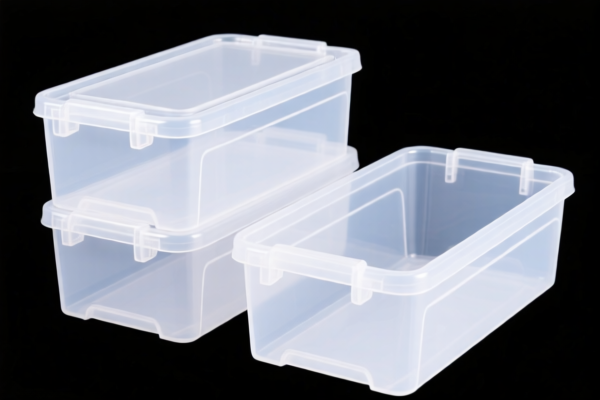
plastic transparent storage box
CN → US| HS Code | Tariff Rate | Origin | Destination | Doc |
|---|---|---|---|---|
| 3926908700 | 40.3% | CN | US | Official Doc |
| 4202929700 | 52.6% | CN | US | Official Doc |
| 6307909875 | 24.5% | CN | US | Official Doc |
| 6307909891 | 24.5% | CN | US | Official Doc |
| 3926909989 | 22.8% | CN | US | Official Doc |
Product Images



AI Analysis
📦 Plastic Transparent Storage Box (Clear Organizers)
🌐 HS Code Reference & Customs Clearance Guide | 2026 Latest Tariff Analysis | Professional Level Strategy
📌 Part I: Product Definition & Classification: What Exactly Is a "Storage Box"?
A Plastic Transparent Storage Box is a versatile container used for organizing jewelry, cosmetics, small hardware, or documents. In international trade, classification hinges on two critical factors: Material Composition and Specific Functionality.
While "plastic" points to Chapter 39, "bags/containers" might suggest Chapter 42 or 63. The key differentiator is whether it is a rigid container (Box) or a flexible bag/enclosure.
⚠️ Key Distinction Point:
- If the item is a rigid, molded box made of plastic (PVC/PE/PP), it generally falls under Chapter 39 (Articles of Plastic).
- If the item is a soft, flexible pouch/bag made of plastic sheets, it may fall under Chapter 42 (Articles of Leather; similar articles; harnesses) or Chapter 63 (Other Made Up Articles), specifically if used for specific items like jewelry.
- "Transparent" implies materials like PVC, PE, or EVA, which are common in Chapter 39.
📦 Part II: HS Code Classification Details (2026 Latest Tariff Authority Cross-Reference)
Based on the provided data, here are the potential classifications, ranging from rigid plastic goods to flexible textile/plastic hybrids.
| HS Code | Product Description | Application Scenario | Material/Form Factor |
|---|---|---|---|
3926.90.87.00 |
Other articles of plastic, including flexible plastic document folders/binders | Rigid or semi-rigid plastic containers; "Storage" implies general utility | ✅ Plastic (PVC/PE) |
4202.92.97.00 |
Articles of apparel clothing accessories, not elsewhere specified or included: Of sheeting of plastics | Jewelry/Accessory Pouches; Soft/Flat plastic bags for specific items | ✅ Plastic Sheets (PVC/EVA) |
6307.90.98.75 |
Other made up articles, including dress patterns: Other | General Fabric/Plastic Bags; "Catch-all" for non-specific made-up articles | ⚠️ Material Inferred (Plastic/PVC) |
6307.90.98.91 |
Other made up articles, including dress patterns: Other | General Made-Up Articles; Similar to 75, but different sub-category for "Other" | ⚠️ Material Inferred (Plastic/PVC) |
3926.90.99.89 |
Other articles of plastic, not elsewhere specified or included: Other | General Plastic Consumer Goods; Rigid/Flexible plastic containers not specifically defined elsewhere | ✅ Plastic (PVC/EVA) |
🔍 Critical Note:
- Rigid Boxes: If the "Storage Box" is hard/rigid, it must go to Chapter 39 (3926...).
- Soft Bags/Pouches: If it is a soft pouch (e.g., for jewelry), it may fall to 4202 (if considered an accessory) or 6307 (if considered a general textile/plastic bag).
- "Transparent" alone does not determine the code; the form (rigid vs. flexible) and primary use do.
💰 Part III: 2026 Latest Tariff Rate Breakdown (Including Surtaxes & Policy Add-ons)
✅ Applicable Country: United States (US)
✅ Country of Origin: China (CN)
✅ Effective Date: November 10, 2025 onwards (including subsequent imports)
🎯 1. 3926.90.87.00 – Other Plastic Articles (Flexible/Folder-like)
| Item | Detail |
|---|---|
| Base Duty | 5.3% (ad valorem) |
| USITC Surtax (Section 301) | +25.0% |
| IEEPA Surtax (122 Clause) | +10.0% |
| Total Tax Rate | 40.3% |
| Tax Calculation | CIF Value × 40.3% |
| De Minimis Exemption | ❌ Denied (deny_de_minimis) |
| Legal Basis Path | IEEPA:9903.01.24 → USITC:3926.90.87.00 → FOOTNOTE:9903.88.01 |
📌 Explanation:
- This classification assumes the item is a plastic article (e.g., a flexible plastic organizer or folder-like storage).
- The 40.3% rate is high due to the combination of base duty and US trade sanctions.
🎯 2. 4202.92.97.00 – Articles of Plastic Sheets (Jewelry/Accessory Bags)
| Item | Detail |
|---|---|
| Base Duty | 17.6% |
| USITC Surtax (Section 301) | +25.0% |
| IEEPA Surtax (122 Clause) | +10.0% |
| Total Tax Rate | 52.6% |
| Tax Calculation | CIF Value × 52.6% |
| De Minimis Exemption | ❌ Denied (deny_de_minimis) |
| Legal Basis Path | IEEPA:9903.01.24 → USITC:4202.92.97.00 → FOOTNOTE:9903.88.01 |
📌 Explanation:
- This is the most expensive option. It applies if the item is considered an article of apparel/accessory (like a jewelry pouch) made of plastic sheets.
- High base duty (17.6%) makes this category costly for soft plastic bags.
🎯 3. 6307.90.98.75 – Other Made Up Articles (Flexible Bags)
| Item | Detail |
|---|---|
| Base Duty | 7.0% |
| USITC Surtax (Section 301) | +7.5% |
| IEEPA Surtax (122 Clause) | +10.0% |
| Total Tax Rate | 24.5% |
| Tax Calculation | CIF Value × 24.5% |
| De Minimis Exemption | ❌ Denied (deny_de_minimis) |
| Legal Basis Path | IEEPA:9903.01.24 → USITC:6307.90.98.75 → FOOTNOTE:9903.88.01 |
📌 Explanation:
- This is a more cost-effective option for flexible bags/pouches.
- It is classified as a "general made-up article" rather than a specific accessory or plastic article, resulting in lower base duty and Section 301 tax.
🎯 4. 6307.90.98.91 – Other Made Up Articles (Alternative Sub-category)
| Item | Detail |
|---|---|
| Base Duty | 7.0% |
| USITC Surtax (Section 301) | +7.5% |
| IEEPA Surtax (122 Clause) | +10.0% |
| Total Tax Rate | 24.5% |
| Tax Calculation | CIF Value × 24.5% |
| De Minimis Exemption | ❌ Denied (deny_de_minimis) |
| Legal Basis Path | IEEPA:9903.01.24 → USITC:6307.90.98.91 → FOOTNOTE:9903.88.01 |
📌 Explanation:
- Similar to6307.90.98.75, this is a "catch-all" for made-up articles.
- If the customs officer accepts the item as a general "bag" rather than a "plastic article" or "accessory," this rate applies.
🎯 5. 3926.90.99.89 – Other Plastic Articles (General Plastic Goods)
| Item | Detail |
|---|---|
| Base Duty | 5.3% |
| USITC Surtax (Section 301) | +7.5% |
| IEEPA Surtax (122 Clause) | +10.0% |
| Total Tax Rate | 22.8% |
| Tax Calculation | CIF Value × 22.8% |
| De Minimis Exemption | ❌ Denied (deny_de_minimis) |
| Legal Basis Path | IEEPA:9903.01.24 → USITC:3926.90.99.89 → FOOTNOTE:9903.88.01 |
📌 Explanation:
- This is the most cost-effective option for plastic items.
- It applies if the item is clearly a plastic article (e.g., a rigid or semi-rigid plastic storage box) that doesn't fit more specific plastic sub-headings.
- Recommendation: If your item is truly a "box" (rigid), this is likely the best classification.
🛠️ Part IV: Customs Clearance Practical Advice (Battle-Tested Pitfall Guide)
✅ 1. Required Documentation Checklist (Non-Negotiable)
| Document | Mandatory? | Description |
|---|---|---|
| ✅ Product Specifications | ✔️ | Dimensions, material type (PVC/PE/PP), weight, capacity |
| ✅ Material Composition Statement | ✔️ | Explicitly state: "100% Plastic (PVC/PE)" or "Polyester with PVC coating" |
| ✅ Product Photos (Clear) | ✔️ | Show the item empty and filled, highlighting rigidity vs. flexibility |
| ✅ Commercial Invoice | ✔️ | Clearly state "Plastic Storage Box" or "Plastic Organizer Bag" |
| ✅ Packing List | ✔️ | Indicate if boxes are nested or stacked |
| ✅ Third-Party Test Report | ✔️ | Phthalate tests (if for children/toys), RoHS compliance |
✅ 2. Declaration Tips (Key Mnemonic)
🔥 "Rigid is 39, Soft is 63/42; Name it Right, Save Cash!"
| Scenario | Correct Declaration | Incorrect Declaration | Consequence |
|---|---|---|---|
| Hard Plastic Box | 3926.90.99.89 (22.8%) |
4202.92.97.00 (52.6%) |
Overpay by ~30%! |
| Soft Plastic Pouch | 6307.90.98.75 (24.5%) |
3926.90.87.00 (40.3%) |
Overpay by ~15%! |
| Jewelry Bag | 4202.92.97.00 (52.6%) |
6307.90.98.75 (24.5%) |
Risk of Auditing/Reclassification |
| Mixed Materials | Specify dominant material | Vague "Plastic Fabric" | Delay + Extra Fees |
✅ 3. Special Cases Handling
| Situation | Handling Advice |
|---|---|
| OEM Custom Boxes | Provide design files to prove it's a "made-up article" vs. standard stock |
| Children's Toy Storage | Must comply with CPSIA; may require additional testing |
| Rigid vs. Flexible | If it stands on its own, classify as 3926 (Plastic). If it collapses, consider 6307 (Bag) |
| Transparent Material | Clarify if it's PVC (restricted in some cases) or PE (safer) |
🌍 Part V: Global Market Customs Comparison (2026 Latest)
| Country/Region | Recommended HS Code | Tariff (China Origin) | Certification | Note |
|---|---|---|---|---|
| 🇺🇸 USA | 3926.90.99.89 |
22.8% (Best for Plastic) | None specific | High tariffs on all plastic goods |
| 🇨🇳 China | 3926.90.90.00 |
5% | CCC (if applicable) | Lower base duty |
| 🇪🇺 EU | 3926.90.97 |
4.7% | CE (if toy-related) | No Section 301 equivalent |
| 🇬🇧 UK | 3926.90.97 |
4.7% | UKCA | Post-Brexit alignment |
| 🇦🇺 Australia | 3926.90.97 |
5% | None | Standard MFN rates |
📌 Conclusion:
- USA has the highest barrier due to Section 301 and IEEPA tariffs.
- EU/UK/Australia are significantly cheaper for plastic storage items.
- China Origin goods face heavy surcharges in the US market regardless of classification.
📌 Part VI: Common Errors & Pitfall Guide (Lessons Learned)
❌ Error 1: Declaring a Rigid Plastic Box as a "Fabric Bag" (6307)
👉 Consequence: Customs may reclassify as 3926, leading to 22.8% vs 24.5% differences, but more importantly, misdeclaration fines.
❌ Error 2: Declaring a Soft Plastic Pouch as a "Plastic Article" (3926)
👉 Consequence: Higher tax (40.3%) than necessary. You could have paid 24.5% under 6307.
❌ Error 3: Using "Plastic Container" without specifying material
👉 Consequence: Customs will request additional info, causing shipment delays.
❌ Error 4: Ignoring IEEPA 122 Clause
👉 Consequence: Failure to declare origin correctly can lead to 10% additional penalty.
✅ Correct Approach:
"Plastic Storage Box, Rigid, PVC Material, Transparent, Model XYZ, No Toy Components"
OR
"Soft Plastic Organizer Bag, PVC Sheet Material, Jewelry Storage, Transparent"
🎯 Part VII: Conclusion: Professional Declaration, Cost Optimization!
🎯 Remember the Mnemonic:
🔹 "Rigid is 39, Soft is 63; Name it Right, Save Cash!"
🔹 "HS Code Determines Life, 10% Difference Means Big Money!"
📌 Pro Tip:
If your plastic storage box is originating from Vietnam, Mexico, or Thailand, you may apply for IEEPA Exemption, reducing the tax to 0%~5%.
Recommendation: Apply for an Advance Ruling from US Customs (CBP) to confirm the correct HS Code before shipment.
📣 Immediate Action:
📞 Contact a professional customs broker + Provide Product Photos + Apply for HS Code Advance Ruling
🚀 Ensure your storage boxes pass customs smoothly, accelerate global trade, and maximize profits!
✨ Professional Customs Clearance Starts with Accurate Classification!
💼 Every Cent of Cost Deserves Precise Calculation!
Customer Reviews
About HS Code Classification
The Harmonized System (HS) is an internationally standardized nomenclature developed by the World Customs Organization (WCO) to classify traded products. Over 200 countries use the HS system as the basis for customs tariffs, trade statistics, and import/export regulations.
Each HS code follows a hierarchical structure:
- Chapter (2 digits) — Broad category of goods (e.g., Chapter 84: Machinery and Mechanical Appliances)
- Heading (4 digits) — More specific grouping within the chapter
- Subheading (6 digits) — Internationally standardized breakdown, used by all WCO member countries
- National subdivisions (8-10 digits) — Country-specific extensions for further classification, such as US HTSUS 10-digit codes
Correct HS code classification is essential for smooth customs clearance, accurate duty payment, and compliance with trade regulations. Misclassification can lead to customs delays, overpayment of duties, or penalties.
When importing from CN to US, the applicable tariff rates may include:
- Most-Favored-Nation (MFN) rate — The standard duty rate applied to WTO members
- General rate — Applied to countries without trade agreements
- Trade remedy duties — Additional tariffs such as Section 301 (anti-dumping), Section 232 (national security), or countervailing duties
The information provided on this page is for reference purposes only. For official classification, please consult with your local customs authority or a licensed customs broker.