plastic trash can
CN → US| HS Code | Tariff Rate | Origin | Destination | Doc |
|---|---|---|---|---|
| 3923900012 | 38.0% | CN | US | Official Doc |
| 3926901000 | 20.9% | CN | US | Official Doc |
| 3926904000 | 12.8% | CN | US | Official Doc |
| 3923900014 | 38.0% | CN | US | Official Doc |
| 3917290050 | 38.1% | CN | US | Official Doc |
Product Images
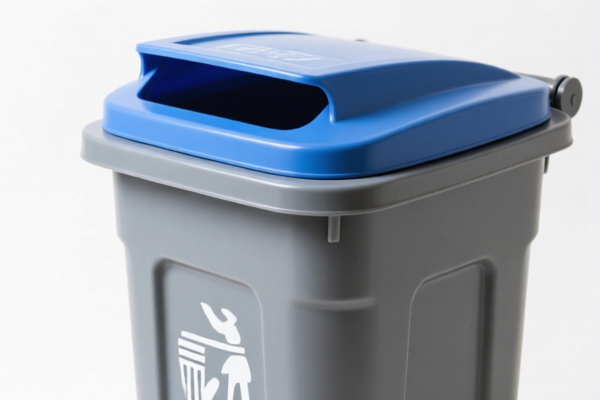
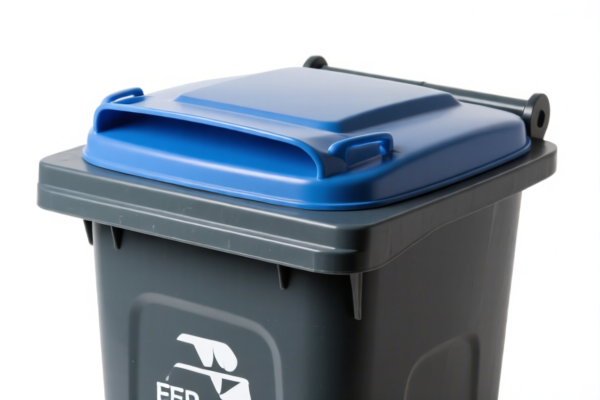
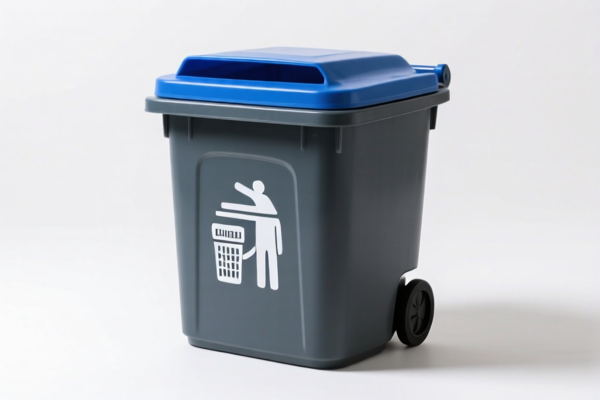
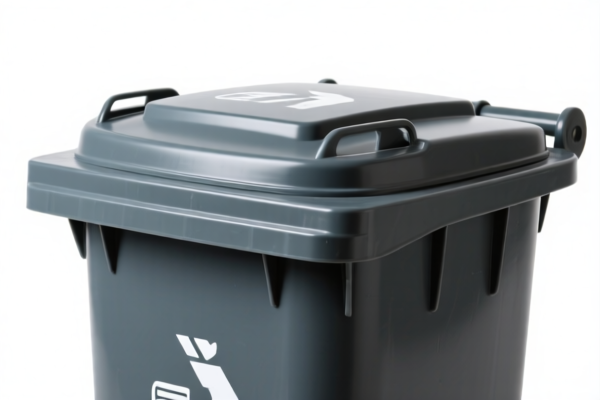
AI Analysis
🗑️ Plastic Trash Can (Plastic Containers/Barrels for Transport or Storage)
🌐 HS Code Reference & Clearance Guide | 2026 Latest Tariff Analysis | Professional Entry Strategy
📌 Part I: Product Definition & Classification: Do You Really Understand "Plastic Trash Cans"?
Plastic trash cans, in international trade terms, are broadly categorized as plastic containers suitable for the transport or storage of goods. Their classification depends heavily on their specific form, usage, and structural characteristics. They are primarily classified under Chapter 39 (Plastics and Articles Thereof), specifically within Heading 3923 (Articles for the conveyance or packing of goods) or Heading 3926 (Other articles of plastics).
Key Distinctions in Classification: * Primary Storage/Transport Containers (Headings 3923): If the "trash can" is designed primarily as a container for bulk storage, transport, or industrial packaging (e.g., large drums, specialized bins for logistics), it falls under 3923.90. * General Household/Decorative Items (Heading 3926): If the item is a simple household bucket, oil barrel, or general-purpose plastic vessel not primarily for industrial transport/packing, it may fall under 3926.90. * Piping/Accessory Forms (Heading 3917): Rarely, if the "container" is structurally integrated with piping systems or is an accessory to a plumbing system, it might be misclassified or confused with 3917.29, though this is less common for standard trash cans.
⚠️ Critical Distinction:
- If it’s a standard household bin (e.g., kitchen waste bin) → Likely 3926.90.10.00 (Plastic articles, including buckets/barrels).
- If it’s a large industrial drum or transport barrel → Likely 3923.90.00.12/14 (Plastic articles for conveyance/packing).
- Do not classify small household bins as "transport containers" to avoid duty discrepancies; customs will scrutinize the primary use.
📦 Part II: HS Code Classification Details (2026 Latest Tariff Authority Comparison)
Based on the provided data, here is the breakdown for Plastic Trash Cans:
| HS Code | Product Description (Summary) | Applicable Scenario | Primary Duty Category |
|---|---|---|---|
3923.90.00.12 |
Plastic barrels/containers for transport or storage | Large industrial drums, bulk transport bins | High Duty (3923) |
3923.90.00.14 |
Plastic packaging containers & barrels, barrel form | Standard plastic barrels for storage/logistics | High Duty (3923) |
3926.90.10.00 |
Plastic articles, including buckets, oil barrels | Household buckets, general-purpose plastic bins | Medium Duty (3926) |
3926.90.40.00 |
Other plastic articles (materials of Ch. 3901-3914) | Generic plastic items not elsewhere specified | Lowest Duty (3926) |
3917.29.00.50 |
Plastic pipe accessories or containers, barrel form | Niche: Containers integrated with piping systems | High Duty (3917) |
🔍 Key Reminder:
- 3923 vs. 3926: The core difference is function. 3923 is for conveyance/packing (industrial/logistics focus); 3926 is for other uses (household/general focus).
- Form Matters: Both 3923.90.00.12 and 3923.90.00.14 specify "barrel form," indicating larger, rigid storage containers.
💰 Part III: 2026 Latest Tariff Rate Breakdown (Including Additional Taxes, Policy Add-ons)
✅ Applicable Country: United States (US)
✅ Origin: China (CN)
✅ Effective Date: Rates include Section 301 and IEEPA surcharges as per provided data.
🎯 1. 3923.90.00.12 —— Plastic Barrels for Transport/Storage
| Item | Content |
|---|---|
| Base Tariff | 3.0% (ad valorem) |
| Section 301 Additional Tariff | +25.0% |
| IEEPA Surcharge (Section 122) | +10.0% |
| Total Tariff Rate | 38.0% |
| Tax Calculation | CIF Value × 38.0% |
| De Minimis Eligibility | ❌ Not Eligible (High tariff rates exclude this from typical low-value exemptions) |
| Legal Basis Path | Base Tariff: 3.0% → Section 301: 25.0% → IEEPA: 10% → Total 38.0% |
📌 Explanation:
- This is a high-duty category due to its classification under 3923 (packaging/transport), which attracts the full 25% Section 301 tariff.
- The additional 10% IEEPA surcharge brings the total to 38.0%.
- Cost Impact: For a $10,000 shipment, duties alone equal $3,800.
🎯 2. 3923.90.00.14 —— Plastic Packaging Containers & Barrels
| Item | Content |
|---|---|
| Base Tariff | 3.0% (ad valorem) |
| Section 301 Additional Tariff | +25.0% |
| IEEPA Surcharge (Section 122) | +10.0% |
| Total Tariff Rate | 38.0% |
| Tax Calculation | CIF Value × 38.0% |
| De Minimis Eligibility | ❌ Not Eligible |
| Legal Basis Path | Base Tariff: 3.0% → Section 301: 25.0% → IEEPA: 10% → Total 38.0% |
📌 Note:
- Identical tax treatment to3923.90.00.12.
- Both fall under the "plastic packaging/transport" umbrella, attracting maximum tariffs.
🎯 3. 3926.90.10.00 —— Plastic Articles (Including Buckets/Barrels)
| Item | Content |
|---|---|
| Base Tariff | 3.4% (ad valorem) |
| Section 301 Additional Tariff | +7.5% |
| IEEPA Surcharge (Section 122) | +10.0% |
| Total Tariff Rate | 20.9% |
| Tax Calculation | CIF Value × 20.9% |
| De Minimis Eligibility | ❌ Not Eligible |
| Legal Basis Path | Base Tariff: 3.4% → Section 301: 7.5% → IEEPA: 10% → Total 20.9% |
📌 Note:
- This is a medium-duty category.
- Lower Section 301 rate (7.5% vs. 25%) because it’s classified as "other articles" rather than "transport/packing containers."
- Cost Impact: For a $10,000 shipment, duties equal $2,090 (saving ~$1,710 vs. 3923 codes).
🎯 4. 3926.90.40.00 —— Other Plastic Articles (Ch. 3901-3914 Materials)
| Item | Content |
|---|---|
| Base Tariff | 2.8% (ad valorem) |
| Section 301 Additional Tariff | 0.0% |
| IEEPA Surcharge (Section 122) | +10.0% |
| Total Tariff Rate | 12.8% |
| Tax Calculation | CIF Value × 12.8% |
| De Minimis Eligibility | ❌ Not Eligible |
| Legal Basis Path | Base Tariff: 2.8% → Section 301: 0.0% → IEEPA: 10% → Total 12.8% |
📌 Note:
- Lowest Duty Option.
- No Section 301 additional tariff (0%), only the 10% IEEPA surcharge on top of the base rate.
- Suitable for generic plastic items that don’t fit specific "transport" or "bucket" descriptions precisely, or where "other articles" is the best fit.
🎯 5. 3917.29.00.50 —— Plastic Pipe Accessories/Containers (Barrel Form)
| Item | Content |
|---|---|
| Base Tariff | 3.1% (ad valorem) |
| Section 301 Additional Tariff | +25.0% |
| IEEPA Surcharge (Section 122) | +10.0% |
| Total Tariff Rate | 38.1% |
| Tax Calculation | CIF Value × 38.1% |
| De Minimis Eligibility | ❌ Not Eligible |
| Legal Basis Path | Base Tariff: 3.1% → Section 301: 25.0% → IEEPA: 10% → Total 38.1% |
📌 Note:
- Highest Duty Option.
- Only applicable if the container is technically a "pipe accessory" or integrated into a plumbing/piping system.
- Avoid this classification unless the product is explicitly a plumbing component.
🛠️ Part IV: Practical Clearance Advice (Pitfall Avoidance Guide)
✅ 1. Documentation Checklist (Essential Items)
| Document | Required | Notes |
|---|---|---|
| ✅ Product Specification Sheet | ✔️ | Must clearly state: Material (PP/PE/etc.), Capacity, Intended Use (Household vs. Industrial) |
| ✅ Product Photos (Front, Side, Bottom) | ✔️ | Must show handles, lids, and any structural features that define its use |
| ✅ Commercial Invoice | ✔️ | Describe accurately: e.g., "Plastic Household Trash Bin" vs. "Plastic Transport Drum" |
| ✅ Packing List | ✔️ | Detail weight, dimensions, and packaging type |
| ✅ Material Declaration | ✔️ | Confirm plastic type (e.g., Polyethylene) to support 3926 classification |
| ✅ Country of Origin Certificate | ✔️ | Crucial for applying IEEPA surcharges and verifying duty rates |
✅ 2. Declaration Tips (Key Mnemonics)
🔥 "Match Use to Code, Avoid 38%, Aim for 12-21%!"
| Scenario | Correct Declaration | Incorrect Approach |
|---|---|---|
| Household Trash Bin | 3926.90.10.00 or 3926.90.40.00 |
Misdeclare as "Transport Barrel" → 38.0% |
| Industrial Storage Drum | 3923.90.00.12/14 |
Misdeclare as "Household Bucket" → Risk of penalty |
| Plumbing-Integrated Container | 3917.29.00.50 |
N/A (Only if true plumbing accessory) |
| Generic Plastic Bin | 3926.90.40.00 |
N/A (Best for cost optimization) |
✅ 3. Special Cases Handling
| Situation | Handling Advice |
|---|---|
| OEM Custom Bins | Provide design drawings and end-use statements to support "Other Articles" (3926) if possible. |
| Bins with Wheels/Lids | Still classified as plastic articles. Ensure description highlights plastic nature. |
| Large Industrial Drums | Must declare as 3923.90.00.12/14. No avoidance possible; budget for 38% duty. |
| Small Retail Bins | Best candidate for 3926.90.40.00 (12.8%) or 3926.90.10.00 (20.9%). |
🌍 Part V: Global Market Comparison (2026 Latest)
| Country/Region | Recommended HS Code | Tariff (China Origin) | Certification Required | Notes |
|---|---|---|---|---|
| 🇺🇸 USA | 3926.90.40.00 |
12.8% | FDA (if food-contact), Prop 65 | Avoid 3923 unless necessary; 38% is costly. |
| 🇨🇳 China | 3926.90.40.00 |
5.0% | No extra tariffs | Low duty, easy clearance. |
| 🇪🇺 EU | 3926.90.90 |
4.0% | CE, REACH | No additional surcharges. |
| 🇦🇺 Australia | 3926.90.90 |
5.0% | No special certs | Standard duty applies. |
| 🇯🇵 Japan | 3926.90.90 |
3.0% | PSE (if electrical, not applicable) | Very low duty. |
📌 Conclusion:
- USA has the highest cost due to Section 301 and IEEPA tariffs.
- Optimize Classification: If your "trash can" is not strictly for industrial transport, choose 3926 codes to save 15-25% in duties.
- EU/Asia: Significantly cheaper; focus on compliance (CE/REACH) rather than duty mitigation.
📌 Part VI: Common Errors & Pitfall Guide (Lessons Learned)
❌ Error 1: Declaring a household trash bin as a "Transport Drum" (3923)
👉 Consequence: 38.0% Duty instead of 12.8%. Waste of $2,500 per $10k shipment!
❌ Error 2: Declaring an industrial storage barrel as a "Household Bucket" (3926)
👉 Consequence: Customs Audit, potential fines, retroactive duty payment at 38%.
❌ Error 3: Using vague descriptions like "Plastic Item"
👉 Consequence: Customs assigns the highest applicable rate (38.1%) due to lack of clarity.
❌ Error 4: Ignoring IEEPA 10% Surcharge
👉 Consequence: Underpayment of duties. Always account for the 10% IEEPA layer in cost calculations.
✅ Correct Practice:
"Plastic Household Waste Bin, Polyethylene, 30L, with Lid, Model XYZ, Made in China"
→ Supports3926.90.10.00(20.9%) or3926.90.40.00(12.8%).
🎯 Part VII: Conclusion: Smart Classification Saves Money!
🎯 Remember the Golden Rules:
🔹 "Household Use? Pick 3926. Industrial Transport? Accept 3923."
🔹 "3926.40 is the Sweet Spot: Only 12.8% Total Duty."
🔹 "Never Ignore the 10% IEEPA Layer; It’s Always On."
📌 Pro Tip:
If your plastic bins are made from recycled materials, ensure your supplier provides Recycled Content Certificates. Some markets offer preferential treatment or lower scrutiny for eco-friendly products, though US tariffs remain fixed based on HS Code.
📣 Immediate Action:
📞 Consult with a licensed customs broker to verify the primary use of your product.
🚀 File for a Pre-Import Ruling if the use case is ambiguous.
💡 Optimize for 3926.90.40.00 whenever possible to minimize costs.
✨ Precision in Classification, Precision in Profit!
💼 Every Percentage Point of Duty Saved is Pure Margin!
Customer Reviews
About HS Code Classification
The Harmonized System (HS) is an internationally standardized nomenclature developed by the World Customs Organization (WCO) to classify traded products. Over 200 countries use the HS system as the basis for customs tariffs, trade statistics, and import/export regulations.
Each HS code follows a hierarchical structure:
- Chapter (2 digits) — Broad category of goods (e.g., Chapter 84: Machinery and Mechanical Appliances)
- Heading (4 digits) — More specific grouping within the chapter
- Subheading (6 digits) — Internationally standardized breakdown, used by all WCO member countries
- National subdivisions (8-10 digits) — Country-specific extensions for further classification, such as US HTSUS 10-digit codes
Correct HS code classification is essential for smooth customs clearance, accurate duty payment, and compliance with trade regulations. Misclassification can lead to customs delays, overpayment of duties, or penalties.
When importing from CN to US, the applicable tariff rates may include:
- Most-Favored-Nation (MFN) rate — The standard duty rate applied to WTO members
- General rate — Applied to countries without trade agreements
- Trade remedy duties — Additional tariffs such as Section 301 (anti-dumping), Section 232 (national security), or countervailing duties
The information provided on this page is for reference purposes only. For official classification, please consult with your local customs authority or a licensed customs broker.