plastic trays
CN → US| HS Code | Tariff Rate | Origin | Destination | Doc |
|---|---|---|---|---|
| 3926100000 | 15.3% | CN | US | Official Doc |
| 3924103000 | 22.8% | CN | US | Official Doc |
| 3924104000 | 13.4% | CN | US | Official Doc |
| 3926909989 | 22.8% | CN | US | Official Doc |
| 3926901000 | 20.9% | CN | US | Official Doc |
Product Images
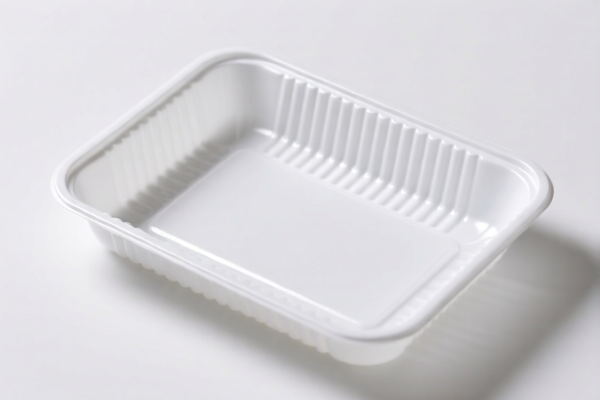
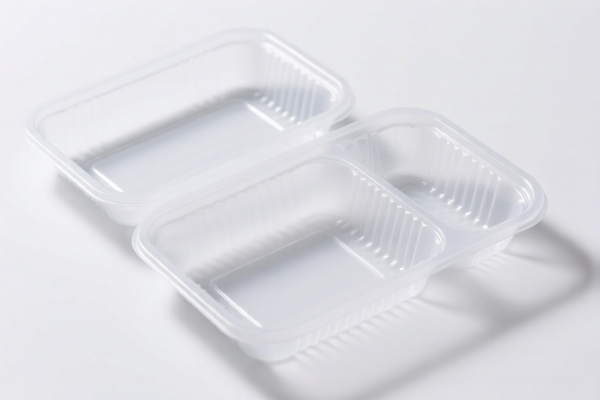
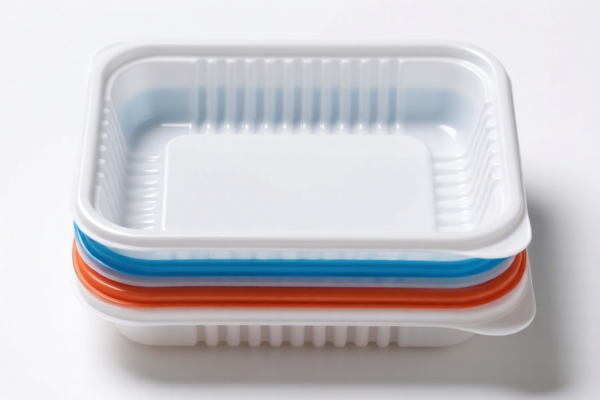
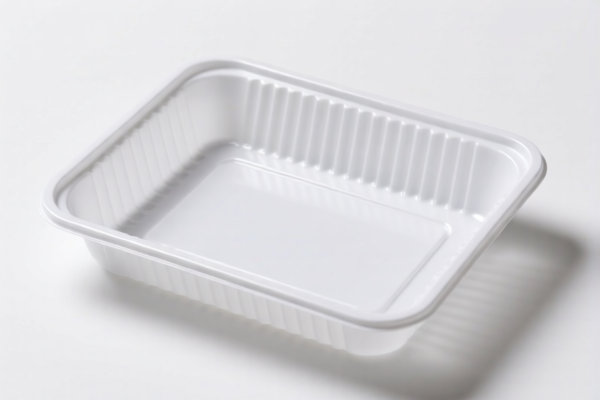
AI Analysis
🍱 Plastic Trays (Plastic Snack Trays)
🌐 HS Code Reference & Customs Clearance Guide | 2026 Tariff Analysis | Professional Classification Strategy
📌 I. Product Definition & Classification: Do You Really Understand "Plastic Trays"?
Plastic trays, particularly those designed for snacks or food service, are ubiquitous in global trade. However, customs authorities differentiate them based on material composition, intended use (household vs. office), and specific classification rules. Misclassification can lead to significant tariff discrepancies, especially under the "Section 301" and "122 Section" tariff regimes.
⚠️ Key Distinction Point:
- If the tray is strictly for office/school stationery use → It may fall under 3926.10.00.00.
- If the tray is for kitchen/dining/household use (like a snack tray) → It falls under 3924.10.30.00 or 3924.10.40.00.
- If the tray is made of Polyethylene (PE) specifically → It may have a different base rate under 3926.90.10.00.
- If it doesn’t fit neatly into specific household or office categories → It falls under the catch-all category 3926.90.99.89.
📦 II. HS Code Classification Details (2026 Latest Tariff Authority Comparison)
| HS Code | Product Description | Applicable Scenario | Key Classification Criteria |
|---|---|---|---|
3926.10.00.00 |
Plastic office/school supplies (e.g., trays for papers, files) | Office organization, school supplies | Use: Office/School. Material: Plastic. |
3924.10.30.00 |
Plastic tableware, kitchenware, or sanitary ware (trays) | Household dining, snack serving | Use: Household/Kitchen. Category: Tableware. |
3924.10.40.00 |
Plastic tableware, kitchenware, or sanitary ware (trays) | Household dining, snack serving | Use: Household/Kitchen. Category: Tableware. |
3926.90.99.89 |
Other plastic articles and articles of other materials of headings 39.01 to 39.14 | Non-specific plastic trays | Use: General/Non-specific. Status: Catch-all. |
3926.90.10.00 |
Polyethylene trays | Specific material: Polyethylene | Material: Polyethylene (PE). Form: Tray. |
🔍 Important Reminder:
- Household Use vs. Office Use: This is the most critical distinction. A "plastic snack tray" is typically considered household/kitchenware (3924.xx), not office supplies (3926.xx), unless explicitly marketed for office storage.
- Material Specificity: If the tray is made of Polyethylene, it has a specific subheading (3926.90.10.00). If made of other plastics (like PP, PS, PET), it falls under different subheadings or the general category.
- Catch-All Clause:3926.90.99.89is a fallback for items that don’t fit other specific descriptions. It often incurs higher tariffs due to lack of preferential status.
💰 III. 2026 Latest Tariff Rate Breakdown (Including Surtaxes, Policy Surcharges)
✅ Applicable Country: United States (US)
✅ Origin: China (CN)
✅ Effective Time: 2025/2026 (Current Regulatory Framework)
🎯 1. 3926.10.00.00 —— Plastic Office/School Supplies (Trays)
| Item | Content |
|---|---|
| Base Tariff Rate | 5.3% (Ad Valorem) |
| Section 301 Surtax | 0.0% (Note: Some office supplies may be exempt, but verify current list) |
| Section 122 Tariff | +10.0% (Specific to certain plastic articles under Section 122) |
| Total Tariff Rate | 15.3% |
| Tax Calculation | CIF Value × 15.3% |
| De Minimis Eligibility | ❌ No (Section 122 tariffs generally apply to de minimis shipments) |
| Legal Basis Path | HTSUS:3926.10.00.00 → USITC:Section 122 |
📌 Explanation:
- This classification assumes the tray is for office or school use.
- The 10% Section 122 tariff applies to certain plastic articles, regardless of origin in some cases, but here it’s additive.
- Total 15.3% is moderate compared to other categories.
🎯 2. 3924.10.30.00 —— Plastic Tableware/Kitchenware (Trays)
| Item | Content |
|---|---|
| Base Tariff Rate | 5.3% (Ad Valorem) |
| Section 301 Surtax | +7.5% (Standard Section 301 rate for many plastics) |
| Section 122 Tariff | +10.0% |
| Total Tariff Rate | 22.8% |
| Tax Calculation | CIF Value × 22.8% |
| De Minimis Eligibility | ❌ No |
| Legal Basis Path | HTSUS:3924.10.30.00 → USITC:Section 301 & 122 |
📌 Note:
- This is the most likely classification for plastic snack trays intended for home use.
- The 7.5% Section 301 plus 10% Section 122 results in a high effective tariff of 22.8%.
- Cost Impact: This is significantly higher than office supplies due to Section 301 applicability.
🎯 3. 3924.10.40.00 —— Plastic Tableware/Kitchenware (Trays)
| Item | Content |
|---|---|
| Base Tariff Rate | 3.4% (Ad Valorem) |
| Section 301 Surtax | 0.0% (Exempt under specific Section 301 exclusions or different subheading rule) |
| Section 122 Tariff | +10.0% |
| Total Tariff Rate | 13.4% |
| Tax Calculation | CIF Value × 13.4% |
| De Minimis Eligibility | ❌ No |
| Legal Basis Path | HTSUS:3924.10.40.00 → USITC:Section 122 |
📌 Critical Insight:
- This subheading has a lower base rate (3.4%) and no Section 301 surtax, resulting in the lowest total tariff of 13.4%.
- Eligibility: Must ensure the product strictly meets the criteria for this subheading (often related to specific material or manufacturing process).
- Strategy: If your plastic snack tray can be classified under3924.10.40.00, choose this code to save 9.4% compared to3924.10.30.00.
🎯 4. 3926.90.99.89 —— Other Plastic Articles (Catch-All)
| Item | Content |
|---|---|
| Base Tariff Rate | 5.3% (Ad Valorem) |
| Section 301 Surtax | +7.5% |
| Section 122 Tariff | +10.0% |
| Total Tariff Rate | 22.8% |
| Tax Calculation | CIF Value × 22.8% |
| De Minimis Eligibility | ❌ No |
| Legal Basis Path | HTSUS:3926.90.99.89 → USITC:Section 301 & 122 |
📌 Warning:
- This is a fallback category. It offers no advantages.
- Same high tariff (22.8%) as3924.10.30.00.
- Avoid this classification if possible, as it may trigger additional scrutiny from customs.
🎯 5. 3926.90.10.00 —— Polyethylene Trays
| Item | Content |
|---|---|
| Base Tariff Rate | 3.4% (Ad Valorem) |
| Section 301 Surtax | +7.5% |
| Section 122 Tariff | +10.0% |
| Total Tariff Rate | 20.9% |
| Tax Calculation | CIF Value × 20.9% |
| De Minimis Eligibility | ❌ No |
| Legal Basis Path | HTSUS:3926.90.10.00 → USITC:Section 301 & 122 |
📌 Note:
- Only applies if the tray is made of Polyethylene (PE).
- Total 20.9% is lower than the general catch-all (22.8%) due to a lower base rate.
- Verification: Ensure the material is correctly identified as PE. If it’s PP (Polypropylene) or PS (Polystyrene), this code is invalid.
🛠️ IV. Customs Clearance Practical Advice (Real-World Pitfall Avoidance Guide)
✅ 1. Documentation Checklist (Essential for Smooth Clearance)
| Document | Must Provide | Explanation |
|---|---|---|
| ✅ Product Specification Sheet | ✔️ | Include material type (PE, PP, PS, etc.), dimensions, weight, intended use. |
| ✅ Material Composition Report | ✔️ | Third-party lab test to confirm polymer type (critical for 3926.90.10.00). |
| ✅ Product Photos | ✔️ | Show tray in use (e.g., with snacks) to prove household/kitchen use. |
| ✅ Commercial Invoice | ✔️ | Clearly state "Plastic Snack Tray" and HS Code. Avoid vague terms like "Plastic Container." |
| ✅ Packing List | ✔️ | Detail items per package to avoid拆分申报 (split declaration). |
| ✅ FCC/RoHS Compliance | ✔️ | If applicable, show compliance to avoid health/safety delays. |
✅ 2. Declaration Tips (Key Mantra)
🔥 “Material First, Use Second, Code Precise, Tariff Minimized!”
| Scenario | Correct Declaration | Incorrect Practice |
|---|---|---|
| Snack tray for home use | 3924.10.40.00 (if eligible) or 3924.10.30.00 |
Misdeclare as office supply (3926.10.00.00) → Risk of penalty. |
| Tray made of Polyethylene | 3926.90.10.00 |
Declare as general plastic (3926.90.99.89) → Higher tariff. |
| Mixed materials | Check primary material | Declare as "Plastic" without specifying → Customs may reclassify. |
| Office supply tray | 3926.10.00.00 |
Declare as tableware (3924.xx) → Unnecessary high tariff. |
✅ 3. Special Cases Handling
| Case | Handling Advice |
|---|---|
| OEM Custom Trays | Provide customer order + design drawings to prove intended use. |
| Tray with Lid/Container | If lid and tray are sold together, declare as a set under the primary component. |
| Recycled Plastic | If >50% recycled content, check for potential preferential treatments (rare for US). |
| Food Contact Safe | Provide FDA compliance documentation to avoid health-related delays. |
🌍 V. Global Market Clearance Comparison (2026 Latest)
| Country/Region | Recommended HS Code | Tariff | Certification Requirements | Notes |
|---|---|---|---|---|
| 🇺🇸 United States | 3924.10.40.00 |
13.4% | FDA + RoHS | Lowest US tariff if eligible. |
| 🇨🇳 China | 3924.10.30.00 |
5% | CCC | No surtaxes. |
| 🇪🇺 European Union | 3924.10.10.00 |
0% | CE + LFGB | No surtaxes. |
| 🇦🇺 Australia | 3924.10.10.00 |
5% | SAA | No surtaxes. |
| 🇯🇵 Japan | 3924.10.10.00 |
0% | JIS | No surtaxes. |
📌 Conclusion:
- US is the only major market with high surtaxes (Section 301 & 122).
- EU, Japan, Australia offer 0-5% tariffs for similar products.
- Strategy: If shipping to the US, optimize HS code to3924.10.40.00(13.4%) or3926.10.00.00(15.3%) to save vs. 22.8%.
📌 VI. Common Mistakes & Pitfall Guide (Lessons Learned)
❌ Mistake 1: Declaring a household snack tray as office supply (3926.10.00.00) to save on Section 301.
👉 Consequence: Customs may detect misuse of use-case → Penalties, retroactive tax, and delays.
❌ Mistake 2: Ignoring material specificity.
👉 Consequence: If PE tray is declared as general plastic → Missed opportunity for 3926.90.10.00 (20.9%) vs. catch-all (22.8%).
❌ Mistake 3: Vague product name "Plastic Tray."
👉 Consequence: Customs may assign highest applicable rate due to uncertainty → 22.8%+.
❌ Mistake 4: Assuming de minimis applies.
👉 Consequence: Section 122 tariffs apply to all shipments, including those under $800. No exemption.
✅ Correct Approach:
"Plastic Snack Tray, Polypropylene, for Household Use, Food-Grade, Model XYZ, FDA Compliant"
🎯 VII. Conclusion: Precise Classification, Cost Efficiency, Smooth Clearance!
🎯 Remember the Mantra:
🔹 "Household vs. Office, Use Defines Code."
🔹 "PE vs. PP, Material Defines Rate."
🔹 "Section 122 Applies to All, No De Minimis Exemption!"
🔹 "Target 3924.10.40.00 (13.4%) for Lowest US Tariff!"
📌 Pro Tip:
If your product qualifies for 3924.10.40.00, apply for a Binding Ruling from US Customs and Border Protection (CBP) before shipping. This provides legal certainty and protects against audits.
📣 Immediate Action:
📞 Contact a licensed customs broker + Provide material test report + Apply for HS Code Ruling.
🚀 Ensure your plastic trays clear customs smoothly, minimize tariffs, and maximize profit!
✨ Professional Clearance Starts with Accurate Classification!
💼 Every percent of tariff saved is pure profit!
Customer Reviews
About HS Code Classification
The Harmonized System (HS) is an internationally standardized nomenclature developed by the World Customs Organization (WCO) to classify traded products. Over 200 countries use the HS system as the basis for customs tariffs, trade statistics, and import/export regulations.
Each HS code follows a hierarchical structure:
- Chapter (2 digits) — Broad category of goods (e.g., Chapter 84: Machinery and Mechanical Appliances)
- Heading (4 digits) — More specific grouping within the chapter
- Subheading (6 digits) — Internationally standardized breakdown, used by all WCO member countries
- National subdivisions (8-10 digits) — Country-specific extensions for further classification, such as US HTSUS 10-digit codes
Correct HS code classification is essential for smooth customs clearance, accurate duty payment, and compliance with trade regulations. Misclassification can lead to customs delays, overpayment of duties, or penalties.
When importing from CN to US, the applicable tariff rates may include:
- Most-Favored-Nation (MFN) rate — The standard duty rate applied to WTO members
- General rate — Applied to countries without trade agreements
- Trade remedy duties — Additional tariffs such as Section 301 (anti-dumping), Section 232 (national security), or countervailing duties
The information provided on this page is for reference purposes only. For official classification, please consult with your local customs authority or a licensed customs broker.